LoreArc

Shadow

49 items tagged with "Shadow"

🐉Monsters(4)
🐉Dragons(3)
yamata-no-orochi

Yamata-no-Orochi

八岐大蛇 · Eight-Headed Serpent of Japanese Myth

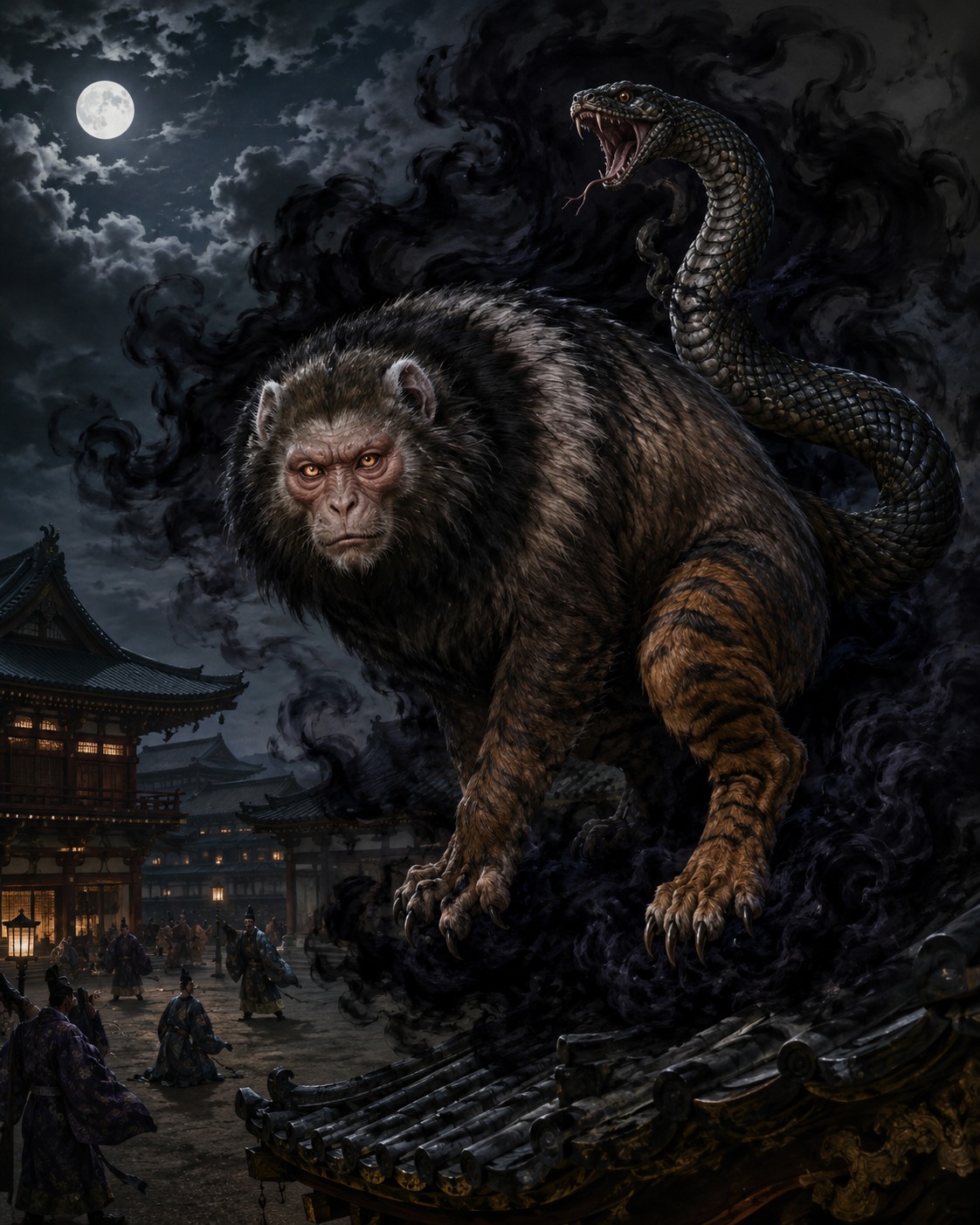
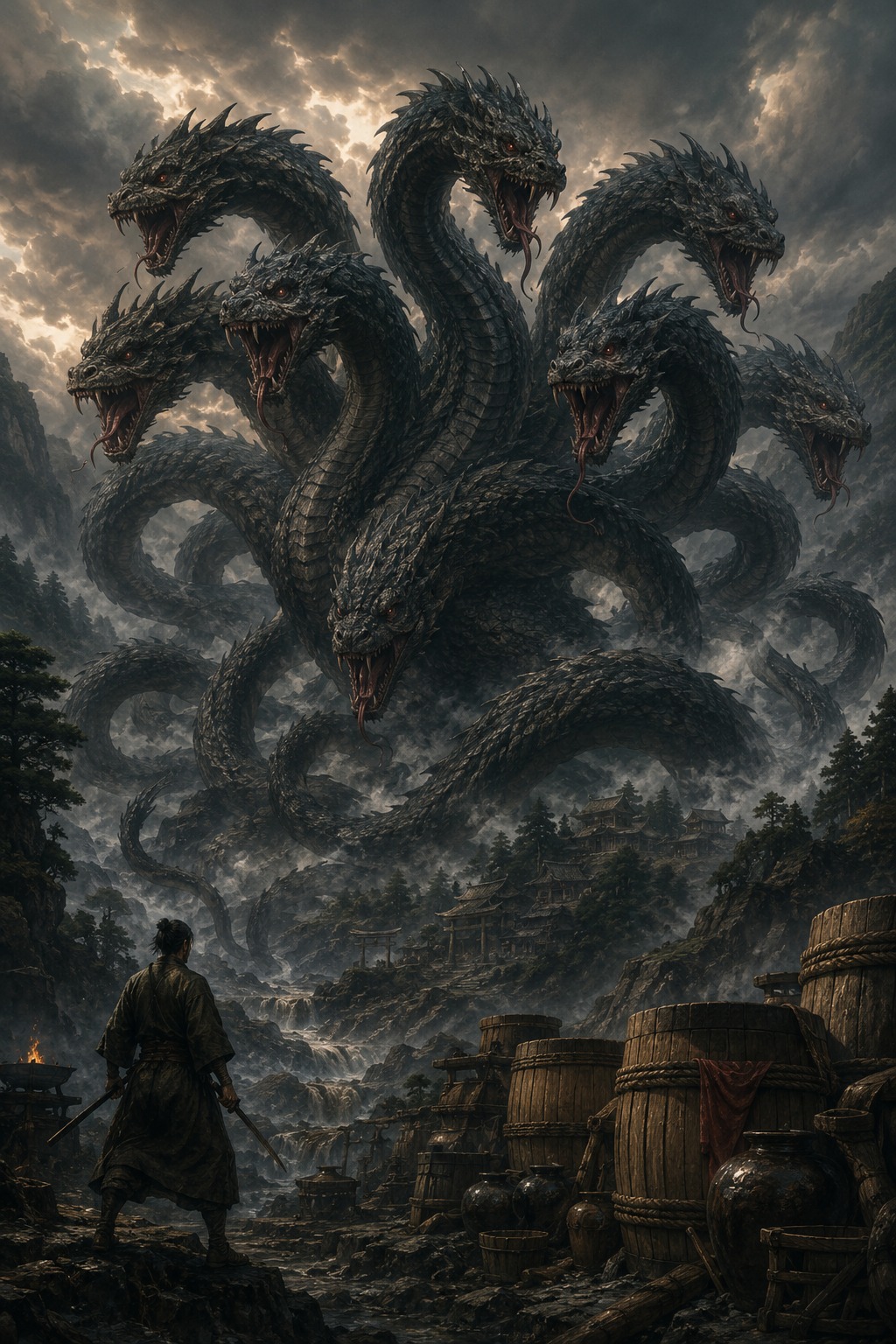
Yamata-no-Orochi ('eight-forked great serpent') is the most iconic many-headed dragon-serpent of Japanese myth, recorded in the early eighth century in the two foundational chronicles of the Japanese state: the 'Kojiki' (712) compiled by Ō no Yasumaro and the 'Nihon Shoki' (720) compiled under Prince Toneri. The serpent has eight heads and eight tails, and its body is so vast that it covers 'eight valleys and eight ridges, with cypress and cedar growing on its back and its belly always inflamed and bleeding'. It appears each year along the Hi no Kawa (today's Hii River) in the Izumo region (eastern Shimane prefecture) and demands one of the daughters of the old couple Ashinazuchi and Tenazuchi as tribute. After devouring seven of their eight daughters, it returns for the last, Kushinada-hime, when the storm-god Susanoo, banished from heaven, descends to Izumo. Susanoo prepares yashiori-no-sake (a wine brewed and refined eight times, sometimes called 'eight-fold wine'), pours it into eight large vats placed before eight gates so that each of Orochi's eight heads will drink from a separate vat, and waits until the eight heads are dead drunk. He then severs all eight heads and eight tails with the divine sword Totsuka-no-Tsurugi (a sword 'ten hand-spans long'). When one tail dulls his blade, he finds inside it another, finer sword — the Kusanagi-no-Tsurugi (also Ame-no-Murakumo-no-Tsurugi), one of the Three Sacred Treasures of the Japanese imperial house, today enshrined at Atsuta Shrine in Nagoya, Aichi prefecture.
🐉Humanoids(5)
goblin

Goblin

Goblin · The Cunning Little Folk — Raiders Who Live by Numbers and Guile

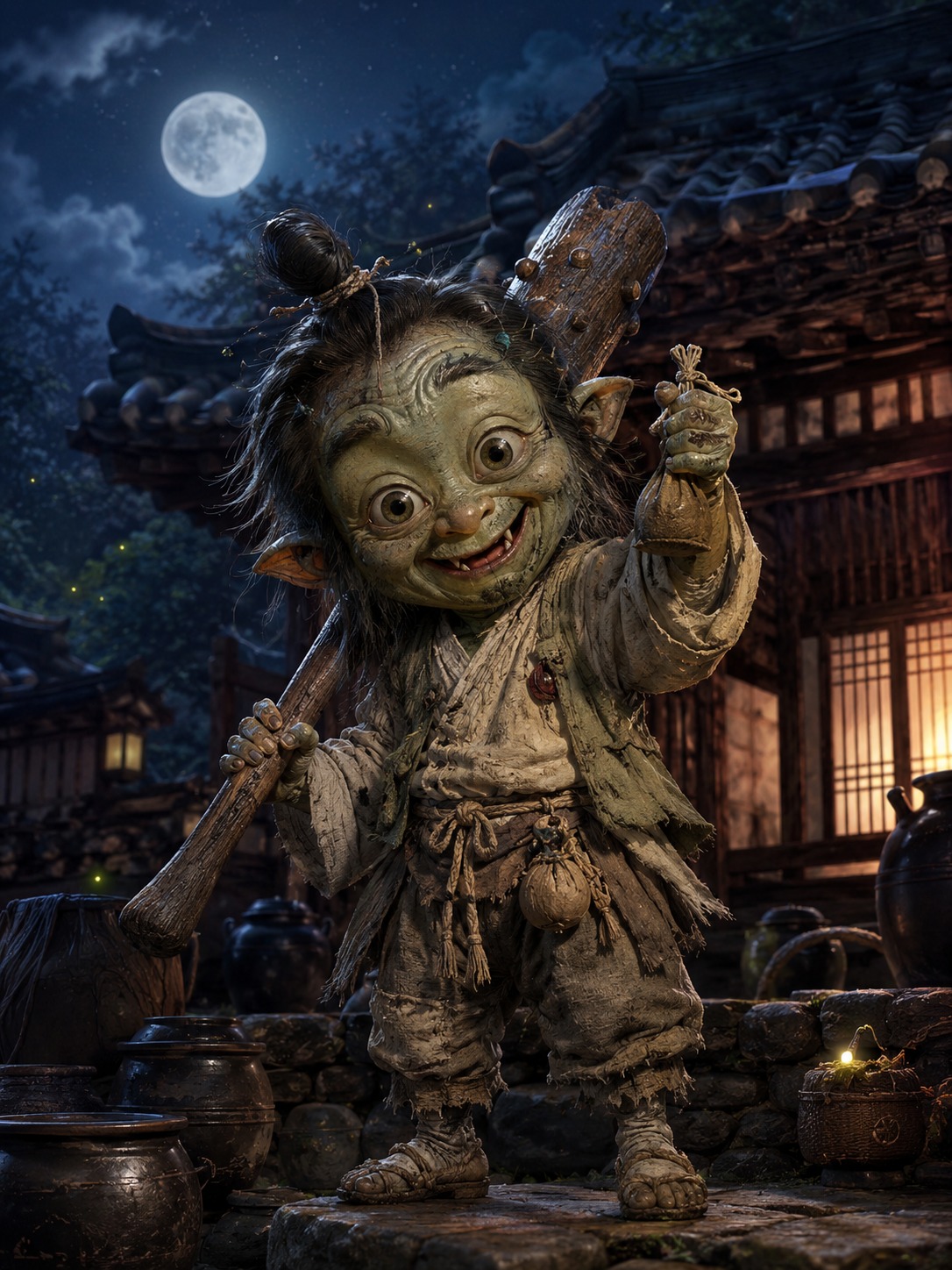
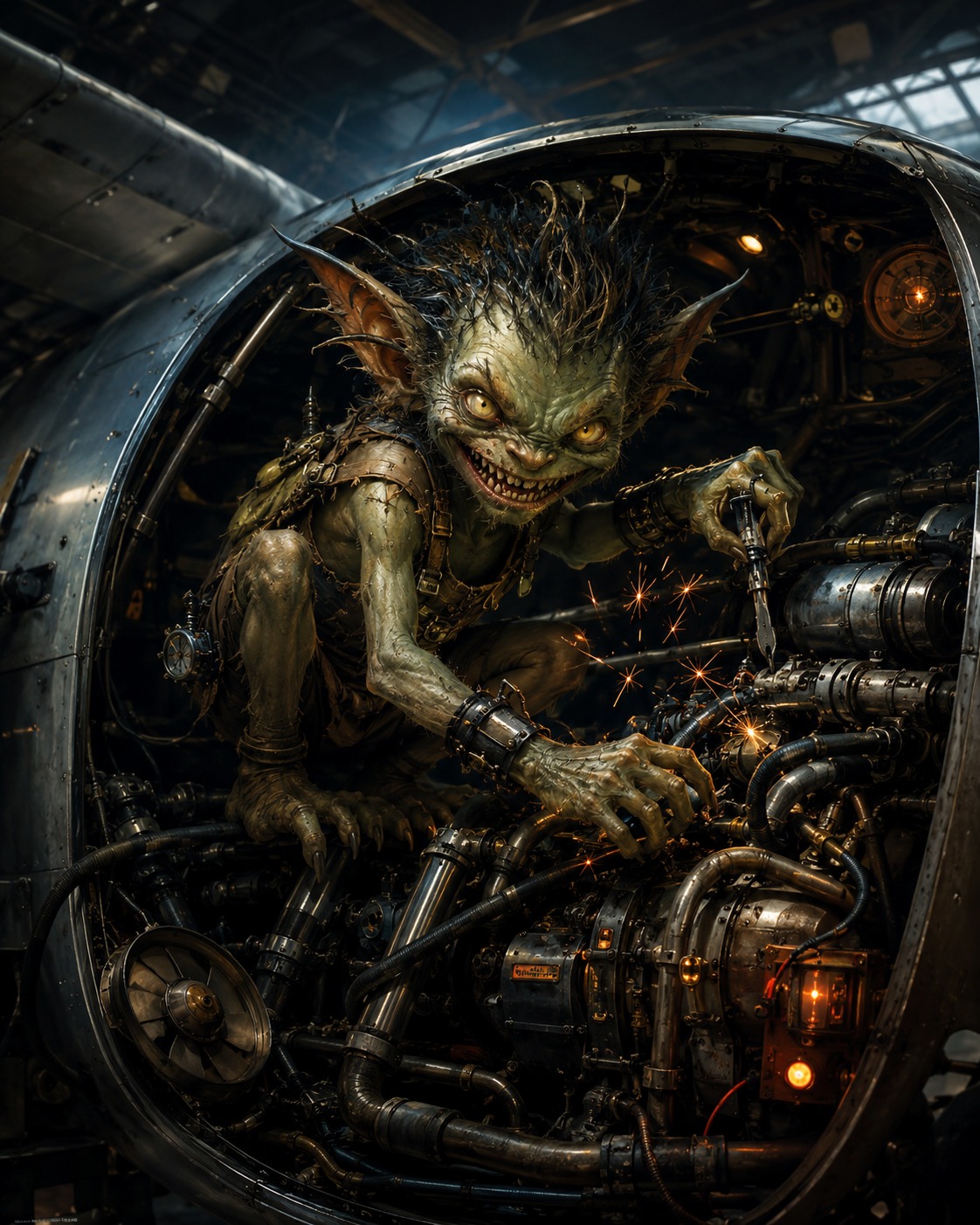
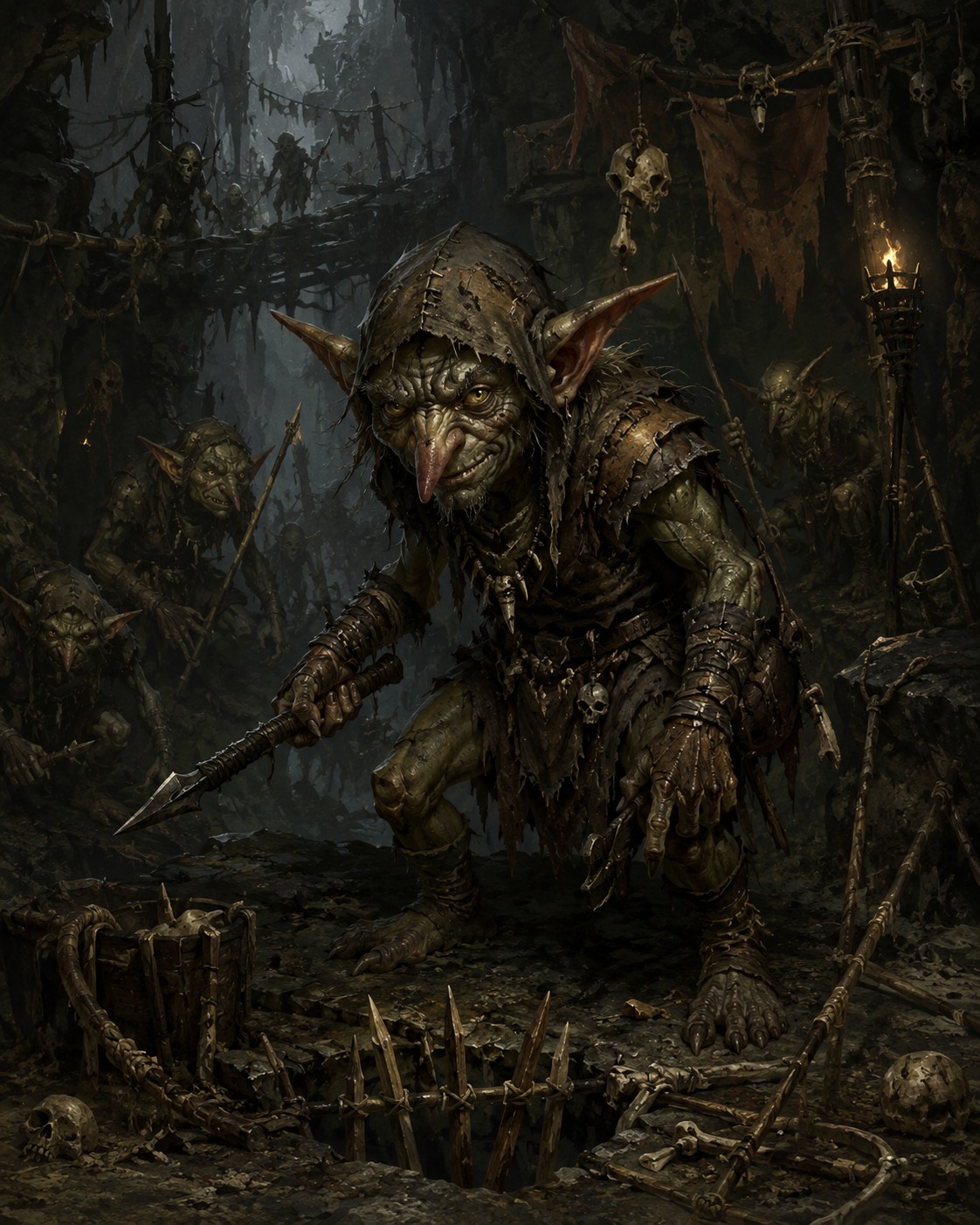
The goblin is the most pervasive 'small raiding humanoid' of modern Anglophone fantasy, descended from the spiteful little fairies of medieval European folklore and codified through three textual layers: the Victorian children's literature of Christina Rossetti's 'Goblin Market' (1862) and George MacDonald's 'The Princess and the Goblin' (Edinburgh, 1872), J.R.R. Tolkien's 'The Hobbit' (1937) — chapters four to six, the Goblins of the Misty Mountains — and the 1974 Dungeons & Dragons original boxed set by Gary Gygax and Dave Arneson. Goblins stand ninety to one hundred and twenty centimetres tall with wiry, sinewy bodies, oversized ears and noses, yellow-green or ashen skin, yellow eyes and sharp canines. They live in tribal warrens in caves, ruins and dark forests, surviving on traps, ambushes and raids. Their individual combat power is low — Challenge Rating 1/4 (7 hit points, AC 15) in the fifth-edition D&D Monster Manual (2014) — but their numbers, cunning and improvisation make them an enduring threat. Their alignment was fixed as Neutral Evil in the 1977 AD&D Monster Manual and remains so. The same lineage appears in the Greenskins of Warhammer Fantasy (from 1983), the Gringotts goblins of J.K. Rowling's 'Harry Potter' (1997 onward), the Kezan goblins of Blizzard's 'World of Warcraft' (2004 onward) and the post-colonial readings of R.F. Kuang's 'Babel' (2022).

gnoll

Gnoll

Gnoll · The Hyena People — A Raiding Tribe Maddened by Hunger

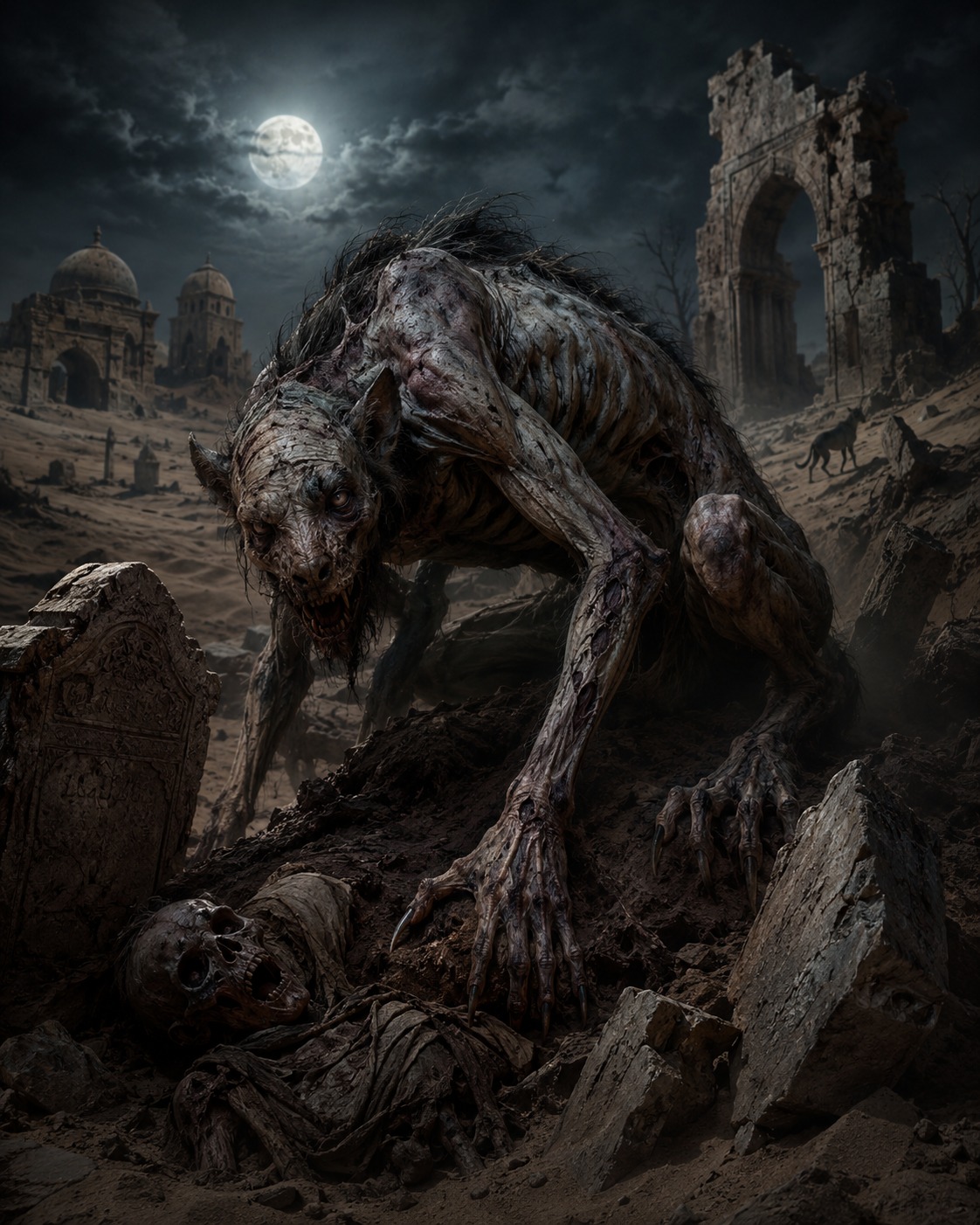
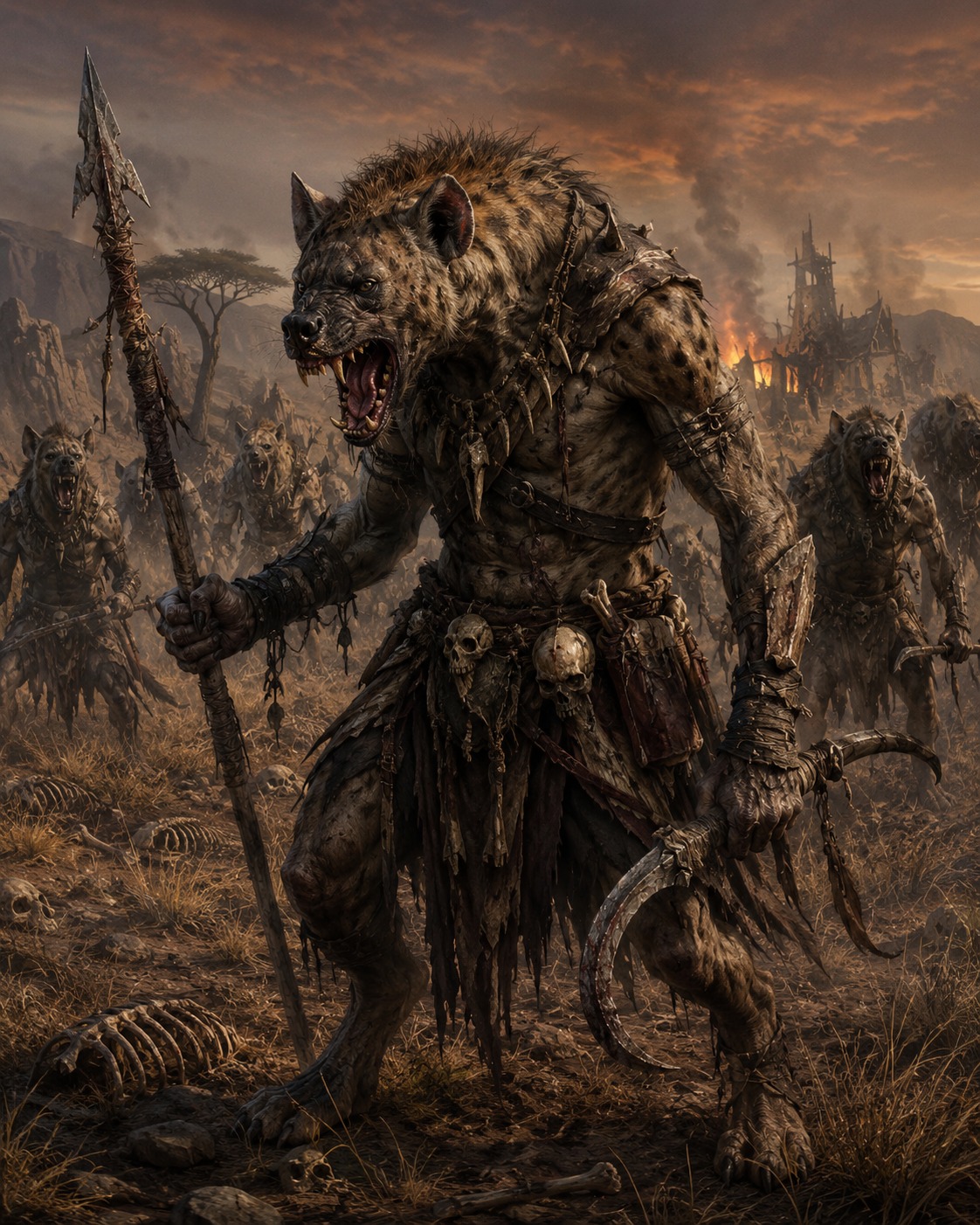
The gnoll is a hyena-headed humanoid raider race introduced by Gary Gygax in the 1974 Dungeons & Dragons original boxed set and codified in the 1977 AD&D Monster Manual as a Chaotic Evil scavenger tribe (Challenge Rating 1/2) that worships the demon-prince of hunger and slaughter, Yeenoghu. The name was acknowledged by Gygax himself, in 'Strategic Review' issue six (1976) and in his 'Dragon Magazine' issue one hundred interview of 1985, as a borrowing from the 'gnole' of Lord Dunsany's short story 'How Nuth Would Have Practised His Art upon the Gnoles' in 'The Book of Wonder' (1912); the form is also commonly read as a portmanteau of 'gnome' and 'troll'. Gnolls stand two hundred and ten to two hundred and twenty centimetres tall, with the rough muscular build of a hominid, the head and brown-grey spotted coat of the spotted hyena (Crocuta crocuta), human-like clawed fingers and a chilling whooping laughter taken from the spotted hyena's territorial call. They live in nomadic packs of four to twelve in savannas, badlands and arid wastes, and obey a Gnoll Fang of Yeenoghu — a warrior touched by the demon-prince. The fifth-edition 'Volo's Guide to Monsters' (2016) makes the canon explicit: gnolls are not a naturally breeding species but the result of Yeenoghu's demon-ichor mutating spotted hyenas. The lineage is borrowed in the Gnoblars of Games Workshop's Warhammer Fantasy, the marogh of BioWare's 'Dragon Age: Inquisition' (2014) and the gnoll raiders of Black Isle's 'Baldur's Gate' series (from 1998).