Apophis
Egyptian Cosmic Serpent of Darkness and Chaos
Names in Other Languages
 아포피스한국어
Apophis · 이집트 신화의 어둠과 혼돈의 거대 뱀
 アポピス日本語
Apophis · エジプト神話の闇と混沌の大蛇
 阿波菲斯繁體中文
Apophis · 埃及神話的黑暗與混沌巨蛇
 ApophisDeutsch
Riesenschlange der Finsternis und des Chaos der ägyptischen Mythologie
 ApophisFrançais
Serpent géant des ténèbres et du chaos de la mythologie égyptienne
 ApofisEspañol
Serpiente gigante de la oscuridad y el caos de la mitología egipcia
 ApófisPortuguês
Serpente gigante das trevas e do caos da mitologia egípcia
 ApofisPolski
Wielki wąż ciemności i chaosu mitologii egipskiej
 АпофисРусский
Апоп · Гигантский змей тьмы и хаоса египетской мифологии
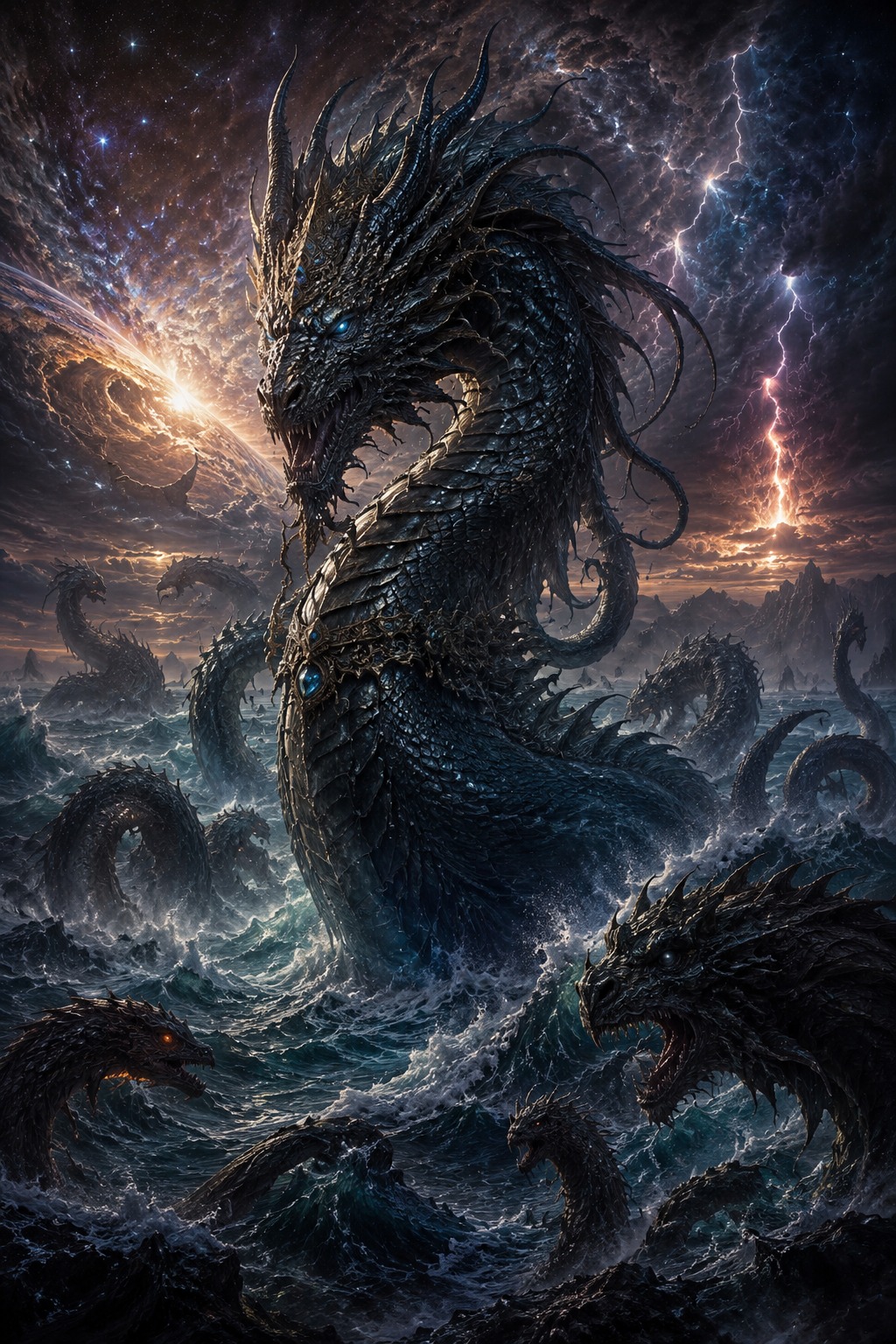
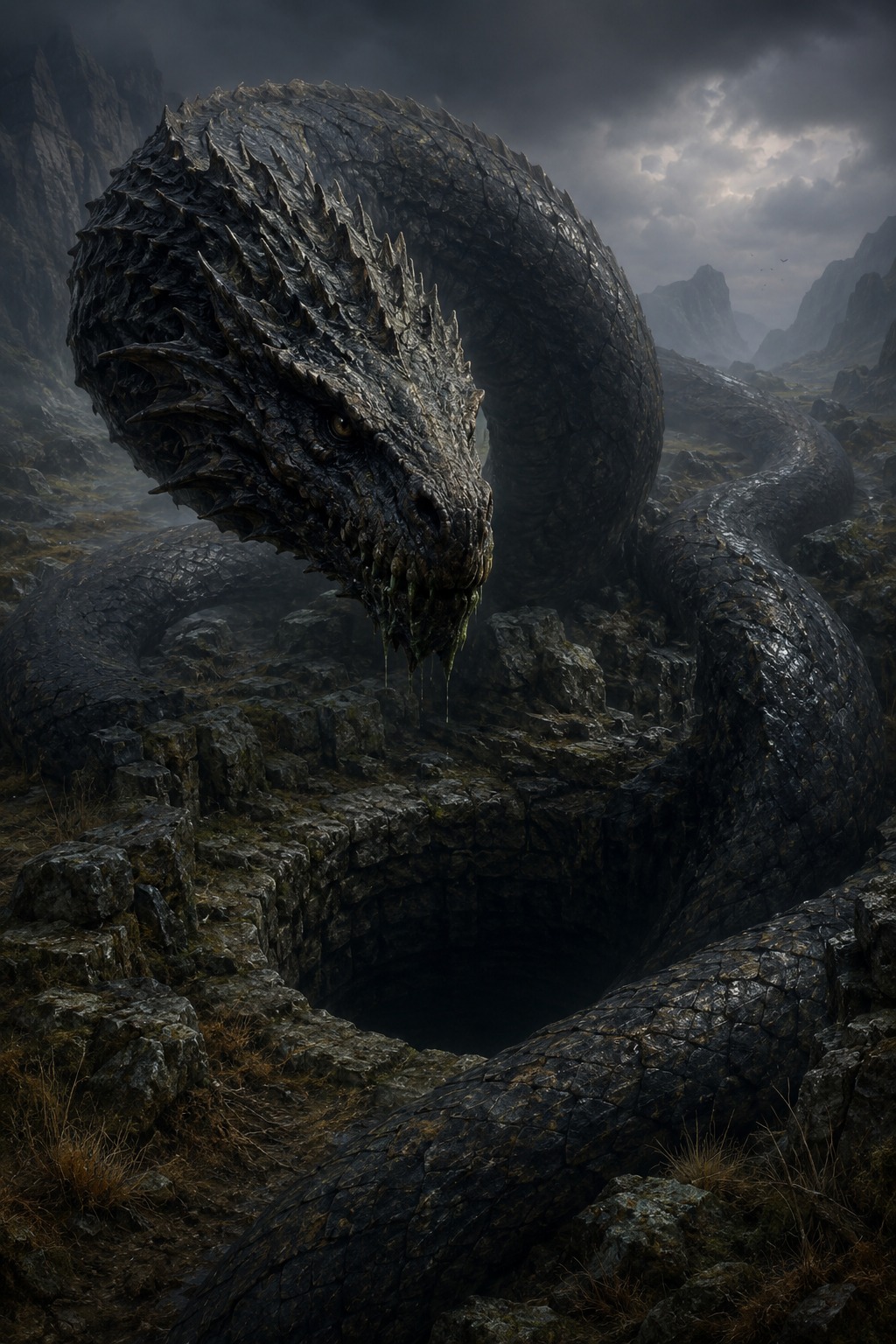
Apep, hellenised as Apophis, is the cosmic serpent of darkness, chaos and isfet (disorder) of ancient Egyptian religion, figured as a sand-coloured monstrous snake some thirty cubits (about sixteen metres) long. Every night, when the sun-god Ra sails the Mesektet boat through the Duat (the underworld), Apep attacks the vessel to prevent the dawn. Ra and his allies — the storm-god Set, the lioness goddess Bastet, the goddess of truth Maat, Mehit and Selket — overthrow him in a nightly battle, but he rises again the following night, an eternal cosmic war that the Egyptians said was the very reason to rejoice at each dawn. Solar and lunar eclipses, earthquakes, storms and floods were read as Apep's momentary victories. The fullest record survives in Chapters 17, 39 and 108 of the New Kingdom 'Book of the Dead' (papyri, c. 1550-1077 BCE) and on the ceiling reliefs of the tomb of Ramesses VI (KV9). Apep is the oldest attested instance of the cosmic-serpent type to which the Mesopotamian Tiamat, the Indo-Aryan Vritra, the Norse Jörmungandr and the Hebrew Leviathan all belong.
Origin
The earliest textual occurrence is in the late twenty-third-century BCE Pyramid Texts of Unas (Utterances 226, 263, 378), where the name 'Aapep' and the role of Ra's adversary appear together. The most systematic compilation is the New Kingdom 'Book of the Dead' (c. 1550-1077 BCE) and the 'Books of Overthrowing Apep' preserved as Berlin Papyrus 3008 (c. fourth century BCE) at the Egyptian Museum in Berlin, first translated into English by Raymond O. Faulkner in 1929. The visual canon is fixed by the Khonsu temple complex at Karnak and the ceiling reliefs of the tomb of Ramesses VI (KV9, reigned c. 1145-1137 BCE). In comparative mythology Georges Dumézil (1898-1986) treats the Apep story as the oldest non-Indo-European variant of the storm-god / serpent Chaoskampf.
Features
- Sand-scaled colossal serpent about thirty cubits (sixteen metres) long
- Cosmic embodiment of darkness, chaos and isfet (disorder)
- Eternal enemy of the sun-god Ra, attacked nightly in the Duat
- Tries to sink Ra's night-boat Mesektet
- Solar and lunar eclipses, earthquakes, lightning and floods are read as his momentary victories
- Target of an annual priestly rite of overthrowing (the 'Banishing of Apep')
Stories
Functioned as the target of the annual priestly 'Banishing of Apep' rite, in which wax effigies of the serpent were spat upon and burned. In modern comparative mythology Apep is the textbook earliest case of the cosmic-evil serpent. The film 'Stargate' (1994) and the television series 'Stargate SG-1' (1997-2007) borrow the name for a Goa'uld System Lord.
Weakness
Apep is defeated nightly by the combined attack of Ra, Set, Bastet and Maat but never completely annihilated. The priestly rite codifies his ritual vulnerabilities: spitting on his image, shooting it with arrows, and burning it in the brazier under the formula of damnatio memoriae.
Cultural Significance
Apep encapsulates the core of Egyptian cosmology — the eternal light-versus-darkness opposition, the daily miracle of sunrise, and the mythic reading of natural disaster — and is a standard case in the comparative-mythology work of Georges Dumézil and Mircea Eliade (1907-1986).
In Popular Culture
Pyramid Texts of Unas (twenty-third century BCE), Chapters 17, 39 and 108 of the 'Book of the Dead' (New Kingdom, c. 1550-1077 BCE), the 'Books of Overthrowing Apep' (Berlin Papyrus 3008, c. fourth century BCE), tomb of Ramesses VI (KV9), Khonsu temple at Karnak, the film 'Stargate' (1994) and the series 'Stargate SG-1' (1997-2007).
Trivia
Berlin Papyrus 3008, acquired by the Egyptian Museum in Berlin in 1862, records about forty separate steps of the Apep rite — spitting, arrow-shooting, brazier-burning, name-erasing (damnatio memoriae). Asteroid 99942 Apophis, discovered in 2004 and due to a close Earth pass in April 2029, is named for the same serpent.