Wyrm
The Limbless Ancient Dragon
Names in Other Languages
 웜한국어
웜한국어Wyrm · 다리 없는 고대의 거대 용
 ワーム日本語
Wyrm · 脚を持たぬ古代の大竜
 蠕龍繁體中文
Wyrm · 無足的遠古巨龍
 WurmDeutsch
Beinloser urzeitlicher Riesendrache
 WyrmFrançais
Dragon géant ancestral sans pattes
 WyrmEspañol
Dragón gigante ancestral sin patas
 WyrmPortuguês
Dragão gigante ancestral sem patas
 WyrmPolski
Beznogi pradawny smok olbrzymi
 ВирмРусский
Wyrm · Безногий древний исполинский дракон
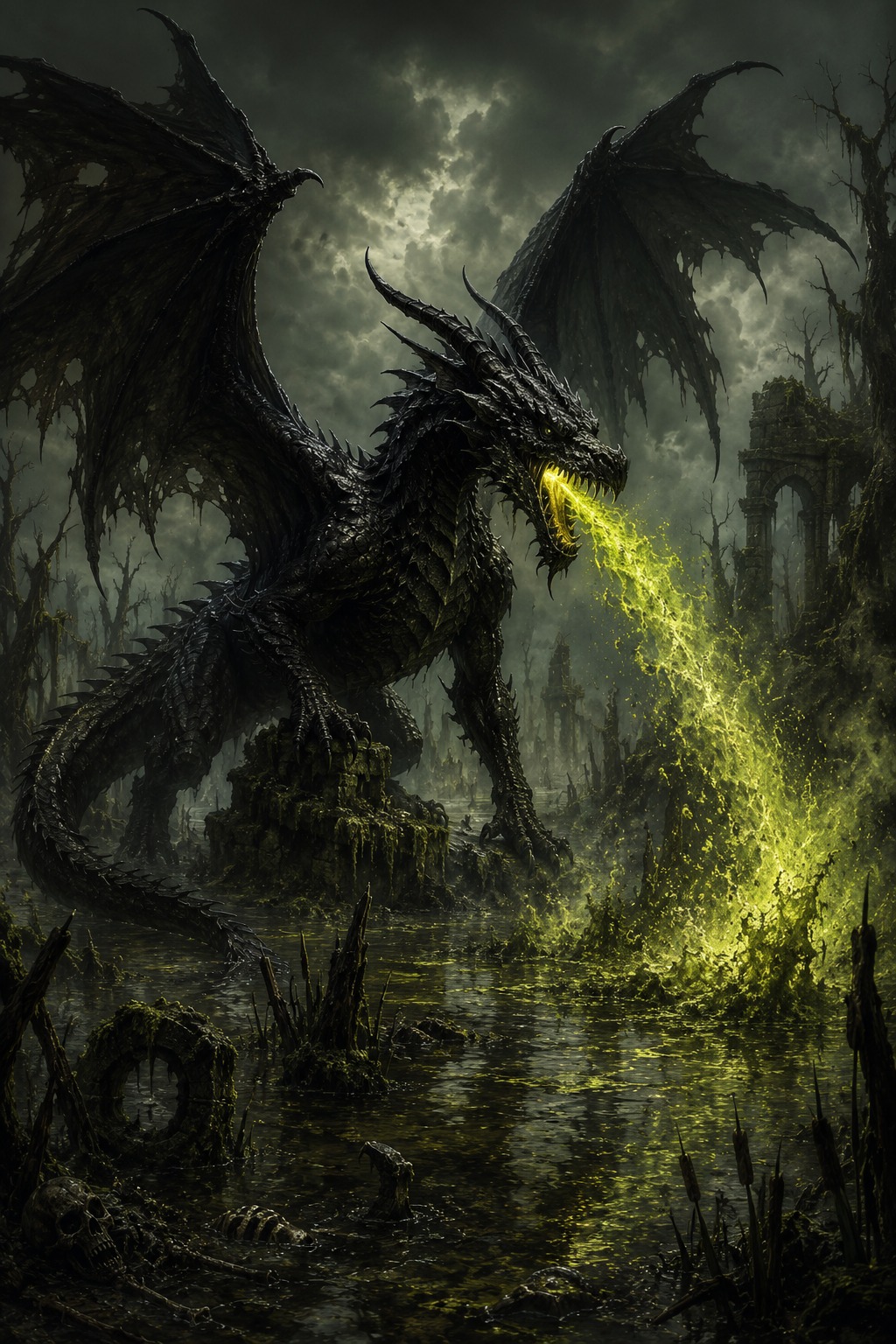
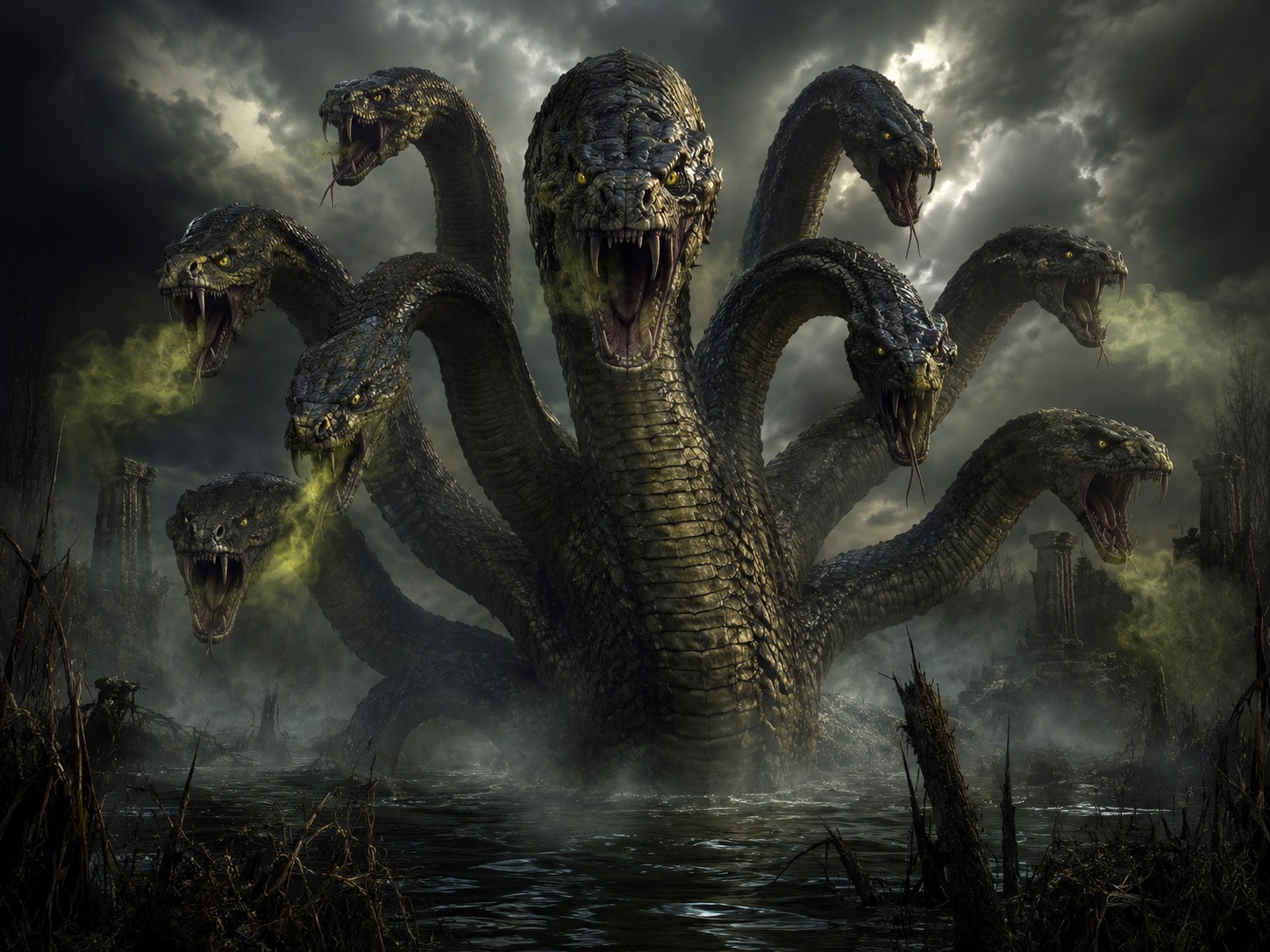
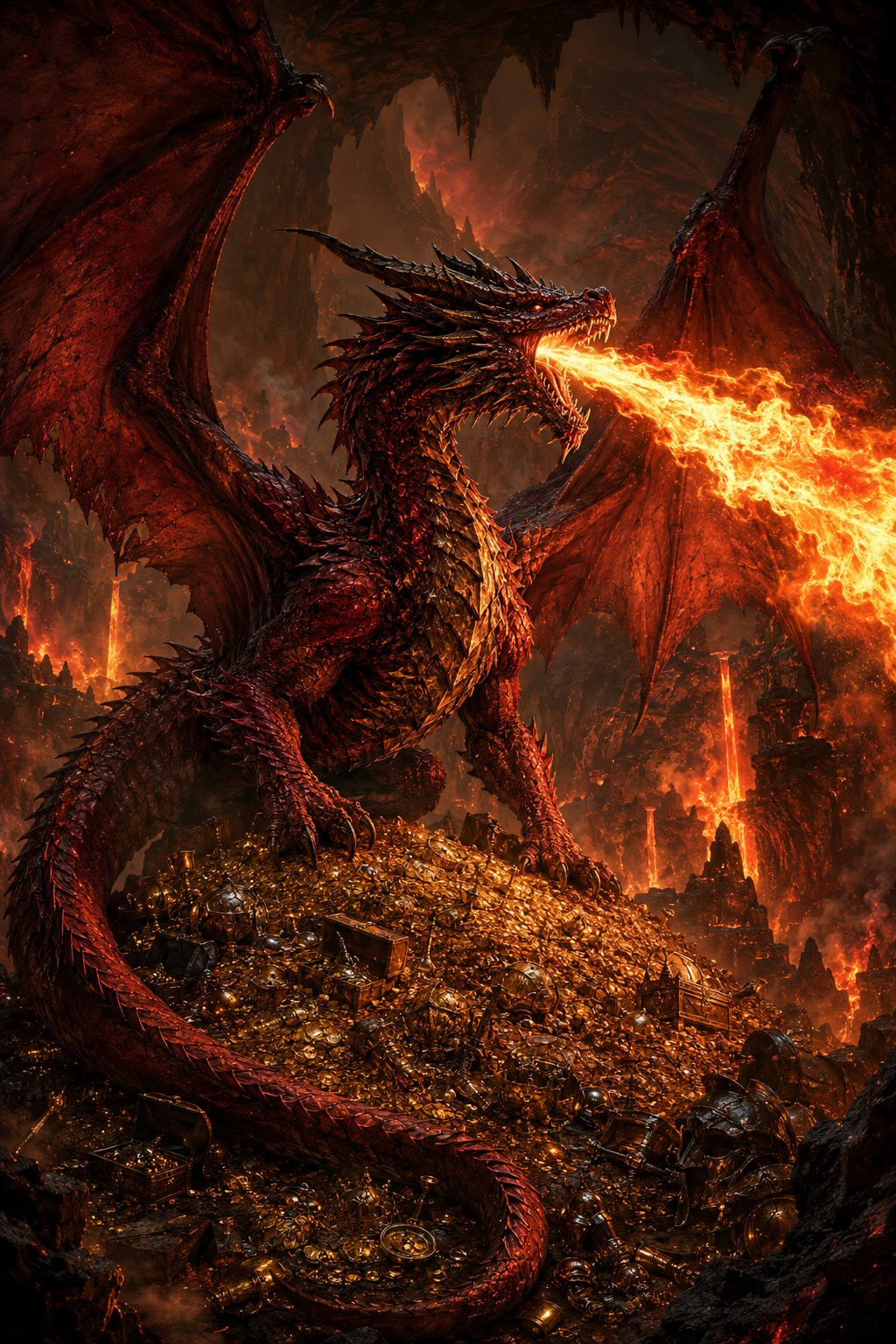
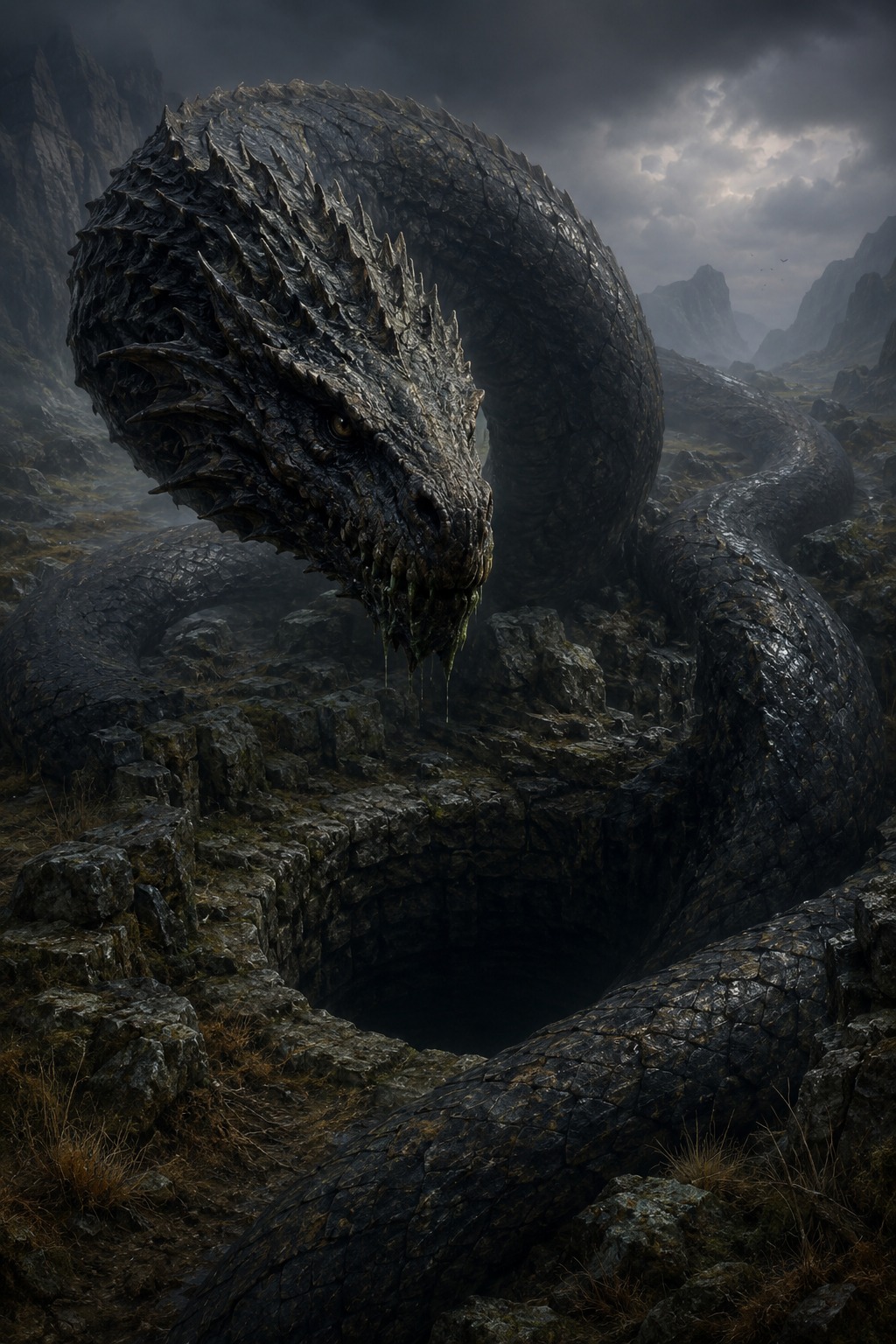
The wyrm (Old English wyrm, Old Norse ormr, Old High German wurm) is the legless, wingless serpent-dragon of Germanic and Norse mythology, the most archaic of the dragon forms and a distinct lineage from the later chromatic dragon and the heraldic wyvern. The word descends from the Proto-Indo-European root *wérmis ('worm, serpent'), cognate with Latin vermis and Sanskrit krmi, and the form is named 'wyrm' in the closing episode of the Old English 'Beowulf' (lines 2200-3182), where Beowulf slays the hoard-keeper that guards a treasure for fifty years before being woken by a stolen cup. The most famous example is Jǫrmungandr ('huge monster' or 'great staff'), the Midgard serpent who encircles the world and bites his own tail, recorded most fully in Snorri Sturluson's prose 'Edda' (Gylfaginning chapter thirty-four, c. 1220) and in the 'Sæmundar Edda'; he is fated to meet the thunder-god Thor at Ragnarǫk in a duel from which neither will return. English regional traditions multiply the figure: the Lambton Worm of Penshaw in County Durham (whose 1867 ballad records its slaying by Sir John Lambton on his return from the Crusades), the Lyminster Knucker of Sussex (slain by a Saxon knight), and the Sherborne Wyrm of Devon.
Origin
The etymological root is Proto-Indo-European *wérmis ('worm, serpent'), cognate with Latin vermis ('worm') and Sanskrit krmi ('worm, insect'). In the Germanic branch this becomes Old English wyrm, Old Norse ormr, Old High German wurm, Old Saxon wurm and Old Frisian wirm. The literary anchor is the Old English 'Beowulf' (preserved in a single manuscript, British Library Cotton MS Vitellius A.xv, c. 1000), whose closing episode on the hoard-keeping wyrm was the subject of Tolkien's 1936 British Academy lecture 'Beowulf: The Monsters and the Critics'. The Norse Jǫrmungandr is described most fully in Snorri Sturluson's prose 'Edda' (Gylfaginning, c. 1220) and in the 'Sæmundar Edda'. The English regional folklore was collected most thoroughly in William Henderson's 'Notes on the Folk-Lore of the Northern Counties of England and the Borders' (1879) and in the anonymous 1867 'Lambton Worm' ballad in Northumbrian dialect. J.R.R. Tolkien calls Smaug a 'wyrm' in 'The Hobbit' (1937), borrowing the term directly; the form passed into the AD&D 'Monster Manual' (1977) as the Purple Worm and into the 'Draconomicon' (1990) and the fifth-edition 'Monster Manual' (2014) as the 'true wyrm' or 'Ancient' rank of dragon.
Features
- Legless, wingless serpent-dragon — the archaic Germanic form, distinct from wyvern and chromatic dragon
- Old English wyrm, Old Norse ormr, Old High German wurm — cognate with Proto-Indo-European *wérmis
- Coils around the land, in deep wells, in underground caves, or in the sea
- The Norse Jǫrmungandr is great enough to encircle the whole Midgard sea
- Falls with Thor at Ragnarǫk in a duel of mutual destruction
- Bears poisonous venom (Lambton Worm) and overwhelming bulk as its weapons
Stories
The most archaic large-serpent image of Germanic-Norse mythology and English folklore. The term was borrowed directly by J.R.R. Tolkien for Smaug in 'The Hobbit' (1937) and survives in D&D under the Purple Worm of the 1977 AD&D Monster Manual and the 'true wyrm' or 'Ancient' age tier in the 1990 Draconomicon and the 2014 fifth-edition Monster Manual. Modern fantasy games — 'The Witcher 3' (2015), 'Dark Souls' and 'Magic: The Gathering' — continue to draw on the silhouette.
Weakness
The wyrm is killed by sacred weapons — undulled swords or blessed arrows — and by a precise blow to the head or heart. The 1867 Lambton Worm ballad records Sir John Lambton's stratagem of fixing razor blades to his armour so that the coiling serpent slices itself; the Norse Jǫrmungandr is killed only by Thor's hammer Mjǫllnir.
Cultural Significance
The figure is the canonical Germanic-Norse instance of the Indo-European Chaoskampf — Thor against Jǫrmungandr — and is classified as such by William Henderson, Max Müller (1823-1900) and Georges Dumézil (1898-1986).
In Popular Culture
The Old English 'Beowulf' (c. 1000 manuscript, British Library Cotton MS Vitellius A.xv), Snorri Sturluson's prose 'Edda' (Gylfaginning, c. 1220), the 'Sæmundar Edda', the 1867 'Lambton Worm' ballad, William Henderson's 'Notes on the Folk-Lore of the Northern Counties' (1879), J.R.R. Tolkien's 'The Hobbit' (1937), the AD&D 'Monster Manual' (1977) Purple Worm, the 'Draconomicon' (1990) and the fifth-edition 'Monster Manual' (2014) true wyrm tier, and the Slipgate Worms of 'The Witcher 3: Wild Hunt' (2015) and the Gru's Worm series of 'Dark Souls'.
Trivia
The English 'worm' for an earthworm is a semantic narrowing of the same Proto-Indo-European *wérmis that gave 'wyrm' for the dragon. The 1867 Lambton Worm ballad is the most often cited regional monster song in English folklore studies, and forms part of the local identity of County Durham alongside the Penshaw Monument (built 1844).