LoreArc

Mythological Age

39 items tagged with "Mythological Age"

gumiho

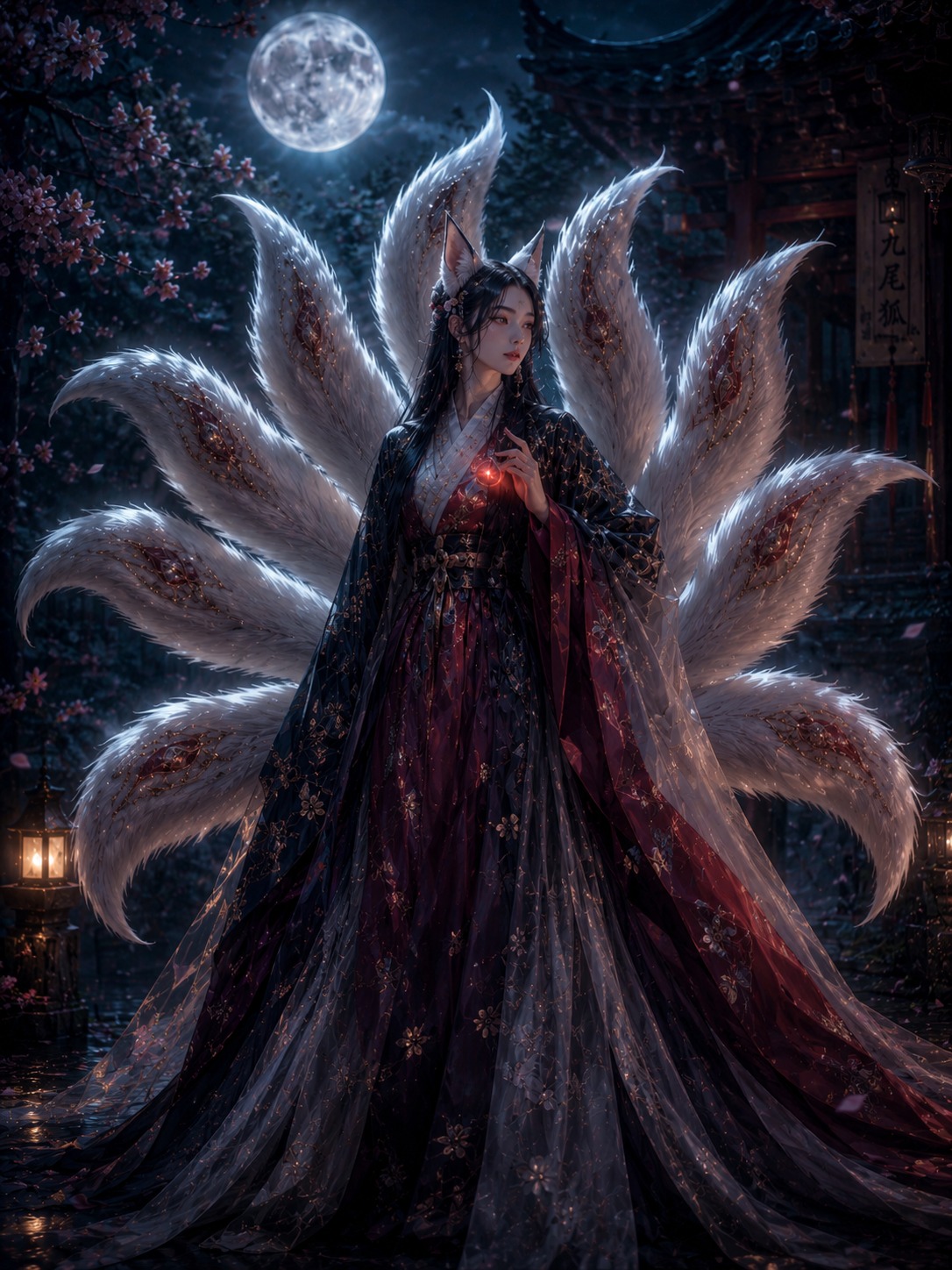
Gumiho

Gumiho · Nine-Tailed Fox — The Bewitching Fox-Spirit of East Asia

The Gumiho (Korean Gumiho, 'nine-tailed fox') is the canonical Korean figure of the East Asian fox-spirit (yohou) tradition, the fox-monster that gains nine tails after living for a thousand years. The earliest textual origin is the Classic of Mountains and Seas (Shan Hai Jing), compiled in the Chinese Warring States period (fifth to third century BC), in which the Cheonggu region of the Southern Mountain Sutra is inhabited by a nine-tailed fox that 'resembles a fox but has nine tails, cries like a baby, and devours men'. In Korea, the gumiho first appears in the Kim Yu-shin entry of Book One of the Memorabilia of the Three Kingdoms (Samguk Yusa) compiled by Iryeon in 1281. In Japan, it settled into the Tamamo-no-Mae legend of the era of Emperor Toba (reigned 1107-1123). The novel of gods and demons Investiture of the Gods (Fengshen Yanyi) by Xu Zhonglin of late Ming China (composed late sixteenth to early seventeenth century), in which the consort Daji of the last Shang king Zhou is revealed as an incarnation of a thousand-year-old nine-tailed fox, established the decisive synthesis of the East Asian gumiho canon. Korean-specific features are (1) the gathering of vital essence by means of the fox-bead (hoeok), (2) the taboo motif that the fox becomes human if it conceals its identity for one hundred or one thousand days, (3) the consumption of human livers and vital essence, and (4) the canonical visual iconography of the Korean gumiho in KBS's Legends of the Hometown series (broadcast 1977-2009). The 2020 tvN drama Tale of the Nine-Tailed (starring Lee Dong-wook and Jo Bo-ah) globalised the twenty-first-century Korean gumiho iconography as K-content canon.
yaksha

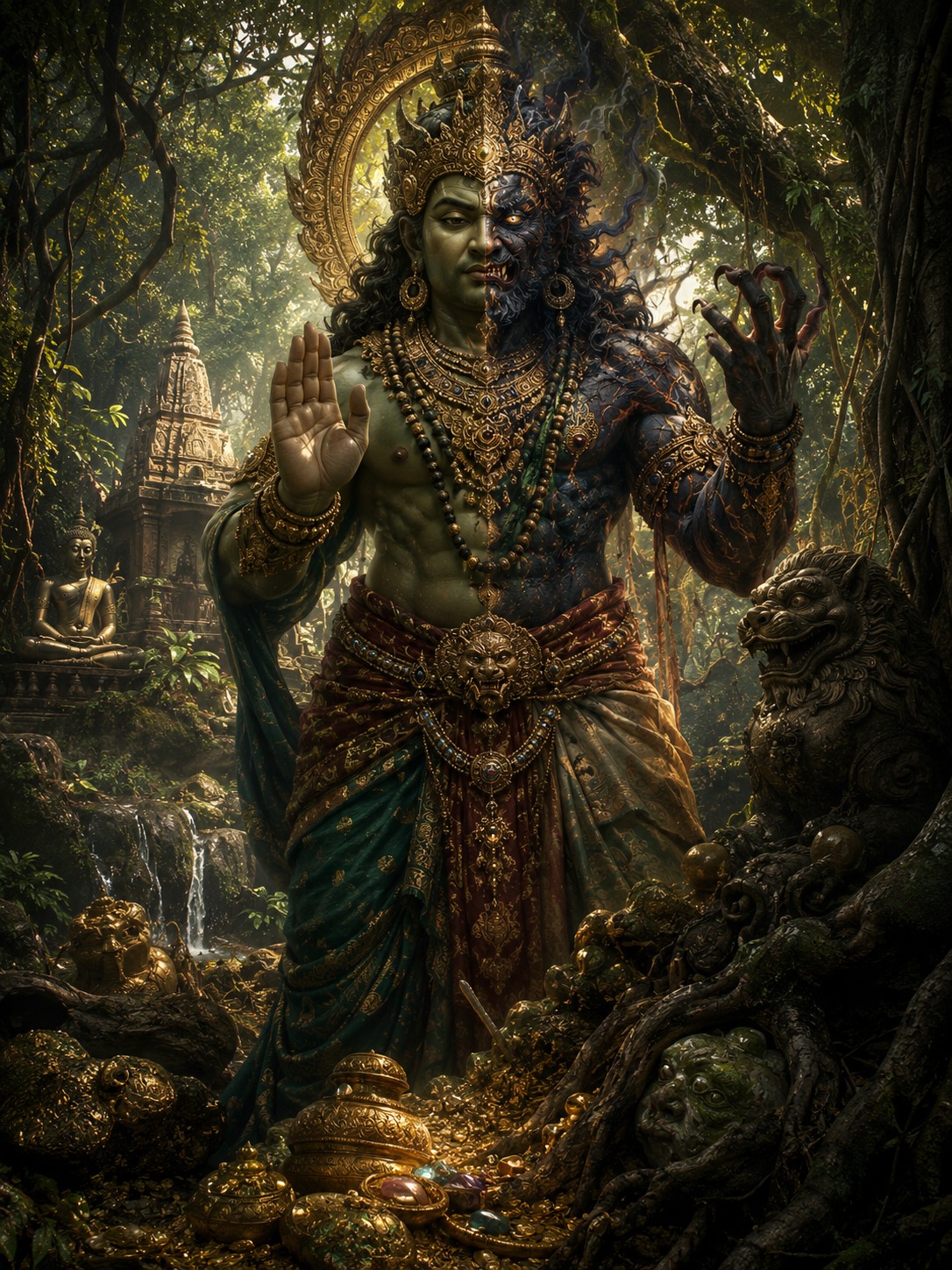
Yaksha

Yaksha · Nature Spirit of India and Buddhism — A Two-Faced Spirit Guarding Treasure

The Yaksha (Sanskrit Yakṣa; Pali Yakkha) is the canonical iconographic figure of an ambivalent spirit, originating in ancient Indian nature-and-treasure spirit belief, absorbed into both Hinduism and Buddhism, and transmitted to East Asia. The Yaksha is the guardian of forests, trees, ponds, and underground treasure, an attendant of the wealth-god Kubera (Sanskrit Kubera), both a benevolent guardian deity granting abundance and fertility, and a fierce demon that devours humans. The decisive textual canon is the Yakṣa Praśna (the Yaksha's Questions) of the Vana Parva (Book of the Forest) of the Mahabharata, compiled between the fifth and third centuries BC — in which the eldest of the Pandava brothers, Yudhishthira, answers the questions of a Yaksha (revealed to be the god of justice, Dharma, in disguise) and revives his slain brothers — establishing the decisive canon of Yaksha iconography. The Yaksha and Yakṣī reliefs of the Bharhut stupa in Madhya Pradesh, India, of the second to first century BC — the oldest extant Yaksha visual canon — are the iconographic canon. After the transmission of Buddhism, the Yaksha was canonised as one class of the Eight Legions (Aṣṭasena) attendant on Vaiśravaṇa (the Buddhist identification of Kubera), and the character Xiao of miHoYo's video game Genshin Impact, released in September 2020 — as the sole surviving Yaksha of the Seven Yakshas of Liyue — settled the twenty-first-century global gaming canon.

hades

Hades

Hades · Greek God of the Underworld — King of the Dead

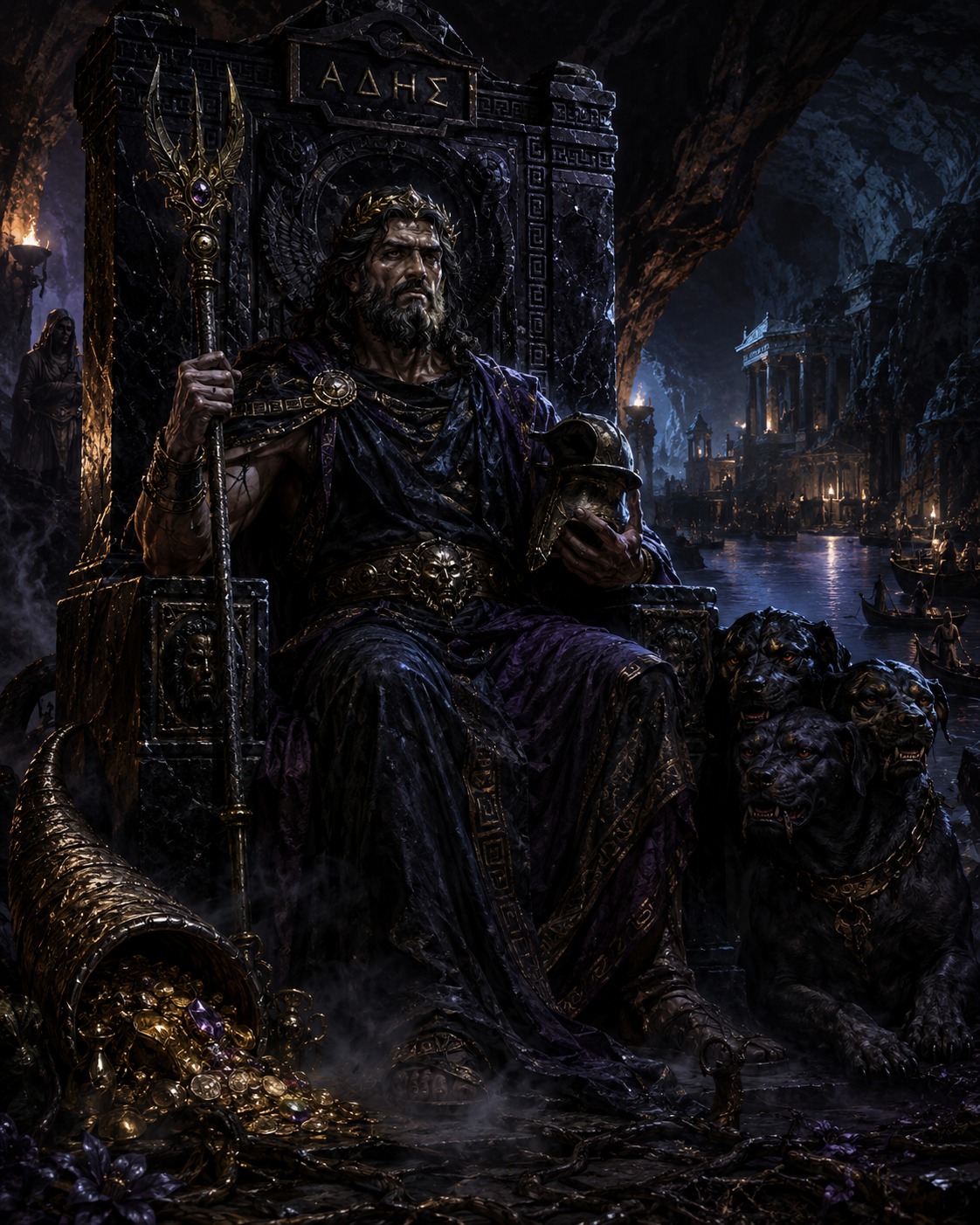
Hades (Ancient Greek Haides, Latin Pluto) is the god of the underworld and king of the dead in Greek mythology — the decisive canon, the son of Kronos (Kronos) and Rhea (Rhea), the elder brother of Zeus (Zeus) and Poseidon (Poseidon), who does not belong to the 12 Olympian gods but holds equal power — the decisive canonical iconographic figure. The etymology of the Greek Haides is the decisive canonical vocabulary of 'unseen (a-idein, not-see)', and the alias Plouton (Plouton, 'god of wealth' — used to avoid speaking his true name) is the decisive canonical vocabulary. The decisive textual canon is the Theogony (Theogony) lines 453-491 of Hesiod (Hesiod) of c. 8th-7th century BCE — the decisive canon in which Kronos swallows his children — and lines 768-806 — the decisive canon of Hades's underworld realm — and the Iliad (Iliad) Book 15 lines 187-193 of Homer (Homer) of c. 8th century BCE — the decisive canon in which Zeus, Poseidon, and Hades, the three brothers, divided heaven, sea, and underworld by lot — and the Odyssey (Odyssey) Book 11 — the decisive canon of the Nekyia (Nekyia, evocation of the souls of the dead). The decisive canon of the Persephone (Persephone) abduction myth of the Homeric Hymns (Homeric Hymns) No. 2 Hymn to Demeter of c. 7th-6th century BCE, and the decisive canonical iconography of the mature male god clothed in darkness and dignity, hiding his appearance with the kynee (kynee) helmet, and commanding the guard dog Kerberos (Kerberos, 3-headed dog).

aphrodite

Aphrodite

Aphrodite · Goddess of Love, Beauty, and Desire

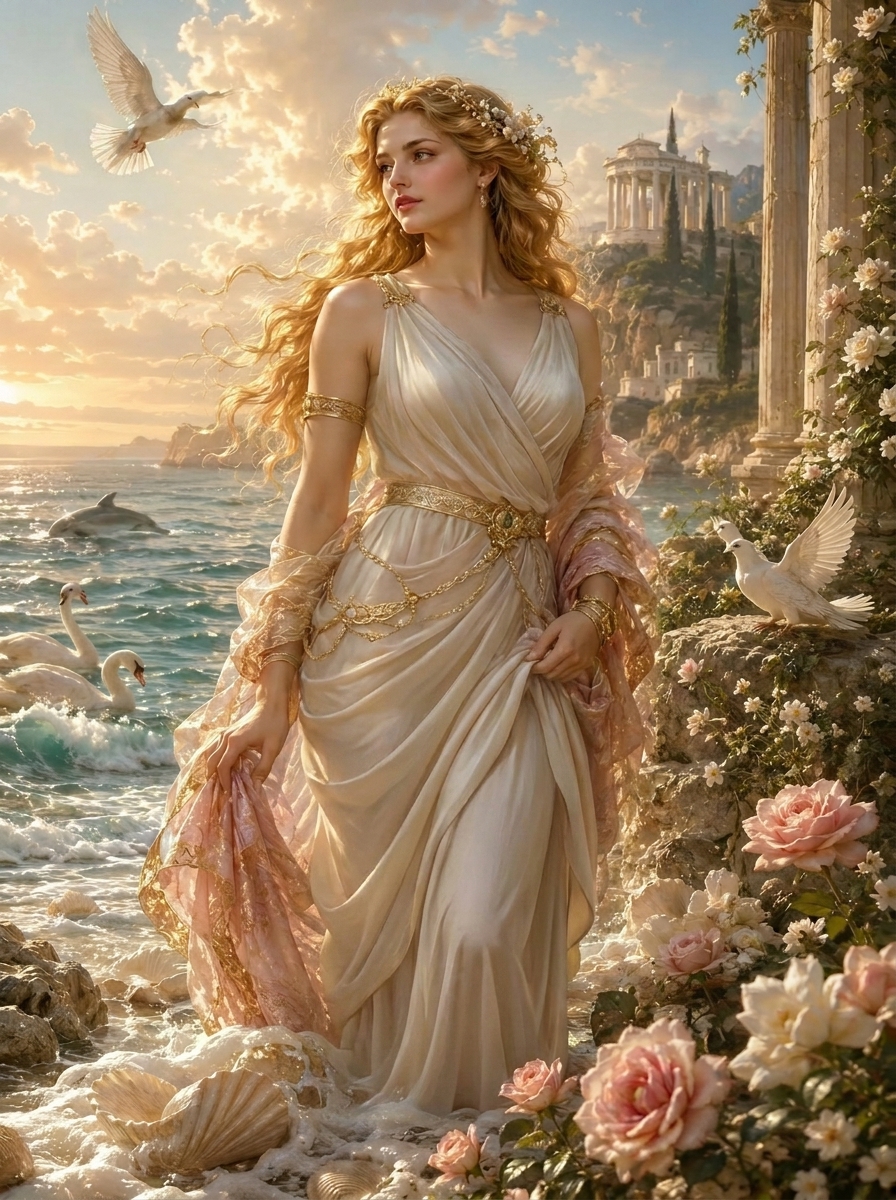
Aphrodite (Ancient Greek Aphrodite, Latin Venus) is the goddess of love, beauty, desire, and fertility in Greek mythology — the decisive canon, the decisive canonical iconographic figure born from the foam (aphros, sea foam) after Kronos (Kronos) castrated his father Ouranos (Ouranos) and threw his genitals into the sea. The etymology is the decisive canonical vocabulary of the Greek aphros (foam, sea foam) — 'the one born from foam'. The decisive textual canon is the Theogony (Theogony) lines 188-206 of Hesiod (Hesiod) of c. 8th-7th century BCE — the decisive canon in which Kronos castrated his father Ouranos and the genitals fell into the sea, foam (aphros) formed, and Aphrodite was born and landed on the shores of Kypros (Kypros) or Kythera (Kythera) — and the Iliad (Iliad) Book 5 lines 311-430 of Homer (Homer) of c. 8th century BCE — the decisive canon of Diomedes (Diomedes) wounding her wrist with a spear and making her flee — and Book 14 lines 214-221 — the decisive canon of the kestos himas (kestos himas, girdle of love) — and the Odyssey (Odyssey) Book 8 lines 266-366 — the decisive canon of the affair with Ares (Ares) caught in Hephaistos's (Hephaistos) bronze net. The fragment 1 Hymn to Aphrodite (Hymn to Aphrodite) of Sappho (Sappho) of c. 7th century BCE and the Homeric Hymns (Homeric Hymns) No. 5 Hymn to Aphrodite of c. 7th-6th century BCE — the decisive canon of conceiving Aineias (Aineias) with the love of Anchises (Anchises).

odin

Odin

Odin · Allfather of Norse Myth — God of Wisdom, War, and Death

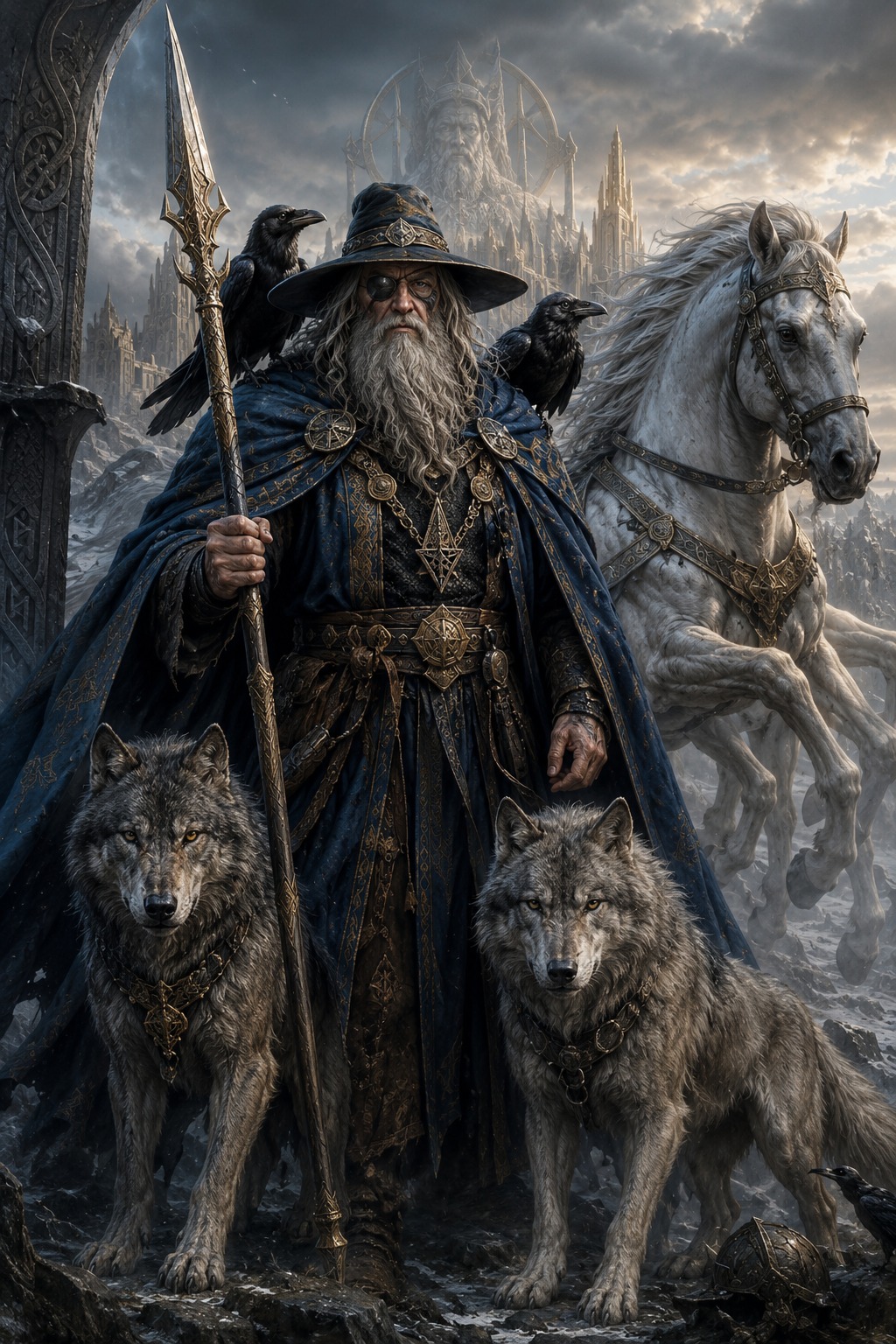
Odin (Old Norse Odin, Proto-Germanic Wodanaz, 'the one of frenzy, ecstasy, inspiration') is the decisive canonical chief god, the All-Father (Alfodr) of all gods and humans, and the god of wisdom, poetry, war, death, runes, and seidr magic of the Aesir (Aesir) in Norse mythology, and the decisive canonical iconographic figure as the grandson of the giant Buri (Buri), son of Borr (Borr) and Bestla (Bestla), who together with his brothers Vili (Vili) and Ve (Ve) killed the primordial giant Ymir (Ymir) and created the world from his body. The etymology is the decisive canonical vocabulary derived from the Old Norse Odin or Proto-Germanic Wodanaz ('frenzy, ecstasy, inspiration'), cognate with the English Wednesday (Old English Wodnesdaeg, 'Woden's day'), the German Mittwoch, and the Latin furor (frenzy). The decisive textual canon is the Prose Edda (Prose Edda) of c. 1220 of the early 13th-century Icelandic poet-historian Snorri Sturluson (Snorri Sturluson, 1179-1241) — chapters 6-9 (creation), 15 (Mimir's well), and 51 (Ragnarok) of Gylfaginning (Gylfaginning) — and the Voluspa (Voluspa), Havamal (Havamal) stanzas 138-141, Grimnismal (Grimnismal), and Vafthrudnismal (Vafthrudnismal) of the Poetic Edda (Poetic Edda) of the c. 1270 Codex Regius (Codex Regius) manuscript are the decisive poetic canon, and the decisive canonical iconography of sacrificing one eye to the well (Mimisbrunnr) of Mimir (Mimir) to gain cosmic wisdom, and hanging himself on Yggdrasil (Yggdrasill) for 9 days to learn the runes (runir).

thor

Thor

Thor · Norse God of Thunder — Protector of Mankind

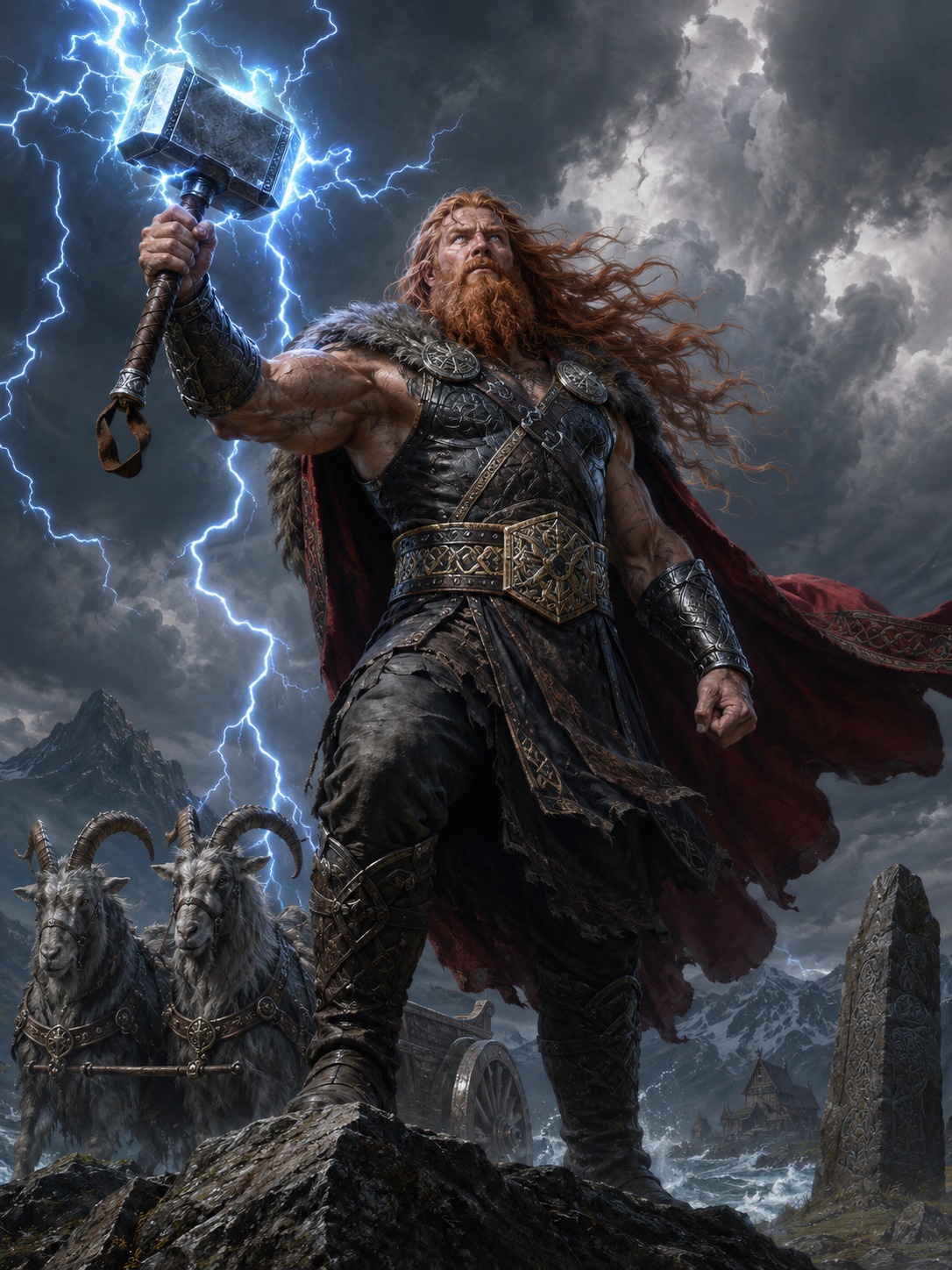
Thor (Old Norse Thorr, Proto-Germanic Thunraz 'thunder') is the god of thunder, lightning, storms, strength, and fertility of Norse mythology — the decisive canon, the son of Odin (Odin) and the earth goddess Jord (Jord), married to Sif (Sif) — the decisive canonical iconographic figure. The etymology is the decisive canonical vocabulary derived from the Old Norse Thorr or Proto-Germanic Thunraz ('thunder'), cognate with the English Thursday (Old English Thunresdaeg, 'Thunor's day'), the German Donnerstag, and the Latin Tonans (epithet of Jupiter, 'thundering'). The decisive textual canon is chapter 9 of the Germania (Germania) of the c. 1st-century Roman historian Tacitus (Cornelius Tacitus, c. 56-120) — the decisive Roman-era canon of Donar (Donar, later Thor) identified by the Germanic tribes with Hercules (Hercules) — and the Prose Edda (Prose Edda) of c. 1220 of the early 13th-century Icelandic poet-historian Snorri Sturluson (Snorri Sturluson, 1179-1241) — chapters 21 (introduction), 25, 28 (Mjollnir), 42-48 (Utgarda-Loki, Skrymir episode), and 50 (Jormungandr fishing) of Gylfaginning (Gylfaginning) — the decisive canon — and the Voluspa (Voluspa), Thrymskvida (Thrymskvida), Hymiskvida (Hymiskvida), Harbardsljod (Harbardsljod), and Alvissmal (Alvissmal) of the Poetic Edda (Poetic Edda) of the c. 1270 Codex Regius (Codex Regius) manuscript are the decisive poetic canon. The decisive canonical iconography of the hammer Mjollnir (Mjollnir) — a weapon that returns when thrown — and the chariot drawn by two goats Tanngnjostr (Tanngnjostr) and Tanngrisnir (Tanngrisnir).

heimdall

Heimdall

Heimdall · Watchman of Bifröst — Trumpeter of Ragnarök

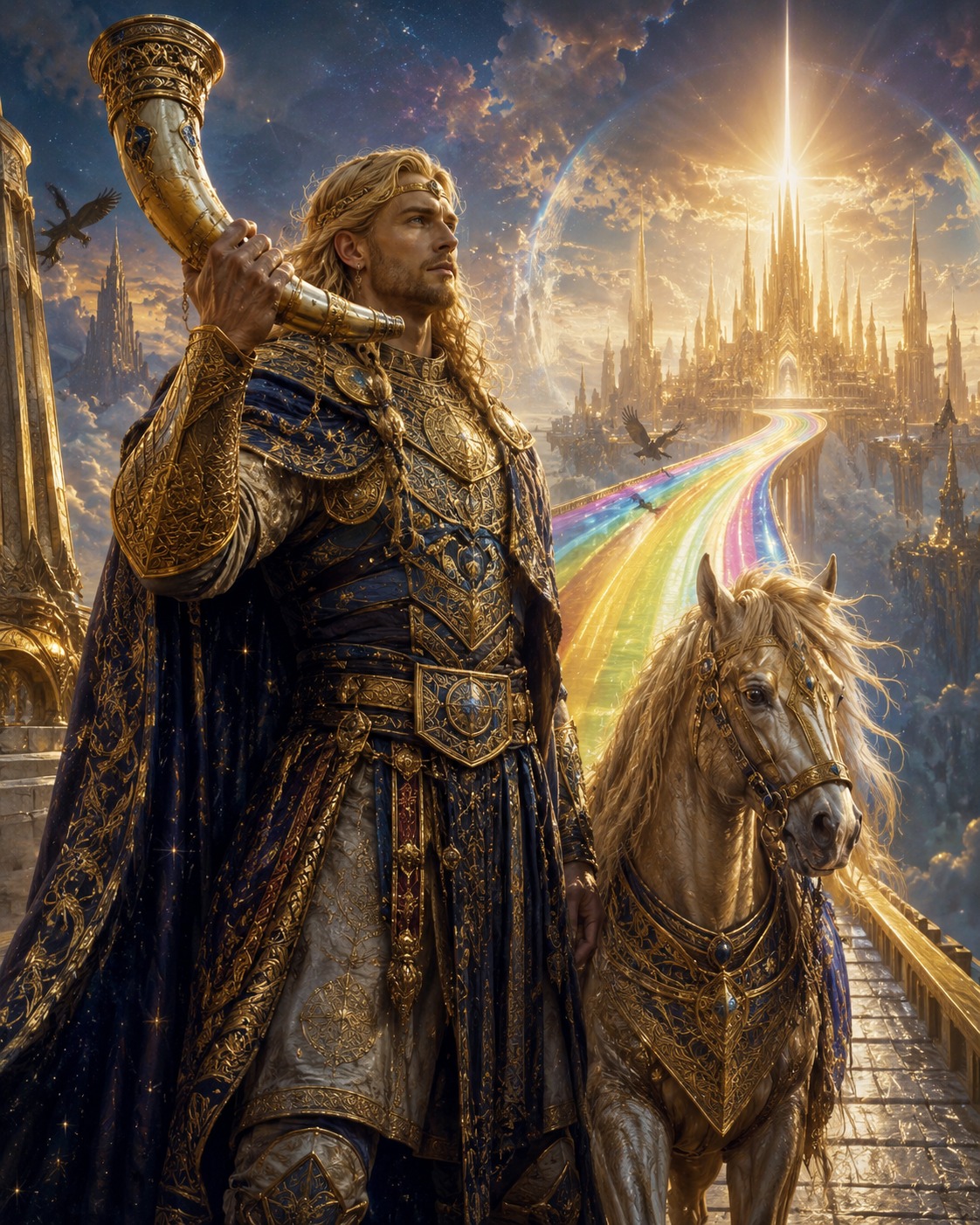
Heimdall (Old Norse Heimdallr, 'shining one of the world' or 'pillar of the world') is the decisive canonical god of light, vigilance, and watching of the Aesir (Aesir) in Norse mythology, and the decisive canonical iconographic figure of the eternal watchman of the rainbow bridge Bifrost (Bifrost). The etymology is the Old Norse compound of heim ('world, home') and dallr ('shining one' or 'pillar') — meaning 'shining one of the world' — the decisive canonical vocabulary, and the aliases Gullintanni (Gullintanni, 'the one with golden teeth') — the god with golden teeth — and Vitli (Vitli, 'the white one') and Hallinskidi (Hallinskidi) are the decisive canonical vocabulary. The decisive textual canon is the Prose Edda (Prose Edda) of c. 1220 of the early 13th-century Icelandic poet-historian Snorri Sturluson (Snorri Sturluson, 1179-1241) — chapter 27 of Gylfaginning (Gylfaginning) — the decisive Heimdall canon — and chapter 51 — the Ragnarok canon — and the Voluspa (Voluspa), Grimnismal (Grimnismal) stanza 13, Thrymskvida (Thrymskvida) stanza 15, and Rigsthula (Rigsthula, Lay of Rig) of the Poetic Edda (Poetic Edda) of the c. 1270 Codex Regius (Codex Regius) manuscript are the decisive poetic canon of Heimdall. The decisive canon of mysterious birth from nine mothers (nine waves, nine sisters), and the decisive canonical iconographic figure who at Ragnarok blows the great horn Gjallarhorn (Gjallarhorn) to wake the gods and mutually destroys with Loki (Loki).

🐉Dragons(14)
yamata-no-orochi

Yamata-no-Orochi

八岐大蛇 · Eight-Headed Serpent of Japanese Myth

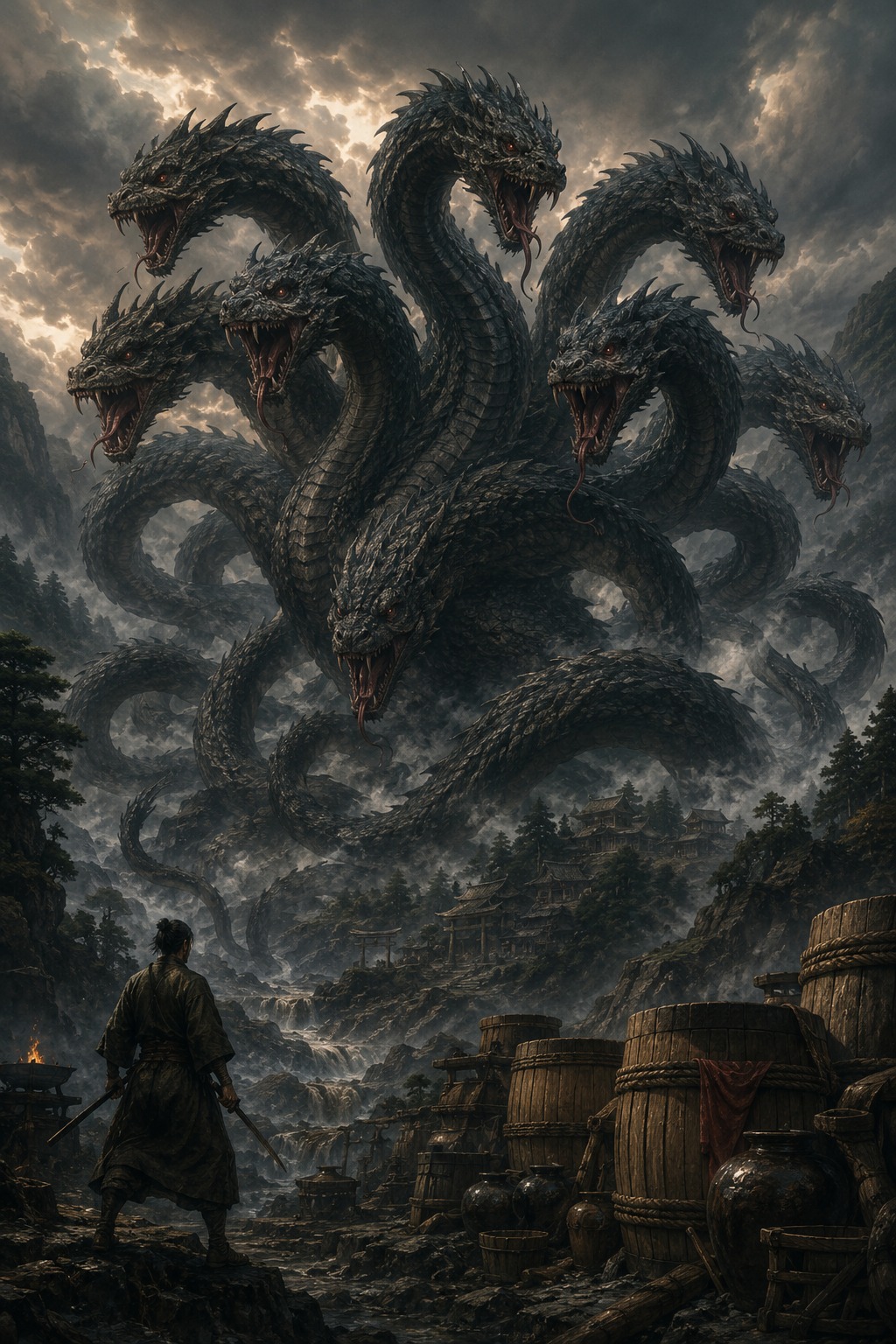
Yamata-no-Orochi ('eight-forked great serpent') is the most iconic many-headed dragon-serpent of Japanese myth, recorded in the early eighth century in the two foundational chronicles of the Japanese state: the 'Kojiki' (712) compiled by Ō no Yasumaro and the 'Nihon Shoki' (720) compiled under Prince Toneri. The serpent has eight heads and eight tails, and its body is so vast that it covers 'eight valleys and eight ridges, with cypress and cedar growing on its back and its belly always inflamed and bleeding'. It appears each year along the Hi no Kawa (today's Hii River) in the Izumo region (eastern Shimane prefecture) and demands one of the daughters of the old couple Ashinazuchi and Tenazuchi as tribute. After devouring seven of their eight daughters, it returns for the last, Kushinada-hime, when the storm-god Susanoo, banished from heaven, descends to Izumo. Susanoo prepares yashiori-no-sake (a wine brewed and refined eight times, sometimes called 'eight-fold wine'), pours it into eight large vats placed before eight gates so that each of Orochi's eight heads will drink from a separate vat, and waits until the eight heads are dead drunk. He then severs all eight heads and eight tails with the divine sword Totsuka-no-Tsurugi (a sword 'ten hand-spans long'). When one tail dulls his blade, he finds inside it another, finer sword — the Kusanagi-no-Tsurugi (also Ame-no-Murakumo-no-Tsurugi), one of the Three Sacred Treasures of the Japanese imperial house, today enshrined at Atsuta Shrine in Nagoya, Aichi prefecture.

vritra

Vritra

Indian Vedic Drought Dragon

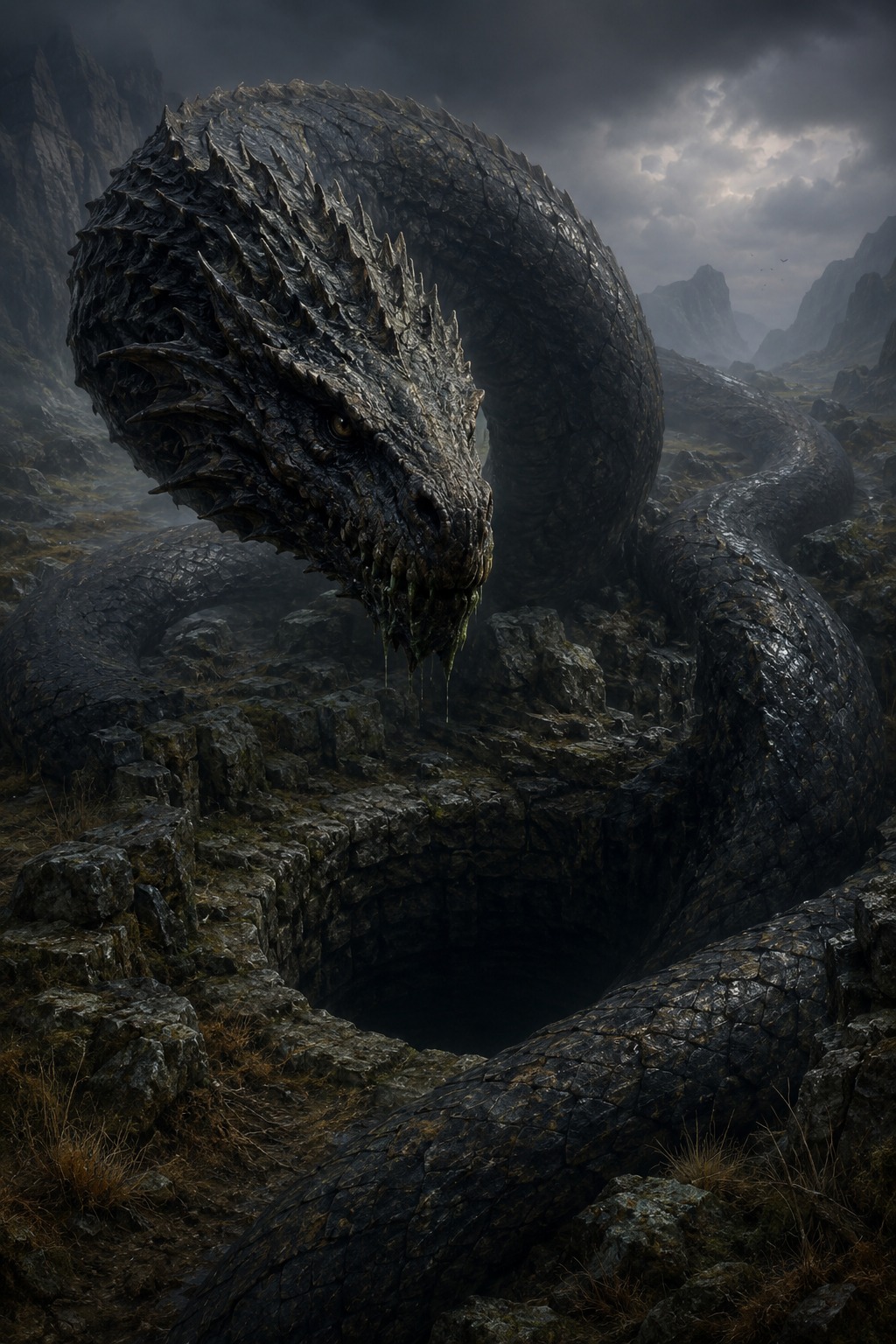
Vritra (Sanskrit Vṛtra) is the most powerful evil dragon-serpent of Vedic Indian mythology and the oldest canonical instance of the Indo-European Chaoskampf motif (storm-god against many-headed serpent) in the surviving textual record. The Sanskrit name itself derives from the verb-root vṛ ('to cover, enclose'), meaning 'the enveloper, the obstructer', and Vritra is represented as a great legless serpent (ahi, 'snake') or as a mountain coiled around all the world's waters. He is the embodiment of drought: by wrapping his body around the seven great rivers (Sapta Sindhu) of the Indian subcontinent, he holds the waters captive and inflicts thirst and death on humankind. He dwells inside a fortress of ninety-nine concentric strongholds (pura). The thunder-god Indra is his eternal enemy, and the Indra-Vritra duel is the central battle of the Vedic corpus, narrated most fully in Rigveda 1.32 — Indra is given the vajra ('thunderbolt' or 'diamond mace') forged by the divine smith Tvaṣṭṛ, breaks the ninety-nine strongholds, and cleaves Vritra's head; the seven rivers held captive in Vritra's body burst forth and bring the Indian subcontinent to life. In later Hindu retellings (Mahābhārata, Bhāgavata Purāṇa), Vritra is recast as the brother of Tvaṣṭṛ's son Viśvarūpa, originally Indra's friend, slain by divine treachery, which charges Indra with the sin of brahmahatyā ('the killing of a brahmin').

azure-dragon

Azure Dragon

靑龍 · Eastern Guardian of the Four Symbols

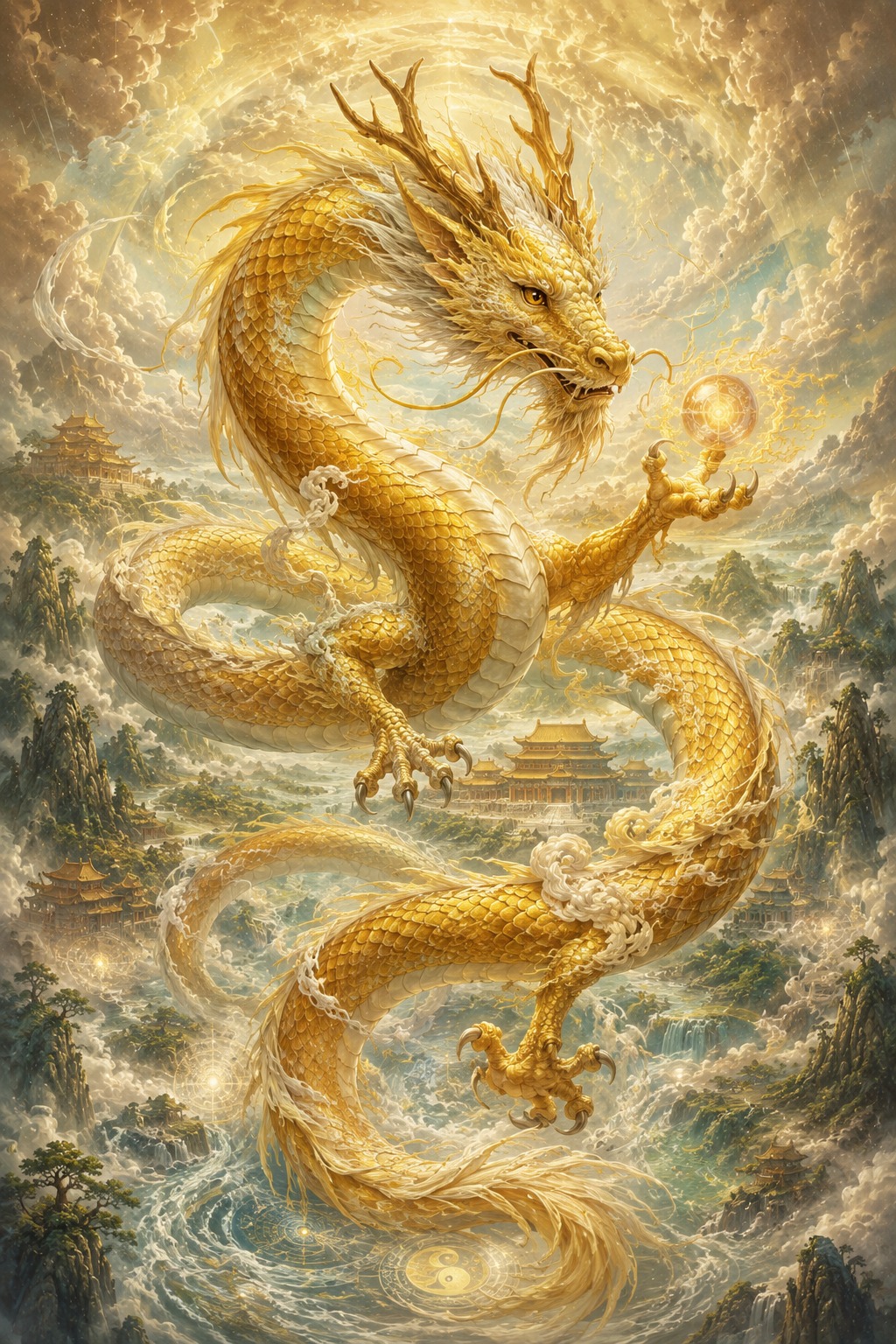
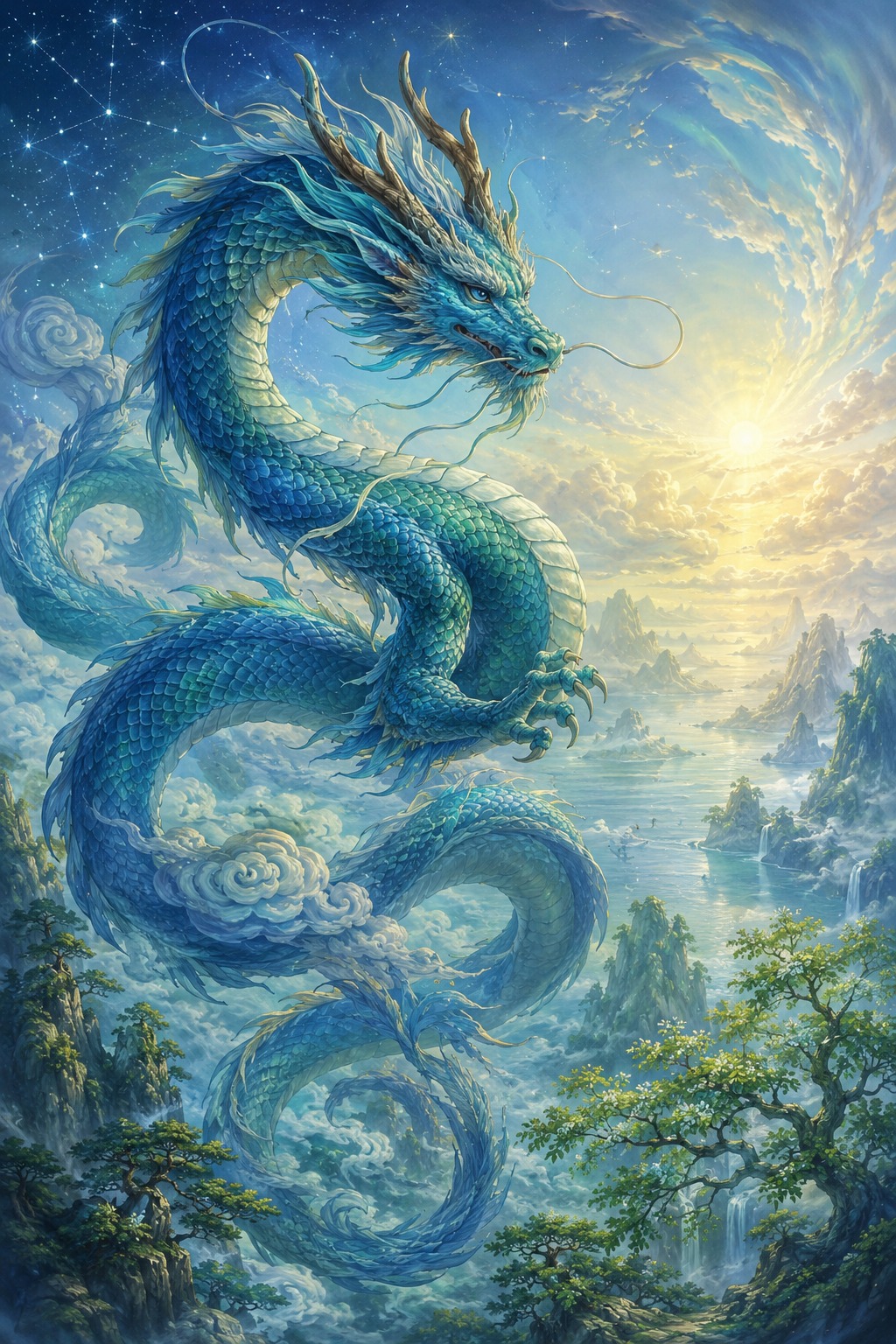
The Azure Dragon (Chinese 'Qinglong', Korean 'Cheongnyong', Japanese 'Seiryu') is the eastern guardian of the East-Asian Four Symbols (sasin / Sishen), the celestial dragon governing the East, the spring, the Wood phase of the five elements and the colour green-blue. The system — Azure Dragon of the East, White Tiger of the West, Vermilion Bird of the South, Black Tortoise of the North — was codified under the Han dynasty, in particular the 'Huainanzi' (c. 139 BCE) of Liu An and Wang Chong's 'Lunheng' (c. 80 CE), and unifies the seven lunar mansions of the eastern quadrant (Jiao, Kang, Di, Fang, Xin, Wei, Ji). Visually the Azure Dragon is distinguished from the imperial yellow long by a slimmer, more serpentine body, a green-blue scale-pattern, branched deer-style antlers and carp scales; it is the canonical image of the geomantic principle that the dragon of the East guards the left side of a settlement. The best-preserved early representations are the eastern murals of the Goguryeo tombs Gangseo Daemyo and Jungmyo (late sixth century, South Pyongan, North Korea) and the late-seventh- to early-eighth-century Kitora Tomb (Asuka village, Nara prefecture, Japan, recognised as a National Treasure in 1998). The Azure Dragon also names the Cheongwadae presidential residence in Korea ('house of green tiles', built 1939) and watches over the Eastern Flowery Gate (Donghuamen) of the Forbidden City completed in 1420.

🌿Materials(1)
🐉Humanoids(1)
satyr

Satyr

Satyr · The Half-Beast — Forest Folk of Wine, Music, and Revelry

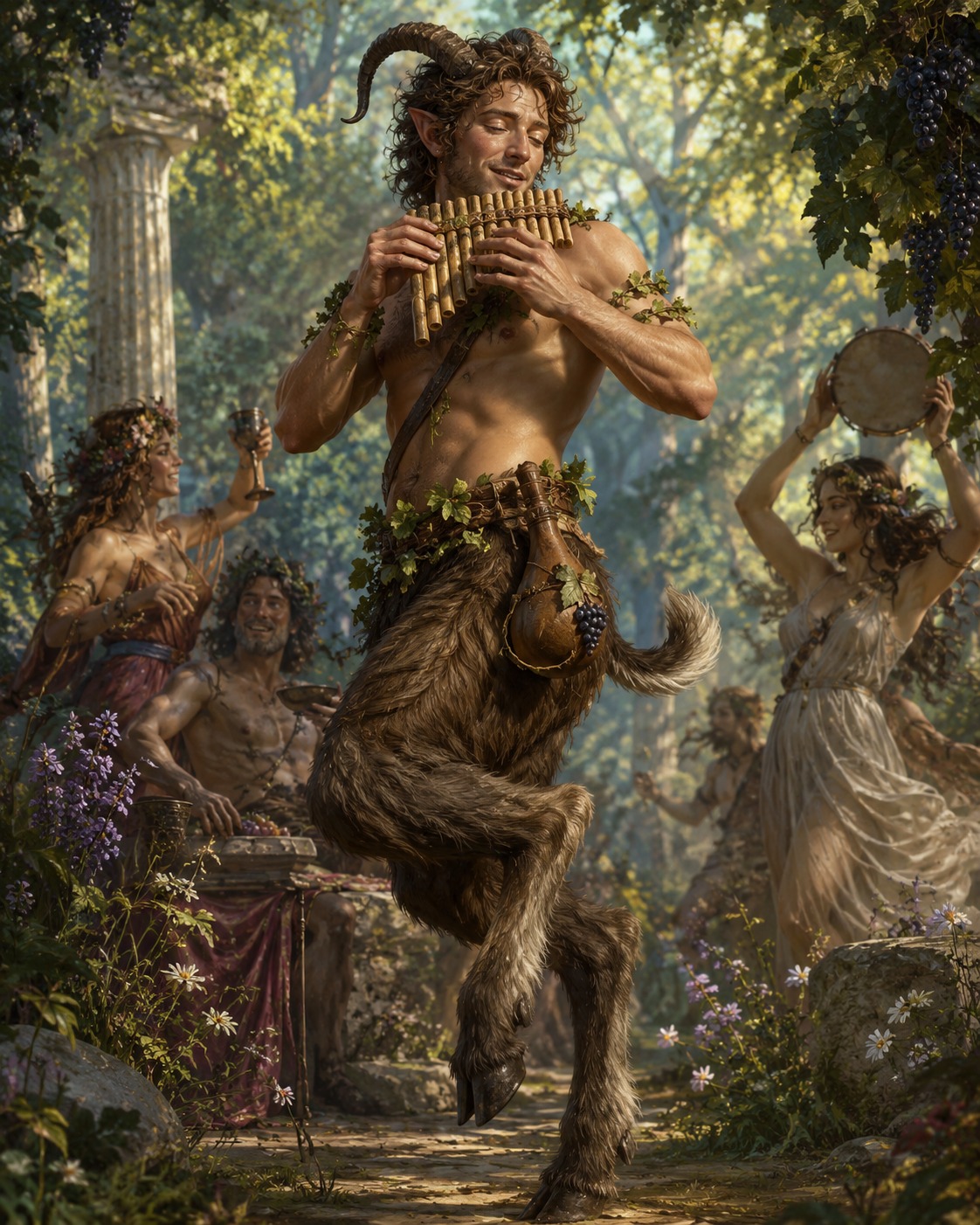
The satyr (ancient Greek Σάτυρος, Latin satyrus) is a half-human, half-beast nature spirit of Greek mythology, the riotous follower of the god of wine and madness Dionysos. The earliest attestations are in Hesiod's 'Catalogue of Women' fragment 10 (c. 700 BCE, which calls them 'a useless mischievous race') and the Homeric Hymn to Pan (number 19, late seventh century BCE); the visual canon is fixed in Attic black- and red-figure pottery of the sixth and fifth centuries BCE, with the François Vase (Ergotimos and Kleitias, c. 570-560 BCE, National Archaeological Museum of Florence) and the Brygos Cup (c. 480 BCE, British Museum) as the standard sources. The earliest Greek satyr was originally a horse-tailed, horse-eared theriomorph, but in the Hellenistic period (late fourth century BCE) the satyr fused with the Roman Faunus (a forest and pastoral god from the cult of Numa Pompilius) and the goat-legged, horned, goat-tailed iconography came to prevail. In the fifth-edition Dungeons & Dragons 'Mythic Odysseys of Theros' (Wizards of the Coast, 2020), satyrs stand 150 to 180 centimetres tall, with a human upper body, hoofed goat legs, short curled horns, a short goat tail and a wild curly head of hair and beard on the human portion. Racial traits are +2 Charisma, +1 Dexterity, Magic Resistance (advantage on saving throws against magic), Mirthful Leaps (double jump distance) and the signature Reveler trait that lets them play a syrinx or aulos with charm and fascination effects. They live in herds in woodlands and fields, accompanying the maenads in the Dionysian thiasos. The iconography is carried into the Renaissance through Botticelli's 'Venus and Mars' (1483, National Gallery, London) and Michelangelo's 'Bacchus' (1497, Bargello Museum, Florence), through Debussy's 'Prelude to the Afternoon of a Faun' (1894), Disney's 'Fantasia' (1940), and Mr. Tumnus in C.S. Lewis's 'The Lion, the Witch and the Wardrobe' (1950).