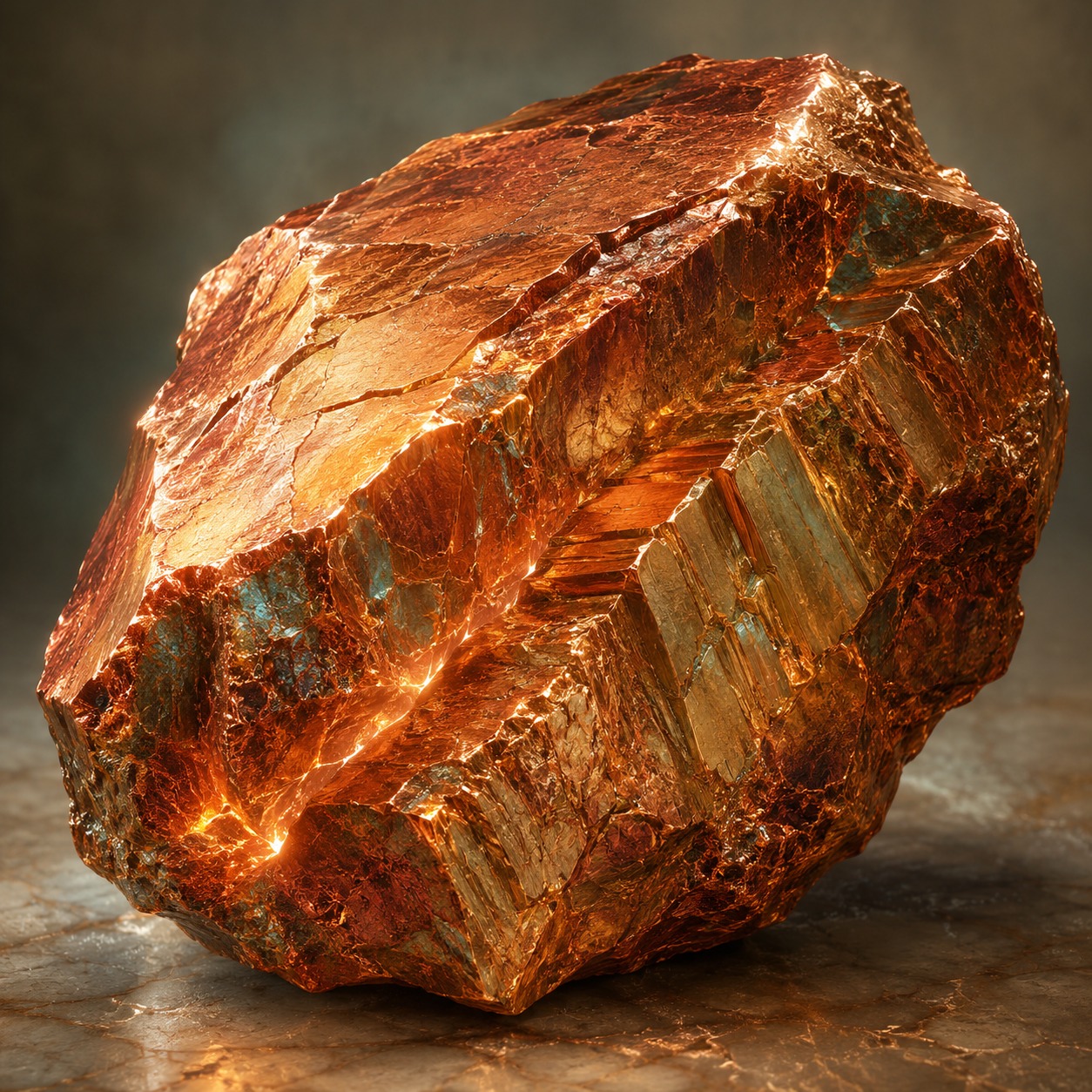
Orichalcum
Orichalcum · The Lost Mystic Metal of Atlantis
Names in Other Languages
 오리하르콘한국어
Orichalcum · 아틀란티스의 잃어버린 신비 금속
 オリハルコン日本語
Orichalcum · アトランティスの失われた神秘の金属
 山銅繁體中文
Orichalcum · 亞特蘭提斯失落的神祕金屬
 OrichalcumDeutsch
Orichalcum · Das verlorene mystische Metall von Atlantis
 OrichalqueFrançais
Orichalcum · Le métal mystique perdu de l'Atlantide
 OricalcoEspañol
Orichalcum · El metal místico perdido de la Atlántida
 OricalcoPortuguês
Orichalcum · O metal místico perdido da Atlântida
 OrichalcumPolski
Orichalcum · Zaginiony mistyczny metal Atlantydy
 ОрихалкРусский
Orichalcum · Утраченный мистический металл Атлантиды
Orichalcum (English Orichalcum, Latin orichalcum, Greek oreíkhalkos) is the lost mythical metal of Atlantis of the decisive canon — derived from Greek 'oreíkhalkos (ὀρείχαλκος oreíkhalkos, mountain copper, óros 'mountain' + chalkós 'copper')' — the decisive canonical vocabulary — the decisive canon of Plato's Critias. Aliases — Orichalcum (Orichalcum), oreíkhalkos (Greek), metal of Atlantis, mountain copper, red gold — are the decisive canonical vocabulary. The decisive Plato canon is the decisive canon of the temple of Atlantis in the Greek Plato's Critias (Critias) 114e-116c, 119c of the 4th century BCE. The decisive Homeric Hymn canon is the decisive canon of Aphrodite in the Homeric Hymn (Homeric Hymn) of the 7th century BCE. The decisive Sicily canon is the decisive canon of the discovery of 39 orichalcum ingots from a shipwreck off Gela of Sicily in 2015.
Origin
The etymological origin is the decisive canonical vocabulary of Greek 'oreíkhalkos (ὀρείχαλκος oreíkhalkos, mountain copper, from óros ὄρος 'mountain' + chalkós χαλκός 'copper')' — the decisive canon becoming the etymology of Latin 'orichalcum' — and the decisive canon of folk etymology with 'auri- (of gold)'. The decisive Plato canon is the decisive canon of the Greek Plato (Plato, 428-348 BCE) of c. 360 BCE — 'orichalcum is the most precious metal after gold and mined from the mountains' in Critias (Critias) 114e, and the decisive canon of 'the temple of Poseidon was covered with orichalcum' in 116c-d, and the decisive canon of 'the law of the 10 kings of Atlantis was inscribed on a pillar of orichalcum' in 119c. The decisive Homeric Hymn canon is the decisive canon of 'earrings of oreíkhalkos' of Aphrodite in the Homeric Hymn 6 of the 7th century BCE. The decisive Sicily canon is the decisive canon of the discovery of 39 orichalcum ingots from a shipwreck off Gela (Gela) of Sicily in 2015.
Features
- Lost metal of Atlantis most precious after gold
- Main axis — Plato's Critias 114e-116c, 119c decisive canon
- Greek oreíkhalkos mountain copper
- Covered the exterior of Poseidon's temple — red-gold glow
- Discovery of 39 ingots from the Gela shipwreck of Sicily in 2015
- Modern orichalcum is an alloy of copper and zinc (brass)
Stories
Plato's Critias of the 4th century BCE is the decisive Plato canon, and the discovery of the Gela shipwreck of Sicily in 2015 is the decisive Sicily canon. The decisive canon used as the exterior of the temple of Atlantis, and the decisive canon invoked as the most precious metal after gold. The decisive Homeric Hymn canon is the decisive canon of Aphrodite in the Homeric Hymn of the 7th century BCE. The decisive Cicero canon is the decisive canon of Cicero's De Officiis of the 1st century BCE, and the decisive 21st-century canon is the decisive canon of Megami Tensei, Final Fantasy, and games.
Weakness
Orichalcum's weaknesses are: (1) unknown identity — the decisive canonical weakness — the decisive canon of not knowing what the actual metal is; (2) binding of non-existence — the decisive canon of being lost with Atlantis; (3) binding of brass — the decisive canon of being 'brass' in modern vocabulary; (4) binding of alloy — the decisive canon of being an alloy of copper, gold, and zinc; (5) binding of Plato — the decisive canon of the binding of the 4th century BCE; (6) binding of the sacred domain — the decisive canon; (7) binding of Atlantis — the decisive canon of the binding of being submerged in the sea; (8) binding of time — the decisive canon of the binding of 2400 years of Plato. The decisive canonical finale is the decisive mythological canon of the 39 ingots of the Gela shipwreck of 2015.
Cultural Significance
Orichalcum is not merely a metal icon but the canonical iconographic figure of the decisive Greco-Roman-modern canon, traversing Aphrodite of the Homeric Hymn of the 7th century BCE, Plato's Critias (Critias) 114e-116c, 119c of the 4th century BCE, Plato's Timaeus of the 4th century BCE, the poem of Callimachus of the 3rd century BCE, Cicero's De Officiis of the 1st century BCE, Pliny the Elder's Natural History Book 34 of the 1st century, the discovery of the Gela shipwreck of Sicily in 2015, and the games and Japanese manga of the 21st century. The etymological origin settled as the decisive canon of Greek 'oreíkhalkos (mountain copper, óros 'mountain' + chalkós 'copper')' — the decisive canon becoming the etymology of Latin 'orichalcum' — and the decisive canon of folk etymology with Latin 'auri- (of gold)'. The decisive Plato canon is the decisive canon of the Greek Plato (Plato, 428-348 BCE) of c. 360 BCE Critias (Critias) — the decisive canon of '114e: orichalcum is the most precious metal after gold and mined everywhere in Atlantis', the decisive canon of '116c-d: the temple of Poseidon was covered with orichalcum and shone with a fiery light', and the decisive canon of '119c: the law of the 10 kings of Atlantis was inscribed on a pillar of orichalcum'. The decisive Homeric Hymn canon is the decisive canon of 'earrings of oreíkhalkos' of Aphrodite in the Homeric Hymn (Homeric Hymn) 6 of the 7th century BCE. The decisive Sicily canon is the decisive canon of the discovery of 39 orichalcum ingots (about 2,000 years of submersion) of the 6th-century BCE shipwreck off the coast of Gela (Gela) of Sicily, Italy in January 2015 — the decisive canon of an alloy of 75-80% copper, 15-20% zinc, and about 5% nickel, lead, and iron. The decisive Cicero canon is the decisive canon of the value of orichalcum in the Roman Cicero (Cicero) De Officiis (De Officiis) of 44 BCE. The decisive 21st-century canon is the decisive canon of the Japanese Atlus's Megami Tensei (Megami Tensei) of 1987, the Square's Final Fantasy (Final Fantasy) of 1987, the Persona of 1997, and the games and manga of Japan of the 21st century.
In Popular Culture
- Earrings of Aphrodite in the Homeric Hymn (Homeric Hymn) 6 (7th century BCE) — decisive Homeric Hymn canon
- Temple of Atlantis in Plato (Plato) Critias (Critias) 114e-116c, 119c (4th century BCE) — decisive Plato canon
- Plato (Plato) Timaeus (Timaeus) (4th century BCE) — decisive Plato canon
- Poem of Callimachus (Callimachus) (3rd century BCE) — decisive Callimachus canon
- Cicero (Cicero) De Officiis (De Officiis) (44 BCE) — decisive Cicero canon
- Pliny the Elder Natural History (Naturalis Historia) Book 34 (1st century) — decisive natural history canon
- 39 ingots from the Gela (Gela) shipwreck of Sicily (2015) — decisive Sicily canon
- Megami Tensei (Megami Tensei) series (1987) — decisive gaming canon
- Final Fantasy (Final Fantasy) series (1987) — decisive gaming canon
- Persona (Persona) series (1997) — decisive 21st-century canon
Trivia
The etymology of Orichalcum (English Orichalcum, Latin orichalcum, Greek ὀρείχαλκος oreíkhalkos) is the decisive canonical vocabulary of Greek 'oreíkhalkos (ὀρείχαλκος oreíkhalkos, mountain copper, from óros ὄρος 'mountain' + chalkós χαλκός 'copper')' — the decisive canon becoming the etymology of Latin 'orichalcum' — and the decisive canon of being misinterpreted as 'gold copper' through folk etymology with Latin 'auri- (of gold)'. Aliases — Orichalcum (Orichalcum), oreíkhalkos (Greek), orichalcum (Latin), metal of Atlantis, mountain copper, red gold, Plato's lost metal — are the decisive canonical vocabulary. The decisive Homeric Hymn canon is the decisive canon of 'earrings of oreíkhalkos (orichalcum earrings)' to Aphrodite in the Homeric Hymn (Homeric Hymn) 6 of the 7th century BCE — the decisive canon of the oldest literary reference. The decisive Plato canon is the decisive canon of the Greek Academy's Plato (Plato, 428-348 BCE) of c. 360 BCE Critias (Critias) — the decisive canon of '114e: orichalcum is the most precious metal after gold, mined everywhere in Atlantis, but now only a name remains (now only a name)', the decisive canon of '116c-d: the exterior of the temple of the Acropolis was covered with orichalcum and shone with a fiery light' and 'the inner pillars of the temple of Poseidon', and the decisive canon of '119c: the law of the 10 kings of Atlantis was inscribed on a pillar of orichalcum in the center of the temple', and the decisive Timaeus canon is the decisive canon of Atlantis in Plato's Timaeus (Timaeus) of c. 360 BCE. The decisive Callimachus canon is the decisive canon of orichalcum in the poem of the Greek Alexandrian Callimachus (Callimachus, 310-240 BCE) of the 3rd century BCE. The decisive Cicero canon is the decisive canon of 'aurichalcum mistaken for gold' in De Officiis (De Officiis) 3.92 of the Roman Marcus Tullius Cicero (Marcus Tullius Cicero, 106-43 BCE) of 44 BCE. The decisive natural history canon is the decisive canon of 'aurichalcum' in Pliny the Elder's (Pliny the Elder, 23-79) Natural History (Naturalis Historia) Book 34.2 of the 1st century. The decisive Sicily canon is the decisive canon of the discovery of 39 orichalcum ingots (about 2,600 years of submersion) of the 6th-century BCE Greek shipwreck (about 300 meters off the coast) off the coast of Gela (Gela) of Sicily, Italy in January 2015 — the decisive canon of an alloy of 75-80% copper, 15-20% zinc, and about 5% nickel, lead, and iron, and the decisive canon of 'the discovery of the orichalcum of Atlantis'. The decisive 21st-century canon is the decisive canon of the Japanese Atlus's Megami Tensei (Megami Tensei) of 1987, the Square's Final Fantasy (Final Fantasy) of 1987, the Persona (Persona) of 1997, and the games and manga of Japan of the 21st century.