Yong
The Divine Dragon of Korean Myth
Names in Other Languages
 용한국어
용한국어Yong · 한국 신화의 비룡
 韓国龍日本語
Yong · 韓国神話の飛竜
 韓國龍繁體中文
Yong · 韓國神話的飛龍
 YongDeutsch
Fliegender Drache der koreanischen Mythologie
 YongFrançais
Dragon volant de la mythologie coréenne
 YongEspañol
Dragón volador de la mitología coreana
 YongPortuguês
Dragão voador da mitologia coreana
 YongPolski
Latający smok mitologii koreańskiej
 ЁнРусский
Yong · Летающий дракон корейской мифологии
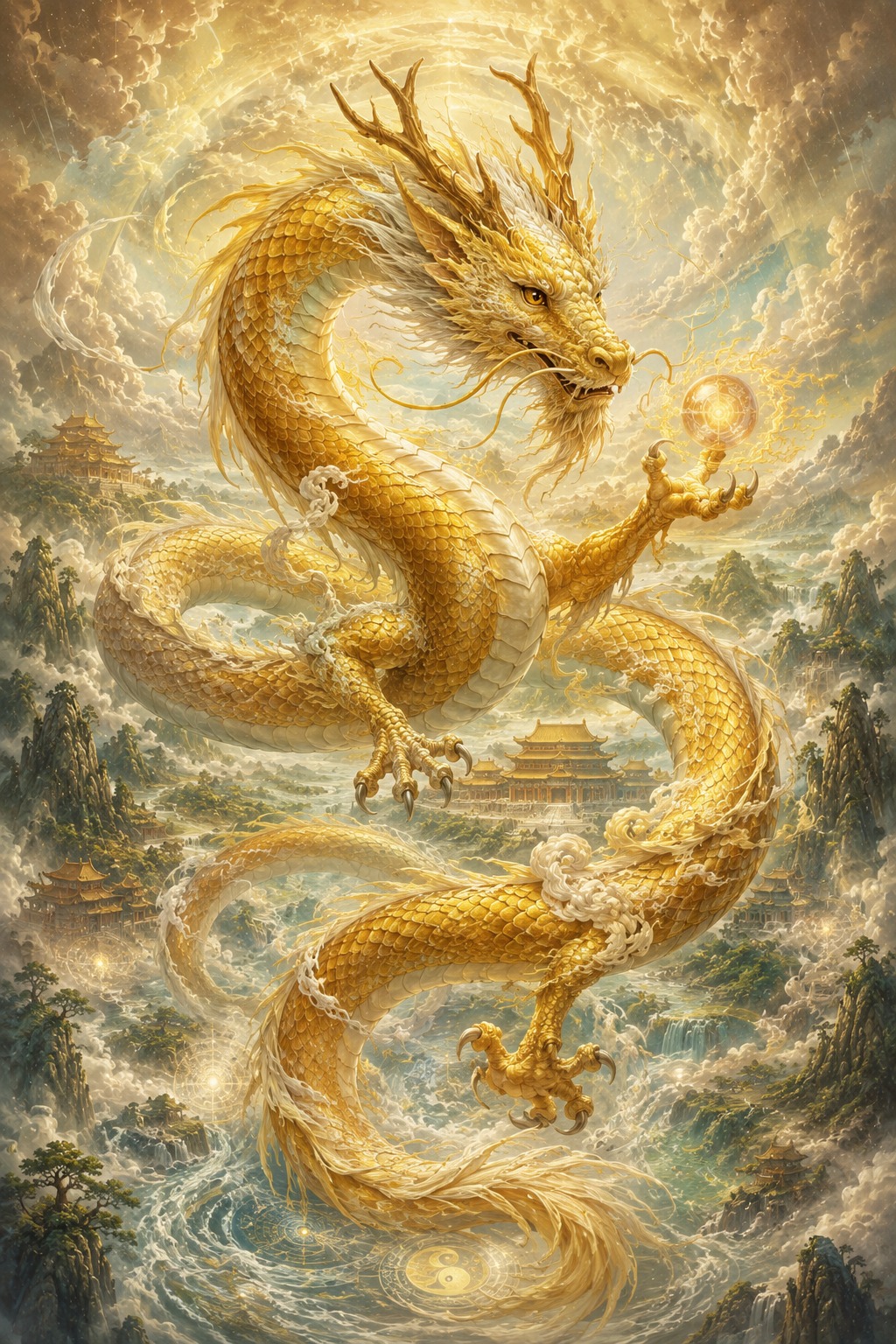
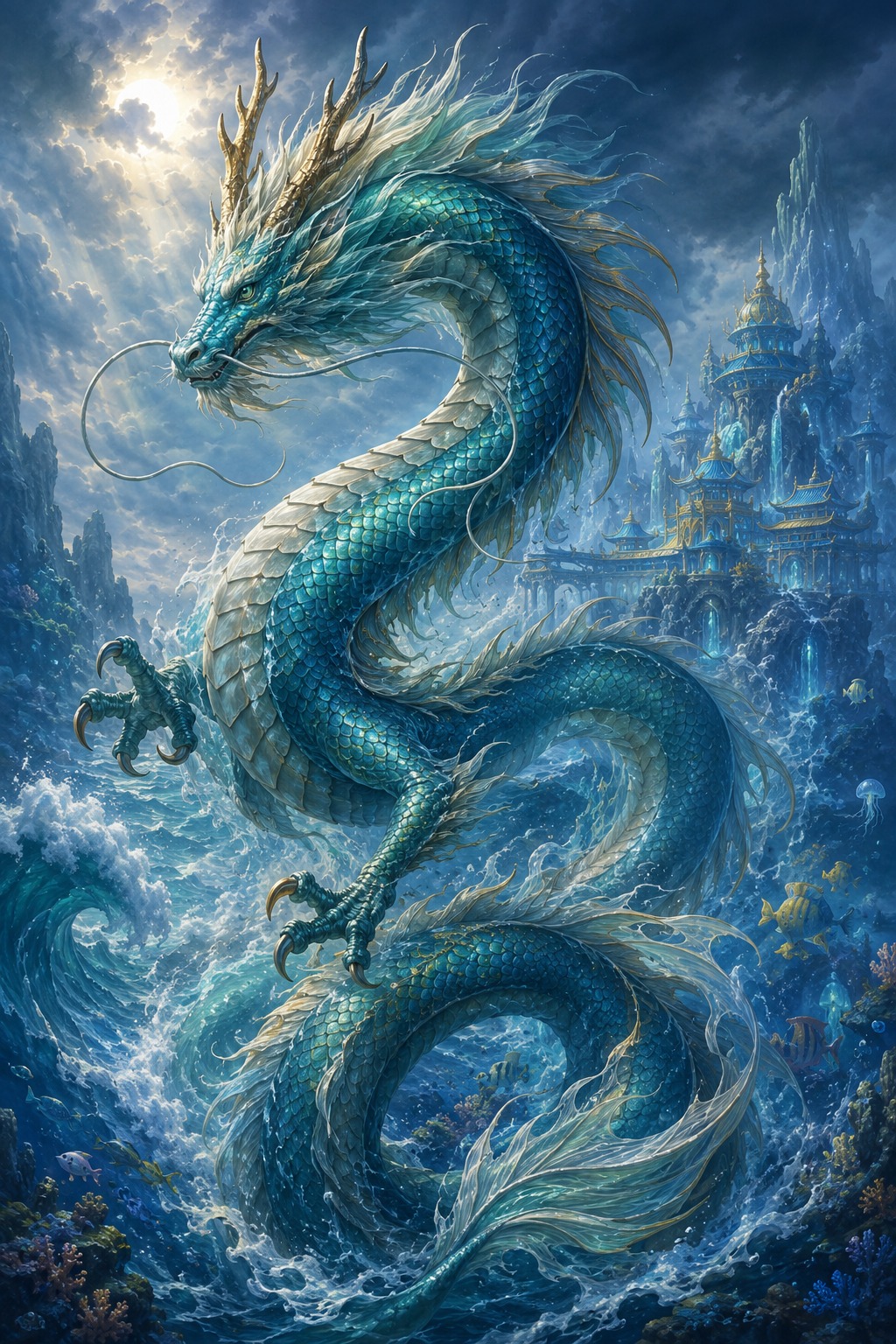
The Korean yong is the indigenous Korean dragon, a benevolent water-deity occupying a distinct position within the East-Asian dragon tradition. It is depicted with a long serpentine body, the branched antlers of a deer, the scales of a carp, the talons of a hawk, the soles of a tiger and — most decisively — four toes on each foot, which mark Korea's rank between the five-toed Chinese imperial long and the three-toed Japanese ryu. The earliest extant records are the dragon-deity passages of Iryeon's 'Samguk Yusa' (1281), book I 'Strange Affairs', particularly the entries on Dongmyeong, King Suro and King Munmu, and the dragon iconography on the Baekje and Silla roof-tile-ends of the fifth and sixth centuries. In Korean myth, the yong is the form an imugi attains after a millennium of practice when it finally wins the wish-fulfilling pearl (yeouiju). The image runs through the royal dragon robe (gollyongpo) of King Jeongjo (reigned 1776-1800, National Palace Museum of Korea) and the twin golden dragons on the throne ceiling of the Geunjeongjeon hall of Gyeongbokgung Palace (founded 1395, rebuilt 1865) and is the antithesis of the malevolent Western dragon — fundamentally good, generous and bound to bring rain to the fields.
Origin
The direct textual sources are the 'Samguk Yusa' (1281) of the monk Iryeon (1206-1289), book I 'Strange Affairs', whose entries on King Munmu (reigned 661-681) record that the king after death became a great protective dragon of the realm and was enshrined in the sea-tomb at Daewangam off the Bongil coast of Gyeongju; this episode is the most authoritative single source of Korean dragon cult. Earlier still is the 'Samguk Sagi' (1145) of Kim Busik (1075-1151), book I 'Annals of Silla', which records that Lady Aryeong was born from the side of the rooster-dragon Gyeryong in the founding myth of Bak Hyeokgeose (founded Silla 57 BCE). The oldest surviving visual records are the dragon-phoenix motifs of the Hwandudaedo ringed-pommel sword of the tomb of King Muryeong of Baekje (1971 excavation, Gongju National Museum), the dragon roof-tile-ends of Hwangnyongsa temple of Silla (sixth century) and the dragon relief of the Sataekjijeokbi stone of Baekje (seventh century). The four-toed rule is read as a compromise by the Choson dynasty, which deferred the five-toed imperial dragon to the Ming and Qing emperors, codified in the 'Veritable Records of the Joseon Dynasty' under King Jungjong (1537).
Features
- Branched deer antlers, carp scales, hawk talons, tiger soles, serpentine body
- Four toes per foot — Korea's rank between China's five and Japan's three
- Water-deity of rivers, lakes and the deep sea, master of rain and drought
- The form an imugi attains after a millennium of practice and the winning of the wish-fulfilling pearl
- Holds the yeouiju (wish-fulfilling pearl) in its jaws
- Core image of the royal dragon robe (gollyongpo) and the Geunjeongjeon ceiling at Gyeongbokgung
Stories
Functions as the supreme emblem of royal authority on the gollyongpo, the palace stone reliefs and the royal seal; in popular religion it is the village guardian whose blessing assures the rains for agriculture, and was the focus of the Lunar New Year's full-moon yongsinje rite. The image is recycled in KBS historical dramas such as 'Tears of the Dragon' (1996-1998) and 'Dae Jo-yeong' (2006-2007).
Weakness
Stripped of its pearl, the yong loses its sacred power, and mythologically a yong that fails the moral trial of pride or lust is demoted back to an imugi — a pattern documented across the Pyongan and Gangwon volumes of Im Seok-jae's 'Collection of Korean Oral Tales' (1987-1993).
Cultural Significance
The image is a synthesis of the East-Asian dragon hierarchy (five-toed China, four-toed Korea, three-toed Japan) and the native serpent and water cults of the Korean peninsula, surviving as the core visual canon of the five Joseon dynasty palaces — Gyeongbokgung, Changdeokgung, Changgyeonggung, Deoksugung and Gyeonghuigung — particularly in their ceiling and throne reliefs.
In Popular Culture
'Samguk Sagi' (1145) of Kim Busik on Bak Hyeokgeose and Lady Aryeong, 'Samguk Yusa' (1281) of Iryeon on King Munmu, the Hwandudaedo sword from the tomb of King Muryeong (fifth century), the Hwangnyongsa roof-tile ends (sixth century), the Sataekjijeokbi stone (seventh century), the gollyongpo of King Jeongjo (National Palace Museum of Korea), the twin gold dragons on the Geunjeongjeon ceiling (1865), KBS 'Tears of the Dragon' (1996-1998), the film 'D-War' (2007, dir. Shim Hyung-rae) and the manhwa 'Land of the Wind' (Kim Jin, 1992- ).
Trivia
The single most famous Korean dragon monument is the underwater tomb of King Munmu (reigned 661-681) off the Bongil coast of Gyeongju, the sea-rock Daewangam, where, according to the 'Samguk Yusa', the king was buried so that he could become a great protective dragon of the East Sea. The twin gold dragons on the ceiling of the Geunjeongjeon hall in Gyeongbokgung (1865) are unusually rendered with seven toes per foot — a symbolic elevation of royal authority during the late Joseon period and the highest-ranked Korean dragon in the surviving canon.