Imugi
The Aspiring Dragon
Names in Other Languages
 이무기한국어
Imugi · 승천을 꿈꾸는 미완의 용
 イムギ日本語
Imugi · 昇天を夢みる未完の竜
 Imugi繁體中文
夢想昇天的未完之龍
 ImugiDeutsch
Unvollendeter Drache, der vom Aufstieg träumt
 ImugiFrançais
Dragon inachevé rêvant de son ascension
 ImugiEspañol
Dragón inacabado que sueña con ascender
 ImugiPortuguês
Dragão inacabado que sonha em ascender
 ImugiPolski
Niedokończony smok marzący o wniebowstąpieniu
 ИмугиРусский
Imugi · Незавершённый дракон, мечтающий о вознесении
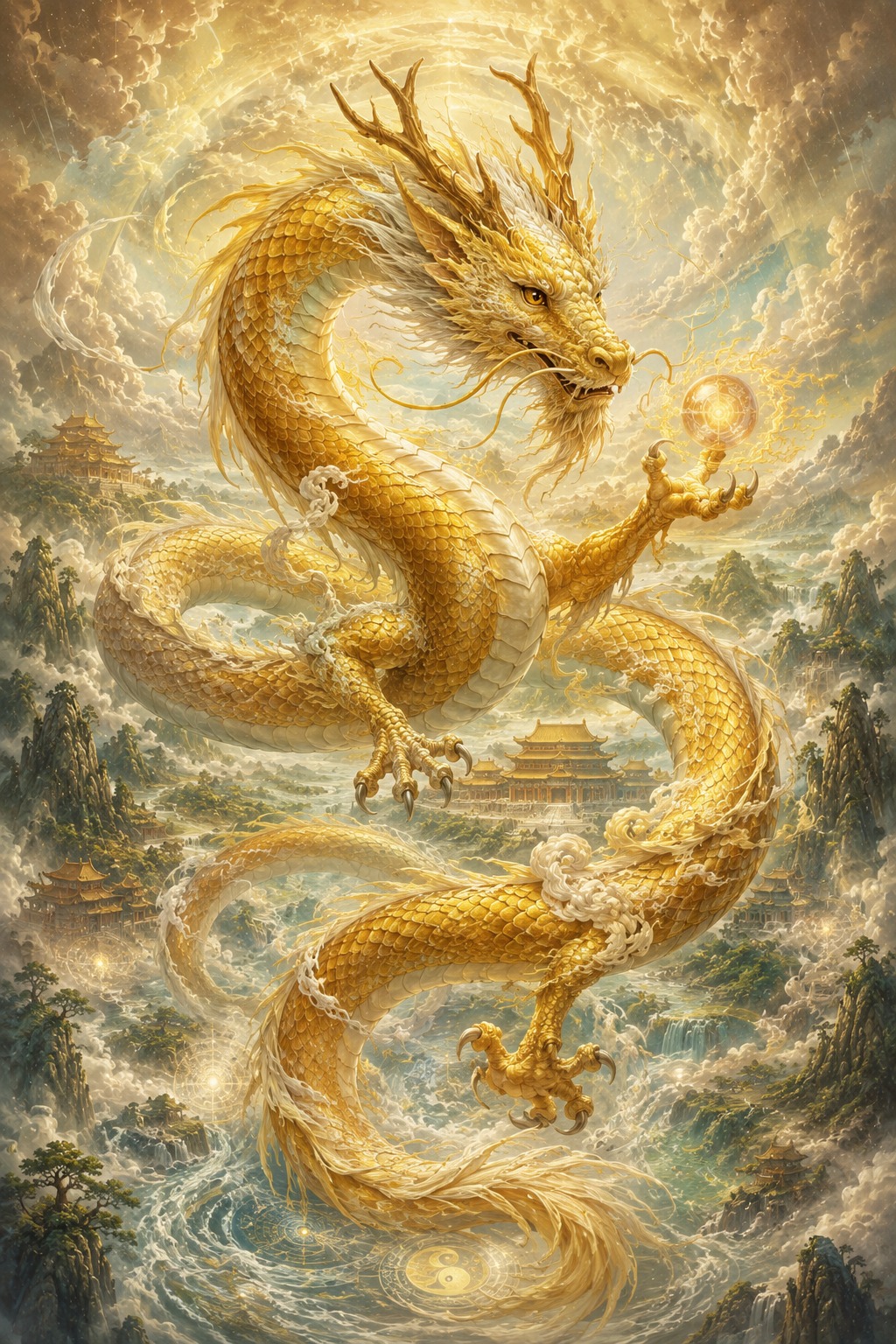
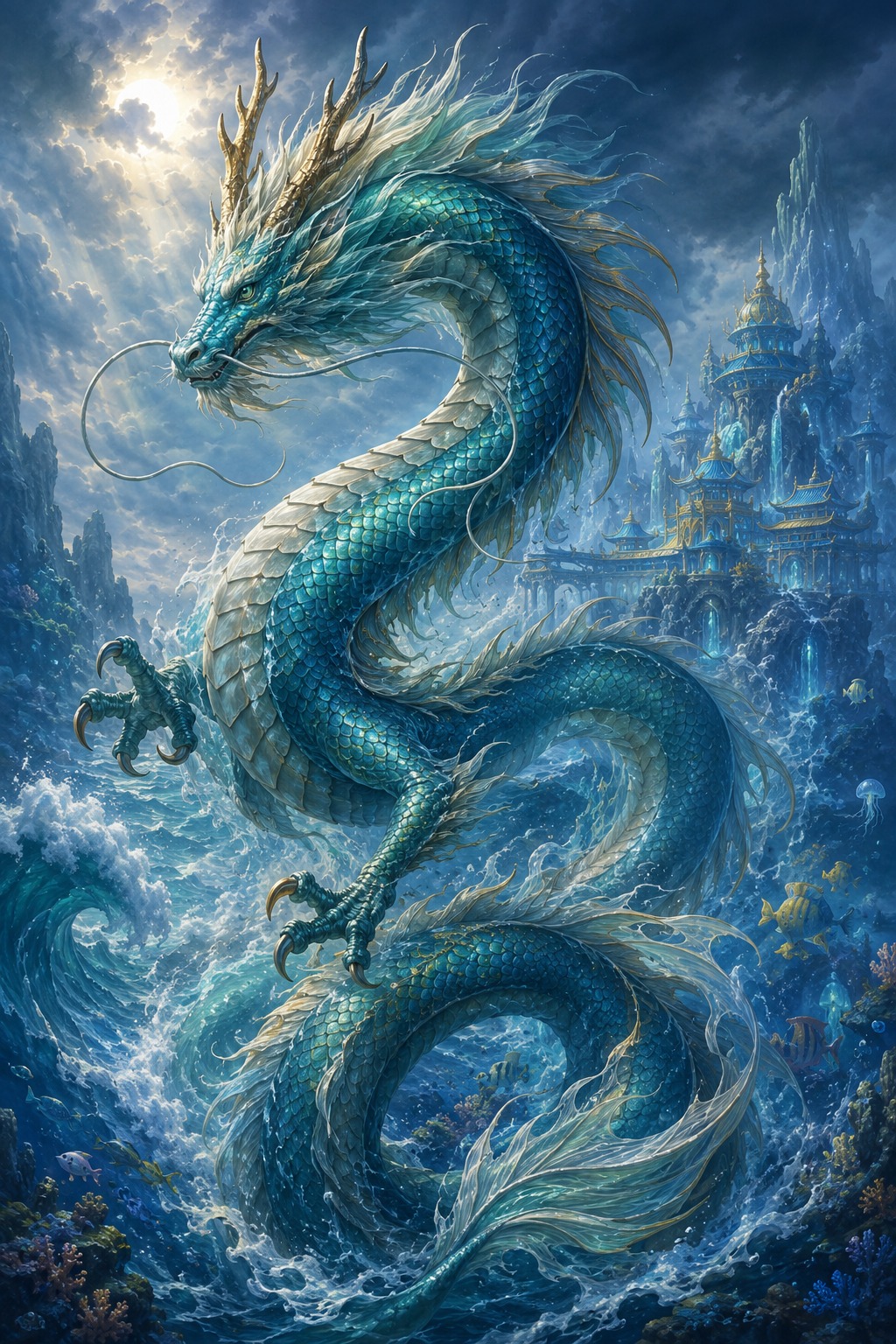
The imugi is the Korean 'unrealised dragon', a great serpent that must endure a thousand years of practice in deep pools, beneath waterfalls and in hidden caves, accumulating moral merit before it can earn the wish-fulfilling pearl (yeouiju) and ascend as a true dragon. It is depicted as a serpent of immense thickness and scale, with a faint pair of nascent horns on its brow; the same image recurs in folktales collected across South Pyongan, Gangwon and South Jeolla provinces. The earliest Korean-language textual mention is in the 'Sun-o-ji' (1678) of Hong Man-jong (1643-1725), while the most systematic ethnographic record is the field collection of Son Jin-tae (1900-1950?) — published as 'Researches on Korean Folk Narratives' (1947) — and Im Seok-jae's 'Collection of Korean Oral Tales' (Pyongminsa, twelve volumes, 1987-1993), which classifies more than two hundred imugi tales under the 'imugi and the maiden' and 'dragon-pool' types. The Standard Korean Dictionary defines it as 'a great snake that failed to become a dragon', and Korean folklorists treat it as a fusion of the Chinese 'jiao' serpent-dragon with native Korean serpent cults. The image was modernised in the manhwa 'Yongbi the Invincible' / 'Land of the Wind' (Kim Jin, 1992-), in the Hollywood-style blockbuster 'D-War' (2007) directed by Shim Hyung-rae, and in Jeong Ju-yeon's 'Myojin Imugi' (2014).
Origin
The first explicit textual record is the 1678 'Sun-o-ji' of Hong Man-jong, which names the imugi and lays out the millennial ascetic frame. Older roots run through the 'Samguk Yusa' of Iryeon (1281, Goryeo period), book I 'Strange Affairs', which records the Dragon Palace and divine-dragon concepts as native Korean religion, and through Seo Geung's 'Gaoli Tujing' (1124) on Goryeo customs, which documents the joint serpent cult and dragon-ascension belief on the peninsula. Son Jin-tae's 1930s-1940s fieldwork in the mountain villages of Pyongan, Hamgyeong and Gangwon (now in the Son Jin-tae Collection of the National Folk Museum of Korea) is the foundational ethnographic corpus, and the regional volumes of Im Seok-jae's twelve-volume collection (Pyongminsa, 1987-1993) preserve the densest catalogue of imugi narratives.
Features
- Massive thick-scaled serpent form, far larger than any ordinary snake
- Faint pair of nascent horns on the brow, marking the unfinished dragon
- Ascends as a true dragon only after a thousand years of practice and the wish-fulfilling pearl
- Dwells in mountain pools (yongso), under waterfalls, and in hidden caves
- May fall into corruption if it fails the moral trial of practice and turn into a man-eating monster
- Can have its fate redeemed by a virtuous human helper — typically a maiden, a Buddhist monk or a filial son
Stories
Functions as the core ordeal-figure of Korean folk narrative, embodying the themes of practice, endurance and unfinished aspiration. Modern Korean media — KBS's anthology 'Legend of the Hometown', the film 'D-War' (2007), the manhwa 'Myojin Imugi' (2014) — recycle the ascension and corruption arcs.
Weakness
During practice the imugi is vulnerable to moral temptation — anger, pride, lust — and a corrupted imugi loses its divine standing and becomes vulnerable to shamanic ritual swords and the spells of a virtuous elder monk, a pattern that runs across Im Seok-jae's collection.
Cultural Significance
The figure sits within the East-Asian dragon hierarchy — five-toed Chinese imperial long, four-toed Korean cheongnyong, three-toed Japanese ryu — by adding a distinctly Korean 'not yet a dragon' tier, and it is linked to the dragon-spirit descent rites of Korean shamanism.
In Popular Culture
Hong Man-jong's 'Sun-o-ji' (1678), Son Jin-tae's 'Researches on Korean Folk Narratives' (1947), Im Seok-jae's twelve-volume 'Collection of Korean Oral Tales' (1987-1993), numerous KBS 'Legend of the Hometown' episodes (1977-1989, 1996-1999), Shim Hyung-rae's film 'D-War' (2007), Jeong Ju-yeon's manhwa 'Myojin Imugi' (2014), and the imugi boss in SoftMax's 'Chronicle of Genesis' role-playing series (1995-2004).
Trivia
The etymology of 'imugi' is uncertain; Son Jin-tae proposed a compound of 'mimul' (lesser creature) with a contracted form of 'gureongi' (great snake). Korea has about 270 named 'dragon pools' (yongso), of which the Odaesan yongso in Gangwon-do Pyeongchang and the Piagol yongso in Jeollanam-do Gurye are the most famous.