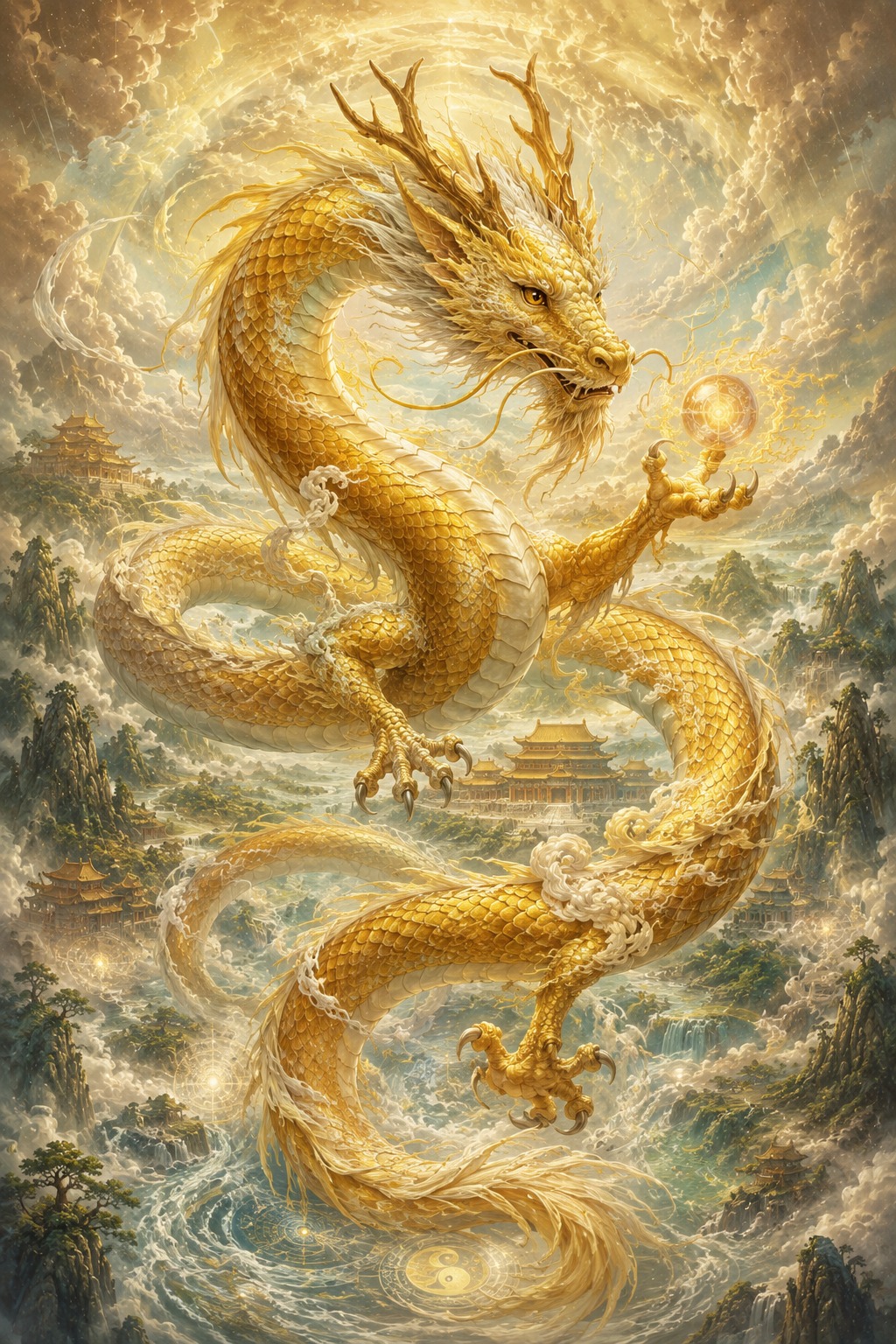
Quetzalcoatl
The Feathered Serpent
Names in Other Languages
 케찰코아틀한국어
Quetzalcoatl · 깃털 달린 신성한 뱀
 ケツァルコアトル日本語
Quetzalcoatl · 羽毛をまとう神聖な蛇
 羽蛇神繁體中文
Quetzalcoatl · 神聖的羽蛇
 QuetzalcoatlDeutsch
Heilige gefiederte Schlange
 QuetzalcóatlFrançais
Serpent à plumes sacré
 QuetzalcóatlEspañol
Serpiente emplumada sagrada
 QuetzalcóatlPortuguês
Serpente emplumada sagrada
 QuetzalcoatlPolski
Święty pierzasty wąż
 КецалькоатльРусский
Quetzalcoatl · Священный пернатый змей
Quetzalcōātl (Nahuatl 'feathered serpent') is the Mesoamerican god worshipped continuously from the late first century BCE at Teotihuacan to the fall of the Aztec empire in 1521. The name compounds 'quetzalli' (the iridescent tail-feather of the resplendent quetzal of the Central American cloud forest) and 'cōātl' (serpent), and the deity is rendered as a great serpent sheathed in those green-gold feathers. He governs Venus as the morning star, and in his wind-god aspect Ehēcatl summons rain. Among the Toltecs he was identified with the priest-king Topiltzin-Quetzalcōātl who ruled Tollan (modern Tula) around 935-947 CE; in Aztec myth he was tricked by the dark god Tezcatlipoca, fled Tollan eastward across the sea, and promised to return in a 'One Reed' year. Hernán Cortés's landing on the Gulf coast in 1519 — a One Reed year — led the emperor Moctezuma II (1466-1520) to read the Spaniard as the returning god, an episode preserved in Bernardino de Sahagún's 'Florentine Codex' (1545-1590) and Diego Durán's 'Historia' (1581). The earliest surviving image is the carved facade of the Temple of the Feathered Serpent at Teotihuacan, dated to about 200 CE.
Origin
The earliest attested form of the deity is the carved facade of the Temple of the Feathered Serpent at Teotihuacan (c. 200 CE); the same divine figure was worshipped by the Maya as Kʼukʼulkan in Yucatec and Q'uq'umatz in Kʼicheʼ. From the eighth century onward the Toltec civilisation fused the god with the priest-king Topiltzin-Quetzalcōātl, and after the fall of Tollan in the twelfth century the Mexica Aztecs inherited the cult and built a round temple to him beside the Templo Mayor in Tenochtitlan. The most detailed textual record is Sahagún's 'Florentine Codex' (1545-1590), preserved in the Biblioteca Medicea Laurenziana (Mediceo Palatino 218-220) in Florence in parallel Nahuatl and Spanish, and Diego Durán's 'Historia de las Indias de Nueva España' (1581). The Quetzalcōātl / Kʼukʼulkan equation became standard in Maya studies after John Lloyd Stephens and Frederick Catherwood's 'Incidents of Travel in Central America' (1841).
Features
- Body of a great serpent sheathed in the iridescent feathers of the quetzal
- Governs Venus as the morning star and the wind in his aspect Ehēcatl
- Identified with the Toltec priest-king Topiltzin-Quetzalcōātl
- Earliest attested image on the Temple of the Feathered Serpent, Teotihuacan (c. 200 CE)
- Equated with the Maya Kʼukʼulkan / Q'uq'umatz, with the equinox shadow descent at Chichen Itza
- Linked to Moctezuma II's reading of Cortés as the returning god in the 1519 One Reed year
Stories
Cited as the central deity of Mesoamerican religion, the focal figure of the colonial 'returning god' narrative, and an emblem of indigenous identity in post-independence Mexican muralism and national heraldry.
Weakness
Mythologically the god is undone by Tezcatlipoca's intrigues and by his own refusal of human sacrifice, which leaves him politically vulnerable; his exile from Tollan is the textbook example.
Cultural Significance
The Mesoamerican feathered-serpent image fuses with the Maya Kʼukʼulkan in the equinox shadow ceremony at the El Castillo pyramid at Chichen Itza, and was reclaimed by the twentieth-century Mexican muralists — José Clemente Orozco (1883-1949) and Diego Rivera (1886-1957) — as a symbol of indigenous civilisation.
In Popular Culture
Temple of the Feathered Serpent at Teotihuacan (c. 200 CE), El Castillo at Chichen Itza (ninth to twelfth century), Sahagún's 'Florentine Codex' (1545-1590), Durán's 'Historia' (1581), the pre-Hispanic 'Codex Borgia', Diego Rivera's 'History of Mexico' murals at the National Palace (1929-1935), D&D 'Deities & Demigods' (1980), and the Aztec leader Montezuma in 'Civilization VI' (2016).
Trivia
The El Castillo pyramid at Chichen Itza is famous for the optical illusion of a feathered serpent descending the north staircase at the equinox sunsets. The resplendent quetzal is the national bird of Guatemala, whose currency is named after it.