Ryu
The Sea Dragon of Japanese Myth
Names in Other Languages
 류한국어
류한국어Ryu · 일본 신화의 해룡
 竜日本語
竜日本語Ryu · 日本神話の海竜
 日本龍繁體中文
Ryu · 日本神話的海龍
 RyūDeutsch
Meeresdrache der japanischen Mythologie
 RyūFrançais
Dragon marin de la mythologie japonaise
 RyūEspañol
Dragón marino de la mitología japonesa
 RyūPortuguês
Dragão marinho da mitologia japonesa
 RyūPolski
Smok morski mitologii japońskiej
 РюРусский
Ryu · Морской дракон японской мифологии
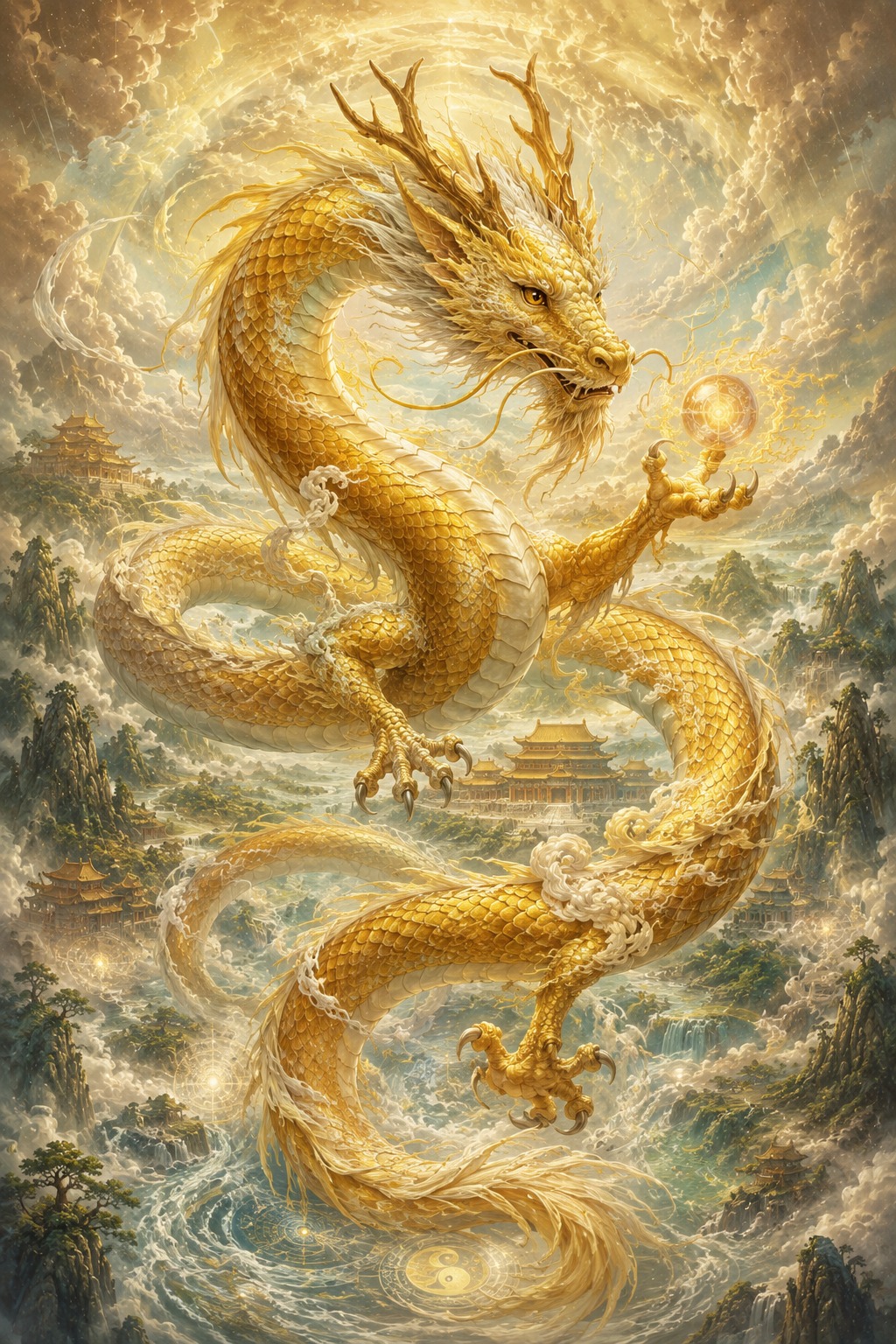
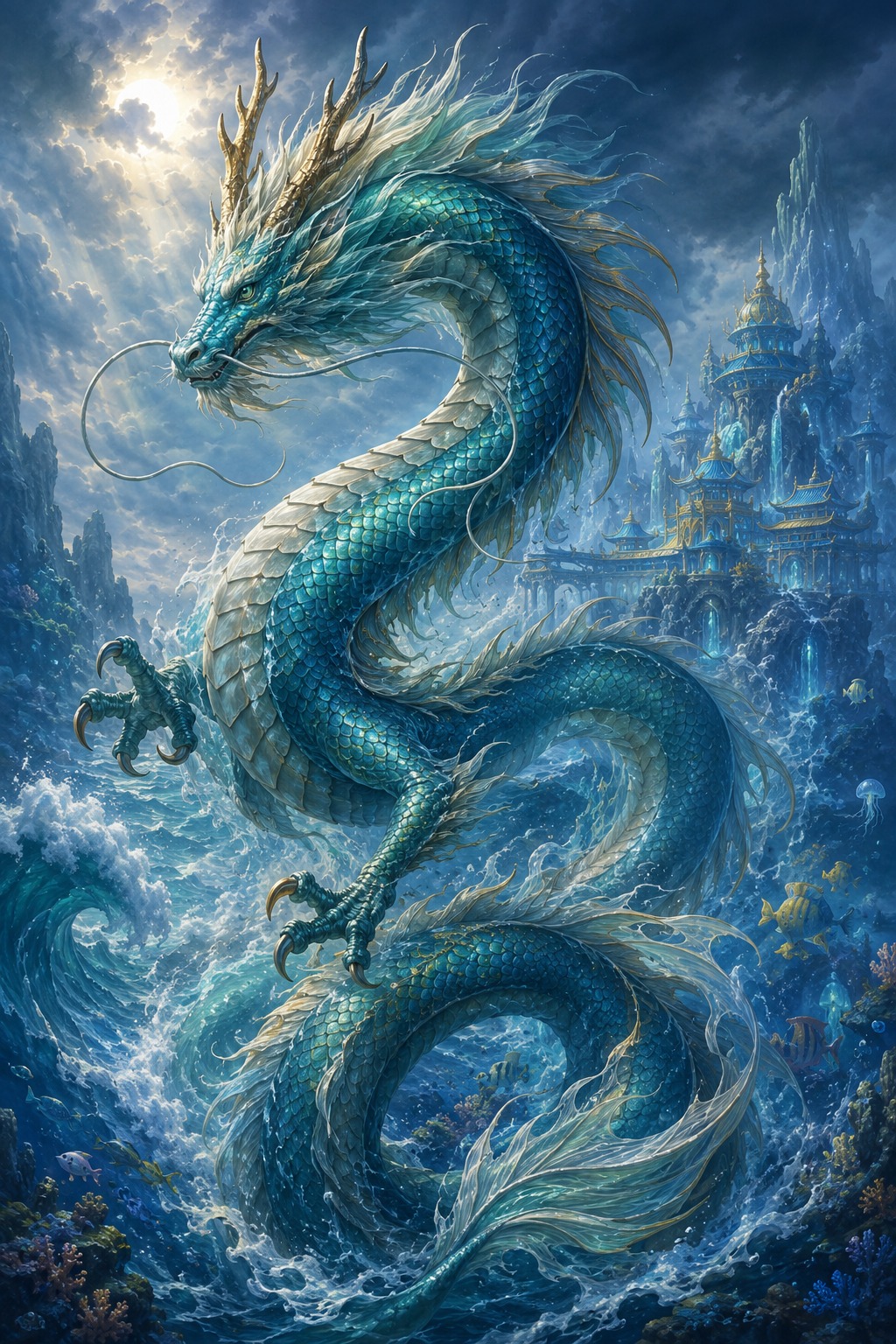
The Ryū is the Japanese dragon, descended from the Chinese long imported via Buddhism in the sixth century and fused with native serpent and water cults. The most visible mark of its lower rank in the East-Asian dragon hierarchy is the three-toed foot, contrasted with the five-toed Chinese imperial dragon and the four-toed Korean dragon. The most celebrated ryū in the corpus is Yamata-no-Orochi, the eight-headed, eight-tailed serpent recorded in the Kojiki (712, compiled by Ō no Yasumaro) and the Nihon Shoki (720), defeated by the storm god Susanoo-no-Mikoto after being made drunk on rice wine; from its tail emerged the sword Kusanagi-no-Tsurugi, one of the three imperial regalia. The dragon king Ryūjin commands sea and storm and reigns over Ryūgū-jō, the undersea palace to which the fisherman Urashima Tarō is led. The ryū is a fixture of temple and shrine ceiling paintings — most famously Kanō Tan'yū's 'Naki-Ryū' (1640s) at Nikkō Tōshō-gū — and of ukiyo-e prints such as Hokusai's 'Hundred Views of Mount Fuji' (1834).
Origin
The direct textual sources are the Kojiki (712), Japan's oldest extant chronicle compiled by Ō no Yasumaro, and the Nihon Shoki (720), which preserve both the Yamata-no-Orochi episode and Ryūjin traditions. The exogenous component is the Naga / dragon-king iconography of translated Buddhist sutras transmitted through Baekje in the sixth century, expanded during the Heian period (794-1185) by Shingon and Tendai through the Four Symbol Beasts. The Ryūgū-jō motif consolidated in the late-Heian 'Taketori Monogatari' (tenth century) and the Muromachi otogi-zōshi 'Urashima Tarō', and in the Edo period merged with indigenous serpent cults at waterfalls, mountain springs and ponds. The folklorist Yanagita Kunio (1875-1962) and the comparativist Minakata Kumagusu documented this layering in their twentieth-century surveys.
Features
- Three-toed feet, the lowest rank in the East-Asian dragon hierarchy
- Frequently appears as a many-headed serpent, exemplified by the eight-headed Yamata-no-Orochi
- Ryūjin governs sea and storm and reigns over the undersea palace Ryūgū-jō
- Fixture of temple and shrine ceiling paintings, with Kanō Tan'yū's 'Naki-Ryū' at Nikkō Tōshō-gū as the touchstone
- Pervades ukiyo-e, haniwa motifs and samurai kamon family crests
- Linked to core mythic figures: Susanoo, Urashima Tarō, the sea princess Toyotama-hime
Stories
Functions as a protective image on temple and shrine ceilings and fusuma panels, as a samurai family crest, in kagura sword dances at festivals, and as a stock boss design in modern Japanese-themed manga, anime and video games.
Weakness
As Yamata-no-Orochi demonstrates, the ryū is undone by intoxication and by sacred swords such as Kusanagi-no-Tsurugi, and is bound by Buddhist guardian imagery.
Cultural Significance
Daoist, Buddhist and Shinto strands of water-source, storm and royal symbolism are layered into the Japanese ryū, and the Orochi-slaying tale is routinely cited as an East-Asian instance of the Indo-European Chaoskampf — Indra against Vritra, Thor against Jörmungandr.
In Popular Culture
Kojiki (712), Nihon Shoki (720), Kanō Tan'yū's Naki-Ryū ceiling at Nikkō Tōshō-gū (seventeenth century), Hokusai's 'Hundred Views of Mount Fuji' (1834), the dragon Haku in Miyazaki Hayao's 'Spirited Away' (2001) and the dragon bosses of the 'Shiren the Wanderer' roguelike series share the same iconography.
Trivia
The toe-count hierarchy — five for the Chinese emperor, four for Korea, three for Japan — is the most-cited bit of dragon lore, and the Naki-Ryū at Nikkō is named for the resonant clap-echo heard beneath the ceiling painting.