LoreArc

Fire

21 items tagged with "Fire"

🐉Dragons(3)
🐉Spirits(9)
suzaku
📸 2

Suzaku

Supreme

Suzaku · 朱雀 — Sacred Red Bird of the South

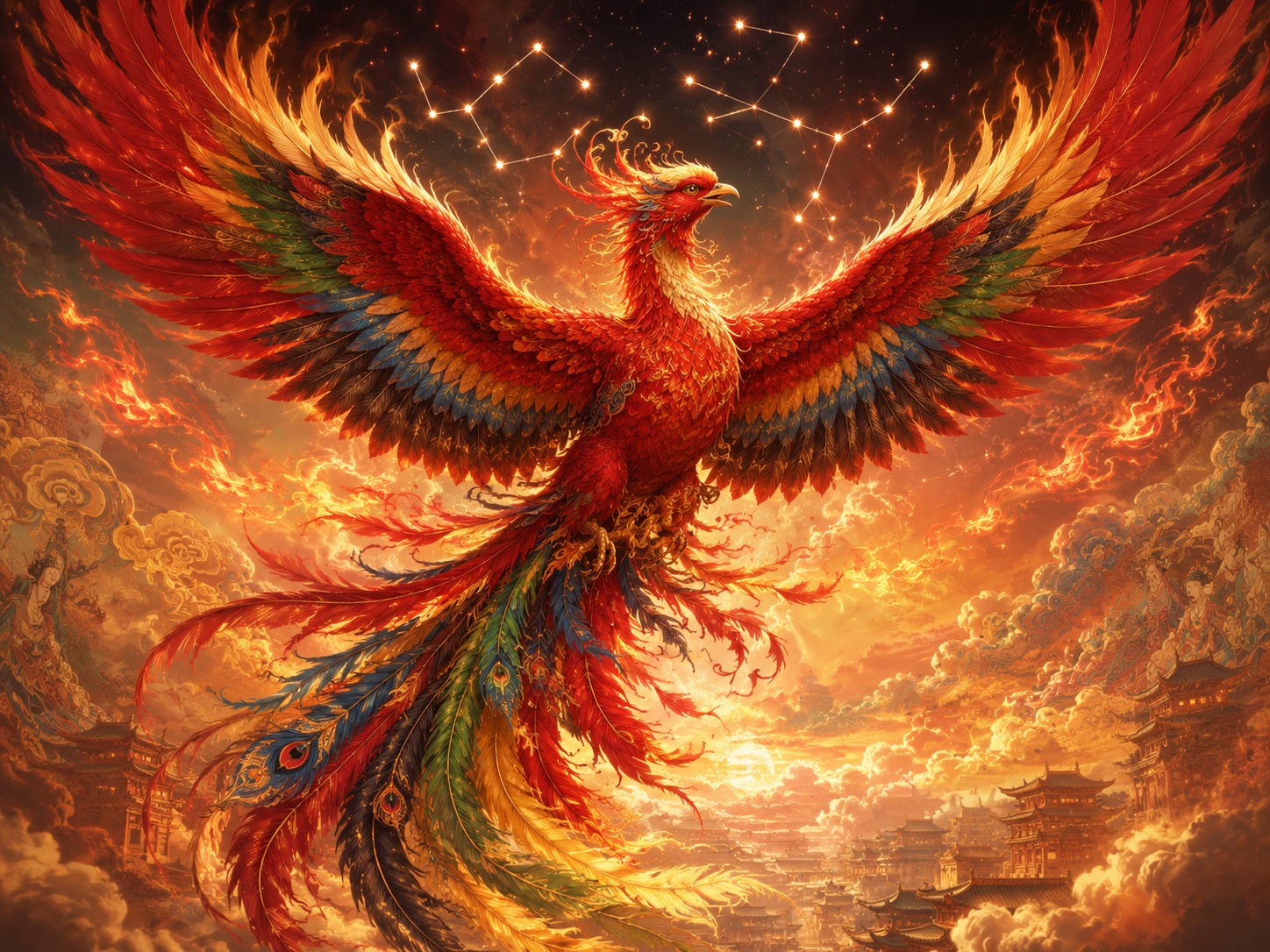
The Suzaku (Chinese Zhuque, Japanese Suzaku, Korean Jujak) is the decisive canonical iconographic figure of the sacred red bird guarding the south in the Four Symbols (Four Guardian Spirits) thought of East Asia. The etymology is the compound of the Chinese characters Zhu ('vermilion, red') and Que ('sparrow, bird') — meaning 'vermilion-coloured bird' — the decisive canonical vocabulary. The Four Symbols are the Azure Dragon (Qinglong) of the east, the Vermilion Bird (Zhuque) of the south, the White Tiger (Baihu) of the west, and the Black Tortoise (Xuanwu) of the north, guarding the four directions, four elements (wood, fire, metal, water), and the southern 7 of the 28 lunar mansions — Jing, Gui, Liu, Xing, Zhang, Yi, Zhen — the decisive canonical iconography. The decisive textual canon is Book of Rites (Liji) Quli Shang of the 2nd-century-BCE Former Han — the four-directional military banner canon — and Shiji Book 27 Tianguanshu of Sima Qian (Sima Qian, 145-86 BCE) of the late 1st century BCE — the 28 lunar mansions astronomical classification — the decisive Han-Chinese canon. The decisive visual canon is the Four Symbols mural of the late-6th-century Goguryeo Gangseo-daemyo Tomb (Gangseo-daemyo, Pyeongan-namdo, Korea) — c. 575-605 — and the Four Symbols murals of the 7th-8th-century Japanese Takamatsuzuka Tomb (Takamatsuzuka kofun, discovered 21 March 1972) and Kitora Tomb (Kitora kofun, discovered 7 November 1983).

salamander
📸 5

Salamander

Lesser

Fire Spirit of Paracelsus

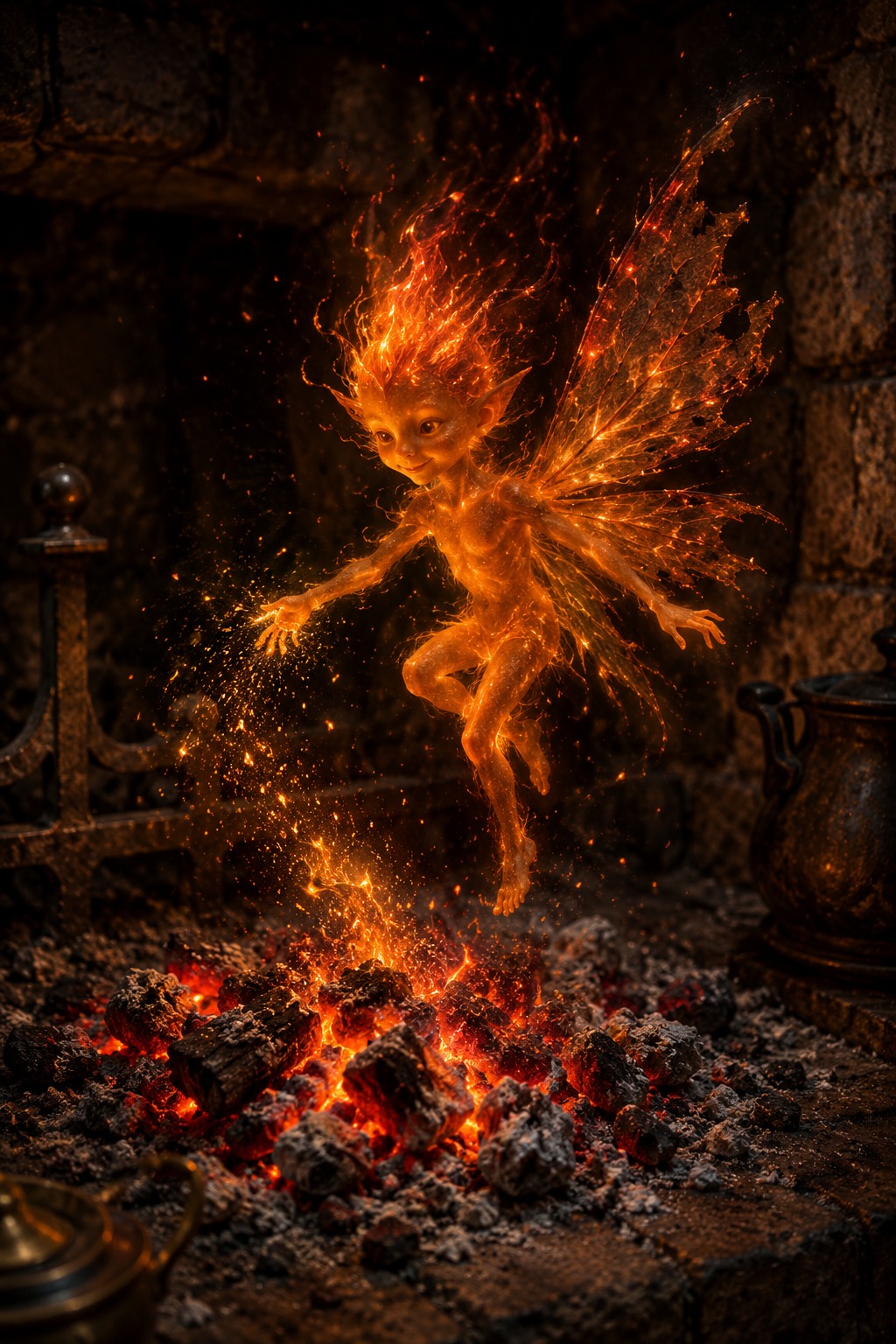
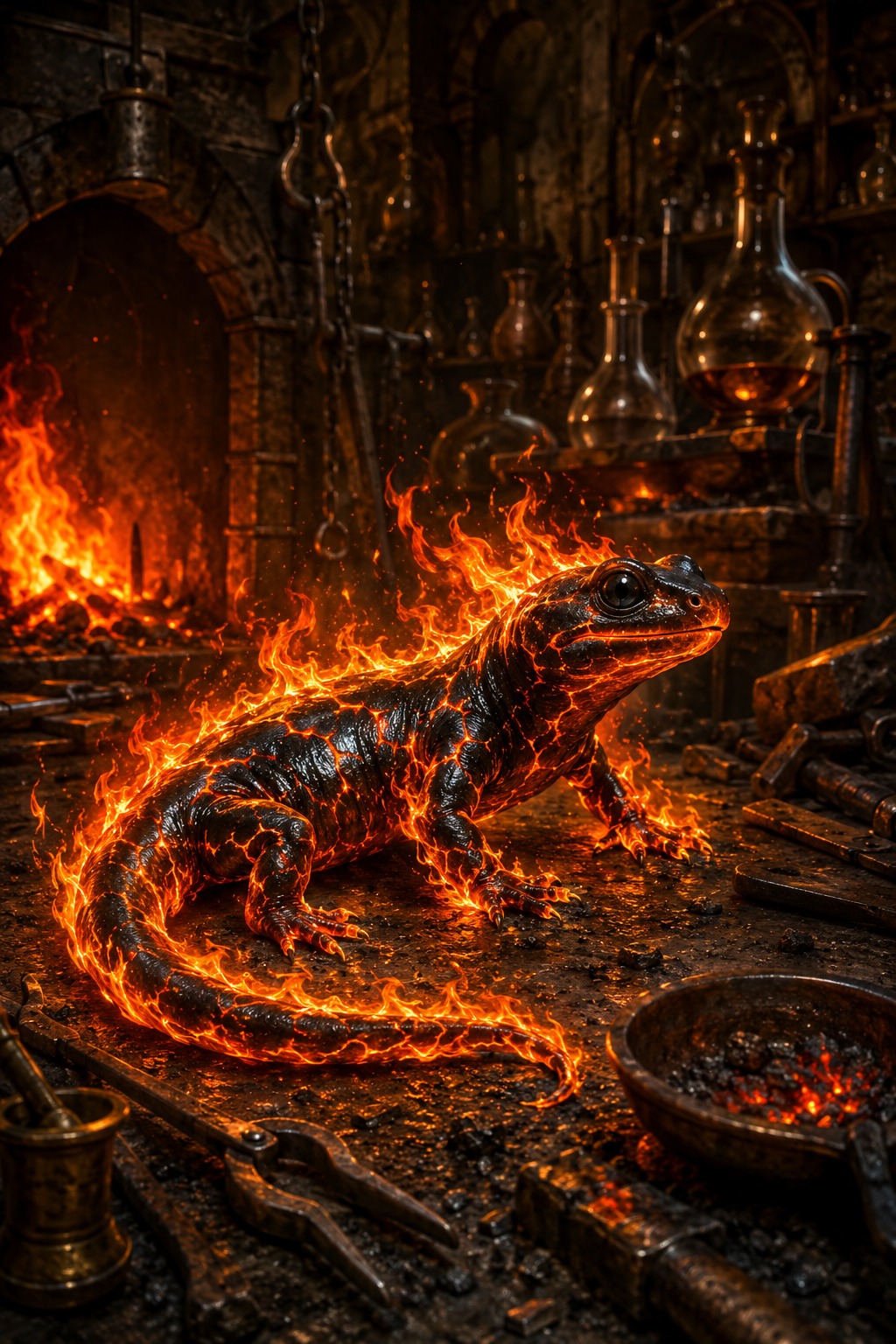
The Salamander (Latin Salamandra, Greek salamandra, English Salamander) is the decisive canonical spirit of fire (Ignis) among the four element spirits (Elemental Spirits) in the posthumous 1566 Latin treatise A Book of Nymphs, Sylphs, Pygmies, and Salamanders (Liber de Nymphis, Sylphis, Pygmaeis et Salamandris) by the Swiss physician-alchemist Paracelsus (1493-1541), a small spirit in the form of a salamander wholly enveloped in flame, dwelling in the hearth and furnace, canonised as the decisive guardian spirit of the blacksmith and the alchemist. The iconographic origin is (1) the canonical record in Book 5, Chapter 19 of the Historia Animalium of the fourth-century BCE Greek philosopher Aristotle (Aristoteles, 384-322 BCE), that the salamandra walks through fire and extinguishes it, and (2) the canonical misunderstanding in Book 10, Chapter 86 of the Natural History (Naturalis Historia) of the Roman naturalist Pliny the Elder (Gaius Plinius Secundus, 23-79 CE) of 77 CE, that the salamandra is born by fire. The decisive canon is the four-element-spirit theory of Paracelsus of 1566 — Undine (Water), Sylph (Air), Gnome (Earth), and Salamander (Fire) — by which the Salamander became the decisive canon of the European Renaissance fire spirit. The Salamander monster of the 1977 D&D Monster Manual by Gary Gygax (1938-2008) of TSR in the USA — consistent through to 5e (5th Edition) of 2014 — is the decisive canon of the modern fantasy RPG fire spirit.

fire-drake
📸 3

Fire-drake

Greater

Fire Dragon of Beowulf and Norse Myth

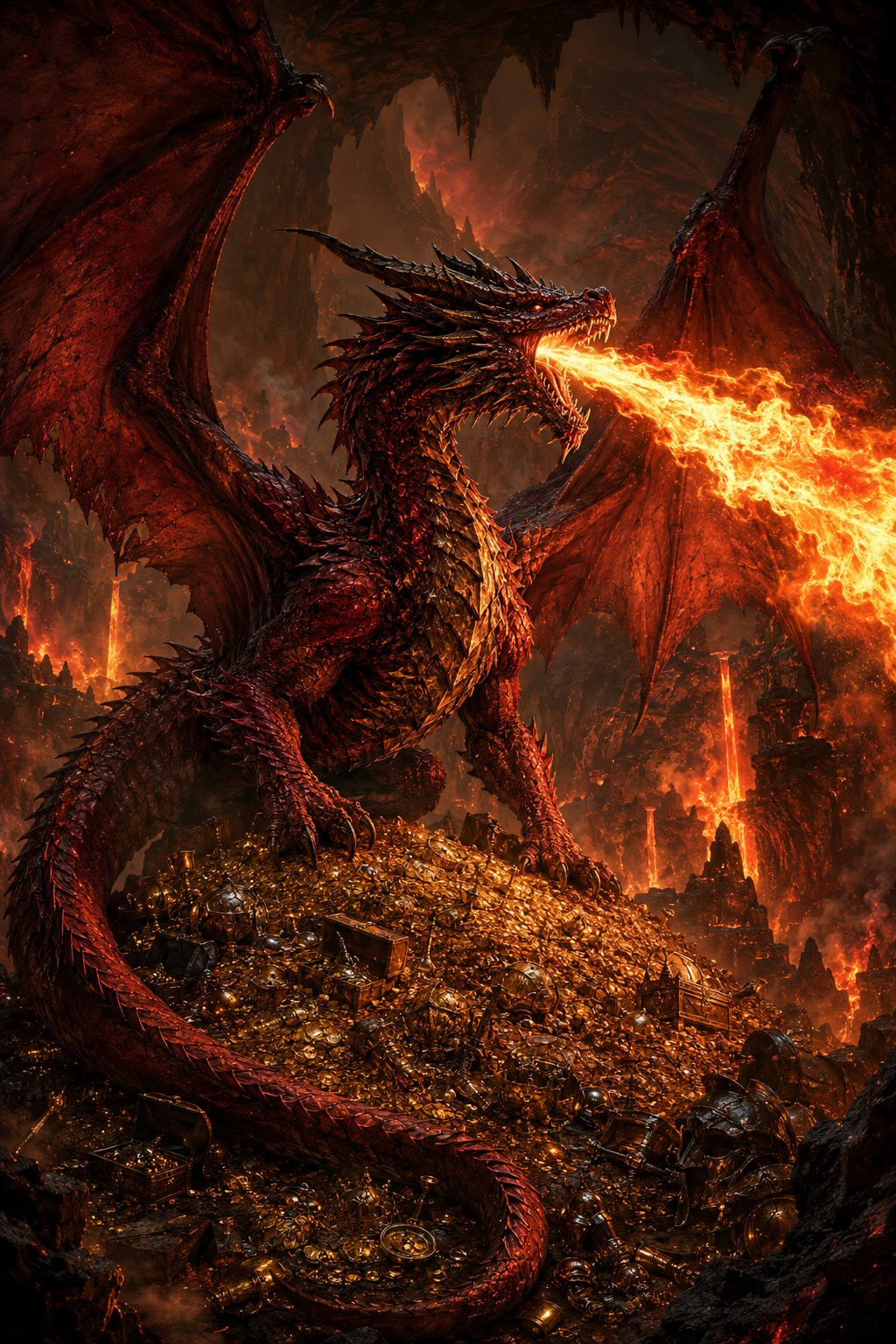
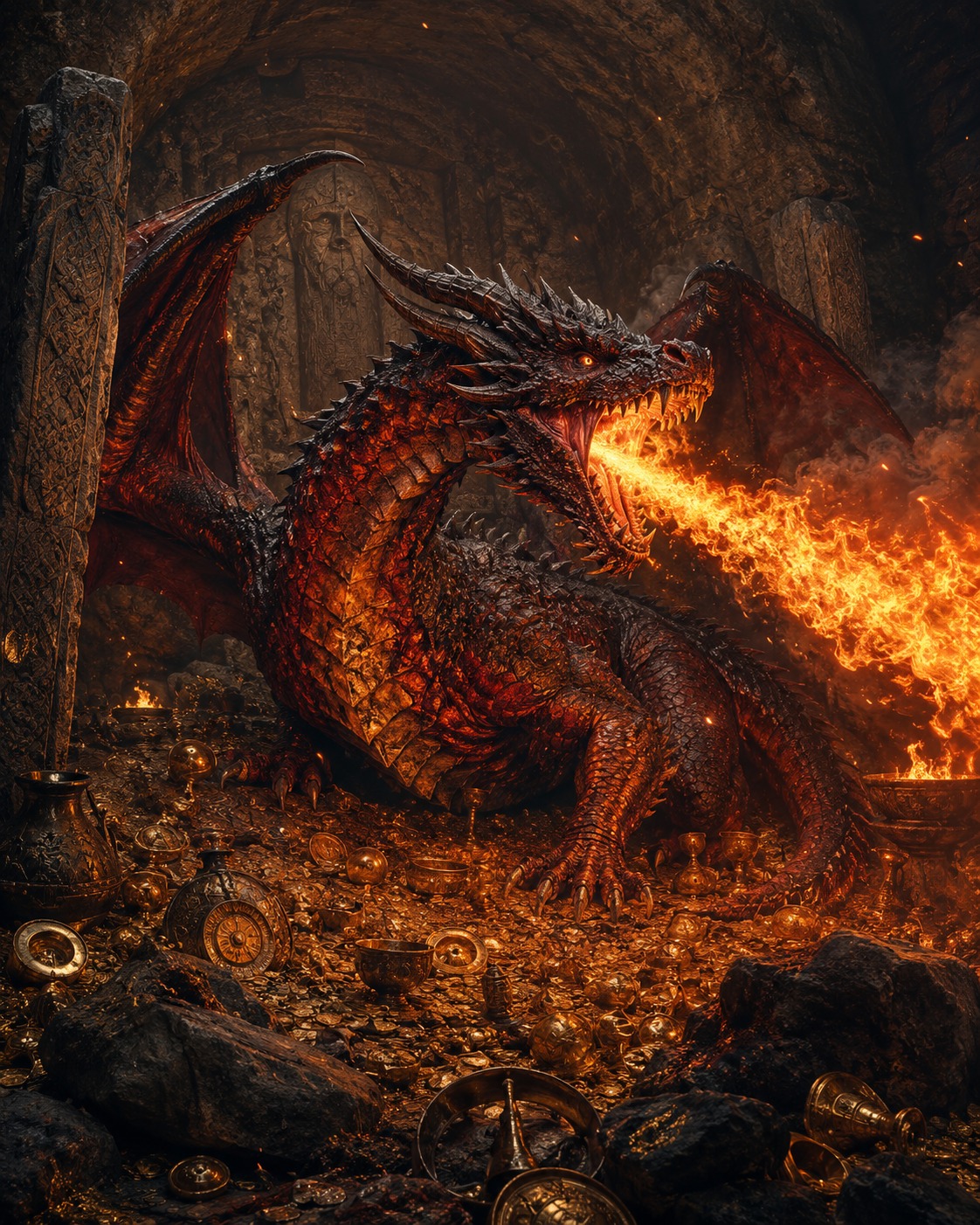
The Fire-drake (Old English fyrdraca, English fire-drake) is the decisive canonical name for the fire-breathing dragon (draca) of Old English and Norse mythology. The etymology is the combination of the Old English fyr ('fire') and draca (borrowed from the Latin draco and Greek drakon, 'dragon'), the Old form of English dragon. The decisive textual canon is the canon in lines 2200-3182 of Book 3 of the Old English epic Beowulf (3,182 lines in total) by an anonymous author of the 8th-10th centuries — in which the hero Beowulf, in his old age after ruling the Geat kingdom for fifty years, when a thief steals the treasure of a sleeping fire-drake — the dragon devastates the Geat kingdom with fire — Beowulf, with his loyal retainer Wiglaf, slays the dragon but dies from the dragon's venom. The Beowulf single manuscript — the Nowell Codex (Cotton Vitellius A.xv at the British Library) copied around the year 1000 — is the decisive textual canon, and the Smaug of The Hobbit by J. R. R. Tolkien (1892-1973), published in Britain on 21 September 1937 — the fire-drake guarding the treasure under the Lonely Mountain — is the decisive modern adaptation of the global fantasy fire-dragon canon of the twentieth century, and the Red Dragon (fire breath) of the 1977 D&D Monster Manual by Gary Gygax of TSR in the USA — consistent through to 5e (5th Edition) of 2014 — is the decisive canon of the modern fantasy RPG fire-dragon.

phoenix-spirit
📸 2

Phoenix Spirit

Spirit King

Spirit Form of the Immortal Phoenix

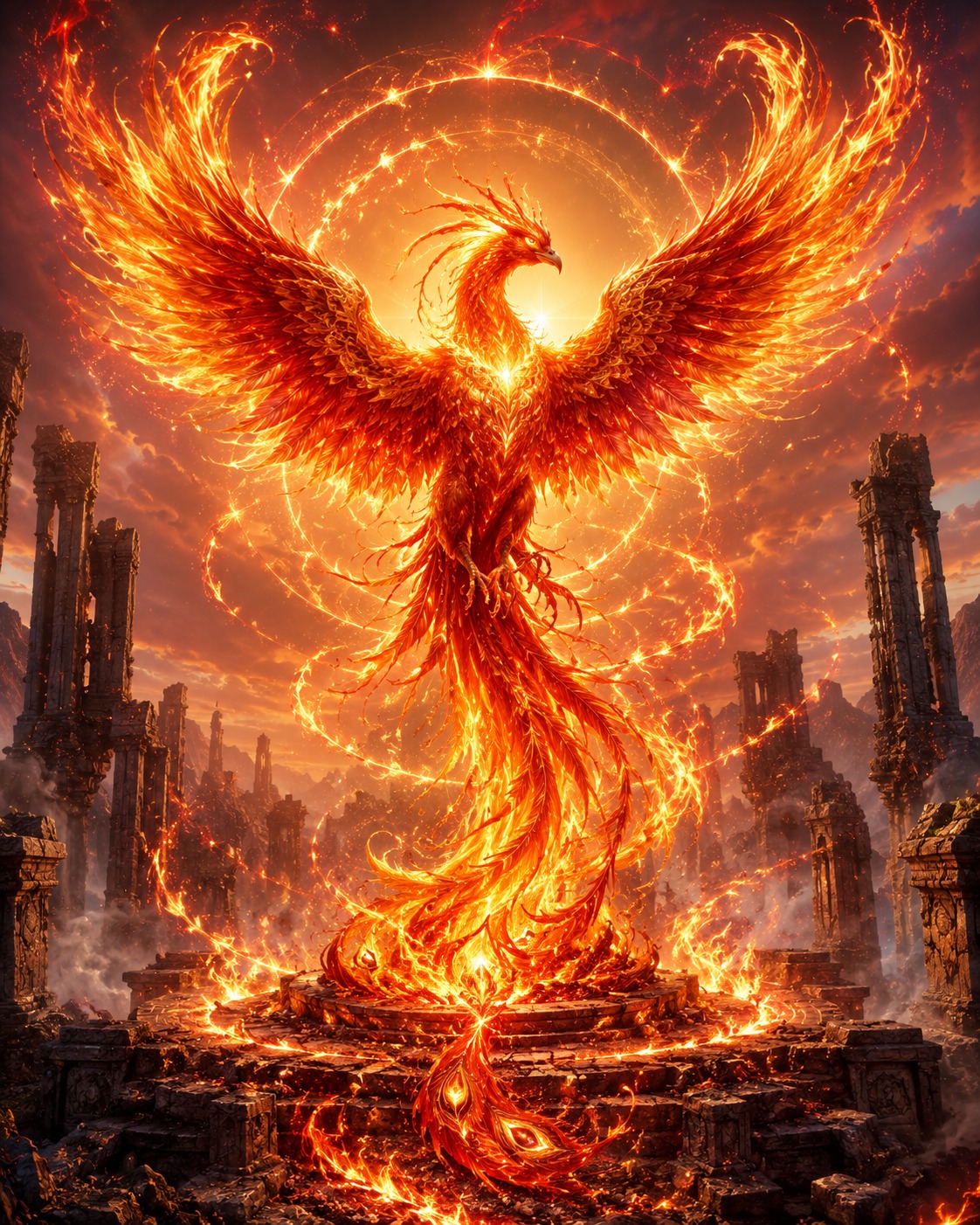
The Phoenix Spirit (Greek Phoinix, Latin Phoenix, English Phoenix) is the canonical iconographic figure of the immortal flame-bird — adapting the Egyptian Bennu (Bennu) and the Greek Phoenix tradition into the spirit category — that immolates itself every 500 or 1000 years and is reborn from the ashes. The etymology is presumed from the Greek Phoinix (Greek 'crimson' or 'Phoenician bird'), and the bennu ('the one that rises') of ancient Egypt — the canonical sacred bird of the resurrection of the sun god Ra and Osiris of Heliopolis — is the decisive origin of the Greek Phoenix iconography. The decisive textual canon is Chapter 73 of Book 2 of the Histories (Historiai) of the Greek historian Herodotus (Herodotus, c. 484-425 BCE) of the 5th century BCE — the testimony of Egyptian priests of seeing the Phoenix at the Sun Temple of Heliopolis and the canon that every 500 years the Phoenix comes from Arabia to Heliopolis carrying the corpse of its father Phoenix in a myrrh egg — the decisive canon, and the decisive Latin-literary canon is the canon of lines 392-407 of Book 15 of the Metamorphoses of the Roman poet Ovid (Publius Ovidius Naso, 43 BCE - 17 CE) of c. 8 CE — the 1000-year cyclic self-immolation and rebirth from the ashes — the decisive canon. The decisive modern canon is the Headmaster Dumbledore's phoenix Fawkes of the Harry Potter (Harry Potter) series of the British author J. K. Rowling (J. K. Rowling, b. 1965) of 1997-2007 — first appearing in Chapter 12 of Harry Potter and the Chamber of Secrets of 1998 — the decisive culminating work of the 21st-century global Phoenix canon.

kagutsuchi

Kagutsuchi

Spirit King

Kagutsuchi · 軻遇突智 — King of the Destructive Flame

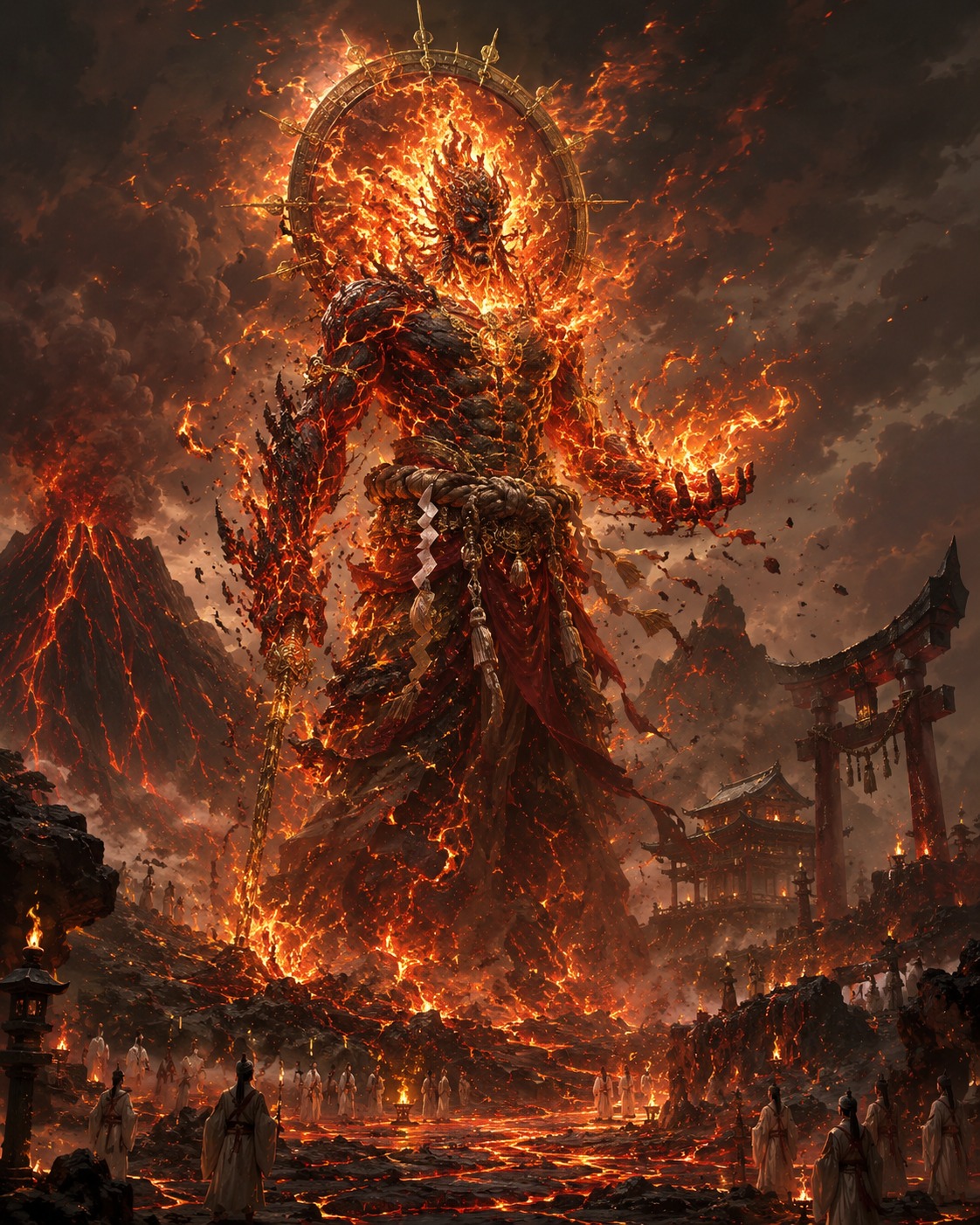
Kagutsuchi (Kagutsuchi, Hi-no-Kagutsuchi) is the decisive canonical fire god of Japanese mythology. The etymology is the Japanese compound of kagu ('shining, radiant') and tsuchi ('spirit, soul') — meaning 'shining soul' — the decisive canonical vocabulary, and the alias Hi-no-Kagutsuchi ('fire Kagutsuchi') indicates that he is the embodiment of fire — the decisive canon. The decisive textual canon is the Volume 1 of the Kojiki (Kojiki) — the oldest extant Japanese historical chronicle compiled by Ono no Yasumaro (660-c. 723) in the Nara period and presented to the 43rd Empress Genmei (Empress Genmei, 661-721) on 28 January 712 CE — the Japanese creation mythology — the decisive canon, in which the mother goddess Izanami (Izanami) dies of burns while giving birth to Kagutsuchi, and the enraged father god Izanagi (Izanagi) beheads Kagutsuchi with his Totsuka-no-Tsurugi (Totsuka-no-Tsurugi, ten-hand sword) — the decisive tragic mythological canon. The Nihon Shoki (Nihon Shoki) Volume 1 Age of the Gods Upper Chapter, presented by Prince Toneri (Prince Toneri, 676-735) to the 44th Empress Gensho in 720 CE, also decisively records this — the decisive canon. From Kagutsuchi's blood and corpse fragments, dozens of new gods were born — the decisive canon — and Kagutsuchi is enshrined at the Fujisan Hongu Sengen Taisha (Fujisan Hongu Sengen Taisha, Fujinomiya City, Shizuoka Prefecture) — the decisive Japanese volcano-faith canon.

ifrit-spirit
📸 3

Ifrit

Intermediate

Fire Jinn of Arab/Islamic Mythology

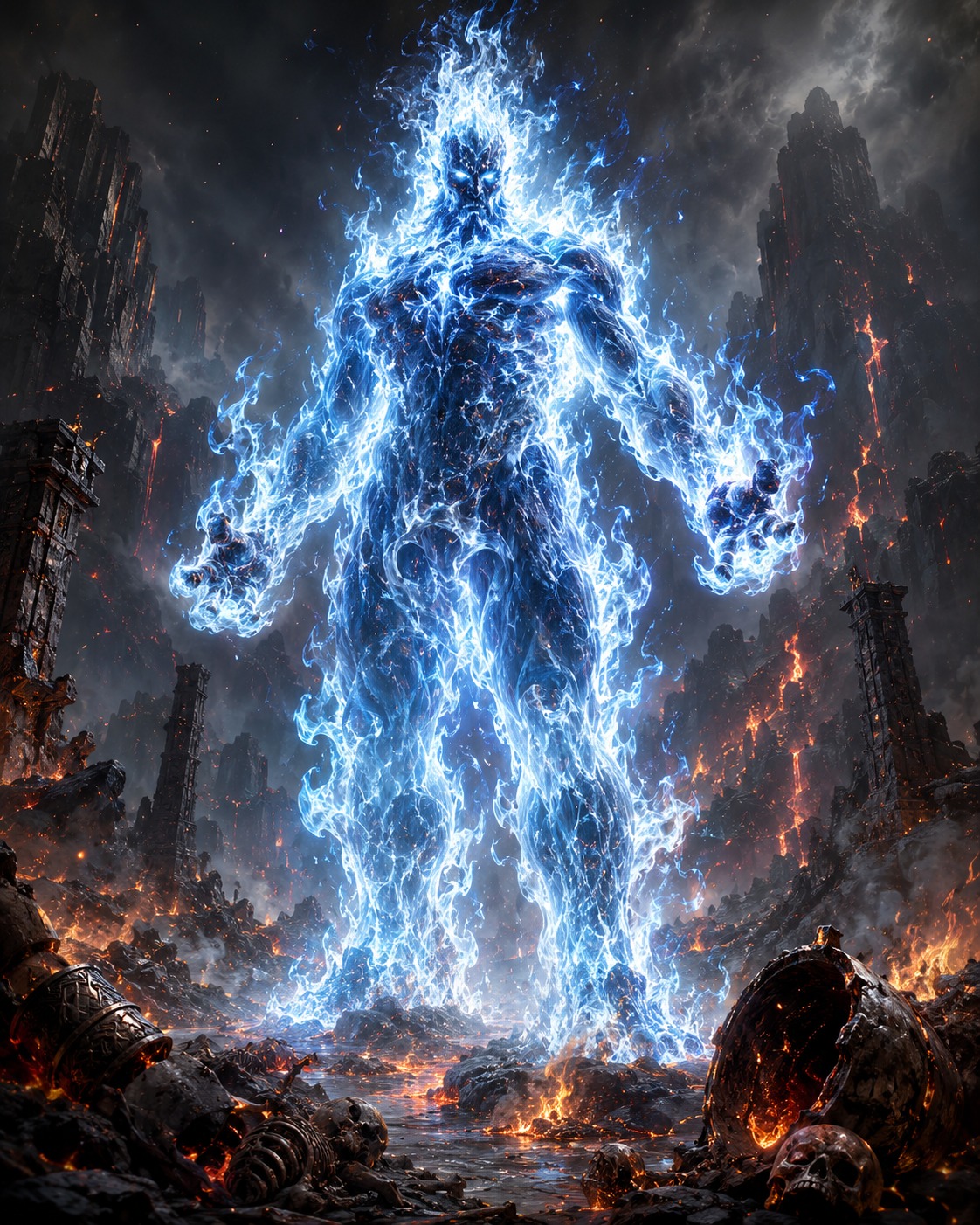
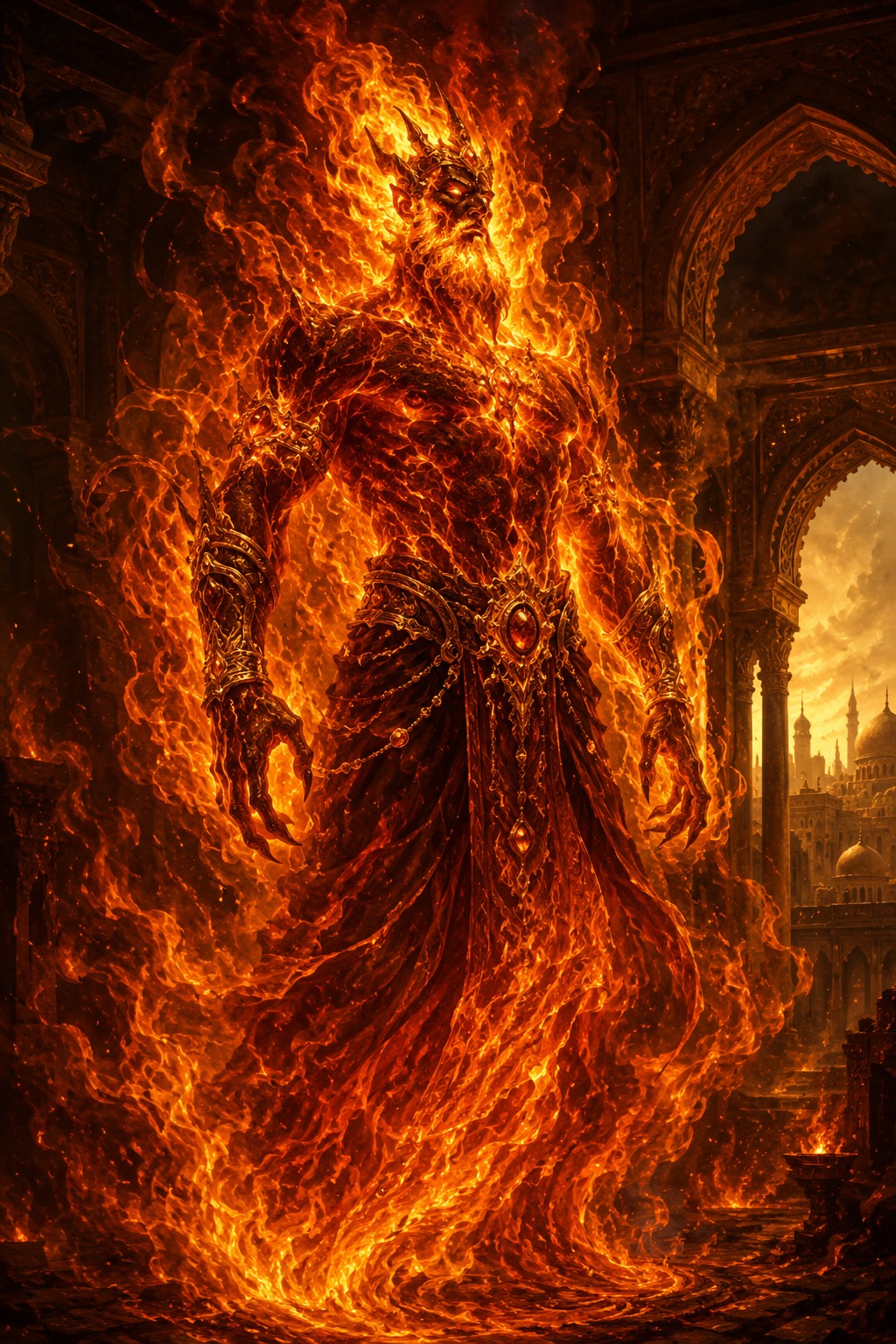
The Ifrit (Arabic ifrit, English Ifrit or Efreet) is the canonical iconographic figure of the powerful fire-jinn among the five-type classification of jinn — Jann, Jinn, Shaytan, Ifrit, Marid — in Arab-Islamic mythology. The etymology is the canonical vocabulary derived from the Arabic root ayn-F-R-T ('strong and evil, cunning'), and the canonical iconography depicts an Ifrit with a giant humanoid body wholly composed of flame — with distinct will and intelligence, more ferocious in disposition than other jinn. The decisive textual canon is verse 39 of Chapter 27 (An-Naml) of the Quran (Qur'an) revealed to the prophet Muhammad (Muhammad, c. 570-632) by the angel Gabriel c. 610-632 CE — in which when King Solomon (Sulayman) commanded the throne of the Queen of Sheba (Bilqis) to be brought, a powerful Ifrit (ifrit min al-jinn, 'an Ifrit of the jinn') volunteered, 'I will bring it to you before you rise from your place' — the decisive canon, and the Fisherman and the Ifrit canon of the One Thousand and One Nights (Alf Layla wa-Layla) compiled in the Mamluk dynasty of Arab Syria and Egypt in the 14th-15th centuries — the decisive Arabic-literary canon in which the Ifrit sealed by Solomon is released by the fisherman and tries to kill him — is the decisive canon. The decisive modern canon is the Efreeti of the D&D Monster Manual of 1977 by Gary Gygax (1938-2008) of TSR in the USA — consistent through to 5e (5th Edition) of 2014 — and the summoned beast Ifrit of Final Fantasy III (Final Fantasy III) by Square in Japan released on 18 December 1987 — the series-integrated canon — the decisive culminating work of the modern global Ifrit canon.

🐉Monsters(2)
🐉Humanoids(1)
dragonborn

Dragonborn

Dragonborn · Dragon-Kin — Warrior Race of Draconic Lineage

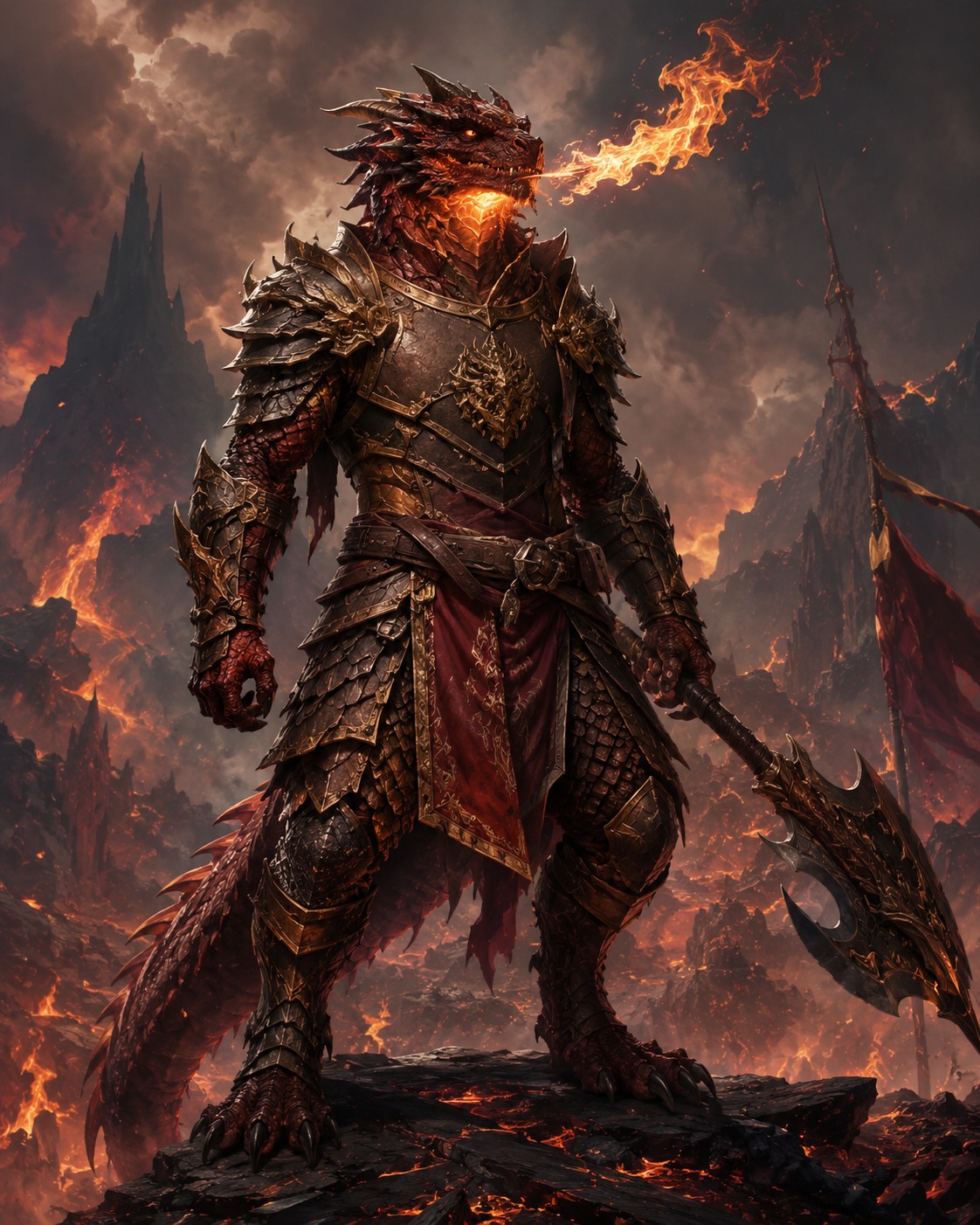
The dragonborn is a draconic humanoid race that descends from dragons, formally introduced as a player race in the Dungeons & Dragons fourth-edition Player's Handbook (Wizards of the Coast, June 2008) and standardised across the English-language fantasy mainstream by the fifth-edition Player's Handbook (2014). The earliest D&D antecedent is the 'Dragon-kin' of the 1990 AD&D 'Council of Wyrms' boxed set (TSR), with the half-dragon template of 'Races of the Dragon' (Wizards of the Coast, 2006) as a transitional form. Dragonborn stand 180 to 200 centimetres tall, weigh 90 to 110 kilograms, with a robust muscular build and scales in chromatic (red, blue, green, white, black — the line of Tiamat) or metallic (gold, silver, copper, bronze, brass — the line of Bahamut) colouring; they have a dragon's head with short horns and a hooked beak and stand upright without a tail. Fifth-edition racial traits are +2 Strength, +1 Charisma, Draconic Ancestry (the elemental damage type set by the parent dragon: fire for red and gold, cold for white and silver, lightning for blue and bronze, acid for black and copper, poison for green), a Breath Weapon (a fifteen-foot cone or thirty-foot line of the chosen damage, recharged on a short or long rest) and Damage Resistance to that same type. The fullest cultural canon is in 'Fizban's Treasury of Dragons' (2021), which paints dragonborn as warriors of clan honour descended from the dragon-gods Bahamut and Tiamat. The same iconography has been borrowed for the Dovahkiin of Bethesda's 'The Elder Scrolls V: Skyrim' (2011), BioWare's 'Dragon Age: Inquisition' (2014), the Draconids of 'Magic: The Gathering' (from 1993) and the Dracthyr of Blizzard's 'World of Warcraft: Dragonflight' (2022).

🌿Materials(1)