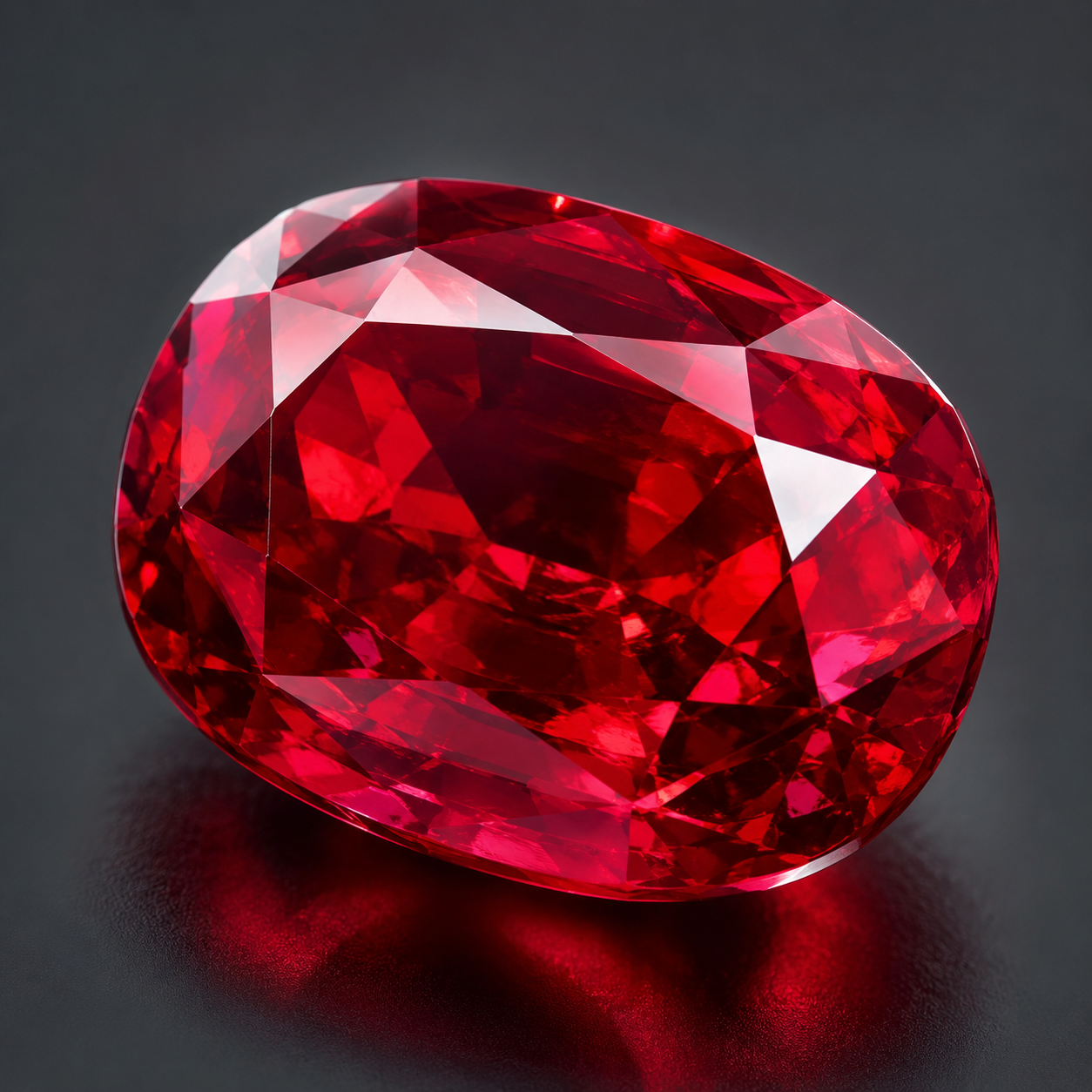
Ruby
Ruby· 紅玉 The core of the four cardinal gems
Names in Other Languages
 루비한국어
루비한국어Ruby· 紅玉 사대 보석의 핵심
 ルビー日本語
Ruby· 紅玉 四大宝石の核
 紅寶石繁體中文
Ruby· 紅玉 四大寶石之核
 RubinDeutsch
Ruby· 紅玉 Der Kern der vier Hauptedelsteine
 RubisFrançais
Ruby· 紅玉 Le cœur des quatre gemmes cardinales
 RubiEspañol
Ruby · 紅玉 — El nucleo de las cuatro gemas cardinales
 RubiPortuguês
Ruby· 紅玉 O nucleo das quatro gemas cardeais
 RubinPolski
Ruby· 紅玉 Rdzen czterech kardynalnych klejnotow
 РубинРусский
Ruby · 紅玉 — Ядро четырёх кардинальных драгоценных камней
Ruby (English Ruby, Latin rubeus, Greek ánthrax, Sanskrit ratnaraj) is the heart of the four great gems of the decisive canon — derived from Latin 'rubeus (red)' and 'rubinus' — the decisive canonical vocabulary — the decisive mineralogical canon of the red variety of corundum (Al2O3) (with chromium content) — and the decisive Indian canon of Sanskrit 'ratnaraj (king of gems)'. Aliases — Ruby (Ruby), rubinus (rubinus, Latin), ratnaraj (ratnaraj, Sanskrit), ánthrax (ánthrax, Greek), carbunculus (carbunculus, Latin), king of gems, birthstone of July — are the decisive canonical vocabulary. The decisive natural history origin canon is the decisive canon of 'carbunculus is the stone of the light of fire' in Pliny the Elder's (Pliny the Elder, 23-79) Natural History (Naturalis Historia) Book 37 chapters 92-95 of the 1st century. The decisive Indian canon is the decisive canon of the king of gems in Sanskrit 'ratnaraj (रत्नराज ratnaraj)'.
Origin
The etymological origin is the decisive canonical vocabulary of Latin 'rubeus (red)' and 'rubinus' and 'ruber (red)' — the decisive canon becoming the etymology of English 'ruby' — and Greek 'ánthrax (ἄνθραξ ánthrax, coal, stone of fire)' and Latin 'carbunculus (small coal)' as the general term for ruby and garnet. The decisive natural history origin canon is the decisive canon of the Roman Pliny the Elder's (Pliny the Elder, 23-79) Natural History (Naturalis Historia) Book 37 chapters 92-95 of the 1st century — 'carbunculus is the stone of the light of fire, from India and Garamantes' — the decisive canon of 12 varieties. The decisive Theophrastus canon is the decisive canon of ánthrax in the Greek Theophrastus's (Theophrastus, 371-287 BCE) On Stones (Peri Lithōn) of the 4th century BCE. The decisive Indian canon is the decisive canon of Sanskrit 'ratnaraj (रत्नराज ratnaraj, 'ratna (gem) + raj (king)', king of gems)' — the decisive canon of the gem of the sun in the Hindu nine gems (navaratna). The decisive Myanmar canon is the decisive canon of the pigeon blood ruby (pigeon blood ruby) of Mogok (Mogok) of Myanmar from the 6th century onward.
Features
- Red variety of corundum (Al2O3) with chromium (Cr) content — Mohs hardness 9
- Main axis Pliny Natural History Book 37 chapters 92-95 carbunculus stone of the light of fire
- Sanskrit ratnaraj (king of gems) — decisive Indian canon
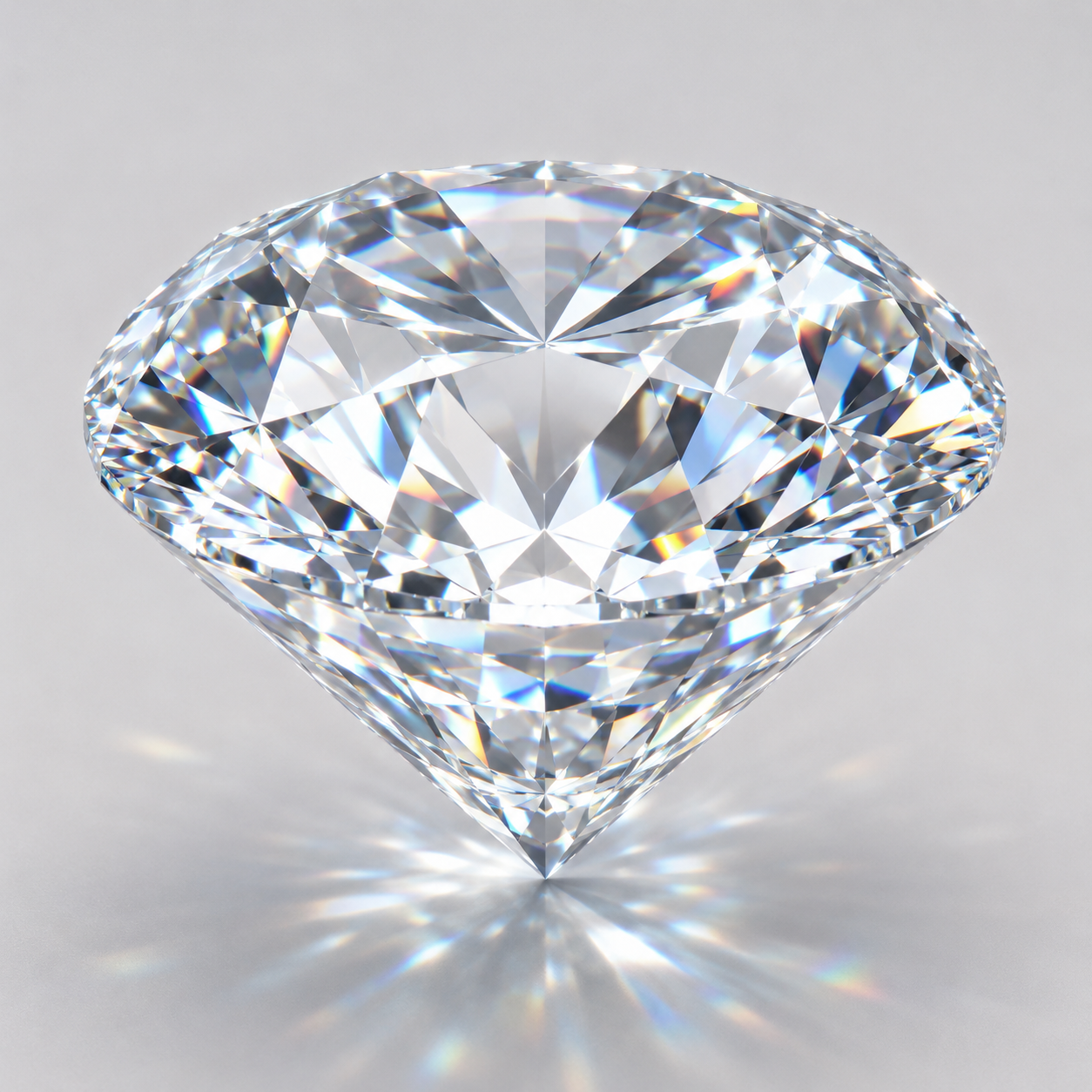
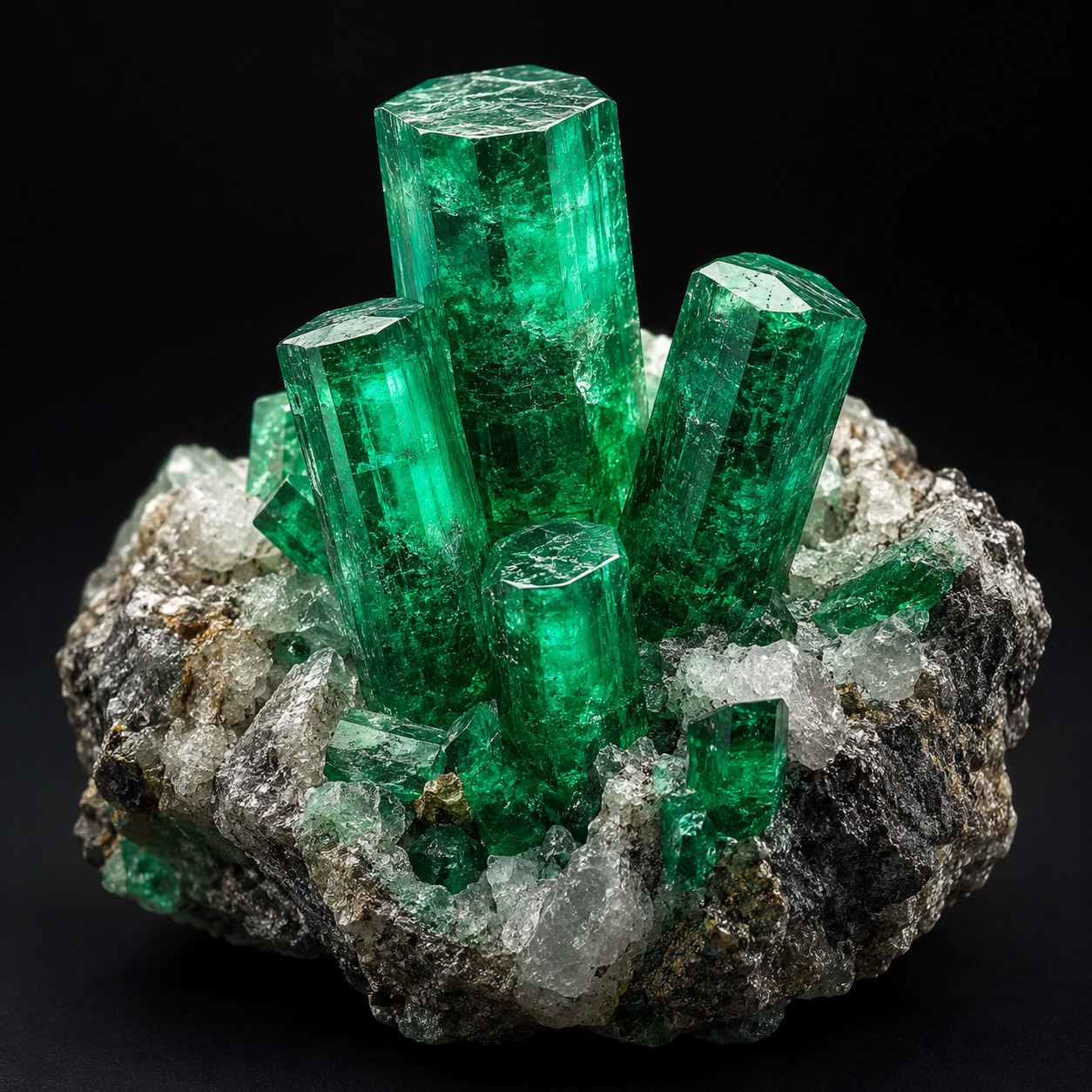
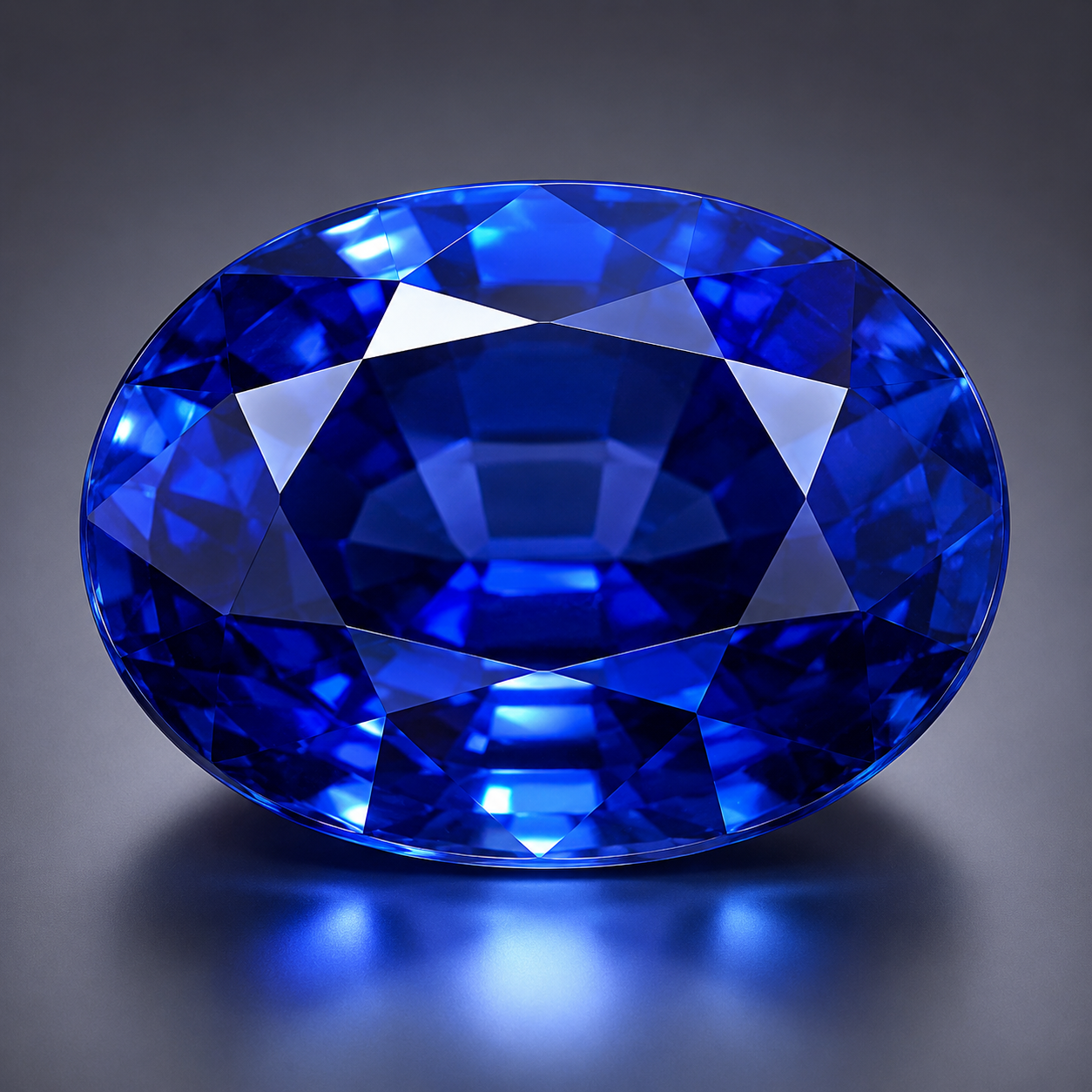
- Four great gems diamond, emerald, sapphire, ruby
- Pigeon blood ruby of Mogok (Mogok) of Myanmar
- Origin — Mogok of Myanmar, Thailand, Sri Lanka, Mozambique
Stories
The carbunculus in Pliny the Elder's Natural History Book 37 chapters 92-95 of the 1st century is the decisive natural history origin, and the king of gems in Sanskrit ratnaraj is the decisive Indian canon. The decisive canon used as the heart of the four great gems, and the decisive canon invoked as the king of gems. The decisive Indian canon is the decisive canon of Sanskrit ratnaraj, and the decisive Myanmar canon is the decisive canon of the pigeon blood ruby of Mogok from the 6th century onward. The decisive British canon is the decisive canon of the Black Prince's Ruby (actually a spinel) of 1367, and the decisive laser canon is the decisive canon of the invention of the world's first ruby laser (ruby laser) by Theodore Maiman (Theodore Maiman) of the USA on 16 May 1960.
Weakness
Ruby's weaknesses are: (1) Mohs hardness 9 limit — the decisive canonical weakness — softer than diamond (10); (2) binding of scarcity — the decisive canon that rubies over 10 carats are rarer than diamonds; (3) binding of impact — the decisive canon of cracking from impact; (4) binding of heat — the decisive canon of color change by heating to 1800 degrees; (5) binding of synthesis — the decisive canon of synthetic ruby by Auguste Verneuil in 1902; (6) binding of the sacred domain — the decisive canon; (7) binding of spinel — the decisive canon of the binding that the Black Prince's Ruby was actually a spinel; (8) binding of time — the decisive canon of the binding of 2500 years of India. The decisive canonical finale is the decisive mythological canon of the invention of the ruby laser by Theodore Maiman in 1960.
Cultural Significance
Ruby is not merely a mineral icon but the canonical iconographic figure of the decisive Indo-Greco-Roman-British canon, traversing the king of gems in Sanskrit ratnaraj, On Stones of Theophrastus of the 4th century BCE, the carbunculus of Pliny the Elder's Natural History Book 37 chapters 92-95 of the 1st century, the pigeon blood ruby of Mogok of Myanmar from the 6th century onward, the Black Prince's Ruby (spinel) of England of 1367, the synthetic ruby of Verneuil in 1902, and the ruby laser of Theodore Maiman of 1960. The etymological origin settled as the decisive canon of Latin 'rubeus (red)' and 'rubinus' — the decisive canon becoming the etymology of English 'ruby' — and the decisive canon of Greek 'ánthrax (ἄνθραξ ánthrax)' and Latin 'carbunculus' as the general term for ruby and garnet. The decisive natural history origin canon is the decisive canon of the Roman Pliny the Elder's (Pliny the Elder, 23-79) Natural History (Naturalis Historia) Book 37 chapters 92-95 of the 1st century — 'carbunculus is the stone of the light of fire, with 12 varieties, India being the best'. The decisive Theophrastus canon is the decisive canon of ánthrax in the Greek Theophrastus's (Theophrastus, 371-287 BCE) On Stones (Peri Lithōn, On Stones) of the 4th century BCE. The decisive Indian canon is the decisive canon of Sanskrit 'ratnaraj (रत्नराज ratnaraj, 'ratna (gem) + raj (king)', king of gems)' — the decisive canon of the gem of the sun (Surya) among the Hindu nine gems (navaratna). The decisive Myanmar canon is the decisive canon of the pigeon blood ruby (pigeon blood ruby) of Mogok (Mogok) of Myanmar (Myanmar) from the 6th century onward — the decisive canon of the world's best source. The decisive British canon is the decisive canon of the Black Prince's Ruby (Edward, the Black Prince, 1330-1376, actually a 170-carat red spinel, now in the British Imperial State Crown) of 1367. The decisive synthesis canon is the decisive canon of the Verneuil process synthetic ruby by the French Auguste Verneuil (Auguste Verneuil, 1856-1913) in 1902, and the decisive laser canon is the decisive canon of the invention of the world's first ruby laser (ruby laser, 694.3 nm) by Theodore Maiman (Theodore Maiman, 1927-2007) of the Hughes Research Laboratories of California in the USA on 16 May 1960.
In Popular Culture
- Sanskrit ratnaraj (रत्नराज ratnaraj) king of gems — decisive Indian canon
- Theophrastus (Theophrastus) On Stones (On Stones, Peri Lithōn) ánthrax (4th century BCE) — decisive Theophrastus canon
- Pliny the Elder Natural History (Naturalis Historia) Book 37 chapters 92-95 carbunculus (carbunculus) (1st century) — decisive natural history origin canon
- Gem of the sun (Surya) among the Hindu nine gems (navaratna) — decisive Hindu canon
- Pigeon blood ruby (pigeon blood ruby) of Mogok (Mogok) of Myanmar (from 6th century) — decisive Myanmar canon
- Black Prince's Ruby (actually a spinel) of England (1367) — decisive British canon
- Black Prince's Ruby of the Imperial State Crown — decisive crown canon
- Synthetic ruby by Auguste Verneuil (Auguste Verneuil) (1902) — decisive synthesis canon
- World's first ruby laser (ruby laser) by Theodore Maiman (Theodore Maiman) (16 May 1960) — decisive laser canon
- Designation as the birthstone of July — decisive 21st century canon
Trivia
The etymology of Ruby (English Ruby, Latin rubeus, Greek ἄνθραξ ánthrax, Sanskrit रत्नराज ratnaraj) is the decisive canonical vocabulary of Latin 'rubeus (red)' and 'rubinus (medieval Latin of the 13th century)' and 'ruber (red)' — the decisive canon becoming the etymology of English 'ruby' — and Greek 'ánthrax (ἄνθραξ ánthrax, coal, stone of fire)' and Latin 'carbunculus (small coal)' as the general term for ruby, garnet, and spinel until the 18th century. Aliases — Ruby (Ruby), rubinus (Latin), ratnaraj (Sanskrit, 'king of gems'), ánthrax (Greek), carbunculus (Latin), king of gems, birthstone of July, gemstone of the 15th and 40th wedding anniversary — are the decisive canonical vocabulary. The decisive natural history origin canon is the decisive canon of the Roman Pliny the Elder's (Pliny the Elder, born 23 CE, died at Pompeii 79 CE) Natural History (Naturalis Historia) Book 37 chapters 92-95 of the 1st century — 'carbunculus is the stone of the light of fire, with 12 varieties, India and Garamantes being the best' — and the decisive canon of 'ruby is the most precious gem after diamond'. The decisive Theophrastus canon is the decisive canon of ánthrax (stone of the light of coal) in the Greek Theophrastus's (Theophrastus, 371-287 BCE) On Stones (Peri Lithōn, On Stones) of the 4th century BCE, pupil of Aristotle. The decisive Indian canon is the decisive canon of Sanskrit 'ratnaraj (रत्नराज ratnaraj, 'ratna (gem) + raj (king)', king of gems)' — the decisive canon of the gem of the sun god Surya (Surya) among the navaratna (navaratna, 'nine gems'; diamond, pearl, ruby, sapphire, emerald, topaz, hessonite, cat's eye, coral) of Hindu mythology — and the decisive canon of the Vedas. The decisive Myanmar canon is the decisive canon of the 'pigeon blood ruby (pigeon blood ruby, Burmese 'kodaingbahay')' of Mogok (Mogok, northeast of Mandalay) of Myanmar (Myanmar, old Burma) from the 6th century onward — the decisive canon of 90% of the world's finest rubies. The decisive British canon is the decisive canon of the Black Prince's Ruby (Edward, the Black Prince, born 15 June 1330, died 8 June 1376, actually a 170-carat red spinel, confirmed as spinel by mineralogical analysis in 1851, now in the British Imperial State Crown) of 1367 — the decisive canon of the gem of Henry V's Battle of Agincourt in 1415. The decisive synthesis canon is the decisive canon of the Verneuil process (Verneuil process, flame fusion method) synthetic ruby by the French Auguste Verneuil (Auguste Verneuil, born 3 September 1856, died 27 April 1913) in 1902 — the decisive canon of the first industrially synthesized gem. The decisive laser canon is the decisive canon of the invention of the world's first ruby laser (ruby laser, red light of 694.3 nm) by Theodore Maiman (Theodore Maiman, born 11 July 1927, died 5 May 2007) of the Hughes Research Laboratories (Hughes Research Laboratories) of California in the USA on 16 May 1960.