LoreArc

Water

21 items tagged with "Water"

🐉Spirits(4)
naiad-spirit
📸 2

Naiad

Spirit King

Freshwater Nymph of Greek Mythology

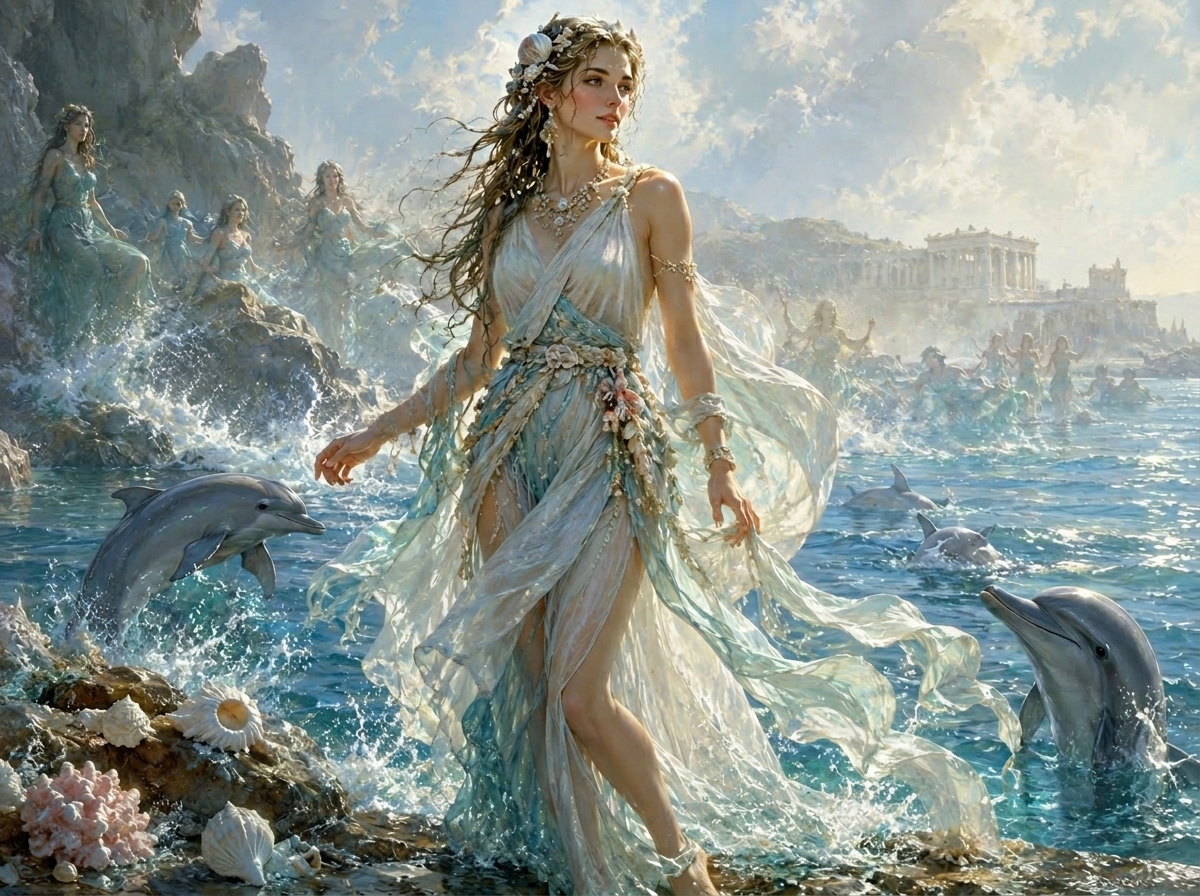
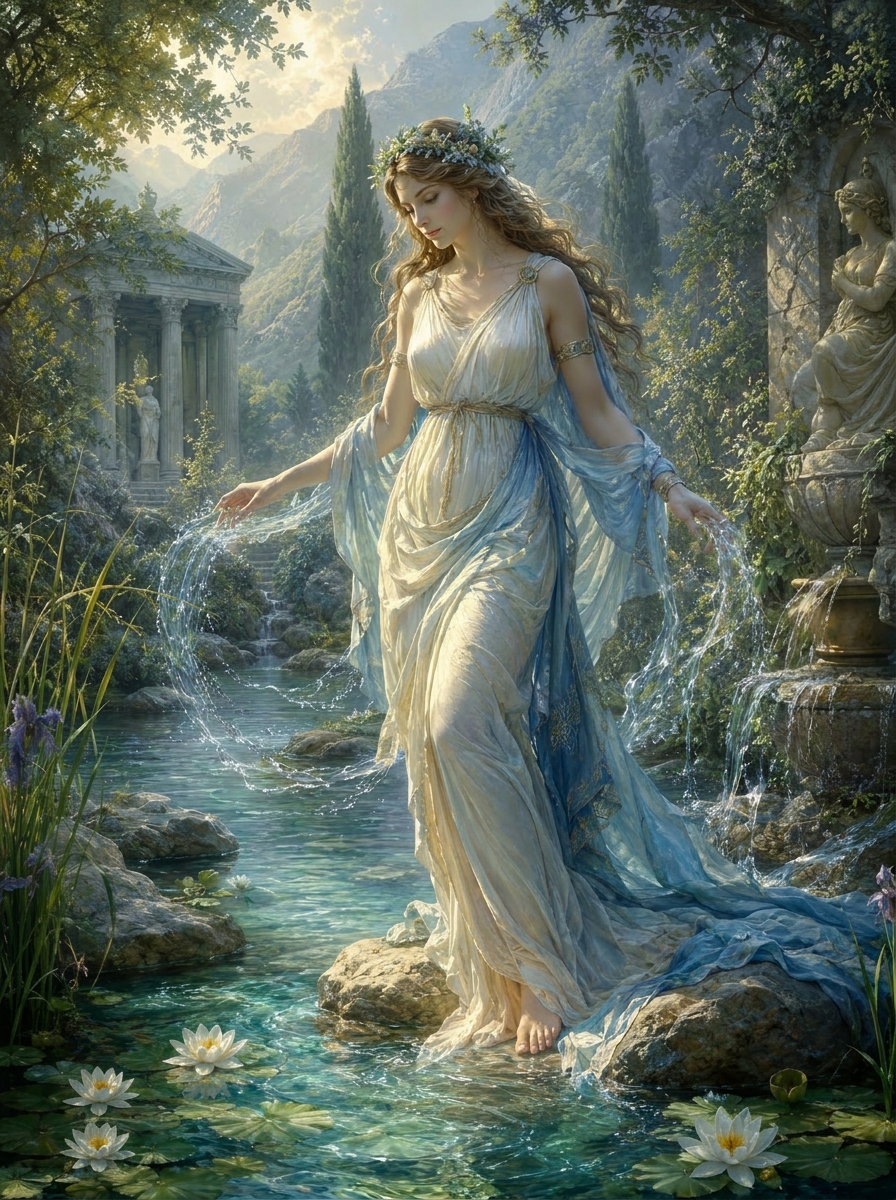
The Naiad (Greek Naias, plural Naiades, English Naiad) is the freshwater nymph (Greek nymphe) who dwells in the freshwater (springs, rivers, lakes, wells) of Greek mythology, in the form of a beautiful human female, embodying the divinity of the freshwater source — the decisive canonical iconographic figure of Greek-mythological nature spirits. The etymology derives from the Greek verb naein ('to flow'), and within the four-fold classification of nymphs — Naiad (freshwater), Oceanid (Oceanids, ocean), Nereid (Nereids, salt sea), and Dryad (Dryads, tree) — the Naiad is the decisive canon of freshwater. The decisive textual canon is in the Theogony (Theogonia) of the Greek poet Hesiod (Hesiodos), c. 700 BCE — lines 364-370, the canon of the 3,000 sisters Oceanids and 3,000 brothers River-gods (Potamoi) born to the river-god Oceanus (Okeanos) and his sister Tethys — is the decisive textual canon of the Naiad, and the river nymphs appear decisively in Books 14 and 20 of the Iliad and Books 13 and 17 of the Odyssey by Homer (Homeros) of the eighth century BCE. The Naiad Castalia of the Castalian Spring (Kastalia) by the Temple of Apollo at Delphi in Greece — the canonical inspiration of poetic prophecy — is the most decisive individual Naiad, and the 1896 painting Hylas and the Nymphs by the British Pre-Raphaelite painter John William Waterhouse (1849-1917) established the visual canon of the Naiad in the nineteenth-century Victorian era.

nix
📸 2

Nix

Lesser

Water Spirit of Germanic/Slavic Folklore

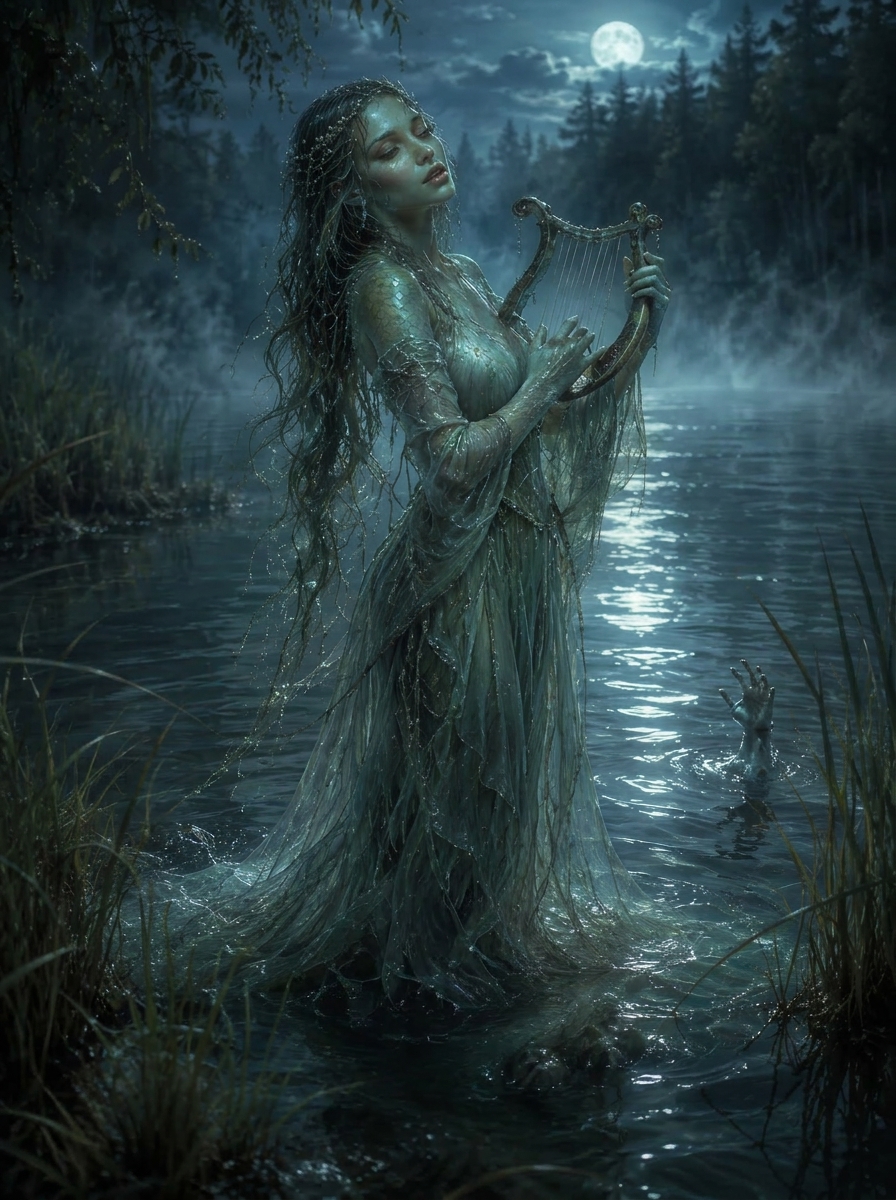
The Nix (Old English nicor, Old Norse nykr, German Nix/Nixe, English Nix or Nixie) is the canonical iconographic figure of the water spirit of Germanic and Slavic folklore dwelling in fresh water — rivers, lakes, and wells — appearing in alluring human form (mostly as beautiful women or handsome men) and luring humans into the water through music and song, with the true form being canonical iconography of a fish-tail, fish-scales, or green skin. The etymology derives from the Proto-Indo-European *neigw- ('to wash, purify') through the Proto-Germanic *nikwiz — the canonical vocabulary of Old English nicor, Old Norse nykr, and Old High German nihhus. The decisive textual canon is line 422 of Book 1 and line 1427 of Book 2 of the Old English epic Beowulf (Beowulf) by an anonymous author of the 8th-10th centuries — the water-monsters 'nicras' in the lake where the hero Beowulf fights Grendel's mother with the sword Hrunting — the decisive origin of the Germanic canon, and the canon of tale 79 The Nixie of the Mill-Pond (Die Nixe im Teich) of the Kinder- und Hausmaerchen of the German Grimm Brothers (Jacob and Wilhelm) of 1812-1815 is the decisive canon of the 19th-century German fairy-tale Nix. The 1779 poem The Fisherman (Der Fischer) of the German poet Johann Wolfgang von Goethe (1749-1832) and the 1824 poem The Loreley (Die Loreley) of the German poet Heinrich Heine (1797-1856) established the 19th-century German Romantic Nix poetic canon, and the opera Rusalka by the Czech composer Antonin Dvorak (1841-1904), premiered on 31 March 1901 at the National Theatre in Prague, is the decisive musical canon of the Slavic Nix canon.

undine
📸 2

Undine

Intermediate

Water Spirit of Paracelsus

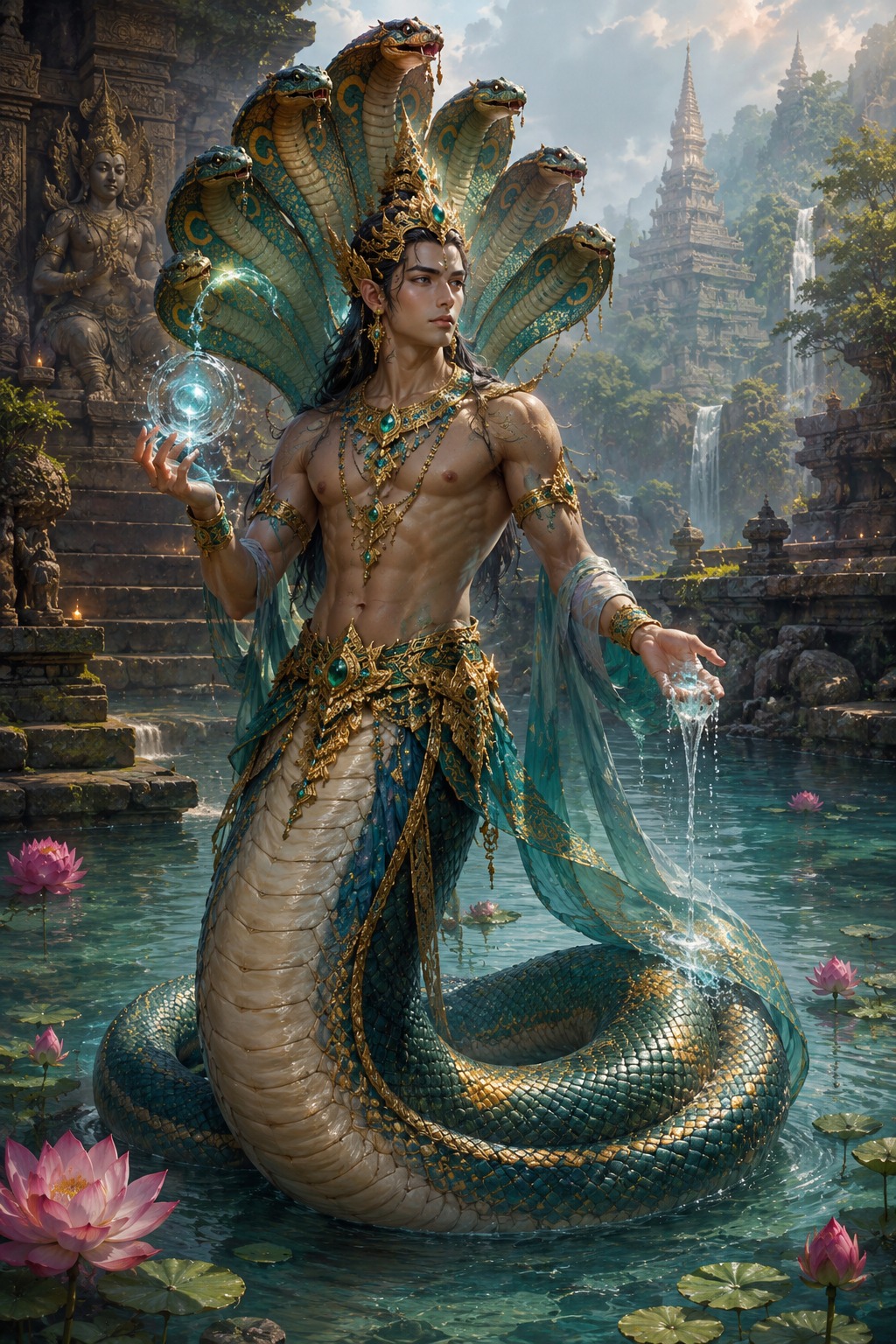
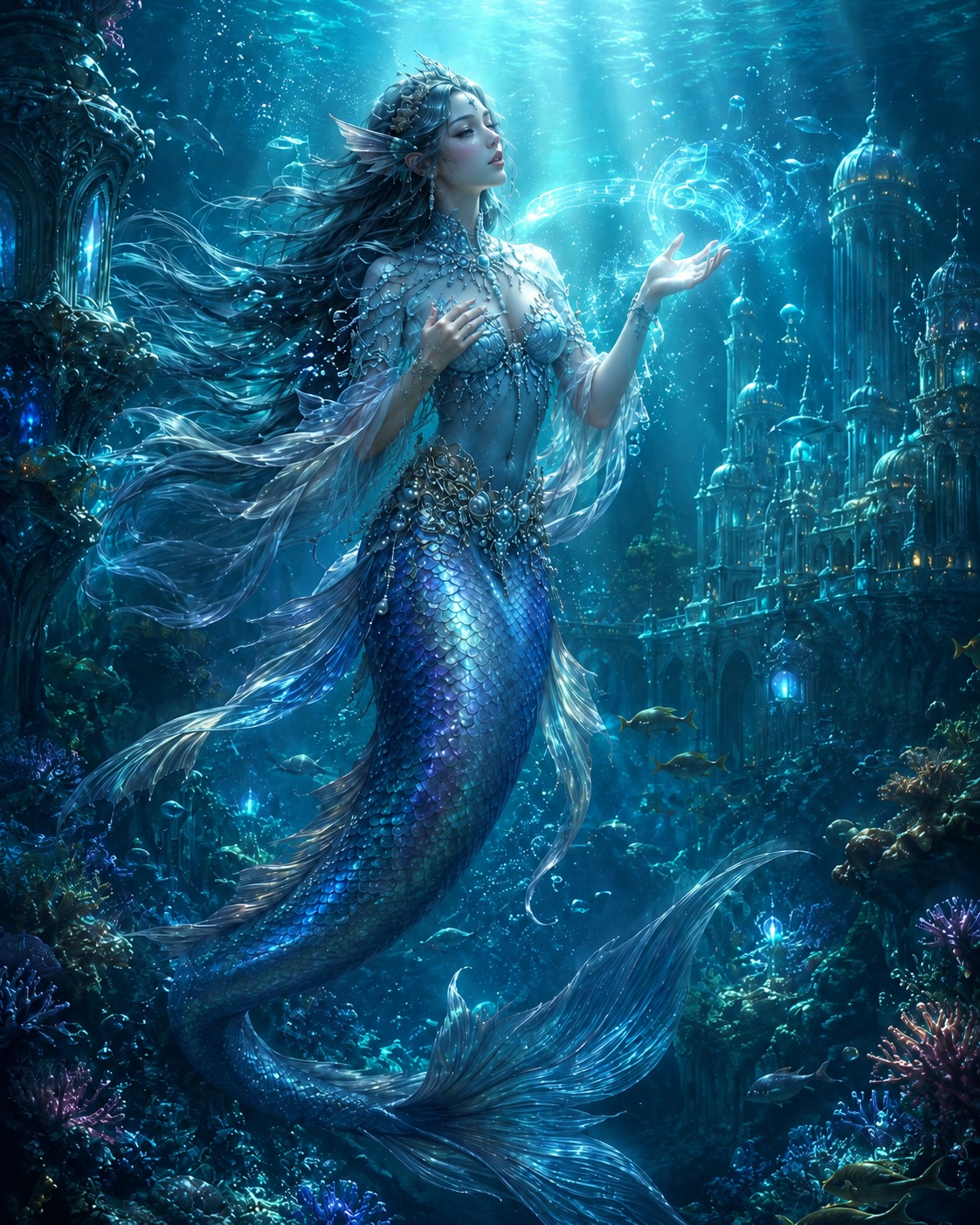
The Undine (Latin Undina, German Undine, English Undine) is the decisive canonical spirit of water (Aqua) among the four element spirits (Elemental Spirits) in the posthumous 1566 Latin treatise A Book of Nymphs, Sylphs, Pygmies, and Salamanders (Liber de Nymphis, Sylphis, Pygmaeis et Salamandris) by the Swiss physician-alchemist Paracelsus (Theophrastus Bombastus von Hohenheim, 1493-1541). The etymology is the canonical vocabulary of the Paracelsian coinage Undina derived from the Latin unda ('wave, billow'), and the decisive canonical iconography depicts her as a beautiful human female figure — dwelling in fresh water such as waterfalls, lakes, and springs — originally without a soul but acquiring one through marriage to a human. The decisive literary canon is the novella Undine (Undine) of 1811 by the German Romantic author Friedrich de la Motte Fouque (1777-1843) — the decisive Romantic tragic canon in which the Undine, who acquires a soul by marrying the human knight Huldbrand (Huldbrand), comes to death through her husband's betrayal — and the opera Undine premiered at the Royal Theatre in Berlin on 3 August 1816 by E. T. A. Hoffmann (E. T. A. Hoffmann, 1776-1822) — with libretto by Fouque himself — is the decisive canon of German Romantic opera. The ballet Undine of the German composer Hans Werner Henze (1926-2012), premiered at the Royal Opera House Covent Garden in London on 27 October 1958 (choreographed by Frederick Ashton, with Margot Fonteyn as Undine) is the decisive canon of 20th-century ballet.

🐉Monsters(2)
🐉Dragons(7)
vritra

Vritra

Indian Vedic Drought Dragon

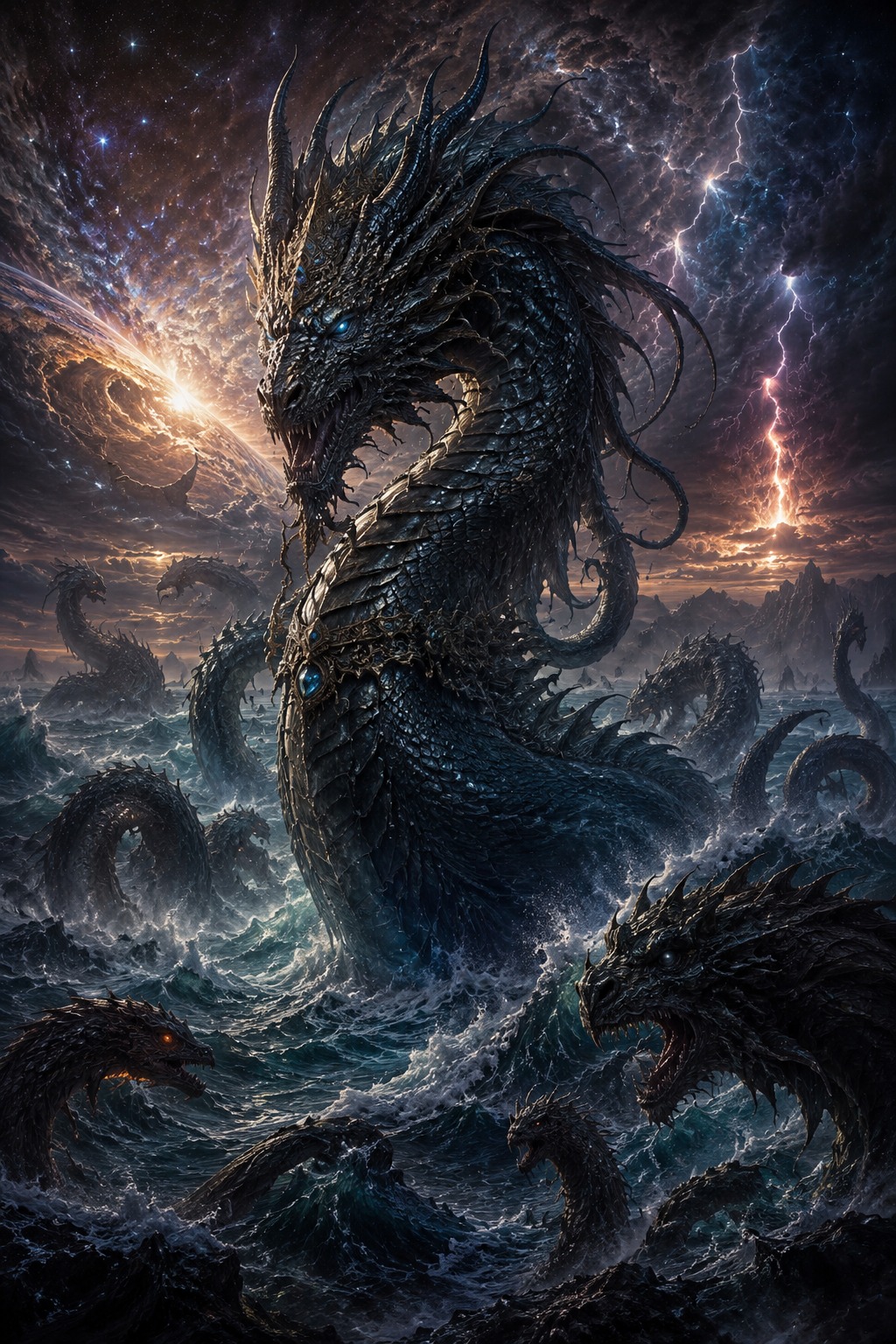
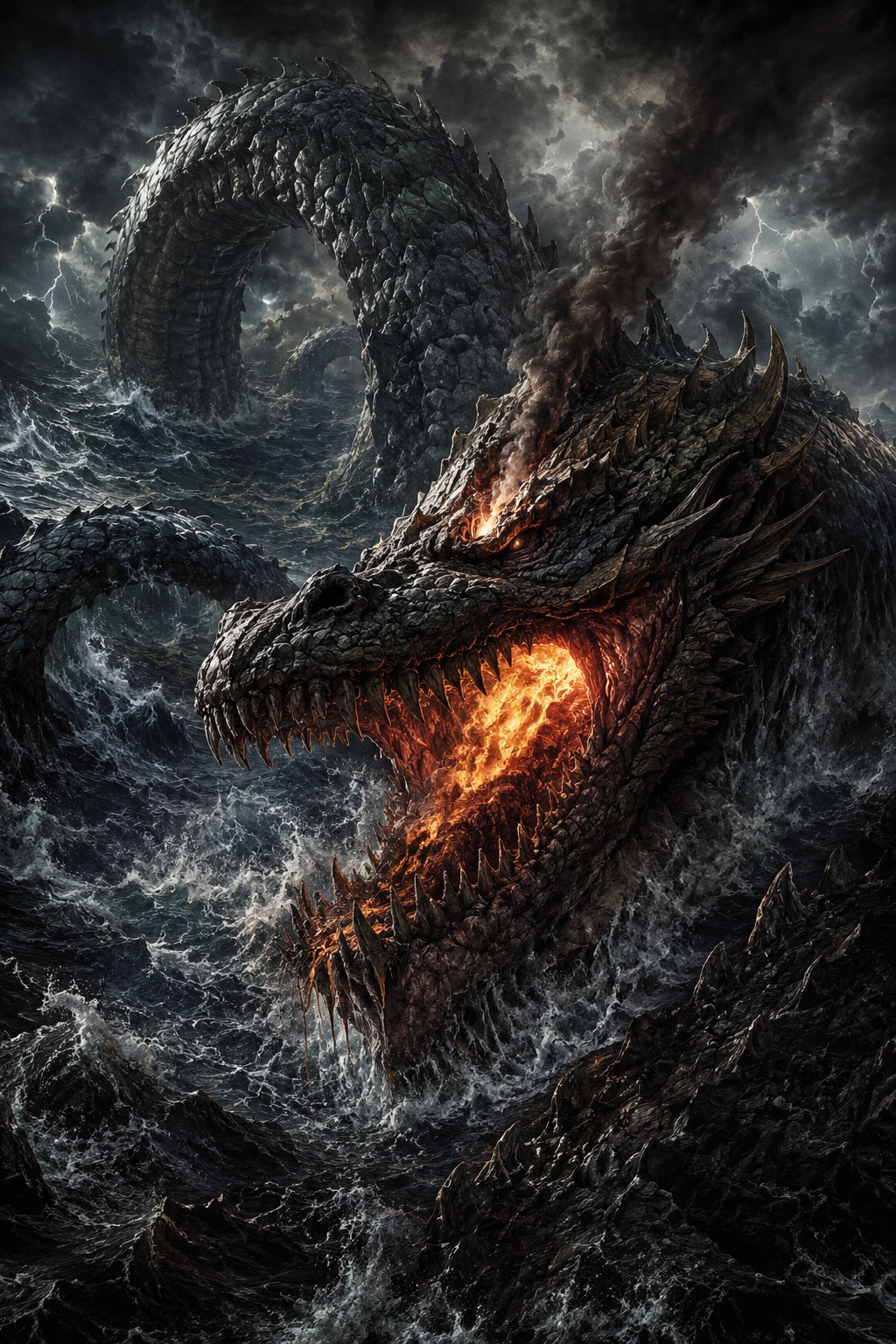
Vritra (Sanskrit Vṛtra) is the most powerful evil dragon-serpent of Vedic Indian mythology and the oldest canonical instance of the Indo-European Chaoskampf motif (storm-god against many-headed serpent) in the surviving textual record. The Sanskrit name itself derives from the verb-root vṛ ('to cover, enclose'), meaning 'the enveloper, the obstructer', and Vritra is represented as a great legless serpent (ahi, 'snake') or as a mountain coiled around all the world's waters. He is the embodiment of drought: by wrapping his body around the seven great rivers (Sapta Sindhu) of the Indian subcontinent, he holds the waters captive and inflicts thirst and death on humankind. He dwells inside a fortress of ninety-nine concentric strongholds (pura). The thunder-god Indra is his eternal enemy, and the Indra-Vritra duel is the central battle of the Vedic corpus, narrated most fully in Rigveda 1.32 — Indra is given the vajra ('thunderbolt' or 'diamond mace') forged by the divine smith Tvaṣṭṛ, breaks the ninety-nine strongholds, and cleaves Vritra's head; the seven rivers held captive in Vritra's body burst forth and bring the Indian subcontinent to life. In later Hindu retellings (Mahābhārata, Bhāgavata Purāṇa), Vritra is recast as the brother of Tvaṣṭṛ's son Viśvarūpa, originally Indra's friend, slain by divine treachery, which charges Indra with the sin of brahmahatyā ('the killing of a brahmin').

azure-dragon

Azure Dragon

靑龍 · Eastern Guardian of the Four Symbols

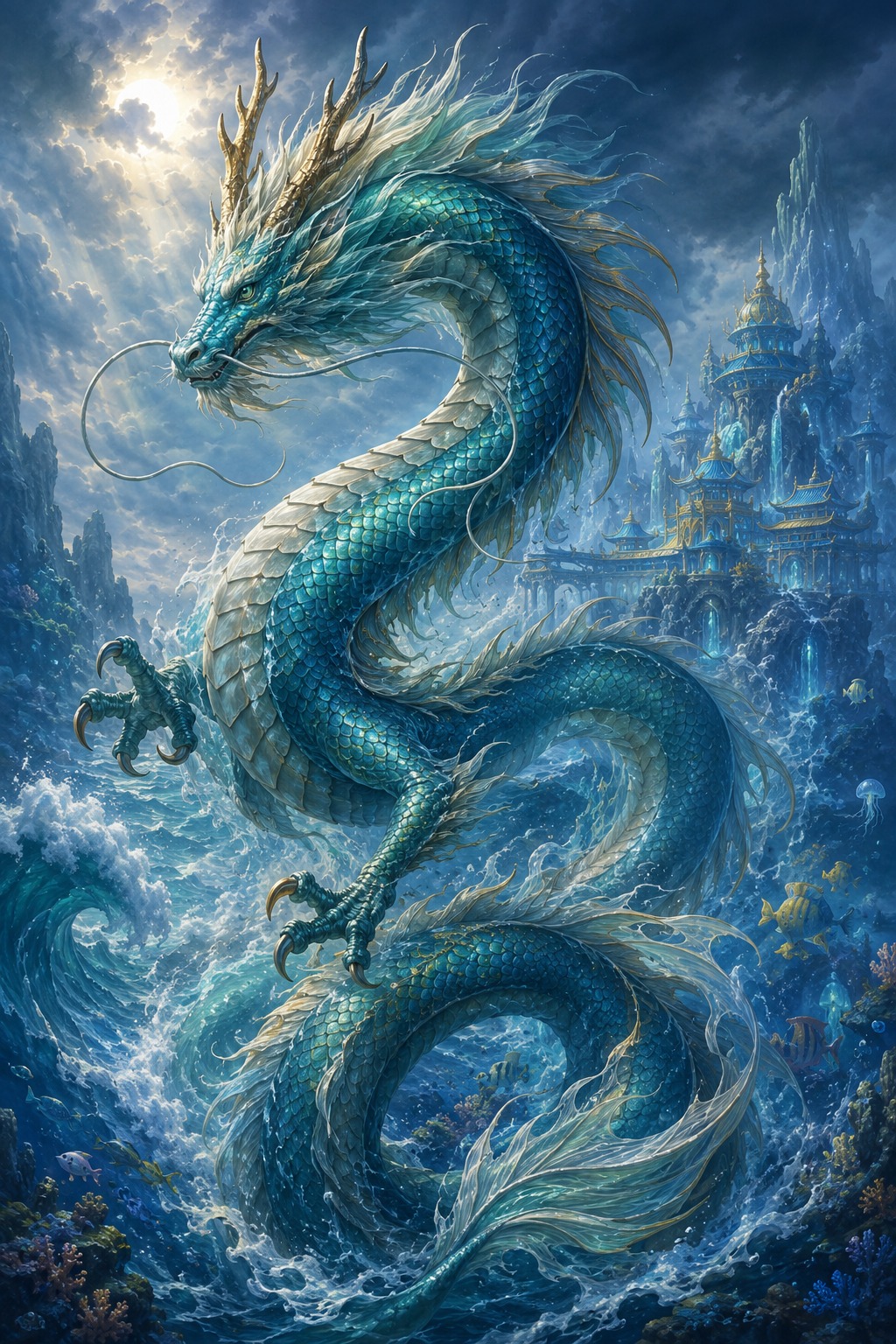
The Azure Dragon (Chinese 'Qinglong', Korean 'Cheongnyong', Japanese 'Seiryu') is the eastern guardian of the East-Asian Four Symbols (sasin / Sishen), the celestial dragon governing the East, the spring, the Wood phase of the five elements and the colour green-blue. The system — Azure Dragon of the East, White Tiger of the West, Vermilion Bird of the South, Black Tortoise of the North — was codified under the Han dynasty, in particular the 'Huainanzi' (c. 139 BCE) of Liu An and Wang Chong's 'Lunheng' (c. 80 CE), and unifies the seven lunar mansions of the eastern quadrant (Jiao, Kang, Di, Fang, Xin, Wei, Ji). Visually the Azure Dragon is distinguished from the imperial yellow long by a slimmer, more serpentine body, a green-blue scale-pattern, branched deer-style antlers and carp scales; it is the canonical image of the geomantic principle that the dragon of the East guards the left side of a settlement. The best-preserved early representations are the eastern murals of the Goguryeo tombs Gangseo Daemyo and Jungmyo (late sixth century, South Pyongan, North Korea) and the late-seventh- to early-eighth-century Kitora Tomb (Asuka village, Nara prefecture, Japan, recognised as a National Treasure in 1998). The Azure Dragon also names the Cheongwadae presidential residence in Korea ('house of green tiles', built 1939) and watches over the Eastern Flowery Gate (Donghuamen) of the Forbidden City completed in 1420.

🐉Humanoids(2)
aphrodite

Aphrodite

Aphrodite · Goddess of Love, Beauty, and Desire

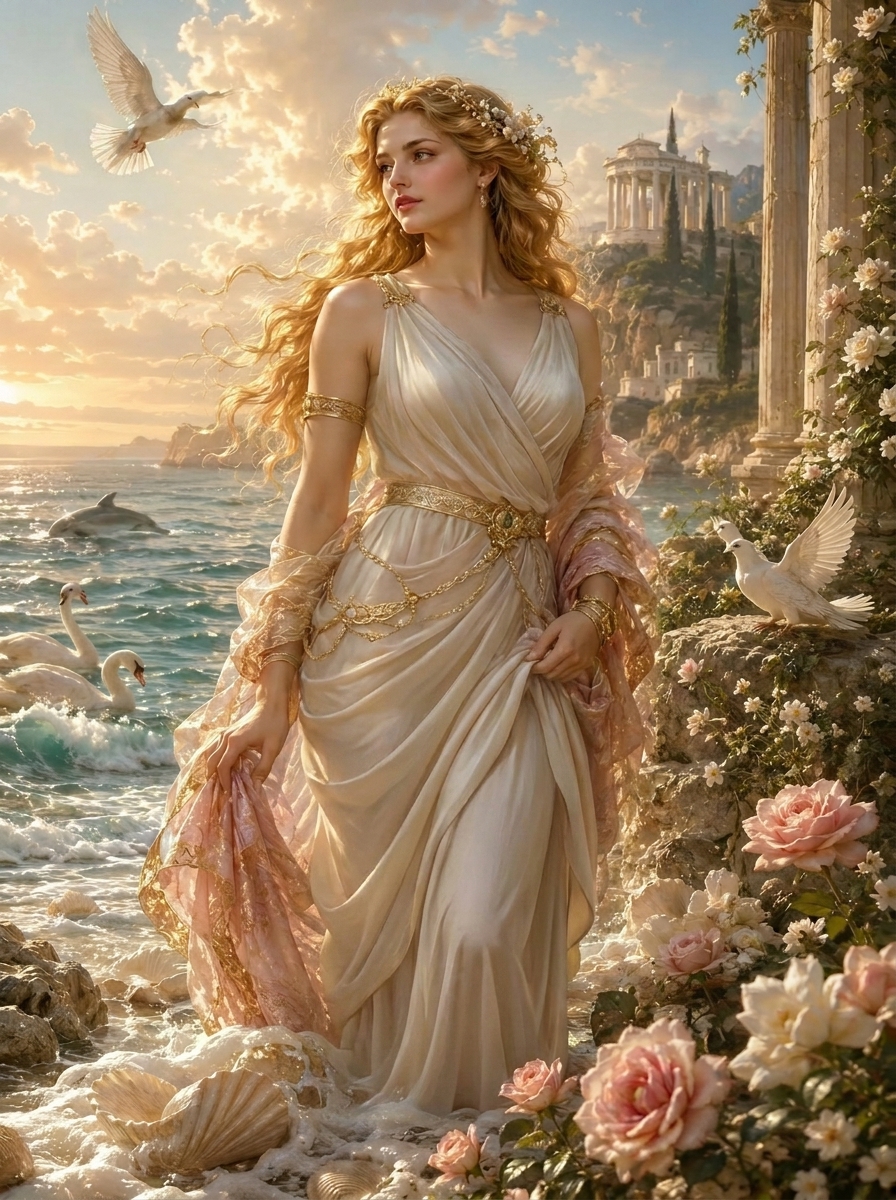
Aphrodite (Ancient Greek Aphrodite, Latin Venus) is the goddess of love, beauty, desire, and fertility in Greek mythology — the decisive canon, the decisive canonical iconographic figure born from the foam (aphros, sea foam) after Kronos (Kronos) castrated his father Ouranos (Ouranos) and threw his genitals into the sea. The etymology is the decisive canonical vocabulary of the Greek aphros (foam, sea foam) — 'the one born from foam'. The decisive textual canon is the Theogony (Theogony) lines 188-206 of Hesiod (Hesiod) of c. 8th-7th century BCE — the decisive canon in which Kronos castrated his father Ouranos and the genitals fell into the sea, foam (aphros) formed, and Aphrodite was born and landed on the shores of Kypros (Kypros) or Kythera (Kythera) — and the Iliad (Iliad) Book 5 lines 311-430 of Homer (Homer) of c. 8th century BCE — the decisive canon of Diomedes (Diomedes) wounding her wrist with a spear and making her flee — and Book 14 lines 214-221 — the decisive canon of the kestos himas (kestos himas, girdle of love) — and the Odyssey (Odyssey) Book 8 lines 266-366 — the decisive canon of the affair with Ares (Ares) caught in Hephaistos's (Hephaistos) bronze net. The fragment 1 Hymn to Aphrodite (Hymn to Aphrodite) of Sappho (Sappho) of c. 7th century BCE and the Homeric Hymns (Homeric Hymns) No. 5 Hymn to Aphrodite of c. 7th-6th century BCE — the decisive canon of conceiving Aineias (Aineias) with the love of Anchises (Anchises).