
Gargoyle
Gargoyle · Stone Monster — Legendary Protectors of Medieval Architecture
Names in Other Languages
 가고일한국어
Gargoyle · 석상 괴물 — 중세 건축을 지키는 전설의 존재
 ガーゴイル日本語
Gargoyle · 石像の怪物 — 中世建築を守る伝説の存在
 石像鬼繁體中文
Gargoyle · 石像怪物 — 保護中世建築的傳說生物
 WasserspeierDeutsch
Gargoyle · Steinernes Ungeheuer — Legendäre Wächter mittelalterlicher Bauwerke
 GargouilleFrançais
Gargoyle · Monstre de pierre — Gardien légendaire de l’architecture médiévale
 GárgolaEspañol
Gargoyle · Monstruo de piedra — Protector legendario de la arquitectura medieval
 GárgulaPortuguês
Gargoyle · Monstro de Pedra — Protetores lendários da arquitetura medieval
 GargulecPolski
Gargoyle · Kamienny potwór — Legendarny stróż średniowiecznej architektury
 ГаргульяРусский
Gargoyle · Каменное чудовище — Легендарный страж средневековой архитектуры
The Gargoyle (French gargouille) is a grotesquely carved stone waterspout fixed to the exterior of Gothic cathedrals and churches between the twelfth and fifteenth centuries. The name derives from French gargouille, itself from Latin gurgulio ('throat' or 'gullet'), the same root that yields English gurgle. Its function is severely practical: a channel is bored through the body so that rainwater channelled along the roof spouts through the creature's mouth and is thrown clear of the wall, sparing the masonry from erosion. At the same time, the monstrous, demonic, or chimerical form was meant to ward off evil. The most famous gargoyles are those of the Cathedral of Notre-Dame de Paris (begun 1163, completed 1345), many of which were redesigned during Eugene Viollet-le-Duc's restoration of 1843-1864. Victor Hugo's 1831 novel Notre-Dame de Paris brought them into popular Romantic imagination. Stone figures without a water-spout function are, strictly, chimeras or grotesques, not gargoyles.
Origin
Gargoyle derives from French gargouille, rooted in Latin gurgulio ('throat, gullet') and Greek gargarizein ('to gargle'). The most famous mythic origin is the legend of La Gargouille, a dragon said to have lived in the Seine and devoured Norman villagers, subdued in the seventh century by Saint Romanus of Rouen (d. c. 631), who tamed it with the sign of the cross and brought it to the village to be executed. The body was burnt; only the throat and head, hardened by the dragon's own fire, would not burn, and were set into the wall of the new church as a waterspout, originating the gargoyle tradition. Variants of the story appear in Jacobus de Voragine's Legenda Aurea (1260s) and the Vita Sancti Romani. Functionally, stone waterspouts long predate the Middle Ages: lion-headed gutter spouts survive from ancient Egyptian, Greek, and Roman architecture (notably at Pompeii). Gothic builders standardised the monstrous gargoyle iconography from the thirteenth century onward.
Features
- Stone carving of monster, demon, beast, or chimera form
- Hollowed channel through the body, water spouting from the mouth
- Practical function to throw rainwater clear of the wall
- Apotropaic function to ward off evil and demons
- Strictly distinguished from chimeras and grotesques, which have no waterspout
- Canonical exterior element of Gothic cathedral architecture
Stories
Gargoyles were mounted along the eaves and corners of Gothic cathedrals as functional rainwater spouts. The canonical example is the Cathedral of Notre-Dame de Paris, begun in 1163 and completed in 1345; many of its current gargoyles and chimeras date from the 1843-1864 restoration directed by Eugene Viollet-le-Duc. The most famous figure, Le Stryge, is in fact a chimera designed by Viollet-le-Duc and has no water-spouting function. Beyond Paris, gargoyles became a standard exterior element of the cathedrals of Canterbury, Salisbury, Cologne, Burgos, and many others. Disney's The Hunchback of Notre Dame (1996) and the Disney television series Gargoyles (1994-1997) brought animated gargoyles into late-twentieth-century popular culture; the Dungeons and Dragons Monster Manual canonised the living-stone variant for fantasy gaming, and the Harry Potter novels gave the figure a humorous office-guardian role at Hogwarts.
Weakness
The chief practical weakness of the gargoyle is the weathering of stone. Constantly exposed to rain and frost, gargoyles erode over centuries; many of Notre-Dame's original gargoyles had collapsed by the eighteenth century and were replaced in the Viollet-le-Duc restoration. The 15 April 2019 fire at Notre-Dame destroyed the spire and damaged numerous gargoyles and chimeras, restoration of which is ongoing. After the Reformation, many gargoyles in Protestant areas of England and Germany were dismantled as superstitious or idolatrous. As mythic creatures, gargoyles rarely have stated weaknesses, though later fantasy (notably Dungeons and Dragons) standardised the convention that animated stone gargoyles return to inert stone in daylight.
Cultural Significance
The gargoyle is not merely a waterspout but a doctrinal sign of medieval Christian architecture. The monstrous figures on the exterior marked the boundary between the sacred interior and the worldly, demonic outside, externalising the bestiary's catalogue of sin. Victor Hugo's Notre-Dame de Paris (1831) revived gargoyles as a central image of Romanticism; Viollet-le-Duc's restoration of Notre-Dame in 1843-1864 standardised neo-Gothic gargoyle iconography. In the twentieth century, Disney's The Hunchback of Notre Dame (1996), the television series Gargoyles (1994-1997), the canonical Dungeons and Dragons gargoyle monster, and the Hogwarts gargoyles of Harry Potter brought the figure into mass culture. The gargoyle thus occupies the rare position of being simultaneously a serious architectural-historical subject, a religious-iconographic motif, and a pop-cultural icon.
In Popular Culture
- La Gargouille legend — seventh-century Saint Romanus of Rouen
- Jacobus de Voragine, Legenda Aurea (1260s) — gargoyle origin legend recorded
- Cathedral of Notre-Dame de Paris — begun 1163, completed 1345
- Victor Hugo, Notre-Dame de Paris (1831) — Romantic revival
- Eugene Viollet-le-Duc, restoration of Notre-Dame (1843-1864) — many new gargoyles and chimeras designed
- Disney television series Gargoyles (1994-1997)
- Disney, The Hunchback of Notre Dame (1996) — gargoyle characters Laverne, Hugo, and Victor
Trivia
The most famous figure of Notre-Dame de Paris, Le Stryge, is in fact a chimera (not a gargoyle) designed by Eugene Viollet-le-Duc during the 1843-1864 restoration; it has no water-spouting function. Viollet-le-Duc himself codified the strict distinction between gargoyle and chimera in the records of the Notre-Dame project. The fire of 15 April 2019 collapsed the spire and damaged numerous gargoyles and chimeras; the cathedral reopened on 8 December 2024 after major restoration. The seventh-century legend of La Gargouille is still celebrated annually in Rouen as the Fete de la Gargouille, in which the dragon is re-enacted being led through the streets to its execution.
Related
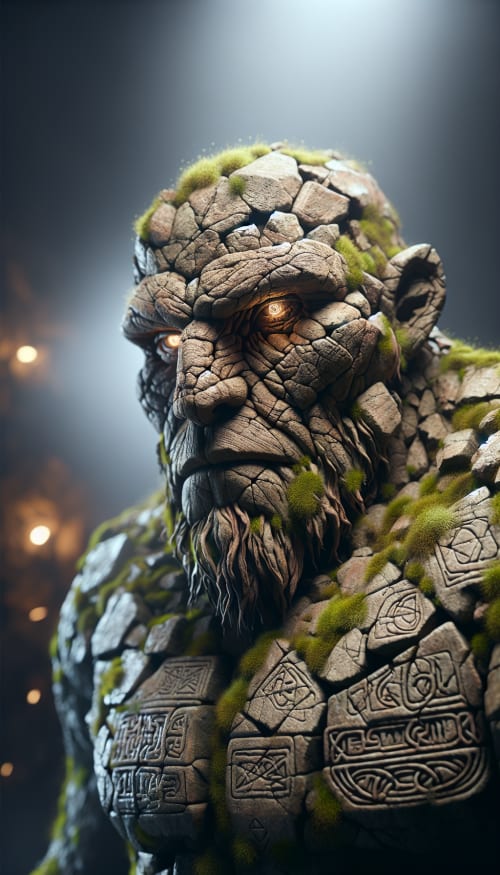
Golem
Golem · Artificial Creature — A being made from inanimate materials
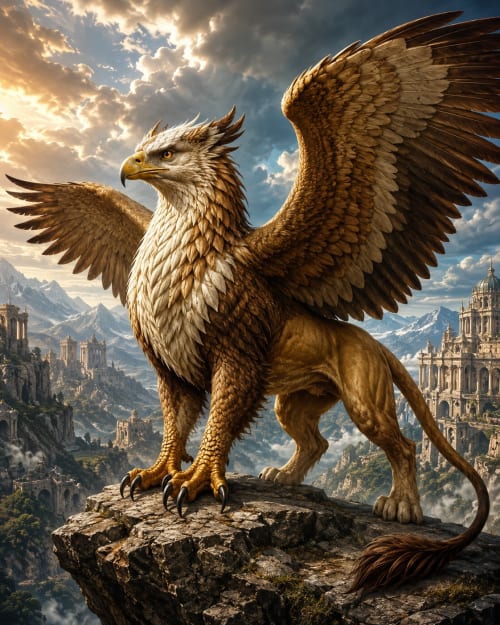
Griffin
Griffin · Legendary Lion-Eagle — Mythical creature with eagle foreparts and lion hindquarters

Cretan Bull
Seventh Labor of Heracles in Greek Myth

Basilisk
King of Serpents in Medieval European Legend

Unicorn
Unicorn · Monoceros — Legendary Horse with a Sacred Horn

Amphisbaena
Two-Headed Serpent of Greek Myth

Strix
Strix · Night Bird — Vampiric Bird of Ancient European Myth

Nemean Lion
Nemean Lion · Invulnerable Beast — Immortal creature of Greek myth
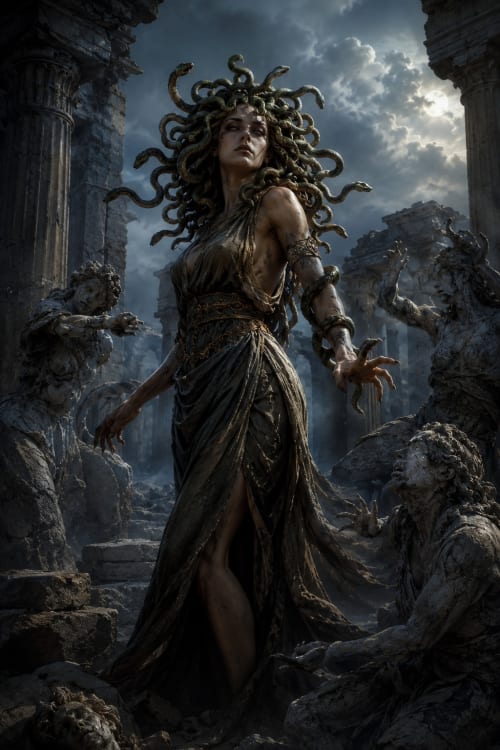
Medusa
Medusa · Monster — Ancient creature with snakes for hair

Phoenix
Phoenix · Firebird — Legendary bird reborn from flames

Centaur
Centaur · Half-human, half-horse — Legendary creature of Greek myth
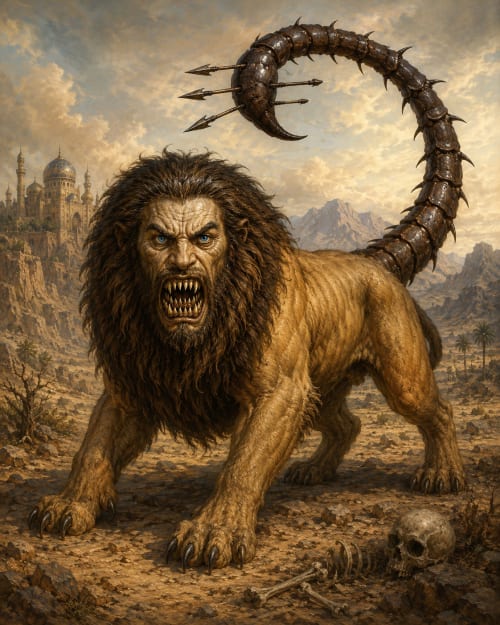
Manticore
Persian Legendary Lion-Man-Scorpion Hybrid