
Unicorn
Unicorn · Monoceros — Legendary Horse with a Sacred Horn
Names in Other Languages
 유니콘한국어
Unicorn · 일각수 — 신성한 힘을 지닌 전설 속의 말
 ユニコーン日本語
ユニコーン · 一角獣 — 神聖な力を持つ伝説の馬
 獨角獸繁體中文
Unicorn · 一角獸 — 擁有神聖力量的傳說之馬
 EinhornDeutsch
Unicorn · Einhorn — Legendäres Pferd mit heiligem Horn
 LicorneFrançais
Unicorn · Licorne — Cheval légendaire au pouvoir sacré
 UnicornioEspañol
Unicorn · Unicornio — Caballo legendario de cuerno sagrado
 UnicórnioPortuguês
Unicorn · Unicórnio — Cavalo lendário com um chifre sagrado
 JednorożecPolski
Unicorn · Jednorożec — Legendarny koń z świętym rogiem
 ЕдинорогРусский
Unicorn · Единорог — Легендарный конь с волшебным рогом
The Unicorn (Latin unicornis, from uni 'one' + cornu 'horn') is the legendary one-horned creature of medieval Europe, represented as a white horse with a single spiral horn in the middle of the forehead and a symbol of purity, chastity, and the sacred. Its etymological root reaches back to Ctesias' fifth-century BCE monoceros, but the unicorn proper crystallised when the Greek Septuagint rendered the Hebrew re'em (now identified as the aurochs) as monokeros and the Latin Vulgate of Saint Jerome rendered that, in turn, as unicornis. The Physiologus of the second to fourth centuries CE introduced the maiden-and-unicorn allegory: no hunter can take the unicorn by force, but a virgin alone in the forest will draw it to her, where it lays its head in her lap and falls asleep. This was theologised as the Incarnation, the unicorn being Christ entering the Virgin's womb. The Cloisters set of seven 'Hunt of the Unicorn' tapestries (Netherlands, 1495-1505) and the Cluny 'Lady with the Unicorn' set of six (c. 1500) are the iconographic peaks. The unicorn supports the Scottish side of the Royal Arms of the United Kingdom, and in twenty-first-century English it has become the standard term for billion-dollar startups.
Origin
The earliest trace of the unicorn is in Ctesias' Indika (fifth century BCE), where it appears as the Indian monoceros; Megasthenes, Aristotle, and Pliny took up the figure in natural-history terms. The iconographic crystallisation came when the Greek Septuagint rendered the Hebrew re'em as monokeros and the Latin Vulgate of Saint Jerome (late fourth century CE) translated it as unicornis, fixing the unicorn-image of Psalms 22 and 92 in Christian iconography. The maiden-and-unicorn allegory entered with the Physiologus (second to fourth century), and Isidore of Seville's Etymologies XII.2.12-13 (seventh century) codified the distinction between unicornus and rhinoceros. The Aberdeen Bestiary, MS Bodley 764, and the Rochester Bestiary of the twelfth and thirteenth centuries fixed the canonical iconography, and the seven 'Hunt of the Unicorn' tapestries (Netherlands, 1495-1505, now in The Cloisters, New York) and the six 'Lady with the Unicorn' tapestries (c. 1500, now in the Musee de Cluny, Paris) became the visual summit.
Features
- A single spiral horn at the middle of the forehead
- A body white as snow, in the form of a horse, fixed in medieval iconography
- A goat's beard and a lion's tail in the bestiary tradition
- The horn ('alicorn') neutralises all poison
- Wild and so fast that no hunter can catch it
- Drawn only to a virgin maiden, in whose lap it lays its head
Stories
The unicorn is a fixture of European heraldry. After James VI of Scotland succeeded Elizabeth I as James I of England in 1603, the two royal arms were combined: the lion (England) and the unicorn (Scotland) stand facing each other as the supporters of the British Royal Arms. In Renaissance pharmacopoeias, alicorn (unicorn horn) was treated as a universal antidote, more costly by weight than gold; Elizabeth I held an alicorn cup among her royal treasures. The Danish naturalist Olaus Worm published in 1638 the identification of most circulating 'unicorn horns' as narwhal tusks (Monodon monoceros), ending the natural-history puzzle. The painters Raphael (Young Woman with a Unicorn, c. 1505-1506, Galleria Borghese), Domenichino (The Virgin and the Unicorn), and the unknown masters of the Cluny and Cloisters tapestries fixed the visual canon. In modern fantasy, Peter S. Beagle's The Last Unicorn (1968), J. K. Rowling's Harry Potter and the Philosopher's Stone (1997), and the canonical Dungeons and Dragons monster maintain the figure.
Weakness
The unicorn's decisive weakness is the lap of a maiden. The Physiologus established the allegory: no hunter or weapon can take the unicorn by force, but a virgin alone in the forest will draw the beast to her, where it lays its head in her lap and falls asleep, allowing it to be captured. The seven 'Hunt of the Unicorn' tapestries of 1495-1505 visualised this canonically — the unicorn lured to the maiden, pierced by spears, and resurrected behind the enclosure of the seventh tapestry, in a theological allegory of Christ's Passion and Resurrection. Pharmacologically, the alicorn's efficacy is held to require living extraction, the horn of a dead unicorn losing half its virtue, as Renaissance pharmacopoeias record. In J. K. Rowling's Harry Potter, the killing of a unicorn and the drinking of its blood preserves life but leaves the drinker cursed and half-alive, a modern variant of the medieval theme.
Cultural Significance
The unicorn is not merely a creature but a triple-layered cultural sign: a theological allegory of the Virgin Mary and Christ through the maiden-and-unicorn motif, a Renaissance emblem of royal authority through the British and Scottish royal arms, and a twenty-first-century shorthand for billion-dollar startups. The Vulgate's unicornis rendering placed the figure at the heart of Christian art; the Cloisters' Hunt of the Unicorn and the Cluny Lady with the Unicorn tapestries are the iconographic peaks of the late fifteenth century. After Olaus Worm's 1638 identification of the narwhal closed the natural-history file, the unicorn persisted in nineteenth-century Pre-Raphaelite painting and twentieth-century fantasy literature, from Peter S. Beagle's The Last Unicorn (1968) through Harry Potter to the Dungeons and Dragons canon. In 2013, the American venture capitalist Aileen Lee adopted 'unicorn' for billion-dollar startups, and the term has become standard in global technology business by the 2020s.
In Popular Culture
- Septuagint Greek Bible (3rd-2nd c. BCE) — Hebrew re'em rendered as monokeros
- Latin Vulgate (late 4th c. CE) — monokeros rendered as unicornis
- Physiologus (2nd-4th c.) — maiden-and-unicorn allegory introduced
- Isidore of Seville, Etymologies XII.2.12-13 (7th c.) — codification of unicorn iconography
- Hunt of the Unicorn tapestries (Netherlands, 1495-1505) — held at The Cloisters, New York
- Lady with the Unicorn tapestries (c. 1500) — held at the Musee de Cluny, Paris
- Peter S. Beagle, The Last Unicorn (1968) — canon of modern fantasy
Trivia
Latin unicornis is a full calque of Greek monokeros: uni + cornu, 'one horn'. In 1638 the Danish naturalist Olaus Worm published, from specimens in his Museum Wormianum, the identification of most of the so-called unicorn horns of Renaissance European royalty as the spiral tusks of the Greenland narwhal (Monodon monoceros). The narwhal's binomial itself preserves the mythic name in scientific taxonomy. The unicorn on the British Royal Arms is shown in chains, reflecting the medieval iconographic tradition that the unicorn's wildness must be restrained. In 2013 the American venture capitalist Aileen Lee of Cowboy Ventures coined the term 'unicorn' in a TechCrunch article for a privately held startup with a valuation of more than one billion dollars; by the 2020s the term is the global standard in technology business.
Related

Monoceros
Monoceros · Unicorn — Legendary one-horned creature
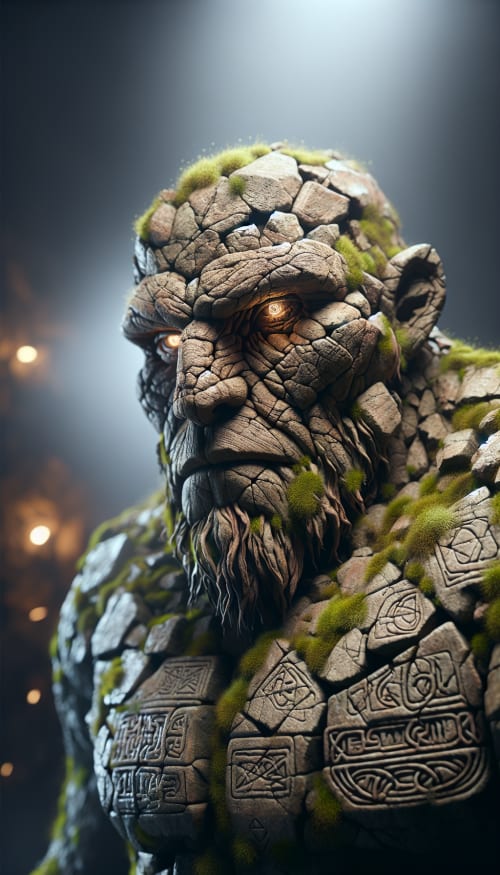
Golem
Golem · Artificial Creature — A being made from inanimate materials
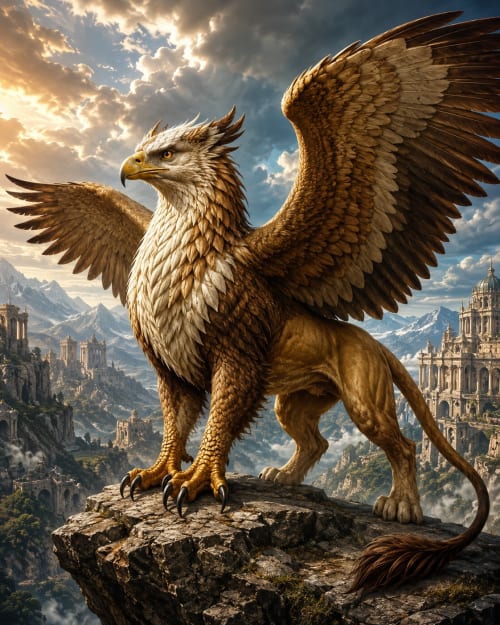
Griffin
Griffin · Legendary Lion-Eagle — Mythical creature with eagle foreparts and lion hindquarters

Basilisk
King of Serpents in Medieval European Legend

Gargoyle
Gargoyle · Stone Monster — Legendary Protectors of Medieval Architecture

Phoenix
Phoenix · Firebird — Legendary bird reborn from flames

Strix
Strix · Night Bird — Vampiric Bird of Ancient European Myth

Cretan Bull
Seventh Labor of Heracles in Greek Myth

Amphisbaena
Two-Headed Serpent of Greek Myth
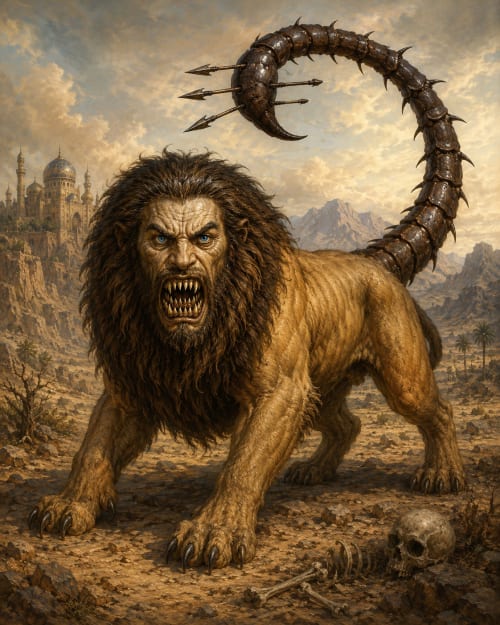
Manticore
Persian Legendary Lion-Man-Scorpion Hybrid
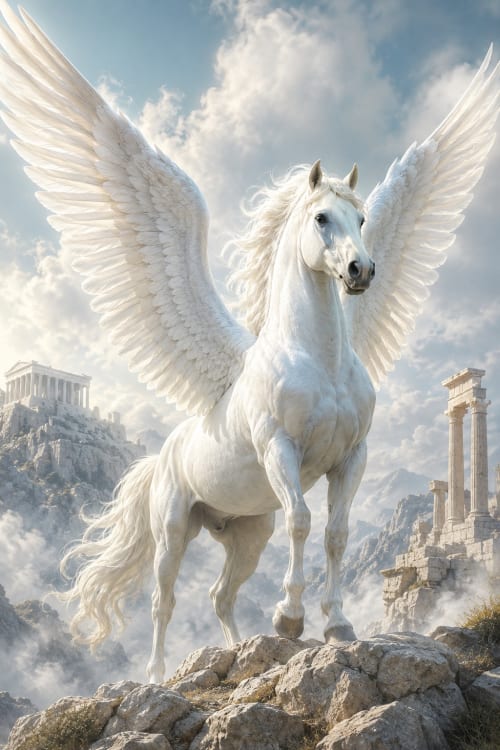
Pegasus
Pegasus · Winged Horse — A Legendary Creature from Greek Mythology