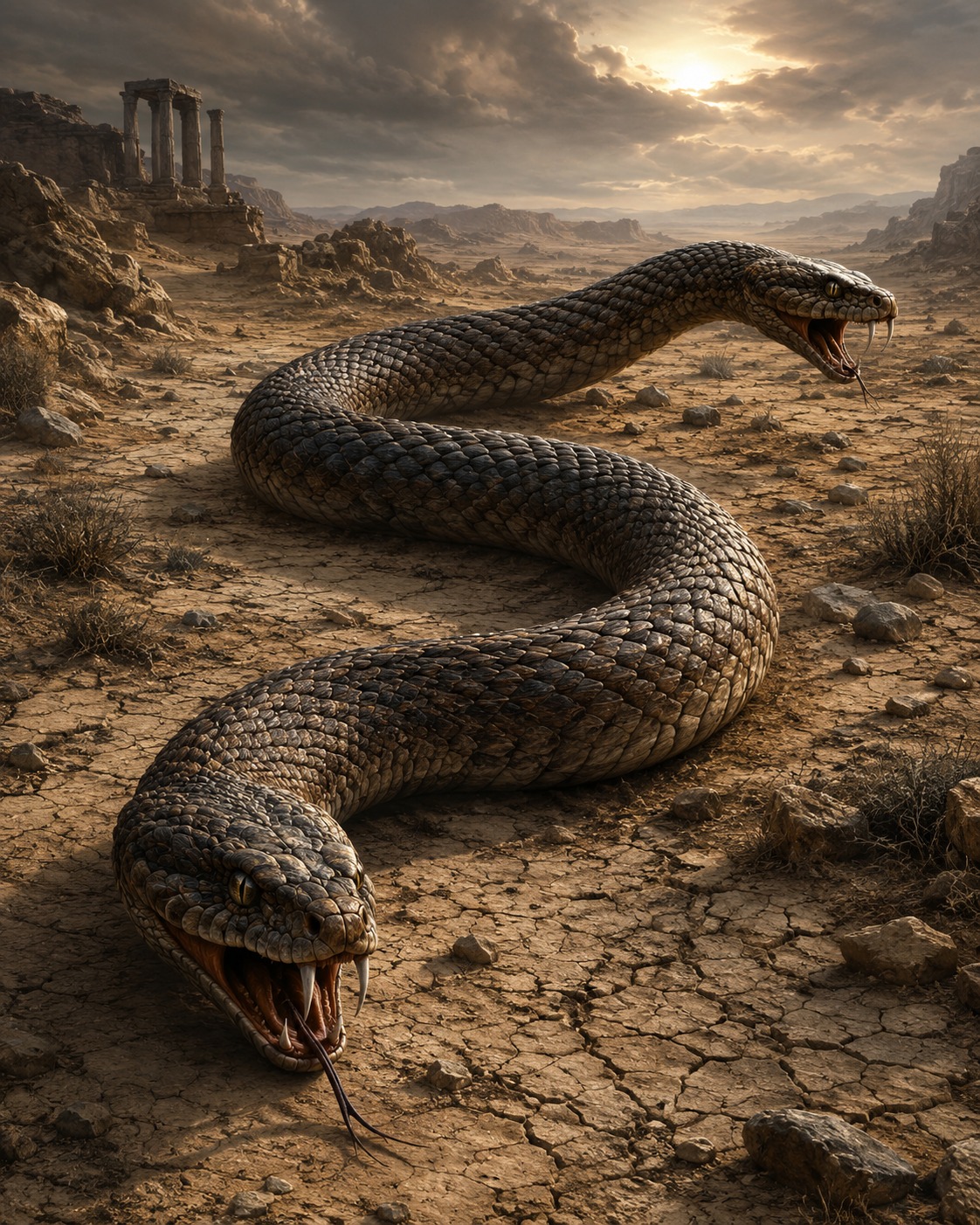
Amphisbaena
Two-Headed Serpent of Greek Myth
Names in Other Languages
 암피스바에나한국어
Amphisbaena · 양 끝에 머리가 달린 그리스 신화의 뱀
 アンフィキオン日本語
Amphicyon(ベアドッグ)· 大型絶滅肉食哺乳類
 熊犬獸繁體中文
Amphicyon · 熊犬 — 史前大型食肉哺乳動物
 AmphicyonDeutsch
Amphicyon · Bärenhund — Großes urzeitliches Raubtier
 AmphicyonFrançais
Amphicyon · Ours-chien — Grand carnivore préhistorique
 AnficiónEspañol
Amphicyon · Perro-oso — Gran depredador prehistórico
 AmficionPortuguês
Amphicyon · Urso-cão — Grande carnívoro pré-histórico
 AmficjonPolski
Amphicyon · Niedźwiedziopies — Duży prehistoryczny drapieżnik
 АмфиционРусский
Amphicyon · Медвежья собака — Крупный доисторический хищник
The Amphisbaena (Greek Amphisbaina, 'going both ways') is a legendary two-headed serpent of Greek and Roman myth, possessing a head at each end of its body and able to travel in either direction. Its name derives from Greek amphis (both ways) and bainein (to go). The Roman poet Lucan's Pharsalia describes the Amphisbaena among the desert serpents born when Perseus carried the head of Medusa over Libya and her blood dripped onto the sand. Pliny the Elder, Natural History VIII.35, notes drily that the Amphisbaena is the only serpent with two heads, 'as if a single mouth were not enough to release its poison'. The motif entered medieval bestiaries and heraldry as a standard charge, and was canonised again in Jorge Luis Borges's Book of Imaginary Beings (1957). Folk medicine credited its skin and living body with talismanic powers, particularly to protect pregnant women.
Origin
The earliest unambiguous reference is in the Theriaca of Nicander of Colophon (second century BCE), a Greek didactic poem on venomous animals. The mythological origin is fixed by the Roman poet Lucan in his Pharsalia IX.708-728 (c. 65 CE), where Cato's army marches through Libya and encounters the Amphisbaena among the serpents born from Medusa's blood: Dipsas, Seps, Aspis, and the two-headed Amphisbaena. Pliny the Elder Natural History VIII.35, Aelian De natura animalium IX.23, Silius Italicus Punica III.317-318, and Isidore of Seville's Etymologies XII.4.20 (seventh century CE) consolidated the description, which became standard in the medieval bestiaries, especially the Aberdeen Bestiary and MS Bodley 764 of the twelfth and thirteenth centuries.
Features
- Two heads, one at each end of the body
- Able to move forward in either direction
- One head sleeps while the other watches, never wholly defenceless
- Born from the blood of Medusa in the Libyan desert
- Venomous from both heads
- Cold-resistant; said by Pliny to move even in deep winter
Stories
Ancient medicine adopted the Amphisbaena as a talisman. Pliny Natural History XXX states that a pregnant woman who wears a living Amphisbaena will not miscarry, and that wrapping its skin around a walking-stick wards off cold. In medieval heraldry it appears on the 1372 tomb brass of William de Buslingthorpe in Northamptonshire and in seventeenth- and eighteenth-century armorial manuals. Dante invokes it in Inferno canto XXV, the metamorphosis of the thieves, and Milton in Paradise Lost X.524 names it among the writhing serpents into which Satan and his followers are transformed. It reappears in Jorge Luis Borges's Book of Imaginary Beings (1957) and is a canonical entry in Dungeons and Dragons monster manuals.
Weakness
Ancient sources rarely specify a predator. Later tradition holds that, since the Amphisbaena was born of Medusa's blood, divine weapons such as the harpe of Perseus retain power over it. Renaissance allegory mocks the creature for paralysis when both heads try to go the same direction at once, the two minds interfering with each other. Modern zoology since the 1960s has identified the mythical description as a misreading of the burrowing reptiles of the family Amphisbaenidae, whose blunt tail resembles their head and which can reverse direction in their tunnels: less a mythic vulnerability than a natural-history misunderstanding.
Cultural Significance
The Amphisbaena is no mere serpent but an emblem of duality. Medieval bestiaries read it as the divided soul, hypocrisy, the sin of the double mind. In heraldry the two heads stand for vigilance and prudence at all sides. Dante uses it for thieves and traitors, Milton for the metamorphosis of fallen angels, and Borges, recapitulating the tradition, calls it 'the snake of two faces of the soul'. In modern zoology, Carl Linnaeus in his Systema Naturae of 1758 named a genus of burrowing reptiles Amphisbaena, fixing the mythic name in scientific taxonomy. The motif also survives in pop culture, from Dungeons and Dragons through Borges's twentieth-century re-canonisation to the heraldic crest of several modern institutions.
In Popular Culture
- Nicander of Colophon, Theriaca (2nd c. BCE) — earliest unambiguous reference
- Lucan, Pharsalia IX.708-728 (c. 65 CE) — born of Medusa's blood in the Libyan desert
- Pliny the Elder, Natural History VIII.35 — 'the only serpent with two heads'
- Aelian, De natura animalium IX.23 and Silius Italicus, Punica III.317-318
- Isidore of Seville, Etymologies XII.4.20 (7th c. CE) — standard medieval bestiary entry
- Dante, Inferno XXV and John Milton, Paradise Lost X.524
- Jorge Luis Borges, Book of Imaginary Beings (1957) — twentieth-century re-canonisation
Trivia
The two-headed motif derives from observation of real burrowing reptiles, the family Amphisbaenidae, whose head and blunt tail resemble each other and which can move tail-first through their tunnels; ancient observers read them as serpents with a head at each end, and this naturalistic explanation has been scholarly consensus since the 1960s. Carl Linnaeus borrowed the mythic name directly in his Systema Naturae of 1758, fixing it in modern taxonomy; about 200 species are recognised today, distributed across Latin America, Africa, the Middle East, and southern Europe. Pliny's recommendation that pregnant women wear a living Amphisbaena was copied into medieval herbals as late as the Tudor period, surviving in English medical manuscripts of the sixteenth century.
Related

Strix
Strix · Night Bird — Vampiric Bird of Ancient European Myth

Cretan Bull
Seventh Labor of Heracles in Greek Myth

Sphinx
Sphinx · Guardian of Riddles — Hybrid of Human and Lion
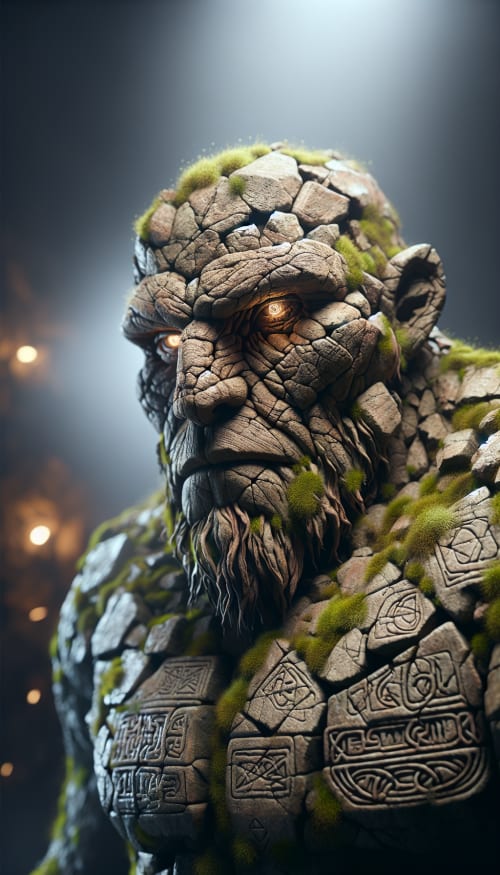
Golem
Golem · Artificial Creature — A being made from inanimate materials

Gargoyle
Gargoyle · Stone Monster — Legendary Protectors of Medieval Architecture

Monoceros
Monoceros · Unicorn — Legendary one-horned creature

Lamia
Serpent-bodied Enchantress · Seductress and Devourer in Greek Mythology

Nemean Lion
Nemean Lion · Invulnerable Beast — Immortal creature of Greek myth
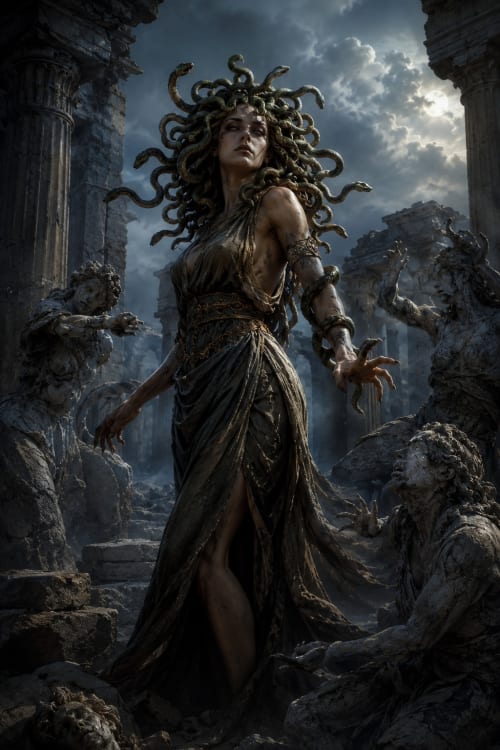
Medusa
Medusa · Monster — Ancient creature with snakes for hair

Basilisk
King of Serpents in Medieval European Legend
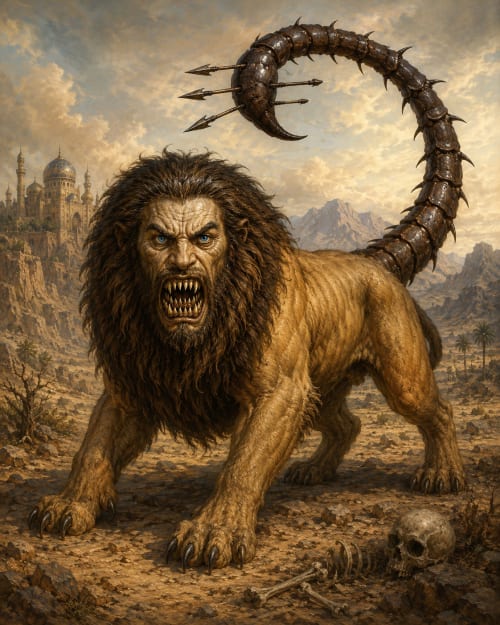
Manticore
Persian Legendary Lion-Man-Scorpion Hybrid

Chimera
Chimera · Monstrous hybrid — Mythical creature with combined animal traits