
Nemean Lion
Nemean Lion · Invulnerable Beast — Immortal creature of Greek myth
Names in Other Languages
 네메안 라이온한국어
Nemean Lion · 네메아의 사자 — 그리스 신화의 불멸의 괴수
 ネメアのライオン日本語
ネメアの獅子 · 不死の怪物 — ギリシャ神話の伝説の獣
 尼米亞獅子繁體中文
尼米安獅 · 不死怪獸 — 希臘神話的傳奇生物
 Nemeischer LöweDeutsch
Nemeanischer Löwe · Unsterbliche Bestie — Legendäres Wesen der griechischen Mythologie
 Lion de NéméeFrançais
Lion de Némée · Bête invulnérable — Créature immortelle de la mythologie grecque
 León de NemeaEspañol
León de Nemea · Bestia invulnerable — Criatura inmortal de la mitología griega
 Leão de NeméiaPortuguês
Leão de Neméia · Fera Invulnerável — Criatura imortal da mitologia grega
 Lew nemejskiPolski
Lew Nemejski · Niezniszczalna bestia — Nieśmiertelne stworzenie z mitologii greckiej
 Немейский левРусский
Немейский лев · Неуязвимый зверь — Бессмертное существо древнегреческой мифологии
The Nemean Lion (Greek Leon Nemeios) is the gigantic golden lion of Greek myth that inhabited the valley of Nemea in the northeast Peloponnese, the target of the first of Heracles' Twelve Labours. According to Hesiod's Theogony it was the offspring of Typhon and Echidna (or Orthrus and the Chimera); a variant tradition has the moon-goddess Selene drop it from the sky. Its defining trait was a hide that no bronze or iron weapon could pierce. Heracles tried arrow, sword, and club without effect and finally chased the lion into a cave with two mouths, sealed one entrance, and strangled it with his bare hands. Even his blade was useless for skinning: only the lion's own claws (or teeth) could cut the hide, a trick the goddess Athena revealed to him. Heracles wore that hide as a cloak for the rest of his life, with the head as helmet, and the lion-skin became the most distinctive emblem of his iconography.
Origin
The earliest literary reference is Hesiod's Theogony 326-332 (eighth century BCE), where the lion is the offspring of Orthrus and the Chimera (or Echidna), kin to Cerberus, Hydra, and Sphinx, set loose by Hera at Nemea to test Heracles. The canonical narrative of the First Labour rests on pseudo-Apollodorus' Bibliotheca II.5.1 (first to second century CE), which fixes the cave with two mouths, Athena's counsel, the bare-handed strangulation, the skinning with the lion's own claws, and the carrying of the hide to King Eurystheus at Mycenae. Diodorus Siculus IV.11.3-4, Hyginus Fabulae 30, Pausanias II.15.2-3, and Theocritus' Idyll XXV (in which Heracles himself recounts the fight) elaborate the legend. The valley of Nemea hosted a Temple of Zeus and the pan-Hellenic Nemean Games, founded in 573 BCE, ritually linked to the myth.
Features
- Gigantic, golden-hued lion body
- Hide impervious to any bronze or iron weapon
- The hide can be cut only by the lion's own claws
- Variant tradition: Selene the moon-goddess let it fall from the sky
- Lives in a cave with two mouths in the Nemean valley
- Its roar alone terrifies neighbouring villages and their flocks
Stories
The Nemean Lion is the iconic adversary of the First Labour of Heracles, a fixture of Greek art since the sixth century BCE. Black-figure and red-figure vases, the metopes of Heracles temples, Pompeian wall paintings, and Roman sarcophagi repeatedly show the hero strangling the lion. Among the constellations, Leo on the ecliptic is widely identified with the Nemean Lion, listed by Ptolemy in the Almagest and retained in the IAU canon. The lion-skin cloak became the hero's signature attribute in the Farnese Heracles, in Annibale Carracci's Palazzo Farnese ceiling (1597-1608), and in countless later paintings. The royal lion of England, the rugby crest of the England national team, and the Disney animated film Hercules (1997) all draw on the Nemean iconography.
Weakness
The hide that no weapon could pierce was simultaneously the lion's chief power and its mythical weakness. According to pseudo-Apollodorus, after Heracles' arrow, sword, and club all failed, he stoppered one mouth of the lion's two-entrance cave and strangled the beast in single combat. To skin the carcass, no blade worked; Athena counselled the hero to use the lion's own claws, the only material hard enough to cut the hide. The Nemean Lion's defining limitation, then, is that it can be overcome only by physical strength and intelligence, not by ordinary weaponry: one of the most morally legible versions of the Greek hero-test pattern.
Cultural Significance
The lion-skin of the Nemean Lion is the single most recognisable attribute of Heracles in Greek and Roman art, the visual mark that distinguishes him from every other hero. Helmet of skull, cloak of pelt, this iconography runs from Attic vases through the Hellenistic Farnese Heracles to Annibale Carracci's Palazzo Farnese ceiling, Peter Paul Rubens's Heracles paintings of 1639, and modern reception. In astronomy the constellation Leo is read as the lion's posthumous form; in heraldry the British and Scottish royal lions, the rugby crest of the England national team, and many medieval and modern coats of arms trace back to the Nemean archetype. Disney's Hercules (1997) and the God of War game series make the lion the iconic first boss.
In Popular Culture
- Hesiod, Theogony 326-332 (8th c. BCE) — offspring of Orthrus and Chimera, set at Nemea
- Pseudo-Apollodorus, Bibliotheca II.5.1 (1st-2nd c. CE) — canonical First Labour narrative
- Diodorus Siculus IV.11.3-4 and Hyginus, Fabulae 30 — full elaboration of the combat
- Theocritus, Idyll XXV — Heracles' first-person account of the fight
- Pausanias, Description of Greece II.15.2-3 — localisation of the lion's cave
- Farnese Heracles (Hellenistic-Roman copy, Naples) — sculptural canon of the lion-skin
- Annibale Carracci, Palazzo Farnese ceiling (1597-1608) — Nemean Lion as Baroque iconography
Trivia
The constellation Leo is canonically identified with the Nemean Lion, included in Ptolemy's Almagest among the 48 classical constellations and retained in the modern IAU list of 88. The skinning by the lion's own claws is most clearly attested in pseudo-Apollodorus, where Athena reveals the trick — a typical Greek pattern in which the hero's strength is completed by divine wisdom. The standard sequence of the Twelve Labours, fixed by pseudo-Apollodorus, runs: 1) Nemean Lion 2) Lernaean Hydra 3) Ceryneian Hind 4) Erymanthian Boar 5) Augean Stables 6) Stymphalian Birds 7) Cretan Bull 8) Mares of Diomedes 9) Belt of Hippolyta 10) Cattle of Geryon 11) Apples of the Hesperides 12) Capture of Cerberus. The lion comes first not by chronology but by iconographic necessity: its hide is the armour the hero wears through every subsequent labour.
Related

Hydra
Hydra · Lernaean serpent — Multi-headed mythical beast
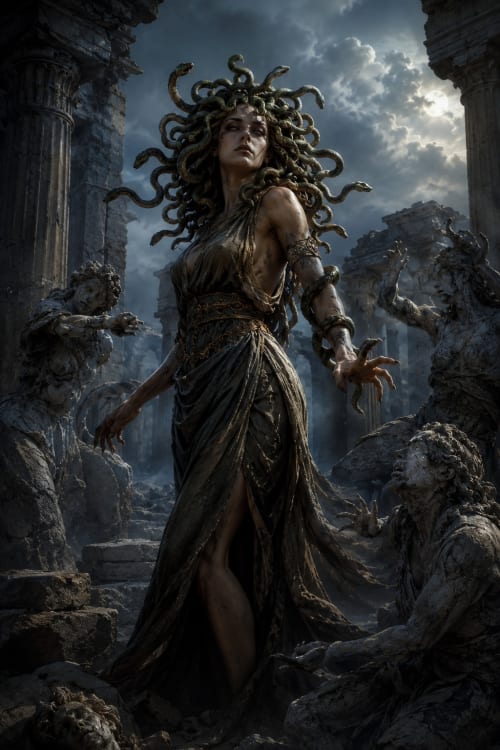
Medusa
Medusa · Monster — Ancient creature with snakes for hair
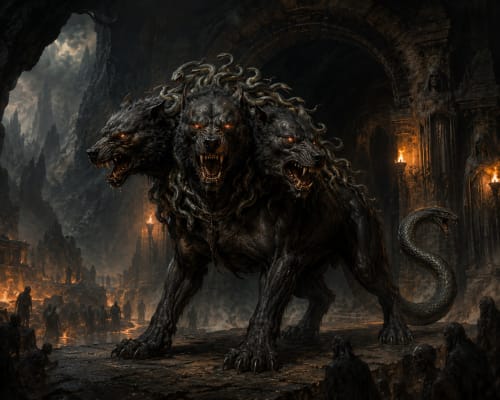
Cerberus
Cerberus · Infernal Gatekeeper — Legendary triple-headed hound
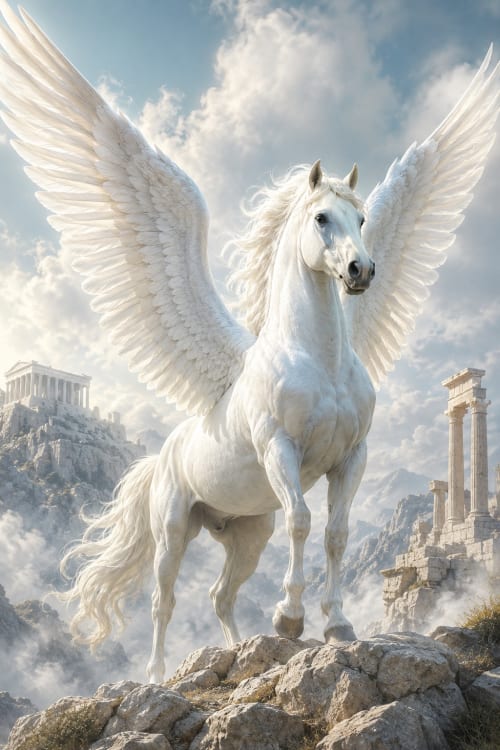
Pegasus
Pegasus · Winged Horse — A Legendary Creature from Greek Mythology

Sphinx
Sphinx · Guardian of Riddles — Hybrid of Human and Lion

Centaur
Centaur · Half-human, half-horse — Legendary creature of Greek myth

Charybdis
Charybdis · Oceanic Monster — The Devouring Whirlpool

Lamia
Serpent-bodied Enchantress · Seductress and Devourer in Greek Mythology

Amphisbaena
Two-Headed Serpent of Greek Myth
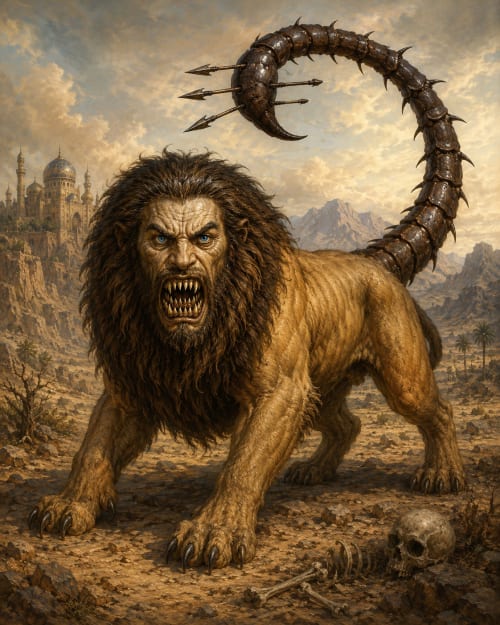
Manticore
Persian Legendary Lion-Man-Scorpion Hybrid
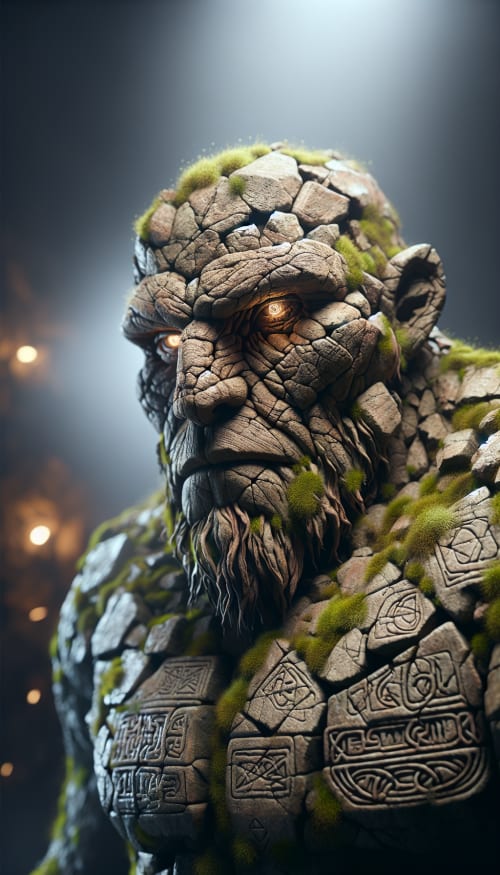
Golem
Golem · Artificial Creature — A being made from inanimate materials

Chimera
Chimera · Monstrous hybrid — Mythical creature with combined animal traits