
Griffin
Griffin · Legendary Lion-Eagle — Mythical creature with eagle foreparts and lion hindquarters
Names in Other Languages
 그리핀한국어
Griffin · 전설의 사자-독수리 — 상반신은 독수리, 하반신은 사자의 환상 존재
 グリフォン日本語
グリフォン · 伝説のライオン-イーグル — 鷲と獅子を融合した幻獣
 獅鷲獸繁體中文
Griffin · 傳說中的獅鷲獸 — 上半身為鷹,下半身為獅的神話生物
 GreifDeutsch
Greif · Legendärer Löwenadler — Mythisches Wesen mit Adler- und Löwenmerkmalen
 GriffonFrançais
Griffon · Lion-aigle légendaire — Créature mythique au torse d’aigle et au corps de lion
 GrifoEspañol
Grifo · León-águila legendario — Criatura mítica con partes de águila y león
 GrifoPortuguês
Grifo · Leão-Águia Lendário — Criatura mítica com águia e leão
 GryfPolski
Gryf · Legendarny lew-orzeł — Mityczne stworzenie z cechami orła i lwa
 ГрифонРусский
Грифон · Легендарный лев-орёл — Мифическое существо с чертами орла и льва
The Griffin (or Gryphon, Greek gryps, Latin gryphus) is a composite sacred beast combining an eagle's head, wings, and forelimbs with a lion's body, hindquarters, and tail, embodying 'the king of the sky joined to the king of the earth'. The earliest depictions appear around 3000 BCE in ancient Mesopotamia (Elamite Susa) and Egypt's Naqada III palettes; the Minoan throne room at Knossos (c. 1500 BCE) shows griffins as royal guardians. Greek tradition placed them in the far north of Scythia, guarding mountains of gold against the one-eyed Arimaspoi. In medieval Europe the griffin became the most popular heraldic charge, symbolising divine kingship, justice, and (in Christian allegory) the two natures of Christ. Dante's Purgatorio shows a griffin drawing the chariot of the Church; modern fantasy from C. S. Lewis to J. K. Rowling keeps the motif alive.
Origin
Griffin iconography originates in the late fourth millennium BCE Near East. Susa cylinder seals, Egyptian Naqada III palettes, and Minoan frescoes establish the eagle-lion hybrid as royal guardian. The earliest Greek literary source is the lost Arimaspea of Aristeas of Proconnesus (seventh century BCE), which sang of griffins warring against the one-eyed Arimaspoi over gold. Herodotus, Histories books III and IV, locates these griffins in the far north of Scythia, plausibly the Altai mountains; Ctesias of Cnidus (Indica) and Aelian (De Natura Animalium) repeat the tradition. Isidore of Seville's Etymologiae (seventh century) standardised the medieval iconography, and the Aberdeen Bestiary and MS Bodley 764 (twelfth and thirteenth centuries) fixed the bestiary form. In 1994, the classicist Adrienne Mayor proposed in The First Fossil Hunters that the griffin image arose from nomads encountering the beaked, four-legged Protoceratops fossils of the Altai gold-prospecting routes.
Features
- Eagle head, wings, and forelimbs with a lion body, hindquarters, and tail
- Sharp beak, hooked talons, and the powerful musculature of a lion
- Strong flight, with ground-hunting instincts of a great cat
- Hoards gold and gemstones, lining its nest with treasure
- Heraldic emblem of justice, kingship, and divine authority
- Believed to mate for life and remain solitary if widowed
Stories
The griffin is a perennial heraldic charge, appearing on the Edinburgh civic arms, the crests of Oxford's Trinity College, the coat of arms of the Pomeranian dukes, the State Emblem of Latvia, and many German noble houses. Dante's Purgatorio, canto XXIX, places it drawing the chariot of the Church, and Saint Mark's Basilica in Venice carries thirteenth-century griffin reliefs. The Library of Congress entrance in Washington bears griffin sculptures; the Vauxhall Motors logo carries an Edinburgh griffin; Hogwarts' Gryffindor house in Harry Potter takes its name from the same beast.
Weakness
Folkloric tradition assigns no formal predator, but the griffin's eternal enemy is the one-eyed Arimaspoi, locked with it in endless war over gold from Herodotus onward. Medieval bestiaries note that griffins can lift horses and even men, a trait more remarkable than vulnerable. Dante presents the griffin as never falling, since it embodies divine nature. The principal scholarly weakness is post-Enlightenment: comparative mythology has reclassified the griffin from real animal to purely iconographic creature.
Cultural Significance
The griffin is less a monster than a long-running iconographic sign. Born of Mesopotamian and Egyptian royal guardianship, refracted through Greek and Roman literature, and theologised in medieval Christianity as an allegory of Christ's twofold nature (Dante's Purgatorio is the locus classicus), it became the Renaissance emblem of justice, vigilance, and courage. Edinburgh, Pomerania, Latvia, and dozens of Oxbridge colleges still bear griffin arms. In the East, Sasanian Persian art and Byzantine silks carried griffins from Eurasia into Islamic ceramics and textiles. The motif persists in modern popular culture: Harry Potter's Gryffindor, Dungeons & Dragons' canonical griffon, the Vauxhall Motors logo, and the Philadelphia Museum of Art griffins all keep it visible.
In Popular Culture
- Herodotus, Histories III and IV (5th c. BCE) — griffins guard Scythian gold against the Arimaspoi
- Aristeas of Proconnesus, Arimaspea (7th c. BCE, fragmentary) — the war of griffins and Arimaspoi
- Ctesias, Indica and Aelian, De Natura Animalium — Indian and Scythian griffin lore
- Isidore of Seville, Etymologiae (7th c. CE) — the standard medieval griffin
- Dante Alighieri, Divine Comedy, Purgatorio canto XXIX (1308-1320) — the griffin drawing the Church's chariot
- Ludovico Ariosto, Orlando Furioso (1532) — the hippogriff, offspring of griffin and mare
- Lewis Carroll, Alice's Adventures in Wonderland (1865) — the Gryphon alongside the Mock Turtle
Trivia
Greek gryps means 'hooked' or 'hook-beaked', from which derive Latin gryphus and English griffin, gryphon, and gryffon. In 1994 the American classicist Adrienne Mayor proposed in The First Fossil Hunters that the griffin originated when Scythian nomads prospecting Altai gold encountered beaked, quadrupedal Protoceratops fossils and read them as the bones of treasure-guardian beasts. Ariosto's hippogriff, the offspring of griffin and mare in Orlando Furioso (1532), is the direct ancestor of J. K. Rowling's Buckbeak. The griffin appears in heraldry in two main forms: a male griffin without wings, sometimes bristling with spikes, and the standard winged 'female' griffin.
Related

Gargoyle
Gargoyle · Stone Monster — Legendary Protectors of Medieval Architecture
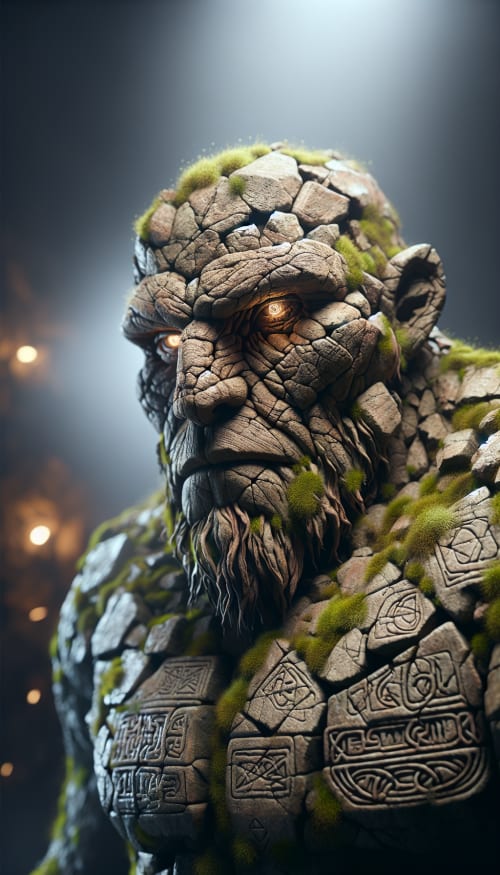
Golem
Golem · Artificial Creature — A being made from inanimate materials

Cretan Bull
Seventh Labor of Heracles in Greek Myth

Basilisk
King of Serpents in Medieval European Legend

Unicorn
Unicorn · Monoceros — Legendary Horse with a Sacred Horn

Centaur
Centaur · Half-human, half-horse — Legendary creature of Greek myth

Strix
Strix · Night Bird — Vampiric Bird of Ancient European Myth

Phoenix
Phoenix · Firebird — Legendary bird reborn from flames
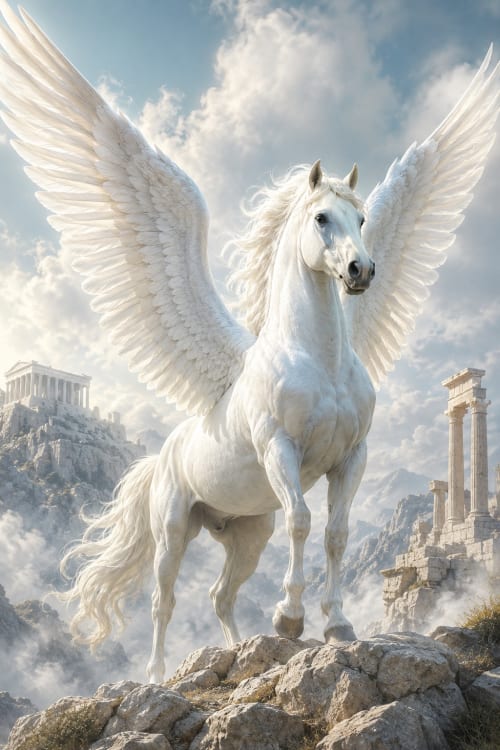
Pegasus
Pegasus · Winged Horse — A Legendary Creature from Greek Mythology

Amphisbaena
Two-Headed Serpent of Greek Myth
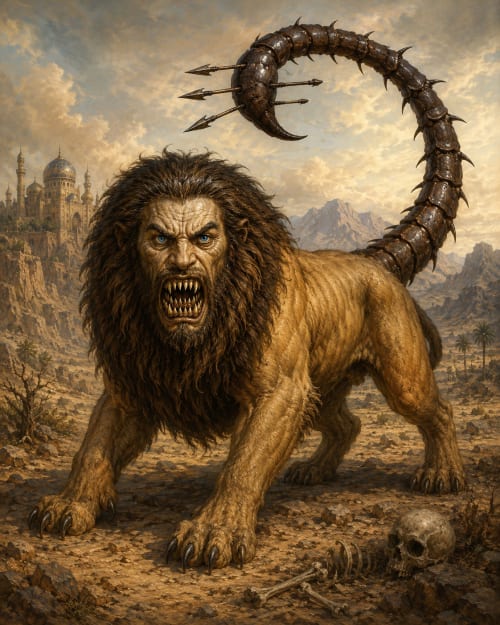
Manticore
Persian Legendary Lion-Man-Scorpion Hybrid

Monoceros
Monoceros · Unicorn — Legendary one-horned creature