LoreArc

Japanese

26 items tagged with "Japanese"

⚔️Weapons(4)
nue

Nue

Nue · Chimera — Legendary Japanese Monster

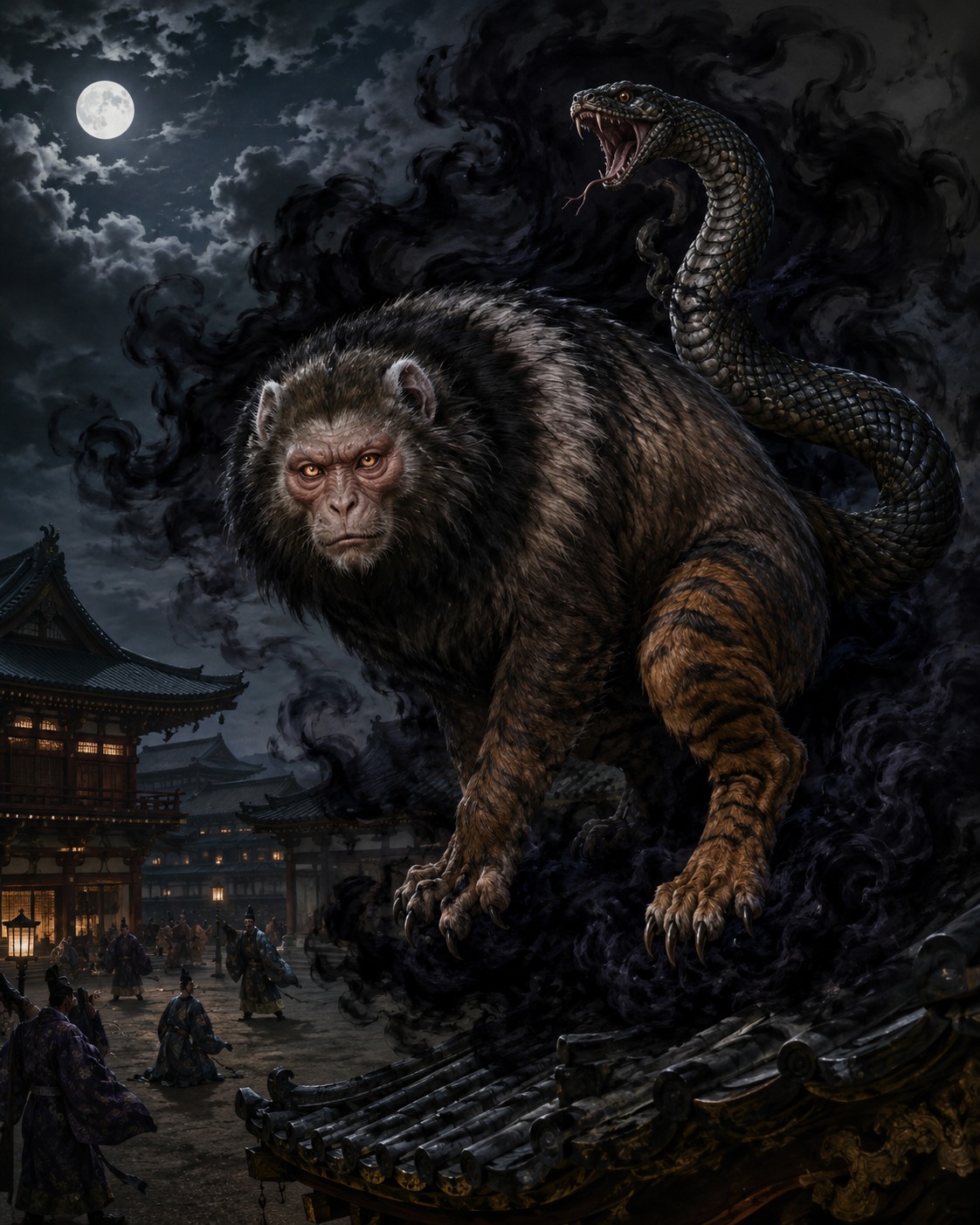
The Nue (Japanese Nue) is the canonical iconographic figure of the Heian-period Japanese chimeric yokai, possessed of the face of a monkey, the body of a raccoon dog (tanuki) or wildcat, the legs of a tiger, and the tail of a snake — one of the most mysterious composite yokai of Japanese legend. The name derives from the archaic Japanese name of the indigenous bird White's thrush (Zoothera dauma, in Japanese tora-tsugumi), whose sad and uncanny cry, when heard, is said in the canon to portend disaster — the canonical bird of the Onmyodo (Yin-Yang Way) belief of the Heian Imperial court. The iconographic origin is the Onmyodo belief of the Heian period (794-1185) and the canonised gunki-mono (military-tale) tradition of the late twelfth century. The decisive textual source is the chapter Nue in Book 4 of the early thirteenth-century Heike Monogatari (Tale of the Heike), the decisive canon of Japanese gunki-mono: in the spring of 1153 a black cloud appeared every dawn over the Heian-kyo Imperial Court from the eastern mountains and disturbed the sleep of Emperor Konoe (reigned 1139-1155), causing his illness; Minamoto no Yorimasa (1104-1180), the greatest archer of the Heian period, shot the nue down from within the black cloud — the decisive textual canon of the Nue legend. The 1779 yokai catalogue Konjaku Gazu Zoku Hyakki by Toriyama Sekien (1712-1788) established the visual canon of the Nue.

yuki-onna

Yuki-onna

Yuki-onna · The Snow Woman — A Cold, Sorrowful Beauty Appearing in the Blizzard

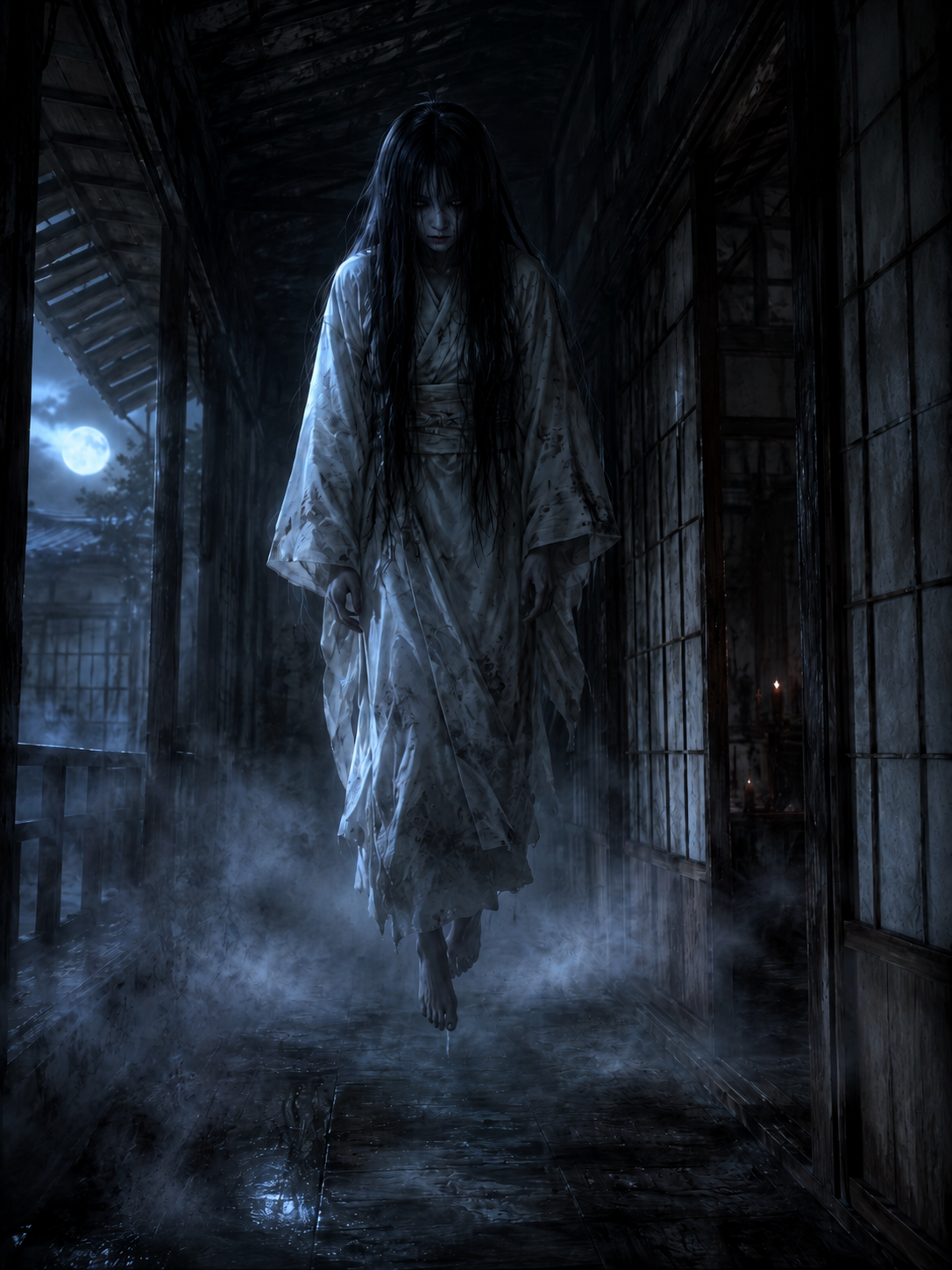
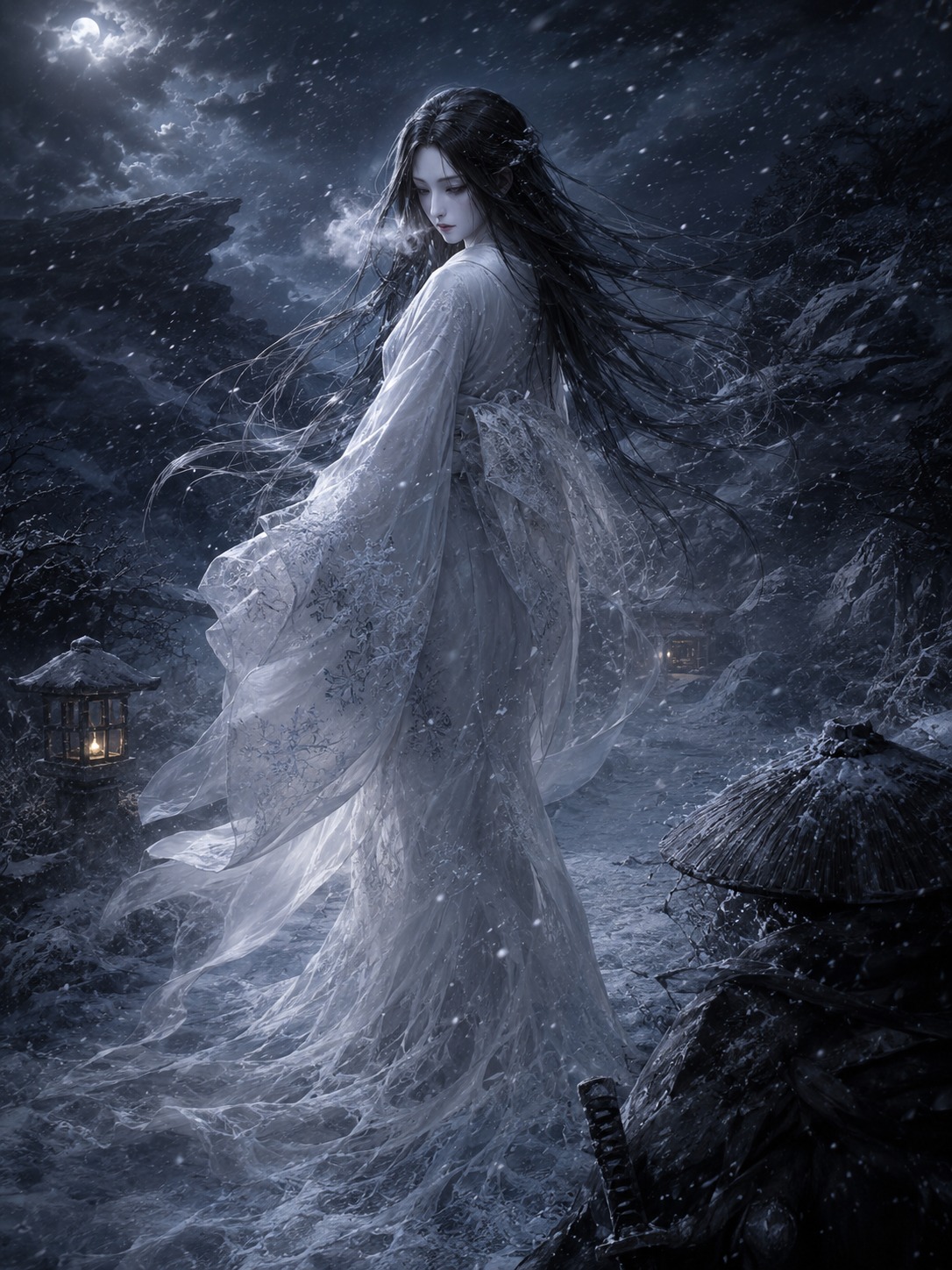
The Yuki-onna (Japanese Yuki-onna, 'snow woman') is the pale female yokai who appears suddenly in the night blizzard, the canonical iconographic figure of the Japanese winter snow-mountain yokai who in white kimono, jet-black hair, and a bloodless face approaches the lost traveller and freezes him to death with her cold breath. The iconographic origin is the fusion of the lethal-cold (toshi) folklore of Japan's heavy-snowfall regions in Tohoku, Chubu, and Hokkaido with mountain-deity (yama-no-kami) belief. The earliest textual record is the Sogi Shokoku Monogatari, a travel account by the renga poet Sogi (1421-1502) of the late Muromachi period (estimated late fifteenth century), describing a tall white-clad woman encountered in the snow mountains of Echigo Province (now Niigata Prefecture). In the Edo period, the Yuki-onna was systematised as a canonical yokai in the yokai catalogue Gazu Hyakki Yagyo (1776) of Toriyama Sekien (1712-1788). The decisive canon is the short story Yuki-Onna in Kwaidan: Stories and Studies of Strange Things, the English-language short-story collection published in April 1904 by Lafcadio Hearn (1850-1904, Japanese name Koizumi Yakumo): the woodcutters Mosaku (the elder) and Minokichi of Musashi Province are trapped in a blizzard and rest in a hut, where the Yuki-onna kills Mosaku but spares the young Minokichi on his promise never to disclose the secret; years later Minokichi marries a woman named Oyuki, who turns out to be the same Yuki-onna, and she vanishes when he breaks the secret. This established the decisive canon of modern Yuki-onna iconography. Masaki Kobayashi's 1965 film Kwaidan, with its Yuki-onna episode, won the Special Jury Prize at the Cannes Film Festival and completed the global canon.

🐉Dragons(2)
yamata-no-orochi

Yamata-no-Orochi

八岐大蛇 · Eight-Headed Serpent of Japanese Myth

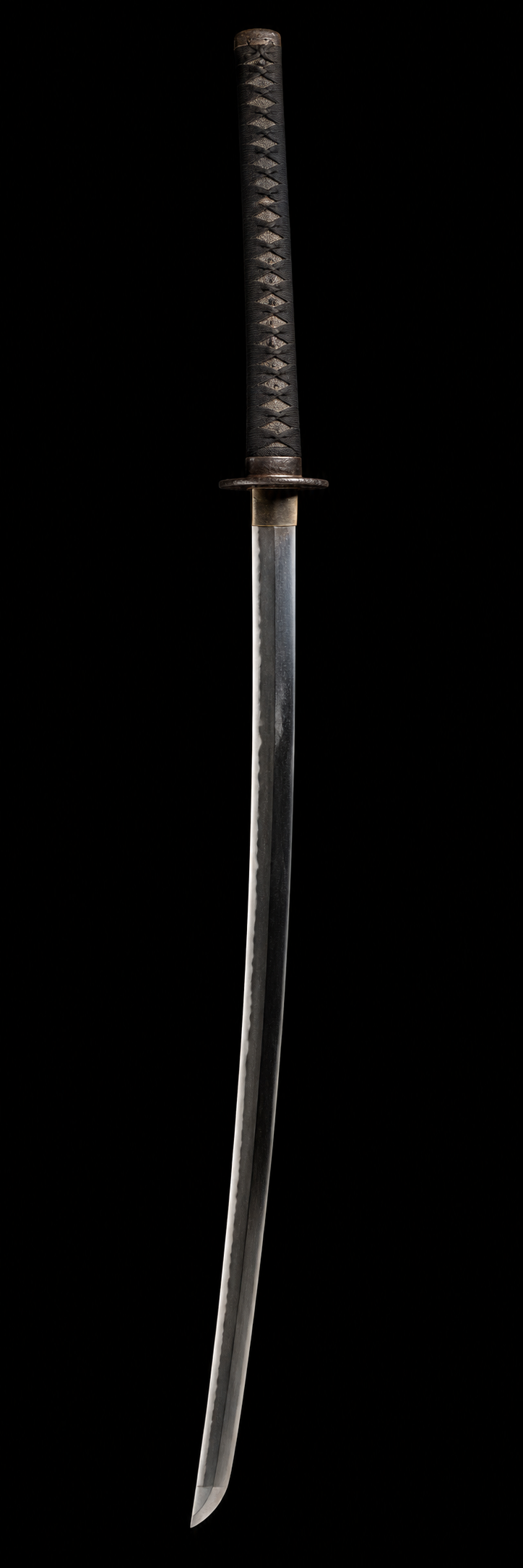
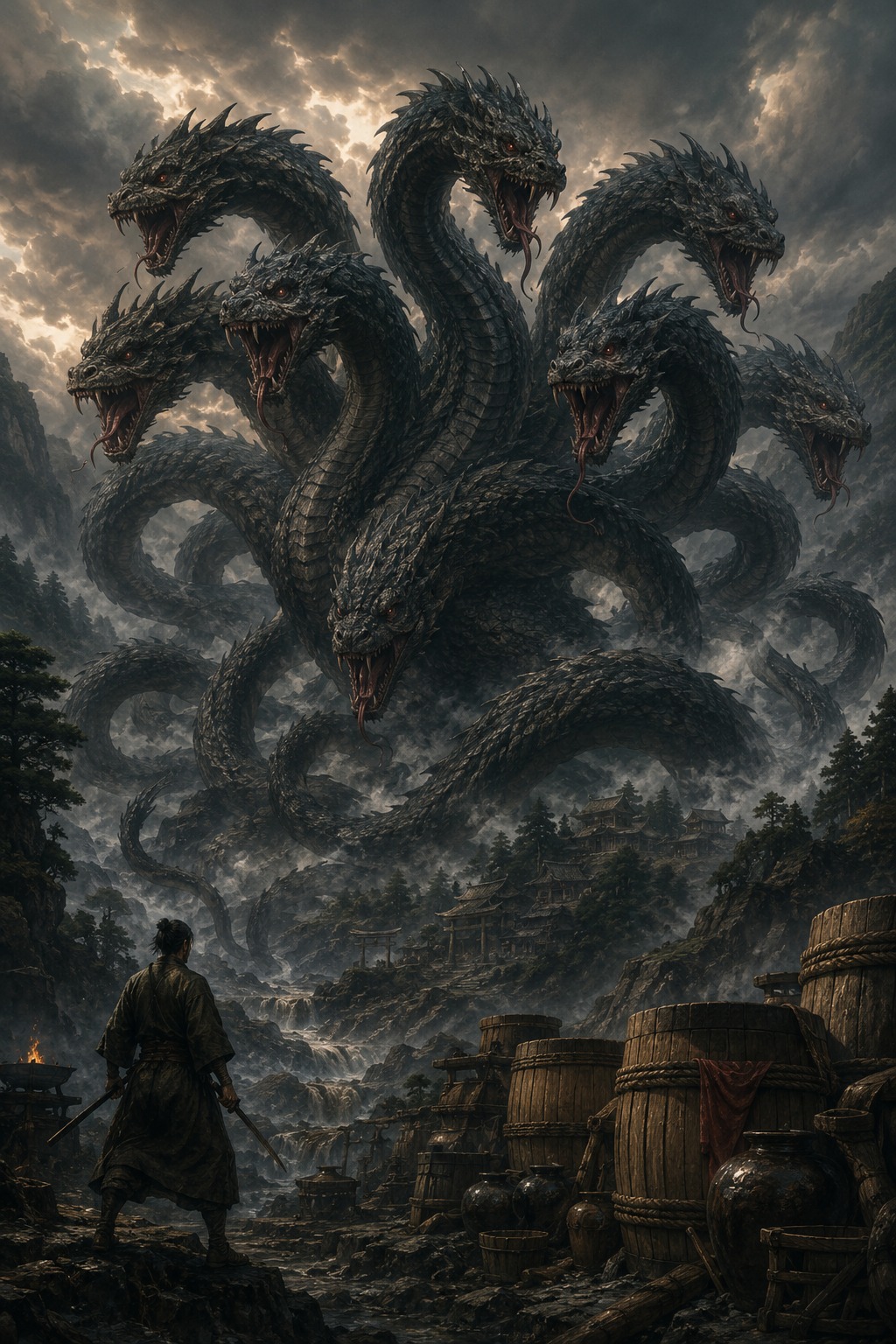
Yamata-no-Orochi ('eight-forked great serpent') is the most iconic many-headed dragon-serpent of Japanese myth, recorded in the early eighth century in the two foundational chronicles of the Japanese state: the 'Kojiki' (712) compiled by Ō no Yasumaro and the 'Nihon Shoki' (720) compiled under Prince Toneri. The serpent has eight heads and eight tails, and its body is so vast that it covers 'eight valleys and eight ridges, with cypress and cedar growing on its back and its belly always inflamed and bleeding'. It appears each year along the Hi no Kawa (today's Hii River) in the Izumo region (eastern Shimane prefecture) and demands one of the daughters of the old couple Ashinazuchi and Tenazuchi as tribute. After devouring seven of their eight daughters, it returns for the last, Kushinada-hime, when the storm-god Susanoo, banished from heaven, descends to Izumo. Susanoo prepares yashiori-no-sake (a wine brewed and refined eight times, sometimes called 'eight-fold wine'), pours it into eight large vats placed before eight gates so that each of Orochi's eight heads will drink from a separate vat, and waits until the eight heads are dead drunk. He then severs all eight heads and eight tails with the divine sword Totsuka-no-Tsurugi (a sword 'ten hand-spans long'). When one tail dulls his blade, he finds inside it another, finer sword — the Kusanagi-no-Tsurugi (also Ame-no-Murakumo-no-Tsurugi), one of the Three Sacred Treasures of the Japanese imperial house, today enshrined at Atsuta Shrine in Nagoya, Aichi prefecture.

⚔️Armor(6)
🐉Spirits(1)
kagutsuchi

Kagutsuchi

Spirit King

Kagutsuchi · 軻遇突智 — King of the Destructive Flame

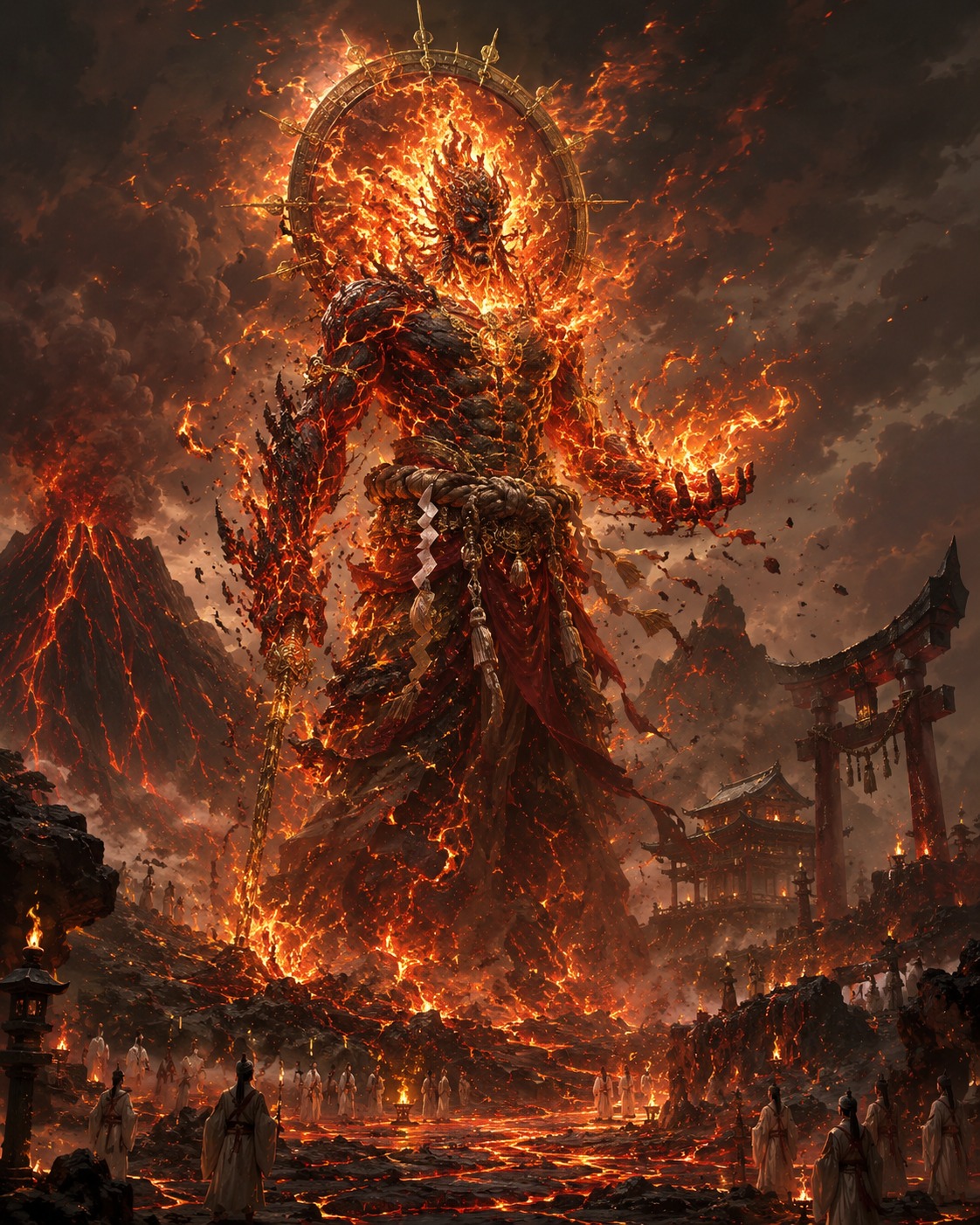
Kagutsuchi (Kagutsuchi, Hi-no-Kagutsuchi) is the decisive canonical fire god of Japanese mythology. The etymology is the Japanese compound of kagu ('shining, radiant') and tsuchi ('spirit, soul') — meaning 'shining soul' — the decisive canonical vocabulary, and the alias Hi-no-Kagutsuchi ('fire Kagutsuchi') indicates that he is the embodiment of fire — the decisive canon. The decisive textual canon is the Volume 1 of the Kojiki (Kojiki) — the oldest extant Japanese historical chronicle compiled by Ono no Yasumaro (660-c. 723) in the Nara period and presented to the 43rd Empress Genmei (Empress Genmei, 661-721) on 28 January 712 CE — the Japanese creation mythology — the decisive canon, in which the mother goddess Izanami (Izanami) dies of burns while giving birth to Kagutsuchi, and the enraged father god Izanagi (Izanagi) beheads Kagutsuchi with his Totsuka-no-Tsurugi (Totsuka-no-Tsurugi, ten-hand sword) — the decisive tragic mythological canon. The Nihon Shoki (Nihon Shoki) Volume 1 Age of the Gods Upper Chapter, presented by Prince Toneri (Prince Toneri, 676-735) to the 44th Empress Gensho in 720 CE, also decisively records this — the decisive canon. From Kagutsuchi's blood and corpse fragments, dozens of new gods were born — the decisive canon — and Kagutsuchi is enshrined at the Fujisan Hongu Sengen Taisha (Fujisan Hongu Sengen Taisha, Fujinomiya City, Shizuoka Prefecture) — the decisive Japanese volcano-faith canon.