Peryton
Borges's Imaginary Stag-Bird Hybrid
Names in Other Languages
 페리톤한국어
Peryton · 보르헤스가 정리한 사슴 몸·새 날개의 환상 동물
 ペリディン日本語
Peridini · 架空の生物 — 実在しない存在
 佩里丁繁體中文
Peridini · 虛構生物 — 非真實存在
 PeridinDeutsch
Peridini · Fabelwesen — Nicht real existierend
 PéridineFrançais
Peridini · Créature imaginaire — N’existe pas réellement
 PeridínEspañol
Peridini · Criatura imaginaria — No es real
 PeridiniPortuguês
Peridini · Criatura imaginária — Não existe de fato
 PeridynPolski
Peridini · Istota wyimaginowana — Nie istnieje naprawdę
 ПеридинРусский
Peridini · Воображаемое существо — Не существует в реальности
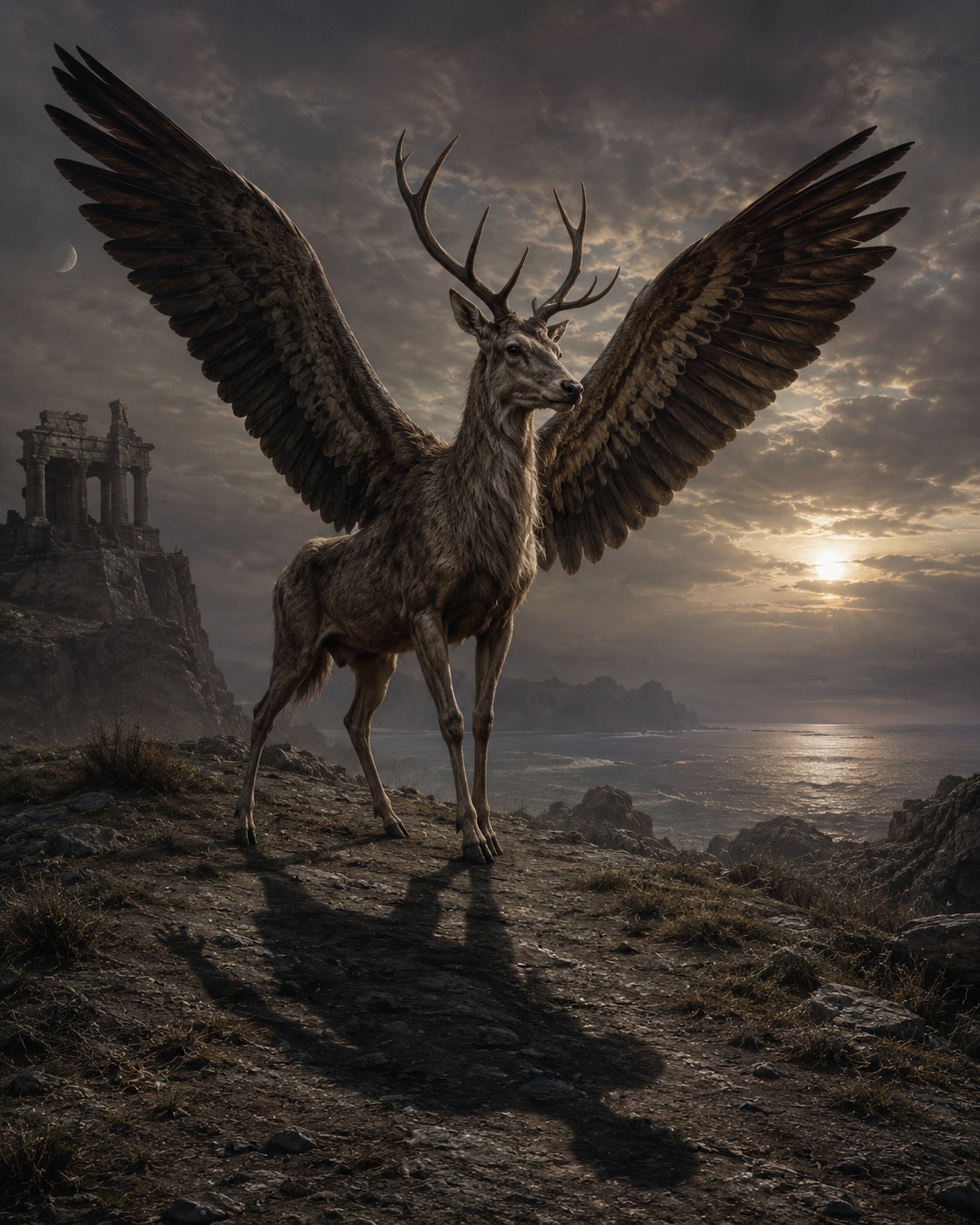
The Peryton is a composite imaginary beast introduced as a canonical entry by Jorge Luis Borges and Margarita Guerrero in their Manual de zoologia fantastica (1957). It has the body and head of a stag and the dark plumed wings of an enormous bird, but its most striking feature is that the shadow it casts under the sun is not its own: it is the shadow of a human being. Borges presents the entry by citing a fictitious sixteenth-century manuscript of an Arab physician at Fez, together with a fictitious fragment of the Erythraean Sibyl preserved at Ravenna, from which we learn that the Peryton was once human and only after killing one mortal acquires the right to cast its own shadow. The 1967 expanded edition El libro de los seres imaginarios, translated into English by Norman Thomas di Giovanni in 1969, fixed the Peryton in fantasy literature; in 1983 Gary Gygax canonised it as a Dungeons and Dragons monster in the Monster Manual II.
Origin
The Peryton first appears in Manual de zoologia fantastica, published in 1957 by Fondo de Cultura Economica in Buenos Aires, one of about eighty entries co-written by Borges with Margarita Guerrero. Borges presents the creature by citing as sources a fictitious sixteenth-century manuscript of an Arab physician at Fez and a fictitious fragment of the Erythraean Sibyl said to be preserved at Ravenna; both citations are now established by scholars as Borgesian pseudo-sources, a technique he had refined in Tlon, Uqbar, Orbis Tertius (1940), Ficciones (1944), and El Aleph (1949). The expanded edition El libro de los seres imaginarios appeared in 1967 and was translated into English in 1969 by Norman Thomas di Giovanni as The Book of Imaginary Beings. In 1983 Gary Gygax included the Peryton in the Dungeons and Dragons Monster Manual II, canonising it for fantasy gaming.
Features
- Body, legs, and head of a stag with the dark plumed wings of a great bird
- Casts the shadow not of itself but of a human under the sun
- Must kill one human being to acquire its own shadow
- Travels in flocks, peaceful once each member has its single kill
- Said in the citation to have once been human and to have been transformed
- Inhabits an unspecified island far across the sea
Stories
Since the 1957 original, the Peryton has been a touchstone of Latin American fantasy, mentioned in works and lectures by Ursula K. Le Guin and Italo Calvino. The 1969 English translation circulated the entry in the Anglophone world, and the 1983 Dungeons and Dragons Monster Manual II canonised it for fantasy gaming, after which it spread to Magic: The Gathering card designs, The Witcher bestiary, and many independent role-playing supplements. The Peryton entry is also routinely cited in literary studies and writing courses as the paradigmatic example of Borges's pseudo-source technique: the citation of fictitious manuscripts and Sibyls that grants invented creatures the gravitas of antiquity.
Weakness
Borges's brief entry assigns no formal predator. The constitutive limitation is internal: once a Peryton has killed a single human and won that mortal's shadow as its own, it will never attack another, so an already-blooded Peryton no longer threatens travellers. Later fantasy games, beginning with the 1983 Dungeons and Dragons treatment, extended this with attack mechanics, hit dice, and vulnerabilities to silvered or blessed weapons; these are gaming extensions, not Borgesian original material. The shadow conceit itself is the creature's deepest weakness: a Peryton cut off from sunlight and unable to project its borrowed shadow is reduced to a wandering ghost of itself.
Cultural Significance
The Peryton is more than a fantasy beast; it is a textbook case of Borges's technique of canonising imaginary beings through fictitious sources. The Erythraean Sibyl prophecy that the Peryton will bring down Rome is a zoological version of the apocryphal histories that run through Borges's stories from the 1940s onward. The 1957 Manual fed into the magical-realism wave of the 1960s, while the 1983 canonisation in Dungeons and Dragons sent the Peryton from Borges's library to the gaming table, securing its modern presence. The entry is regularly studied in literary and game-studies courses alike as the model case of pseudo-source citation, in which the invented animal is granted the authority of antiquity by the very act of citation.
In Popular Culture
- Jorge Luis Borges and Margarita Guerrero, Manual de zoologia fantastica (1957) — first publication
- Borges, El libro de los seres imaginarios (1967) — expanded edition
- Norman Thomas di Giovanni, The Book of Imaginary Beings (1969) — English translation
- Gary Gygax, Dungeons and Dragons Monster Manual II (1983) — fantasy gaming canon
- John Clute and John Grant, The Encyclopedia of Fantasy (1997) — entry as canonical
- Magic: The Gathering — various Peryton cards across multiple sets
- The Witcher game series — Peryton entry in the in-game bestiary
Trivia
Within the entry Borges cites a fictitious sixteenth-century Arab physician at Fez and a fictitious fragment of the Erythraean Sibyl preserved at Ravenna; both citations are pseudo-sources, the same technique Borges had perfected in Tlon, Uqbar, Orbis Tertius (1940). The etymology of the name 'Peryton' is left unexplained by Borges; critics have variously proposed Greek perimetros ('perimeter') and Latin perire ('to perish') without consensus. When Gary Gygax included the Peryton in the 1983 Dungeons and Dragons Monster Manual II, he added a feature absent from Borges's original — the Peryton must eat the heart of a human, not merely kill one, to claim its shadow — and this gaming embellishment has shaped every subsequent fantasy depiction of the creature.
Related

Naga
Naga · Serpent People — Mythical half-human, half-serpent beings

Phoenix
Phoenix · Firebird — Legendary bird reborn from flames
Manticore
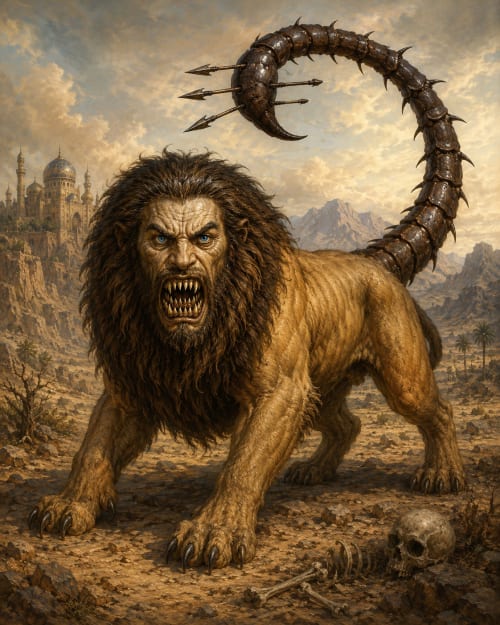
Persian Legendary Lion-Man-Scorpion Hybrid

Nemean Lion
Nemean Lion · Invulnerable Beast — Immortal creature of Greek myth

Hydra
Hydra · Lernaean serpent — Multi-headed mythical beast
Medusa
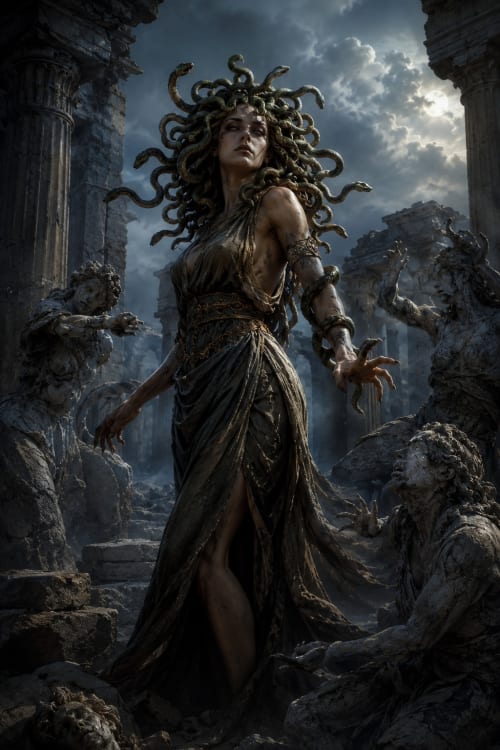
Medusa · Monster — Ancient creature with snakes for hair
Pegasus
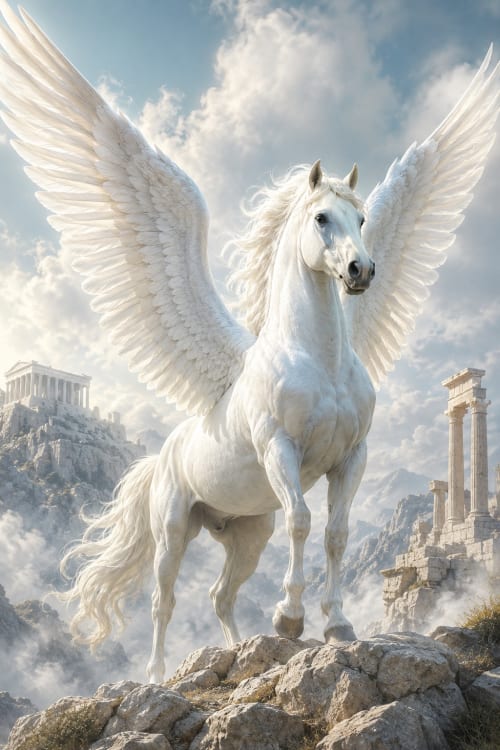
Pegasus · Winged Horse — A Legendary Creature from Greek Mythology
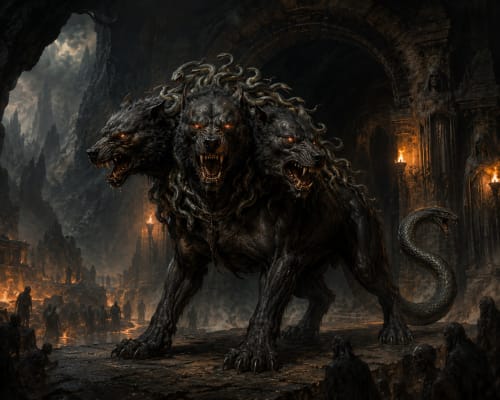
Cerberus
Cerberus · Infernal Gatekeeper — Legendary triple-headed hound

Charybdis
Charybdis · Oceanic Monster — The Devouring Whirlpool

Chimera
Chimera · Monstrous hybrid — Mythical creature with combined animal traits
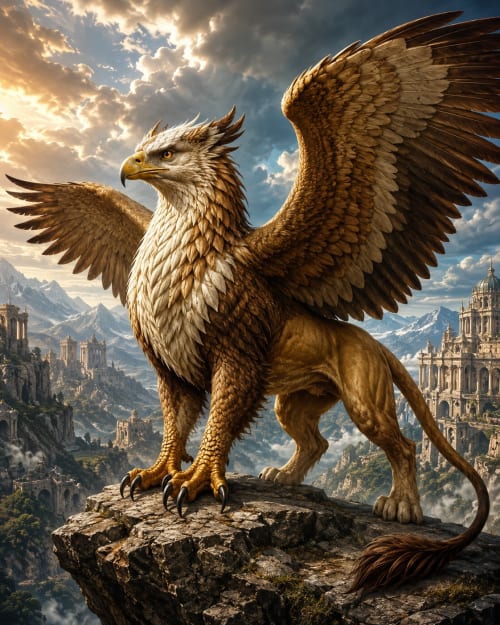
Griffin
Griffin · Legendary Lion-Eagle — Mythical creature with eagle foreparts and lion hindquarters

Centaur
Centaur · Half-human, half-horse — Legendary creature of Greek myth