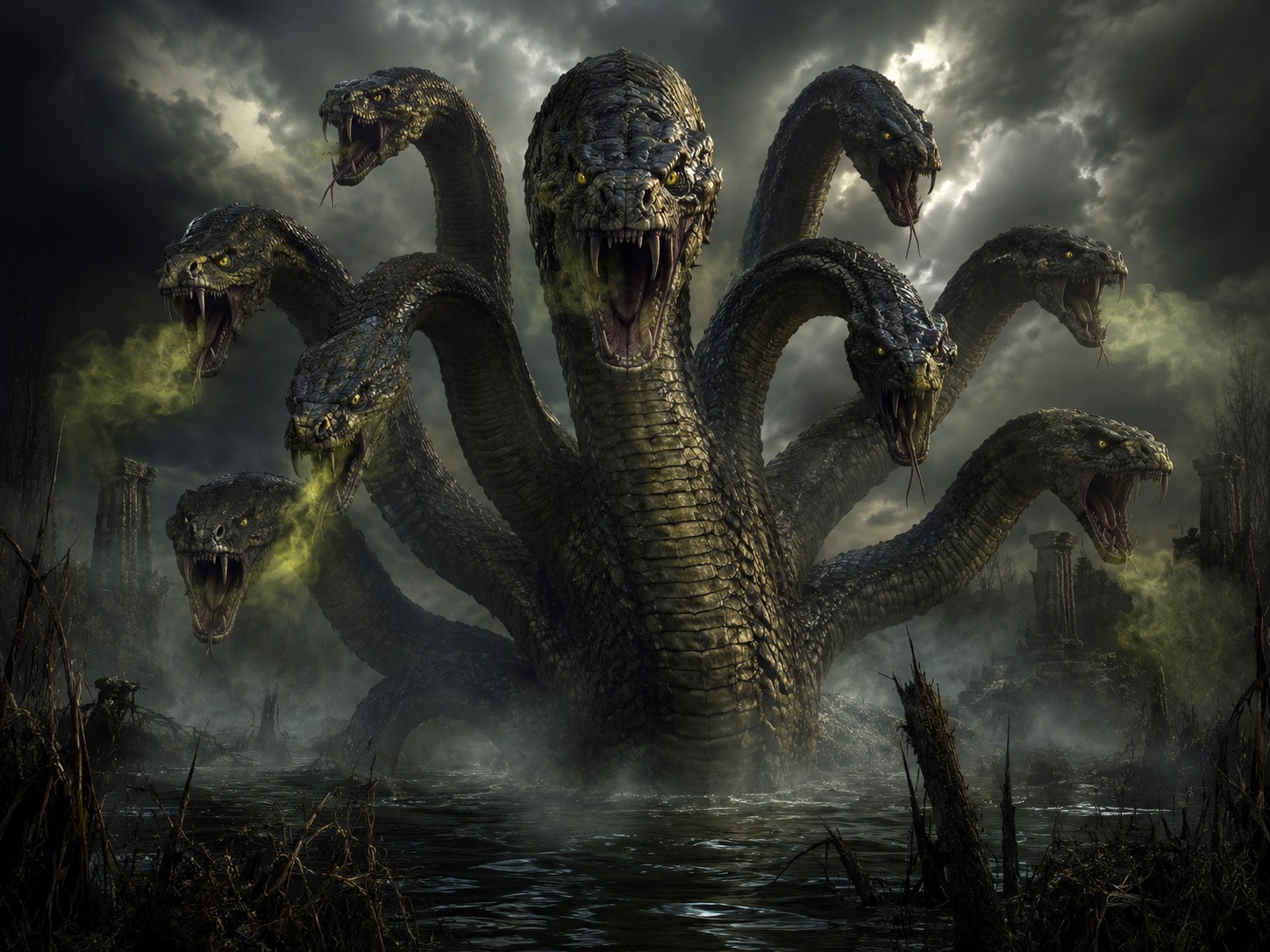
Hydra
Hydra · Lernaean serpent — Multi-headed mythical beast
Names in Other Languages
 히드라한국어
Hydra · 다두룡 — 머리가 여러 개인 신화 속 괴수
 ヒュドラ日本語
ヒュドラ · レルネの怪物 — 複数の頭を持つ神話上の怪物
 九頭蛇繁體中文
Hydra · 勒爾納巨蛇 — 多頭神話怪獸
 HydraDeutsch
Hydra · Lernaische Schlange — Vielköpfiges mythisches Ungeheuer
 HydreFrançais
Hydre · Serpent de Lerne — Monstre mythique à plusieurs têtes
 HidraEspañol
Hidra · Serpiente de Lerna — Bestia mítica de múltiples cabezas
 HidraPortuguês
Hidra · Serpente de Lerna — Monstro mítico de múltiplas cabeças
 HydraPolski
Hydra · Lernejska bestia — Mityczne wielogłowe stworzenie
 ГидраРусский
Гидра · Лернейское чудовище — Мифическое многоголовое существо
The Hydra (Greek Hydra, Latin Hydra) is the most famous many-headed monster of Greek mythology, properly the Lernaean Hydra after its swampy haunt at Lerna in the Peloponnese near Argos. Born of Typhon and Echidna, sister to Cerberus, Chimera, and Orthrus, the Hydra was reared by the goddess Hera as a test for Heracles. Its heads number nine in the canonical account, though variant traditions give seven, fifty, or a hundred; one central head is immortal. Its signature power is regenerative: cut off one head and two grow back. Its breath and blood are venomous. As the second of Heracles' Twelve Labours, the hero, aided by his nephew Iolaus who cauterised each severed neck with a torch, finally lopped off the immortal head and buried it under a great rock. He then dipped his arrows in the Hydra's blood, beginning a chain of poisonings that ran through the rest of Greek myth.
Origin
The earliest literary reference is Hesiod's Theogony lines 313-318 (eighth century BCE), where the Hydra appears as offspring of Typhon and Echidna alongside Cerberus, the Chimera, and Orthrus, reared by Hera for the express purpose of testing Heracles. The canonical narrative of the Second Labour rests on the Library (Bibliotheca) of pseudo-Apollodorus II.5.2 (first to second century CE), which fixes nine heads, the torch-bearing Iolaus, Hera's gift of a giant crab (Karkinos), and the burial of the immortal head. Diodorus Siculus IV.11, Hyginus Fabulae 30 and 151, Pausanias II.37.4, and Virgil Aeneid VI all elaborate the legend. Variations in head count run from Alcaeus' nine through Simonides' fifty to Euripides' hundred in his Heracles, evidencing that the proliferation of heads is itself a structural motif. Vase painting from the sixth century BCE onward shows the encounter as a fixed Heraclean iconography.
Features
- Many serpentine heads, canonically nine, with variants from seven to a hundred
- Regenerative: two heads grow where one is severed
- A single central head that is immortal
- Venomous breath and blood, lethal to any creature
- Massive serpentine body amphibious in the swamps of Lerna
- Personally reared by Hera as a test for Heracles
Stories
The Hydra is the iconic adversary of Heracles' Second Labour and a fixture of Greek art. Black-figure vases from the sixth century BCE, the metopes of the Temple of Zeus at Olympia, and Pompeian wall paintings all depict the combat. In astronomy the constellation Hydra, listed by Ptolemy in his Almagest, is the largest of the modern 88 IAU constellations; the southern constellation Hydrus shares the name. In biology, the freshwater cnidarian genus Hydra, first observed by Leeuwenhoek in 1702 and shown by Abraham Trembley in 1744 to regenerate from cut fragments, bears the mythic name directly. In popular culture the metaphor 'hydra-headed problem' is ubiquitous, and the Marvel Comics secret society HYDRA, created by Joe Simon and Jack Kirby in Strange Tales No. 135 (1965), carries the myth straight into modern pop iconography.
Weakness
Each severed neck must be cauterised with fire immediately to prevent regeneration. The pseudo-Apollodorus account has Iolaus stationed with a torch as Heracles severs each head, the partnership solving the regeneration paradox. The central immortal head cannot be killed and was instead buried beneath a great rock by the hero. Some depictions show the Hydra growing sluggish when drawn out of its swamp onto dry ground. Hera's giant crab Karkinos attacks Heracles' foot during the combat and is crushed underfoot; Hera elevates its soul into the constellation Cancer in compensation, a frequent companion-myth.
Cultural Significance
Beyond myth the Hydra is the archetype of 'evil that grows when struck', the single most powerful trope of regenerative threat in Western letters. Dante's seven-headed beast in Inferno and the seven-headed beast of Revelation 13 share Hydra-imagery; Shakespeare's Coriolanus calls the mob a 'many-headed hydra'. Eighteenth-century English political cartooning rendered corruption and tyranny as hydras, and the historians Marcus Rediker and Peter Linebaugh recast Atlantic slavery and proletarian revolt under the title The Many-Headed Hydra (2000). The IAU constellation Hydra, spanning 1303 square degrees, is the largest in the sky. The Marvel secret society HYDRA, with its slogan 'cut off one head, two more shall take its place', keeps the myth in twenty-first century cinema. The cnidarian genus Hydra, used in biology textbooks worldwide, bears the name through Trembley's eighteenth-century regeneration experiments.
In Popular Culture
- Hesiod, Theogony 313-318 (8th c. BCE) — Lernaean Hydra as Typhon and Echidna's offspring
- Pseudo-Apollodorus, Bibliotheca II.5.2 (1st-2nd c. CE) — canonical Second Labour narrative
- Diodorus Siculus IV.11 and Hyginus, Fabulae 30 — full elaboration of the combat
- Ovid, Metamorphoses Book IX — the poisoned arrows and their consequences
- Euripides, Heracles — Hydra of a hundred heads
- Virgil, Aeneid Book VI — the Hydra at the gates of the underworld
- Dante, Inferno — seven-headed beast as Hydra descendant in medieval Christian allegory
Trivia
Greek hydra derives from hydor (water), the same root that yields hydrogen, hydraulic, and hydrate. In 1744 the Swiss naturalist Abraham Trembley proved that the freshwater hydra polyp, when cut into pieces, regenerates each fragment into a whole organism; the genus took the myth's name directly, becoming the first modern textbook case of regeneration. The constellation Hydra, at 1303 square degrees, is the largest of the 88 IAU constellations and sprawls across the southern spring sky. Marvel's HYDRA, introduced by Joe Simon and Jack Kirby in Strange Tales 135 (1965), borrows the slogan 'cut off one head, two more shall take its place' directly from the myth and reached worldwide audiences through Captain America: The Winter Soldier (2014).
Related

Nemean Lion
Nemean Lion · Invulnerable Beast — Immortal creature of Greek myth
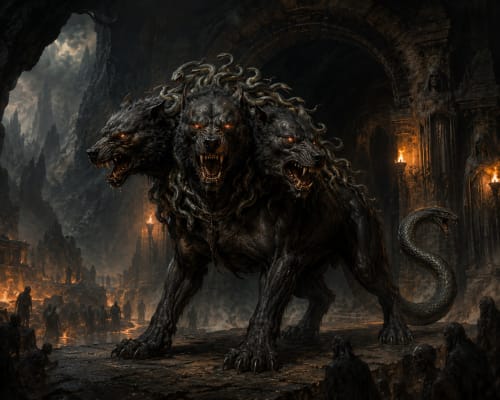
Cerberus
Cerberus · Infernal Gatekeeper — Legendary triple-headed hound
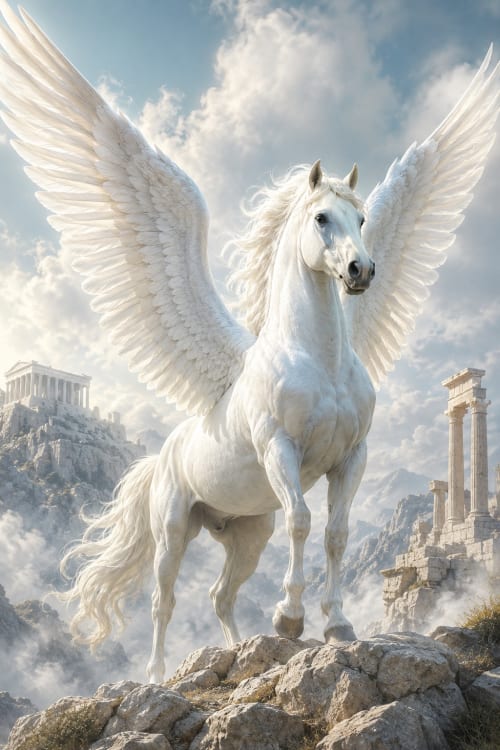
Pegasus
Pegasus · Winged Horse — A Legendary Creature from Greek Mythology
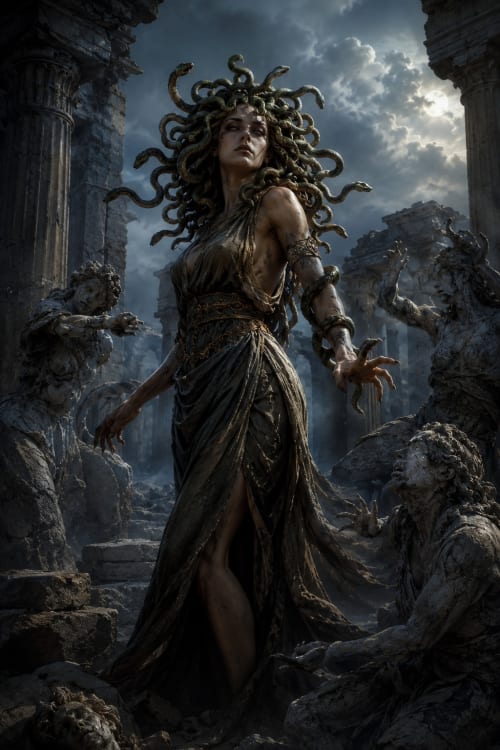
Medusa
Medusa · Monster — Ancient creature with snakes for hair

Centaur
Centaur · Half-human, half-horse — Legendary creature of Greek myth

Charybdis
Charybdis · Oceanic Monster — The Devouring Whirlpool

Lamia
Serpent-bodied Enchantress · Seductress and Devourer in Greek Mythology

Basilisk
King of Serpents in Medieval European Legend
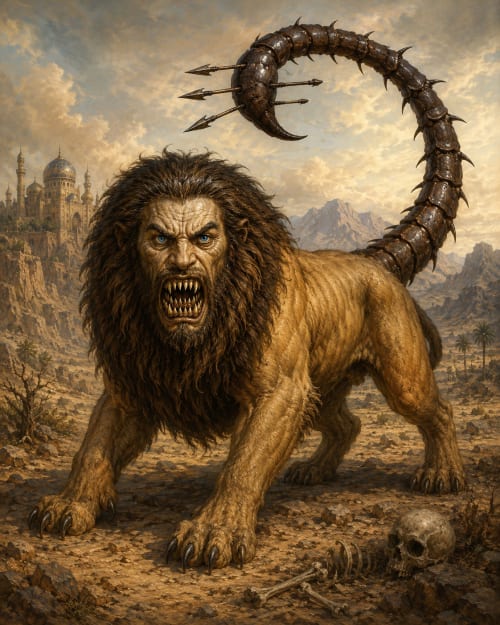
Manticore
Persian Legendary Lion-Man-Scorpion Hybrid

Sphinx
Sphinx · Guardian of Riddles — Hybrid of Human and Lion

Chimera
Chimera · Monstrous hybrid — Mythical creature with combined animal traits

Phoenix
Phoenix · Firebird — Legendary bird reborn from flames