LoreArc

Greek

29 items tagged with "Greek"

🐉Monsters(10)
⚔️Weapons(1)
hades

Hades

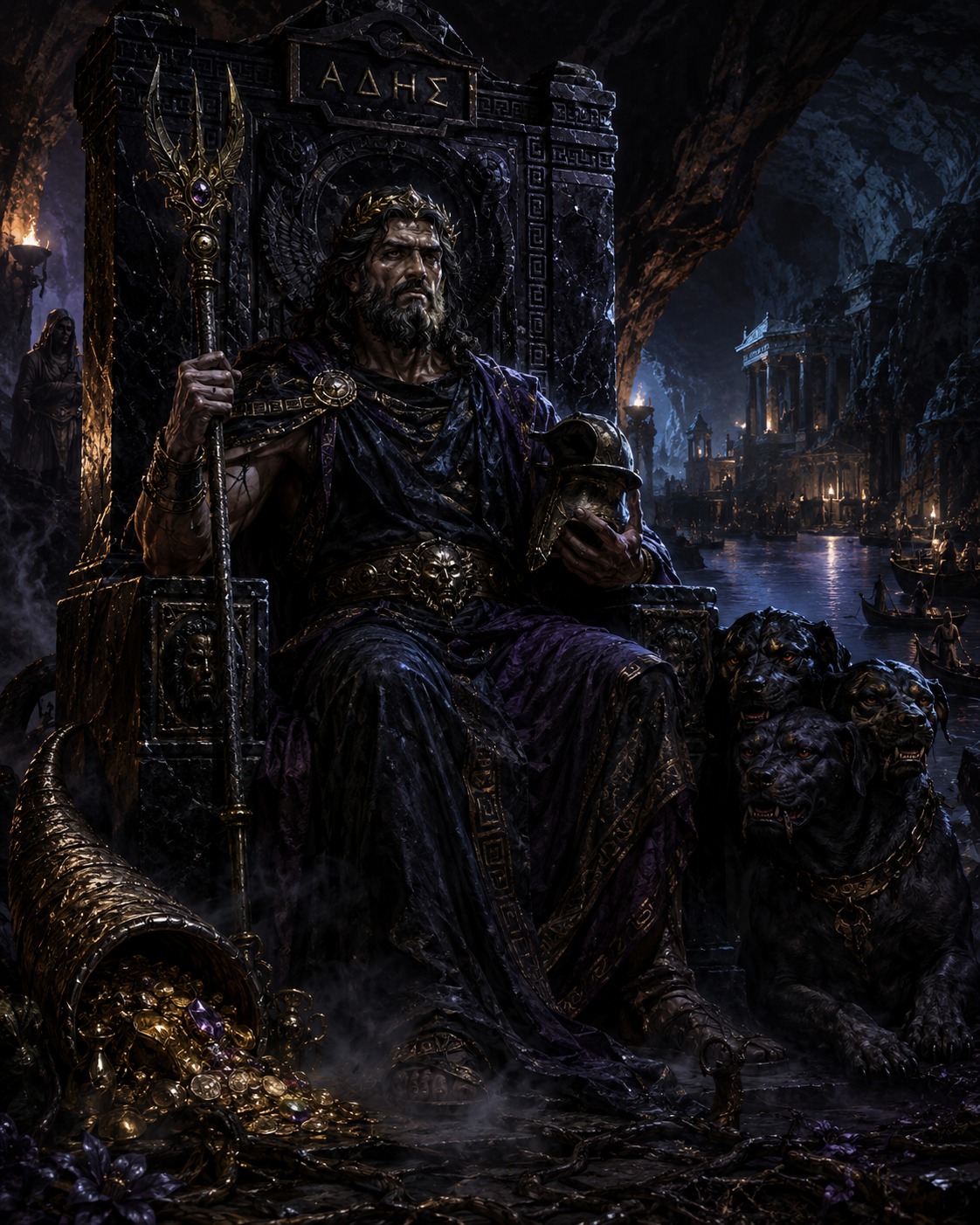
Hades · Greek God of the Underworld — King of the Dead

Hades (Ancient Greek Haides, Latin Pluto) is the god of the underworld and king of the dead in Greek mythology — the decisive canon, the son of Kronos (Kronos) and Rhea (Rhea), the elder brother of Zeus (Zeus) and Poseidon (Poseidon), who does not belong to the 12 Olympian gods but holds equal power — the decisive canonical iconographic figure. The etymology of the Greek Haides is the decisive canonical vocabulary of 'unseen (a-idein, not-see)', and the alias Plouton (Plouton, 'god of wealth' — used to avoid speaking his true name) is the decisive canonical vocabulary. The decisive textual canon is the Theogony (Theogony) lines 453-491 of Hesiod (Hesiod) of c. 8th-7th century BCE — the decisive canon in which Kronos swallows his children — and lines 768-806 — the decisive canon of Hades's underworld realm — and the Iliad (Iliad) Book 15 lines 187-193 of Homer (Homer) of c. 8th century BCE — the decisive canon in which Zeus, Poseidon, and Hades, the three brothers, divided heaven, sea, and underworld by lot — and the Odyssey (Odyssey) Book 11 — the decisive canon of the Nekyia (Nekyia, evocation of the souls of the dead). The decisive canon of the Persephone (Persephone) abduction myth of the Homeric Hymns (Homeric Hymns) No. 2 Hymn to Demeter of c. 7th-6th century BCE, and the decisive canonical iconography of the mature male god clothed in darkness and dignity, hiding his appearance with the kynee (kynee) helmet, and commanding the guard dog Kerberos (Kerberos, 3-headed dog).

aphrodite

Aphrodite

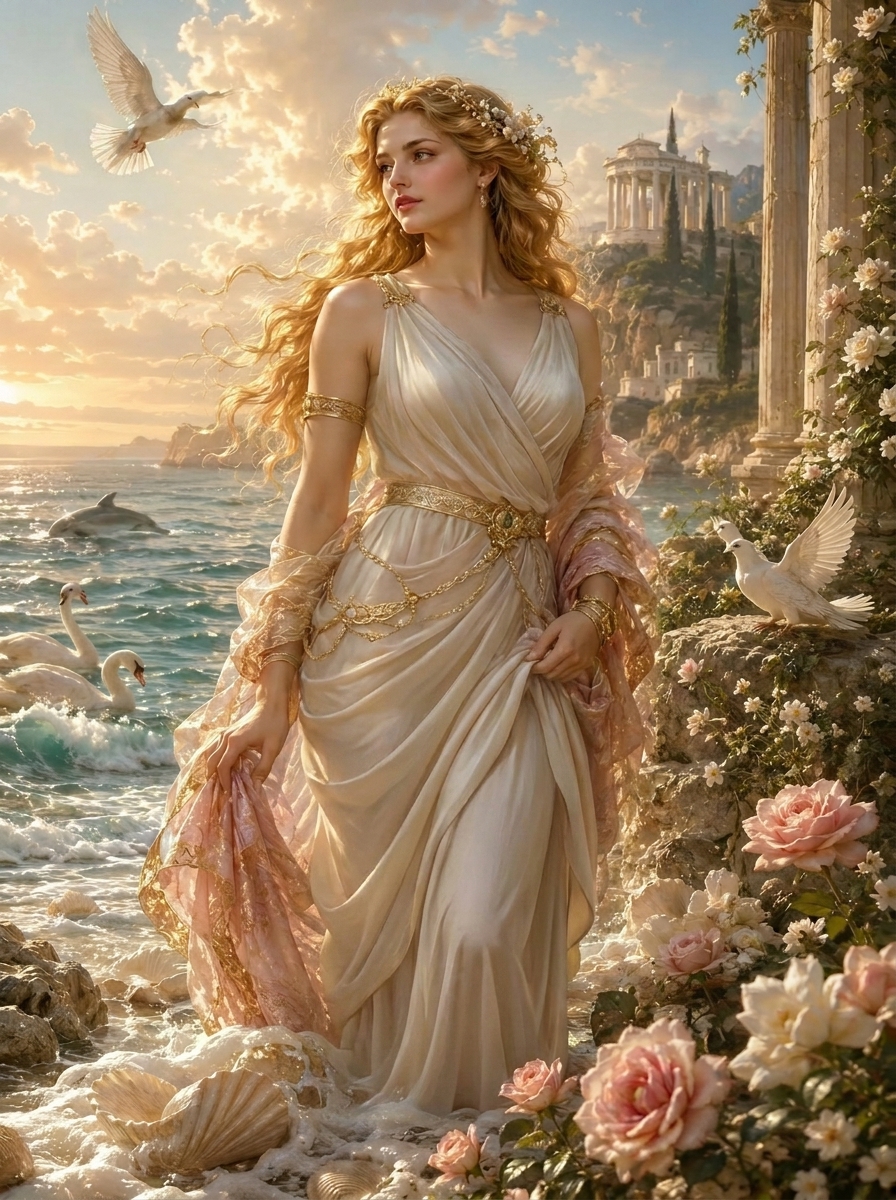
Aphrodite · Goddess of Love, Beauty, and Desire

Aphrodite (Ancient Greek Aphrodite, Latin Venus) is the goddess of love, beauty, desire, and fertility in Greek mythology — the decisive canon, the decisive canonical iconographic figure born from the foam (aphros, sea foam) after Kronos (Kronos) castrated his father Ouranos (Ouranos) and threw his genitals into the sea. The etymology is the decisive canonical vocabulary of the Greek aphros (foam, sea foam) — 'the one born from foam'. The decisive textual canon is the Theogony (Theogony) lines 188-206 of Hesiod (Hesiod) of c. 8th-7th century BCE — the decisive canon in which Kronos castrated his father Ouranos and the genitals fell into the sea, foam (aphros) formed, and Aphrodite was born and landed on the shores of Kypros (Kypros) or Kythera (Kythera) — and the Iliad (Iliad) Book 5 lines 311-430 of Homer (Homer) of c. 8th century BCE — the decisive canon of Diomedes (Diomedes) wounding her wrist with a spear and making her flee — and Book 14 lines 214-221 — the decisive canon of the kestos himas (kestos himas, girdle of love) — and the Odyssey (Odyssey) Book 8 lines 266-366 — the decisive canon of the affair with Ares (Ares) caught in Hephaistos's (Hephaistos) bronze net. The fragment 1 Hymn to Aphrodite (Hymn to Aphrodite) of Sappho (Sappho) of c. 7th century BCE and the Homeric Hymns (Homeric Hymns) No. 5 Hymn to Aphrodite of c. 7th-6th century BCE — the decisive canon of conceiving Aineias (Aineias) with the love of Anchises (Anchises).

⚔️Armor(2)
🐉Dragons(1)
🌿Materials(1)
🐉Humanoids(1)
satyr

Satyr

Satyr · The Half-Beast — Forest Folk of Wine, Music, and Revelry

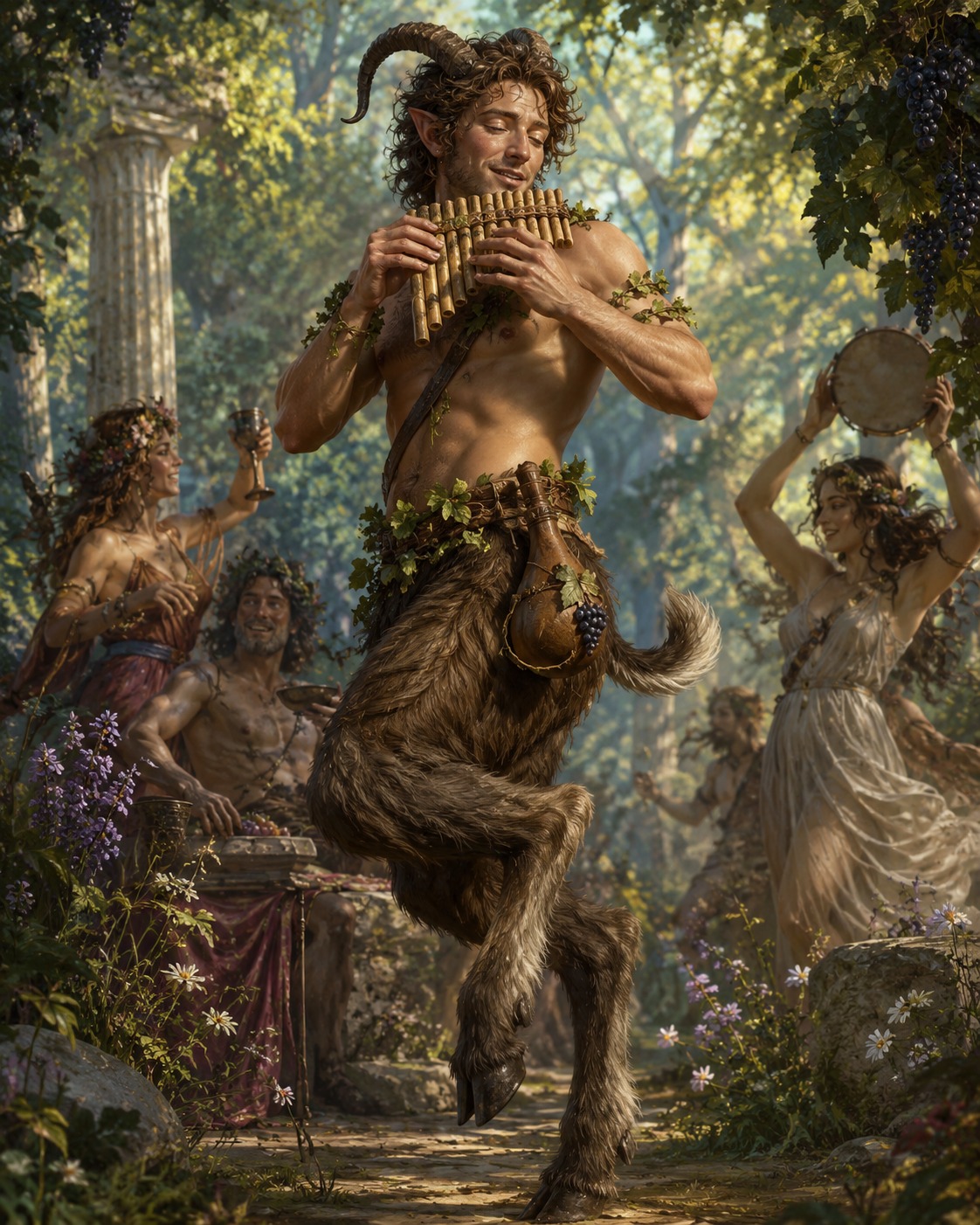
The satyr (ancient Greek Σάτυρος, Latin satyrus) is a half-human, half-beast nature spirit of Greek mythology, the riotous follower of the god of wine and madness Dionysos. The earliest attestations are in Hesiod's 'Catalogue of Women' fragment 10 (c. 700 BCE, which calls them 'a useless mischievous race') and the Homeric Hymn to Pan (number 19, late seventh century BCE); the visual canon is fixed in Attic black- and red-figure pottery of the sixth and fifth centuries BCE, with the François Vase (Ergotimos and Kleitias, c. 570-560 BCE, National Archaeological Museum of Florence) and the Brygos Cup (c. 480 BCE, British Museum) as the standard sources. The earliest Greek satyr was originally a horse-tailed, horse-eared theriomorph, but in the Hellenistic period (late fourth century BCE) the satyr fused with the Roman Faunus (a forest and pastoral god from the cult of Numa Pompilius) and the goat-legged, horned, goat-tailed iconography came to prevail. In the fifth-edition Dungeons & Dragons 'Mythic Odysseys of Theros' (Wizards of the Coast, 2020), satyrs stand 150 to 180 centimetres tall, with a human upper body, hoofed goat legs, short curled horns, a short goat tail and a wild curly head of hair and beard on the human portion. Racial traits are +2 Charisma, +1 Dexterity, Magic Resistance (advantage on saving throws against magic), Mirthful Leaps (double jump distance) and the signature Reveler trait that lets them play a syrinx or aulos with charm and fascination effects. They live in herds in woodlands and fields, accompanying the maenads in the Dionysian thiasos. The iconography is carried into the Renaissance through Botticelli's 'Venus and Mars' (1483, National Gallery, London) and Michelangelo's 'Bacchus' (1497, Bargello Museum, Florence), through Debussy's 'Prelude to the Afternoon of a Faun' (1894), Disney's 'Fantasia' (1940), and Mr. Tumnus in C.S. Lewis's 'The Lion, the Witch and the Wardrobe' (1950).