
War Hammer
A blunt weapon designed to defeat plate armor
Names in Other Languages
 워해머한국어
War Hammer · 갑옷 파괴용 타격 무기
 ウォーハンマー日本語
板金鎧を破壊する打撃武器
 戰錘繁體中文
破壞板甲的打擊武器
 KriegshammerDeutsch
Die Rüstungsknacker-Waffe
 Marteau de guerreFrançais
L'arme brise-armure
 Martillo de guerraEspañol
El arma rompe-armaduras
 Martelo de guerraPortuguês
A arma quebra-armaduras
 Młot bojowyPolski
Broń niszcząca zbroje
 Боевой молотРусский
Оружие для пробития доспехов
The war hammer is an anti-armor striking weapon made to counter the plate armor that developed in the later Middle Ages. Its head is split in two: one side is a flat or textured hammer face that delivers a heavy shock, and the other is a sharp spike, called in French the bec, or beak, that punches through armor. When a sword could no longer cut through hard plate, the war hammer broke a foe in two ways: a blow with the hammer face drove the shock through to the body beyond the armor to break bones or knock him senseless, while the spike pierced weak points such as the helmet or the joints, or a relatively thin plate. It ranged from one-handed versions of about 60 to 90 cm to polearm forms of 120 to 180 cm, the one-handed kind usually weighing about 1 to 2.5 kg.
Origin
The war hammer appeared as plate armor developed rapidly in 14th-century Europe. Once mail gave way to hard steel plate, the cut of a sword could no longer pierce armor, and a dedicated anti-armor weapon was needed that delivered both shock and penetration. In medieval France such iron hammer weapons were called the martel-de-fer, the iron hammer. As full plate became common in the 15th and 16th centuries it became an essential weapon carried by everyone from knights to infantry, developing into many forms, from the short horseman's pick used on horseback to polearm types such as the pollhammer, the bec de corbin, and the Lucerne hammer swung in both hands.
Features
- A twin head: a hammer face for shock and a spike for penetration
- Both one-handed (about 60 to 90 cm) and polearm (about 120 to 180 cm) forms
- An anti-armor weapon specialized against plate
- Causes fractures and internal injury through the armor by shock
- Pierces weak points such as helmet and joints, and thin plate, with the spike
- Weighing about 1 to 2.5 kg in the one-handed kind
Stories
The war hammer came into its own against a fully armored foe. Against an opponent off whom a sword simply glanced, the soldier swung the hammer face hard so that even when the armor was not pierced the shock carried through to the body, breaking bones or leaving him reeling. Having broken the enemy's balance, he then aimed the spike on the other side at the visor of the helmet, the gaps at the armpit, elbow, or knee, or a relatively thin plate, and punched through. The long rear spike of the polearm forms was used to hook a mounted enemy and drag him down or drive into his armor, while the horseman's pick on horseback delivered its power in a single downward strike in passing.
Weakness
The war hammer cannot cut, so against an unarmored foe it is less efficient than a sword, which can threaten several lines of attack at once. The head is heavy, so it takes time to move from one swing into the next, and a miss easily allows a counter in the gap. The sharp spike can lodge in an enemy's armor or body and fail to come free, so there was a risk of not recovering the weapon after a single decisive blow. The large polearm forms are also hard to swing in a confined space or a packed melee.
Cultural Significance
The war hammer is a symbol of the endless arms race between armor and weapon in the later Middle Ages. It stood at the center of a cycle in which each tougher armor was answered by a heavier shock weapon to break it. As records of English archers wielding great mauls at the Battle of Agincourt in 1415 show, hammer weapons were familiar not only to knights but to infantry. In Poland the long-beaked war hammer called the nadziak became fashionable as a status symbol and personal weapon of the nobility, the szlachta, in the 16th and 17th centuries, and was so dangerous that it gained a grim reputation in duels and brawls.
In Popular Culture
The war hammer appears often in fantasy and games as the byword for the heavy blunt weapon. The Warhammer franchise, which grew from a miniatures game and its setting, made the very name widely known, and the Doomhammer of World of Warcraft and the great hammer weapons of countless RPGs cemented that impression. It is often drawn as the emblematic weapon of the dwarf races. In fiction, though, unlike the real one-handed war hammer of around 1 to 2.5 kg, it tends to be exaggerated into a giant two-handed hammer as tall as a person. The impression of a blunt weapon that smashes by sheer force is emphasized over its true, sophisticated design as an anti-armor weapon combining shock and penetration.
Trivia
- In medieval France iron hammer weapons were called the martel-de-fer, the iron hammer, and the pointed rear spike was called the bec de corbin, the crow's beak, for its resemblance to a crow's beak.
- The hammer face of a war hammer worked on the principle of carrying its shock through to the body beyond the armor to cause fractures or internal injury even without piercing the plate, a core idea it shares with other blunt anti-armor weapons such as the mace and the pollaxe.
- The long-beaked Polish war hammer called the nadziak was fashionable among the noble szlachta in the 16th and 17th centuries as a status symbol and a carried weapon, but gained a grim reputation in brawls and duels for a power that could pierce even the skull.
Related
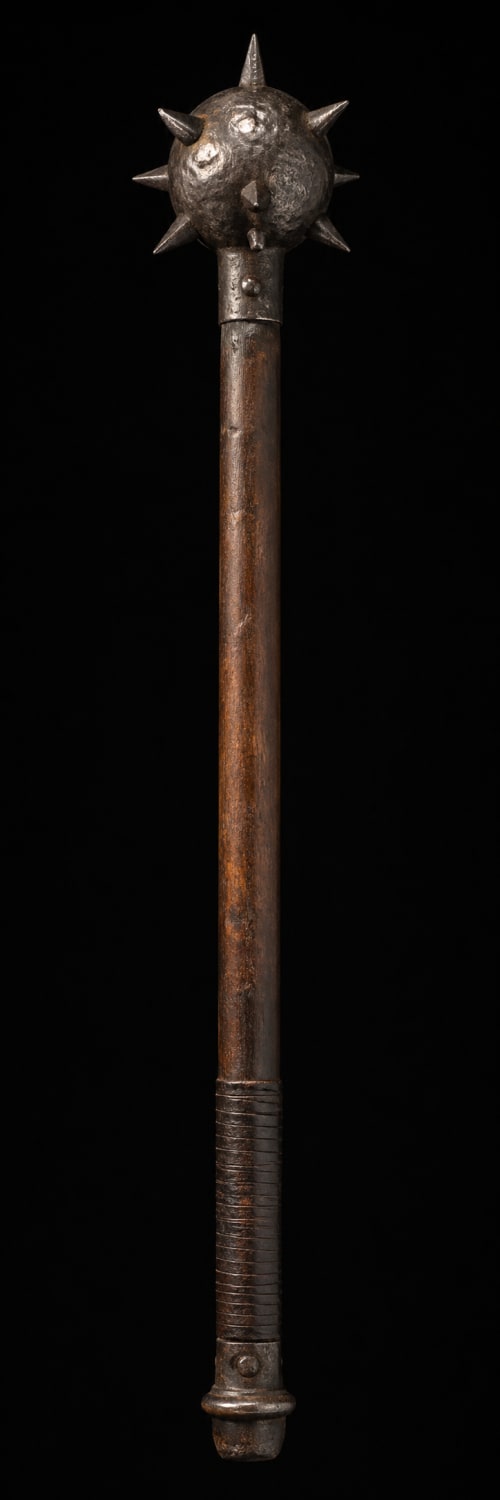
Morning Star
The spiked ball weapon of medieval warfare

Longsword
The quintessential two-handed sword of medieval Europe

Lance
The cavalry charge weapon of the mounted knight

Flail
A chain-linked striking weapon that bypasses shields

Mace
A flanged metal club effective against armor

Halberd
The versatile polearm combining axe, spear, and hook

Shamshir
The curved cavalry saber of Persia
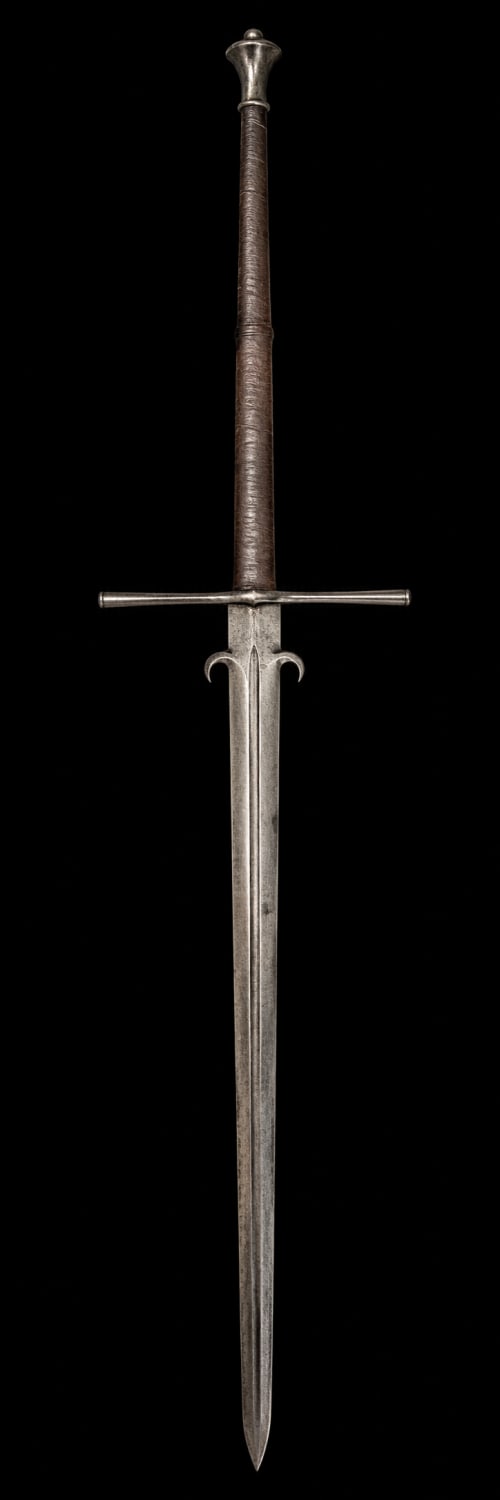
Zweihänder
The massive two-handed sword of German Landsknechts

Crossbow
The mechanized ranged weapon of the medieval era

Battle Axe
An axe designed specifically for combat

Sabre
The curved cavalry sword for slashing
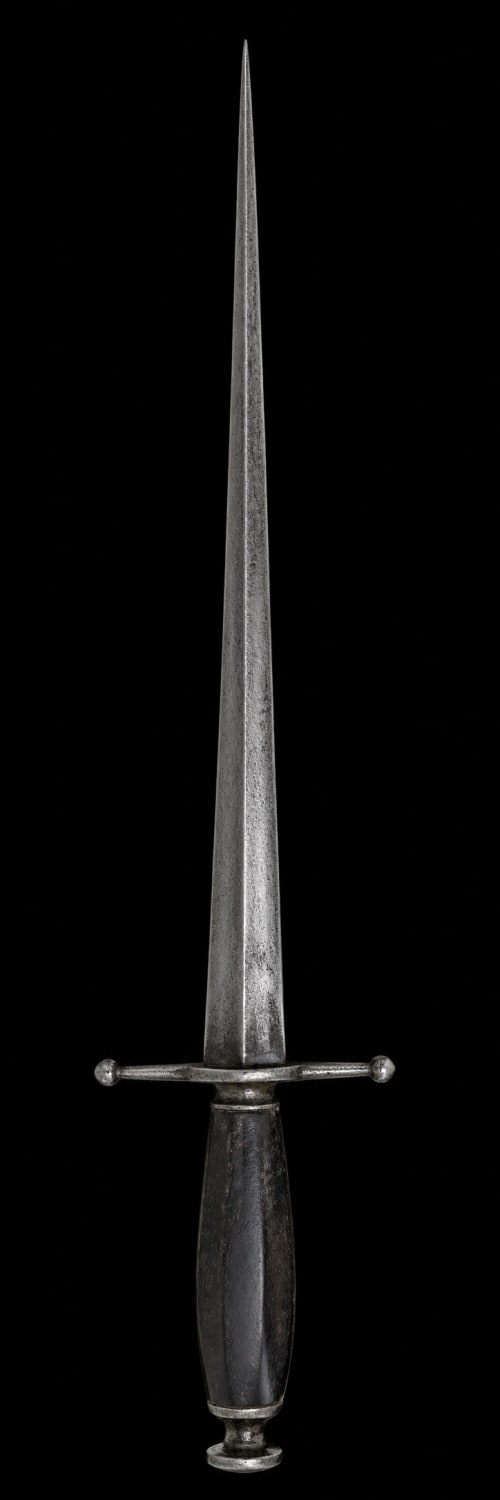
Stiletto
The Italian thrusting-only dagger