
Sabre
The curved cavalry sword for slashing
Names in Other Languages
 사벨한국어
사벨한국어Sabre · 기병의 곡선형 베기 검
 サーベル日本語
騎兵の曲線形斬撃剣
 軍刀繁體中文
騎兵的彎曲劈砍劍
 SäbelDeutsch
Die gebogene Kavalleriewaffe
 SabreFrançais
L'arme courbe de la cavalerie
 SableEspañol
El arma curva de la caballería
 SabrePortuguês
A arma curva da cavalaria
 SzablaPolski
Zakrzywiona broń kawalerii
 СабляРусский
Изогнутое кавалерийское оружие
The sabre is the standard sword of European cavalry from the 17th to the 19th century, marked by a gently curved single-edged blade about 80–90 cm long and a D-shaped knuckle guard that encloses the whole hand. The curve of the blade is optimized for the slash — the draw cut delivered while riding at full gallop — leaving a deep wound in the instant of the charge. Descended from the curved swords of 17th-century Eastern European and Hungarian cavalry, it spread across Western Europe and, in the Napoleonic era, became the main weapon of the cavalry of France, Britain, Prussia, and every major power. About 900 g–1.1 kg and wielded in one hand, it symbolizes the 'age of cavalry' alongside the gaudy uniforms of the light horse. The sabre event of modern fencing descends from it.
Origin
The sabre grew from the curved swords used by 17th-century Eastern European and Hungarian cavalry. Its roots lie in the Eastern curved blades such as the Ottoman kilij and shamshir, whose cut-favoring curvature suited mounted combat and took hold among the Hungarian hussars (light horse) and Polish cavalry. In the 17th and 18th centuries this Hungarian-style sabre spread to Western armies and was standardized along with light-cavalry formations, becoming the representative cavalry sword of Europe in the Napoleonic Wars (1803–1815). When the machine gun and repeating rifle of the late 19th century made the cavalry charge obsolete, it declined as a battlefield weapon but lived on as the officer's dress and ceremonial sword and as a fencing discipline.
Features
- Gently curved single-edged blade (about 80–90 cm)
- D-shaped knuckle guard enclosing the whole hand
- Curvature optimized for the mounted slash (draw cut)
- Total weight about 900 g–1.1 kg, wielded one-handed
- From the Hungarian hussars; the Napoleonic cavalry standard
- The prototype of the modern fencing sabre event
Stories
The sabre's real worth lay in the cavalry charge. A horseman riding past the enemy at full speed cut down foot and horse with the curved blade; the draw cut, with the speed of the horse added, opened a deep wound in a single passing stroke. In the charge it was used with the arm thrust straight to lead with the point, or with the blade trailed at an angle to slice as the rider swept by. The D-guard protected the hand, so it was not injured even in a melee of clashing blades. It served in dismounted duels and close combat too, but its true element was always the mobile blow from the saddle.
Weakness
Specialized for the cut, the curved blade was less effective at the thrust than a straight sword, putting it at a disadvantage in driving a point through massed infantry head-on (for which some armies adopted a separate straight thrusting cavalry sword). Optimized for mounted combat, its usefulness was limited in dismounted close fighting, and above all, when the repeating rifle and machine gun of the late 19th century made the cavalry charge itself suicidal, the sabre's battlefield value plummeted. It all but vanished from war over the course of the two World Wars.
Cultural Significance
The sabre is the sword that symbolizes the 'age of cavalry' and the officer class. The gaudy uniform of the hussar and the flashing curved blade epitomized the romantic image of the 19th-century army, and to this day it survives as the officer's dress and ceremonial sword and in the 'saber arch' of the military wedding. It left a mark on language too: the English 'saber-rattling' became an idiom for showing off military force to threaten without actually using it. Of the three weapons of modern fencing, the 'sabre' descends directly from this cavalry blade.
In Popular Culture
The sabre is a fixture of works set in the Napoleonic age and 19th-century war. It is drawn as the charge weapon in films like Waterloo, the series Sharpe, and the cavalry of Napoleon: Total War. The sabre (szabla) of Poland's 'winged hussars' is an emblem of Polish historical drama, and the sabre also appears in the cavalry charges of the Crimean War, famous from Tennyson's poem The Charge of the Light Brigade. Meanwhile the name of the 'lightsaber' of Star Wars is taken from this sabre — the image of the curved blade carried even into science fiction.
Trivia
- The English 'saber-rattling' is an idiom born of officers rattling their sabres to intimidate; it means making a show of military force to threaten without actually going to war.
- Of the three weapons of modern Olympic fencing — foil, épée, and sabre — only the sabre scores by cutting with the edge, a trait carried directly from the cut of the cavalry sabre rather than the thrust of the straight sword.
- The Polish curved sabre, the szabla, was the weapon of the nobility (szlachta) and the 'winged hussars' (husaria), and is a cultural emblem deeply woven into Polish national identity.
Related

Rapier
A thrust-oriented slender sword of Renaissance Europe

Longsword
The quintessential two-handed sword of medieval Europe
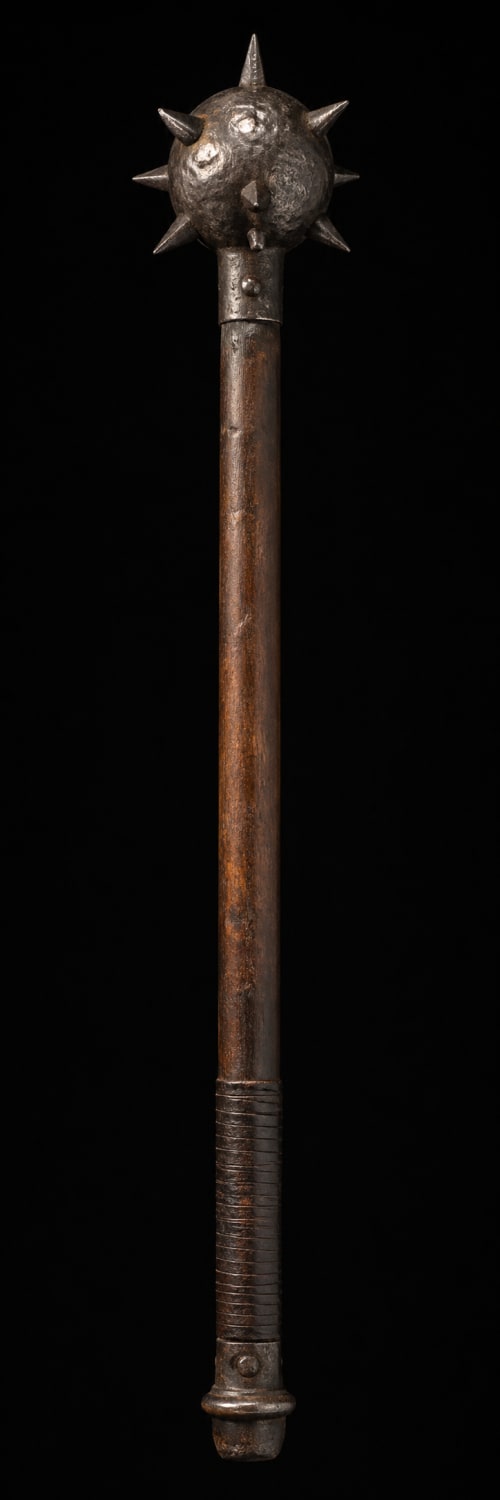
Morning Star
The spiked ball weapon of medieval warfare

Lance
The cavalry charge weapon of the mounted knight

Musket
The muzzle-loading firearm of the early modern era
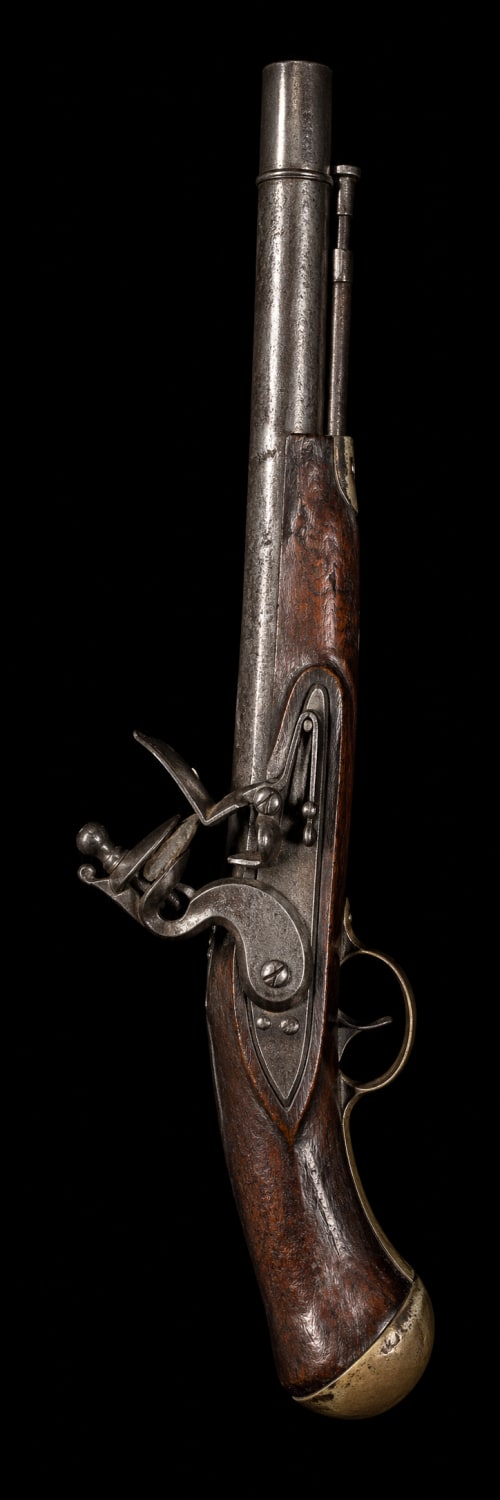
Flintlock Pistol
A single-shot pistol ignited by striking flint
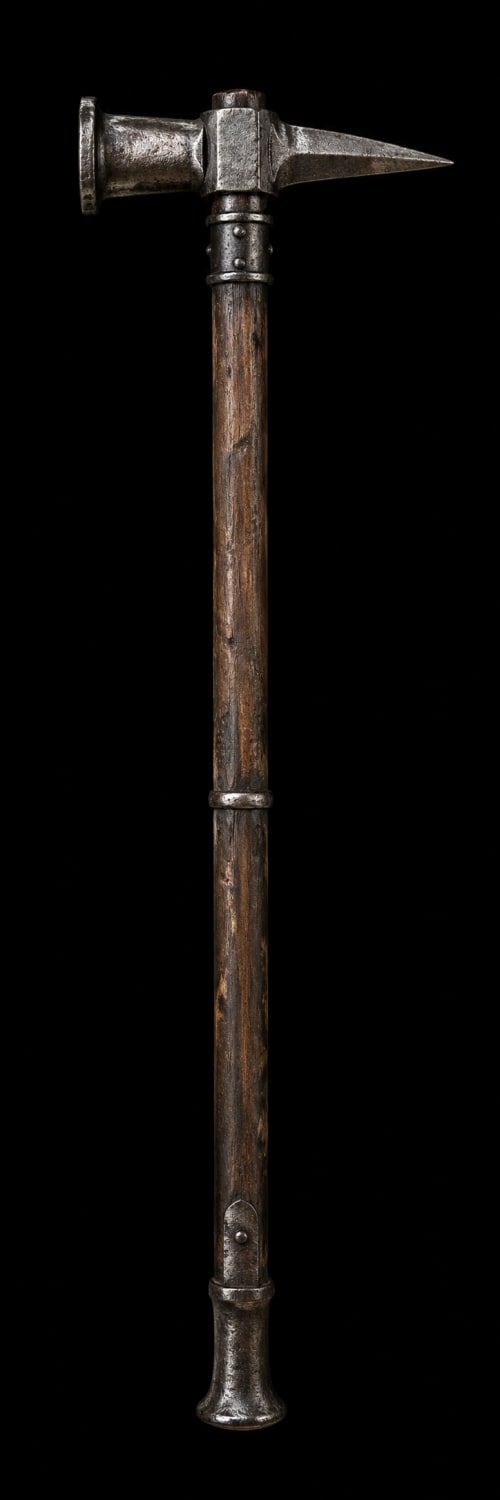
War Hammer
A blunt weapon designed to defeat plate armor

Shamshir
The curved cavalry saber of Persia

Falchion
A single-edged medieval European chopping sword

Gladius
The standard short sword of the Roman legionnaire

Halberd
The versatile polearm combining axe, spear, and hook

Spear
Humanity's oldest weapon