
Mace
A flanged metal club effective against armor
Names in Other Languages
 메이스한국어
Mace · 갑옷 파괴용 금속 곤봉
 メイス日本語
甲冑破壊用の金属棍棒
 釘頭錘繁體中文
破壞盔甲的金屬棍棒
 StreitkolbenDeutsch
Die klassische Schlagwaffe gegen Rüstung
 Masse d'armesFrançais
L'arme contondante classique contre les armures
 MazaEspañol
El arma contundente clásica contra armaduras
 MaçaPortuguês
A arma contundente clássica contra armaduras
 BuławaPolski
Klasyczna broń obuchowa przeciw zbroi
 БулаваРусский
Классическое ударное оружие против доспехов
The mace is a striking weapon with a heavy metal head on a shaft, one of the oldest weapon types in human history. From the Bronze Age it was used as a club with a head of stone or metal, and in the Middle Ages it developed into a metal head with protruding flanges or a knobbed form, serving as an armor-crushing weapon. The flanged design in particular concentrates the force of the blow on a narrow edge, carrying the shock into the body even when the armor is not pierced. About 50 to 80 cm long with a head of about 1 to 2 kg, it was held in one hand and usually used with a shield. The story that medieval clergy wielded the mace so as not to shed blood is widely spread, but it is a later-made myth with little historical basis.
Origin
The mace is one of the oldest weapon types humankind ever made, used from the Bronze Age, about 3000 BC. At first it was a simple club with a head carved of stone or metal on a shaft, and it was used early on as a symbol of power. When plate armor developed in medieval Europe, a weapon was needed to break by shock the armor that a blade could not pierce, and so the mace was refined into the flanged form with protruding vanes and became the key blunt weapon of the age of armor. Along with the war hammer and the pollaxe of the same era, it was a weapon developed in the arms race between armor and weapon.
Features
- A metal head, flanged or knobbed
- About 50 to 80 cm long, a head of about 1 to 2 kg
- Carries shock through armor to cause internal injury and fractures
- An old weapon type used from the Bronze Age
- The bloodless clergy weapon, a later myth
- Used in one hand, with a shield
Stories
The mace came into its own before a fully armored foe. Against an opponent off whom a sword glanced from steel plate, the soldier struck a part such as the helmet or the joints hard, so that even when the armor was not pierced the shock carried into the body and caused concussion or fractures. The flanged head gathered that force onto the narrow tips of the vanes and drove the shock deeper still. It was commonly handled with the mace in one hand and a shield in the other, blocking and striking, and it was often used from horseback too. In the age of armor, where the cutting weapon did not tell, the mace was the most direct answer of beating and breaking.
Weakness
The weakness of the mace is its short reach and its lack of a cutting edge. With a short shaft, it is at a disadvantage against a foe with a spear or polearm who keeps his distance, and it cannot, like a sword, threaten several lines at once with a cut. The head is heavy, so it takes time to move from one swing into the next, and a miss easily allows a counter in the gap. Above all, against an unarmored foe a sword that both cuts and thrusts is more efficient than a blunt head that strikes a single point, so the true element of the mace lay always in anti-armor combat.
Cultural Significance
The mace is engraved deep in human culture as a symbol of power beyond a weapon. The Narmer Palette of ancient Egypt (about 3100 BC) shows the pharaoh striking down an enemy with a mace, showing that the mace was a symbol of kingship from early on. This club of authority carries on as the ceremonial mace borne in the ceremonies of parliaments, universities, and cities today. In Eastern Europe the flanged mace (the pernach) and the bulawa became symbols of military command, and in Indian myth the club called the gada appears as the weapon of the hero Bhima and the god Hanuman. The story of the bloodless clergy weapon, meanwhile, is appealing but a myth with little historical basis.
In Popular Culture
The mace commonly appears in fantasy and games as the blunt weapon of the cleric and paladin class. The setup in Dungeons and Dragons of the cleric wielding a mace springs precisely from the myth of the bloodless clergy weapon, a case of fiction hardening a later story as it stands. The flanged mace is also drawn as the representative blunt weapon of the armored knight in works of medieval setting. In works dealing with Indian myth, the gada appears as the emblematic weapon of Bhima and Hanuman. The ceremonial mace used as a symbol of authority in parliaments and the like is also widely seen in reality.
Trivia
- The stone-headed mace is among humanity's oldest weapons and earliest symbols of power: the Narmer Palette of Egypt (about 3100 BC) shows the pharaoh striking down an enemy with a mace, and from this weapon of kings descends the ceremonial mace borne in the ceremonies of parliaments and universities today.
- The story that medieval clergy wielded the mace so as not to shed blood under canon law, often tied to Bishop Odo on the Bayeux Tapestry, is a later-made myth with little historical basis: clergy who fought used various weapons, and what canon law forbade was not the choice of weapon but the fighting itself.
- The flanged mace, which developed with the spread of plate armor, gathered its force onto narrow vanes to carry shock through armor, and in Eastern Europe the flanged maces (the pernach and shestoper) and the bulawa became symbols of command for Slavic, Cossack, and Ottoman leaders.
Related
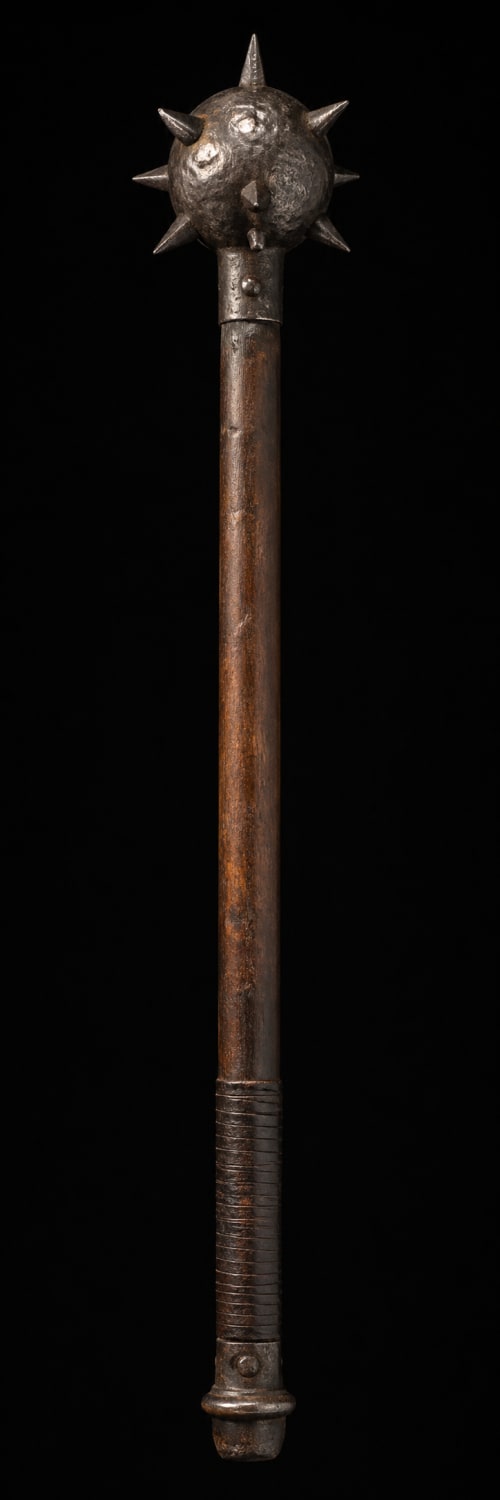
Morning Star
The spiked ball weapon of medieval warfare
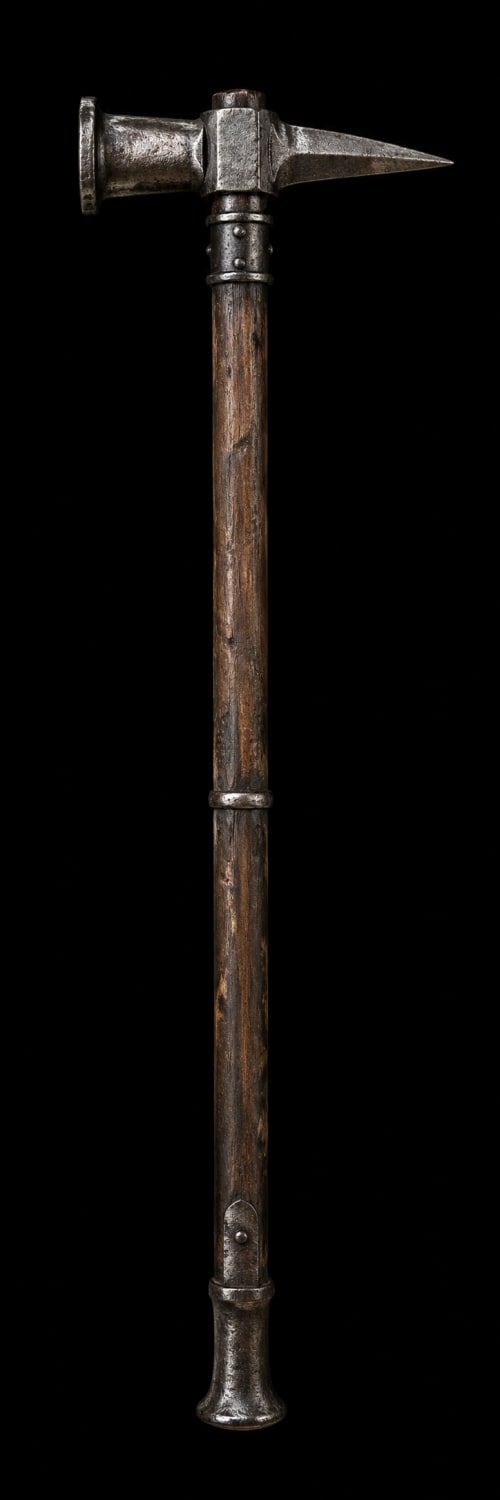
War Hammer
A blunt weapon designed to defeat plate armor

Flail
A chain-linked striking weapon that bypasses shields

Halberd
The versatile polearm combining axe, spear, and hook

Longsword
The quintessential two-handed sword of medieval Europe
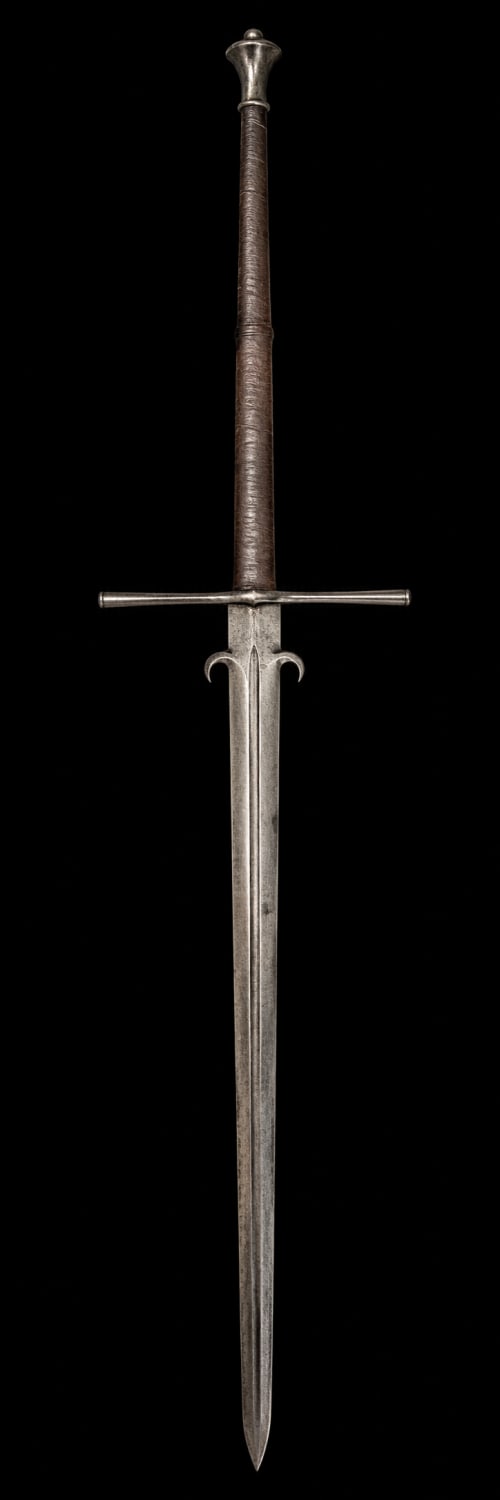
Zweihänder
The massive two-handed sword of German Landsknechts

Crossbow
The mechanized ranged weapon of the medieval era

Battle Axe
An axe designed specifically for combat

Lance
The cavalry charge weapon of the mounted knight
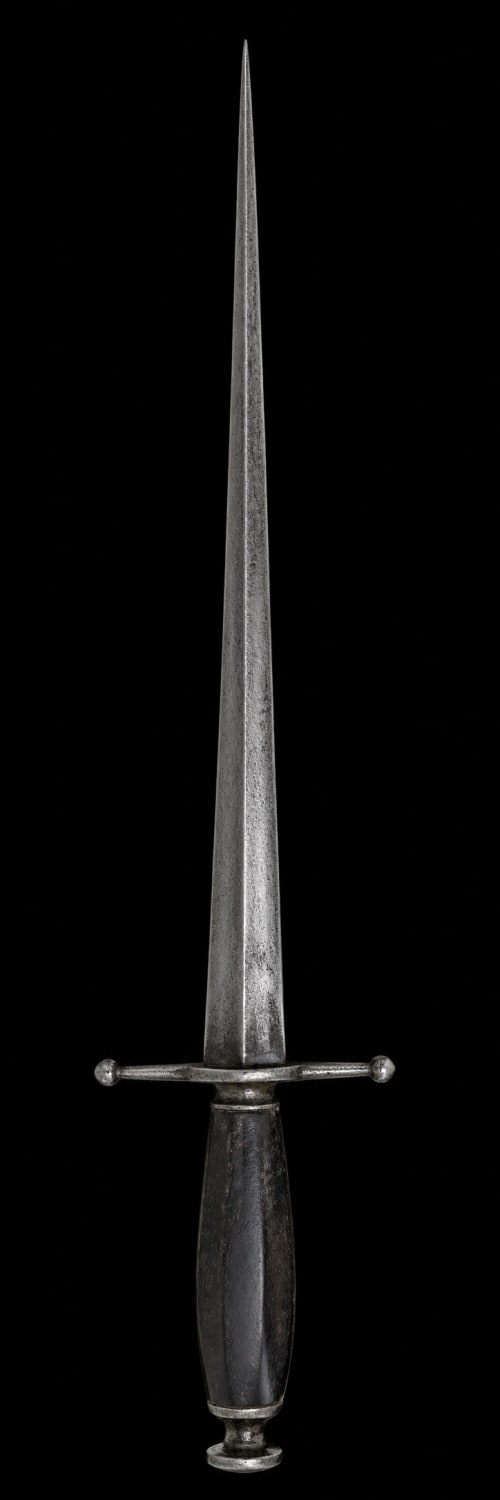
Stiletto
The Italian thrusting-only dagger

Glaive
A polearm with a curved single-edged blade

Longbow
The iconic weapon of the English archer