
Crossbow
The mechanized ranged weapon of the medieval era
Names in Other Languages
 크로스보우한국어
Crossbow · 기계식 발사 장치를 가진 석궁
 クロスボウ日本語
機械式発射装置の弩
 十字弓繁體中文
機械式發射的弩
 ArmbrustDeutsch
Die mechanische Fernwaffe des Mittelalters
 ArbalèteFrançais
L'arme à distance mécanique du Moyen Âge
 BallestaEspañol
El arma a distancia mecánica del medievo
 BestaPortuguês
A arma de distância mecânica medieval
 KuszaPolski
Mechaniczna broń dystansowa średniowiecza
 АрбалетРусский
Механическое дальнобойное оружие Средневековья
The crossbow is a ranged weapon that lays a bow horizontally on a stock, the tiller, and holds the drawn string until a trigger releases it. Unlike an ordinary bow, it can deliver great power after relatively short training rather than a lifetime of practice, and so it is often called a democratized weapon. In medieval Europe it was widely used as an infantry weapon and as the mainstay of wall defense. Early prods were composite, of wood, horn, and sinew glued together, but from the 14th century the steel prod was introduced and greatly raised the draw weight and the penetration. The bolt, or quarrel, that answers to the arrow is shorter and heavier than an ordinary arrow and delivered strong penetration at close range.
Origin
The crossbow is thought to have arisen around the 5th century BC in China's Warring States period. The Chinese nu of that time mass-produced a precision-cast bronze trigger mechanism and upheld the armies of the Qin and Han empires, and the Terracotta Army of the First Emperor's tomb was armed with crossbows. It spread widely again in Europe around the 10th century, and as a commoner could now kill an armored knight with only short training, it raised the fear of unsettling the order of the knightly class. At the Second Lateran Council of 1139, Pope Innocent II forbade its use among Christians, but the ban had almost no force.
Features
- A horizontal prod and a mechanical trigger that holds the drawn string
- Great power even with short training, a democratized weapon
- Excellent penetration with the steel prod from the 14th century
- A bolt, or quarrel, short and heavy for high penetration at close range
- Spanned by a windlass, a crank, or a foot stirrup
- An effective range of about 100 to 200 m
Stories
The crossbow shone above all in wall defense and siege. It could be spanned in advance, leaving time to aim, and the strong penetration of the steel prod punched through shields and armor. In the field, infantry worked it by sheltering the body behind a large shield, the pavise, shooting a bolt and spanning again, the Genoese crossbow mercenaries being the chief example. The harder it was for an army to raise trained archers, the greater the value of the crossbow, for unlike the longbow that demanded a lifetime of practice, anyone could learn it in a short time and loose a powerful bolt.
Weakness
The greatest weakness of the crossbow is its slow rate of shooting. It takes time to draw and set the strong string again, so it managed only 1 to 3 shots a minute, far behind the bow that loosed more than ten. In the Battle of Crecy in 1346, the rout of the Genoese crossbowmen by the English longbowmen owed to this slow spanning, strings soaked by rain, and the absence of pavises together. The string and the mechanical parts are also weak to moisture, so its power fell off in damp weather, and the delicate trigger mechanism could fail.
Cultural Significance
The crossbow is a weapon symbolic of the democratization of war. Letting a commoner trained in a short time bring down an armored noble, rather than a knight or skilled archer reared by a lifetime of practice, this weapon unsettled the order of medieval rank. Such unease underlay the Church's attempt to forbid its use among Christians. Among heroic legends of the bow, meanwhile, the Swiss tale of William Tell, who shot an apple off his son's head, is widely known together with the crossbow. In China the repeating crossbow, the lian nu, which loosed several bolts in succession, developed into another branch.
In Popular Culture
The crossbow is a staple ranged weapon in works dealing with the Middle Ages and fantasy. It often appears as a slow but powerful infantry weapon that looses a single hard shot in strategy and action games, or as the quiet sniping weapon of a hunter or assassin character. The crossbows of games such as Warcraft and Dark Souls, and the weapon that silently dispatches a foe in zombie media, are familiar. It is used symbolically too in the tale of William Tell and in works depicting the hunting of vampires. In fiction, though, the slowness of spanning, a core weakness, is often left out, so it tends to be simplified into something that fires rapidly like a bow.
Trivia
- At the Second Lateran Council of 1139 Pope Innocent II forbade the use of the crossbow (and the bow) among Christians as a thing hateful to God, but the ban was almost never kept, a sign of how much the fact that a commoner trained in a short time could kill an armored noble unsettled the order of the knightly class.
- The Chinese nu, the root of the crossbow, was a weapon that mass-produced a precision-cast bronze trigger mechanism, fielded in great numbers by the Qin and Han empires, and the Terracotta Army of the First Emperor's tomb was armed with crossbows.
- A crossbow whose steel prod was drawn by a windlass reached draw weights of several hundred pounds, beyond what a man could draw by hand, but its slow spanning, of 1 to 3 bolts a minute, meant crossbowmen sheltered behind a large shield, the pavise, to span, the Genoese crossbowmen being the chief example.
Related
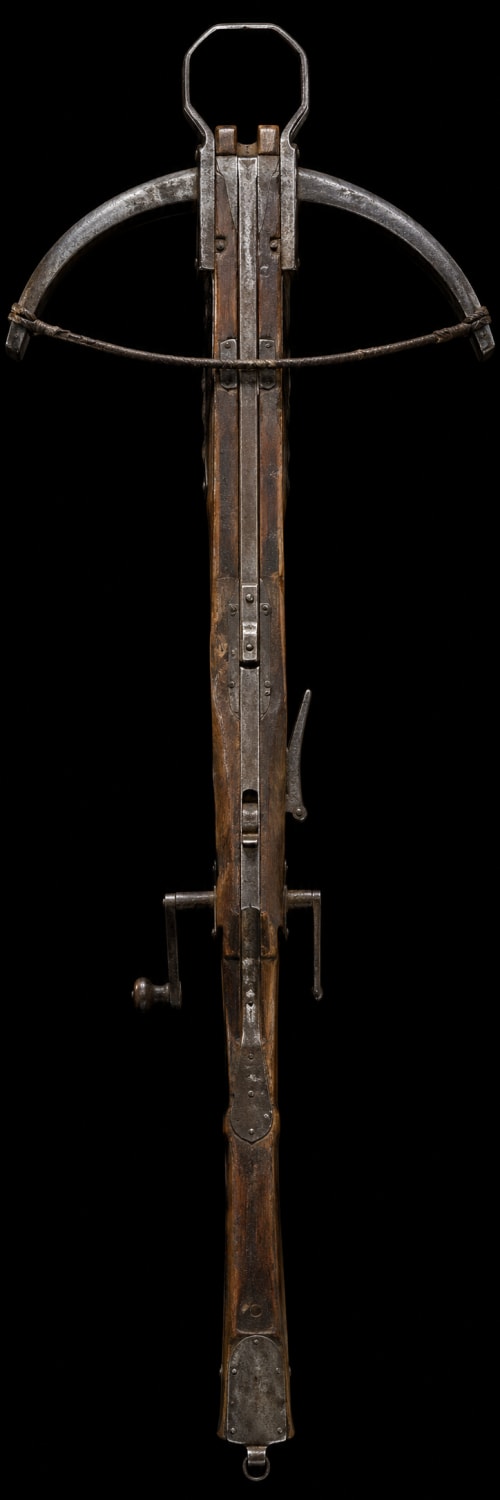
Arbalest
A heavy steel-prodded crossbow of the late Middle Ages

Longbow
The iconic weapon of the English archer

War Bow
A heavy-draw longbow built for battlefield use

Halberd
The versatile polearm combining axe, spear, and hook

Longsword
The quintessential two-handed sword of medieval Europe
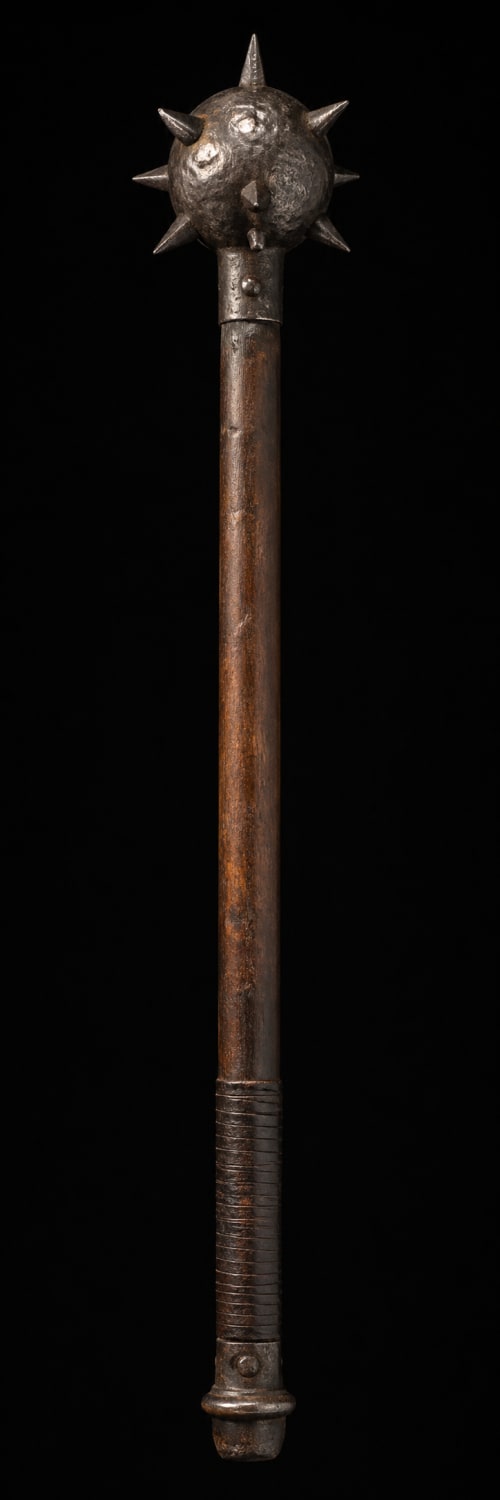
Morning Star
The spiked ball weapon of medieval warfare
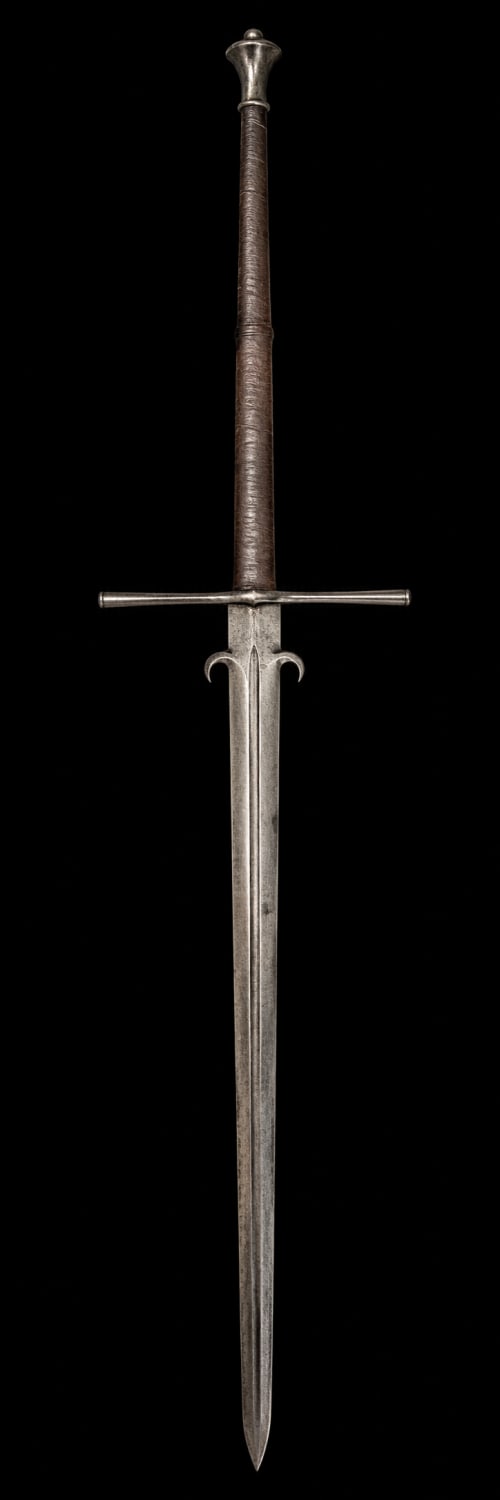
Zweihänder
The massive two-handed sword of German Landsknechts

Battle Axe
An axe designed specifically for combat

Lance
The cavalry charge weapon of the mounted knight
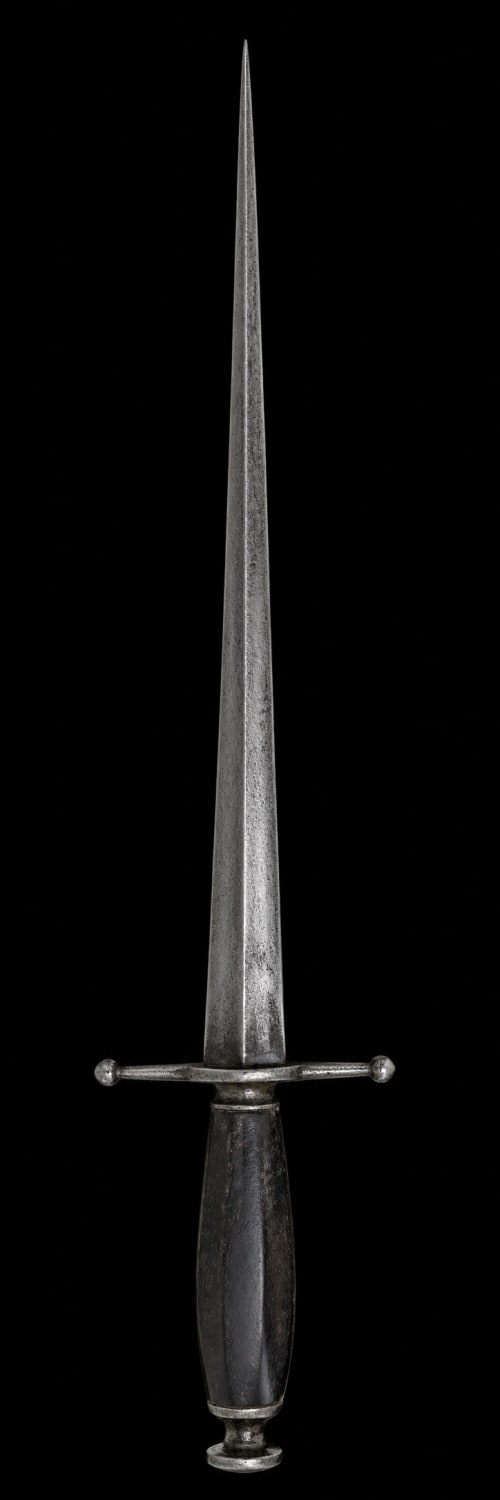
Stiletto
The Italian thrusting-only dagger

Mongol Bow
The composite bow of mounted archers

Glaive
A polearm with a curved single-edged blade