
Longsword
The quintessential two-handed sword of medieval Europe
Names in Other Languages
 롱소드한국어
Longsword · 중세 유럽의 양손 장검
 ロングソード日本語
中世ヨーロッパの両手直剣
 長劍繁體中文
中世紀歐洲的雙手直劍
 LangschwertDeutsch
Das Zweihänder-Schwert des mittelalterlichen Europas
 Épée longueFrançais
L'épée à deux mains de l'Europe médiévale
 Espada largaEspañol
La espada a dos manos de la Europa medieval
 Espada longaPortuguês
A espada de duas mãos da Europa medieval
 Miecz długiPolski
Oburęczny miecz średniowiecznej Europy
 Длинный мечРусский
Двуручный меч средневековой Европы
The longsword is the two-handed straight sword most widely used in Europe from the 13th to the 17th century. With a blade of about 90 to 130 cm and a long grip of 20 to 30 cm, it can be handled in one hand or two, and so it is also called the bastard sword or the hand-and-a-half sword. Its traits are a straight double-edged blade, a cruciform guard, and a heavy pommel, and thanks to the balance of the pommel, which sets the point of balance about 10 cm forward of the guard, its handling is excellent. Its total weight is about 1.1 to 1.8 kg, far lighter than commonly imagined. It is a versatile weapon equipped with a wide range of techniques: cuts and thrusts, of course, but also half-swording, gripping the blade to thrust, and the Mordschlag, striking down with the pommel.
Origin
The longsword appeared when, in the lineage of the one-handed knightly sword descending from the 10th-century Viking sword, the grip was lengthened around the late 13th century so it could be held in two hands as well, and it reached its height in the 14th and 15th centuries. The way to handle this weapon was set down in systematic fencing treatises, the Fechtbuecher, that survive to this day: the German Kunst des Fechtens, the art of fighting, sprang from Johannes Liechtenauer of the 14th century, and in Italy Fiore dei Liberi left the Fior di Battaglia, the flower of battle, around 1409. These manuals became the basis of the modern revival of Historical European Martial Arts (HEMA).
Features
- A straight double-edged blade (about 90 to 130 cm)
- A long grip for hand-and-a-half or two-handed use (20 to 30 cm)
- A cruciform guard and a heavy pommel
- A total weight of about 1.1 to 1.8 kg, lighter than thought
- A range of techniques such as half-swording and the Mordschlag
- A point of balance about 10 cm from the guard, for excellent handling
Stories
The longsword was the main weapon of knights and soldiers, a key weapon not only on the battlefield but in judicial duels and tournaments. Held in two hands, it moved freely between heavy cuts and precise thrusts, and with its long grip it changed direction quickly as if by a lever and unfolded a varied array of techniques. Its true worth showed above all against an armored foe: with half-swording, gripping the blade in one hand to thrust precisely into the gaps of armor, and with the Mordschlag, holding the blade reversed and swinging the heavy pommel and guard like a hammer or a pick, it could attack even plate armor that the edge could not cut. It was an all-around weapon equipped with the cut, the thrust, the pommel strike, and grappling.
Weakness
The weakness of the longsword arises from its long blade and two-handed handling. In a narrow, enclosed space or a dense formation, the long blade becomes a hindrance and it is hard to unfold its skill. Being meant by nature for two hands, it also does not suit handling a sword and a shield together in one hand. Compared with a short sword it is awkward to handle in the close press of a melee, and its native versatility comes to life only when supported by room to move freely and considerable training.
Cultural Significance
The longsword is the symbol of the late-medieval knight and the heart of the European fencing tradition. Its form with the cruciform guard overlaps with the image of chivalry and Christianity and has become the figure that comes to mind to this day at the words knight's sword. Above all, the longsword stands at the center of a written fencing tradition: the medieval and Renaissance fencing books, including the manuals of Liechtenauer and Fiore, survive in abundance and have been revived and are actually practiced today as Historical European Martial Arts (HEMA). That is, the longsword is not a museum relic but the weapon of a living martial art still studied and swung today.
In Popular Culture
The longsword is the weapon that appears most widely as the type of the knight's sword in fantasy and games. It is drawn as the standard weapon of the knight and the warrior in countless RPGs and action games and in films of medieval setting, and is treated as a class of hand-and-a-half sword in games including Dungeons and Dragons. In reality too its techniques are reproduced and widely known through HEMA tournaments and practice. In fiction, though, the longsword is often exaggerated as an unrealistically heavy and clumsy weapon, or drawn as cut-only, so the precise and varied real techniques such as half-swording and the pommel strike are little shown.
Trivia
- A real longsword is far lighter than commonly imagined, usually only about 1.1 to 1.8 kg, with its point of balance only a few centimeters forward of the guard, so that it was a quick and precise weapon rather than a clumsy one, the heavy pommel acting as a counterweight.
- The longsword stands at the center of a written European fencing tradition: fencing books such as the lineage of Johannes Liechtenauer of 14th-century Germany and the Fior di Battaglia of the Italian Fiore dei Liberi (around 1409) survive in abundance and became the basis of the modern revival of Historical European Martial Arts (HEMA).
- Against plate armor the longsword used special techniques: half-swording, gripping the blade in one hand to thrust precisely into the gaps of armor, and the Mordschlag, the murder-stroke, holding the blade reversed and swinging the heavy pommel and guard like a hammer, attacking armor the edge could not cut as if with a blunt weapon.
Related
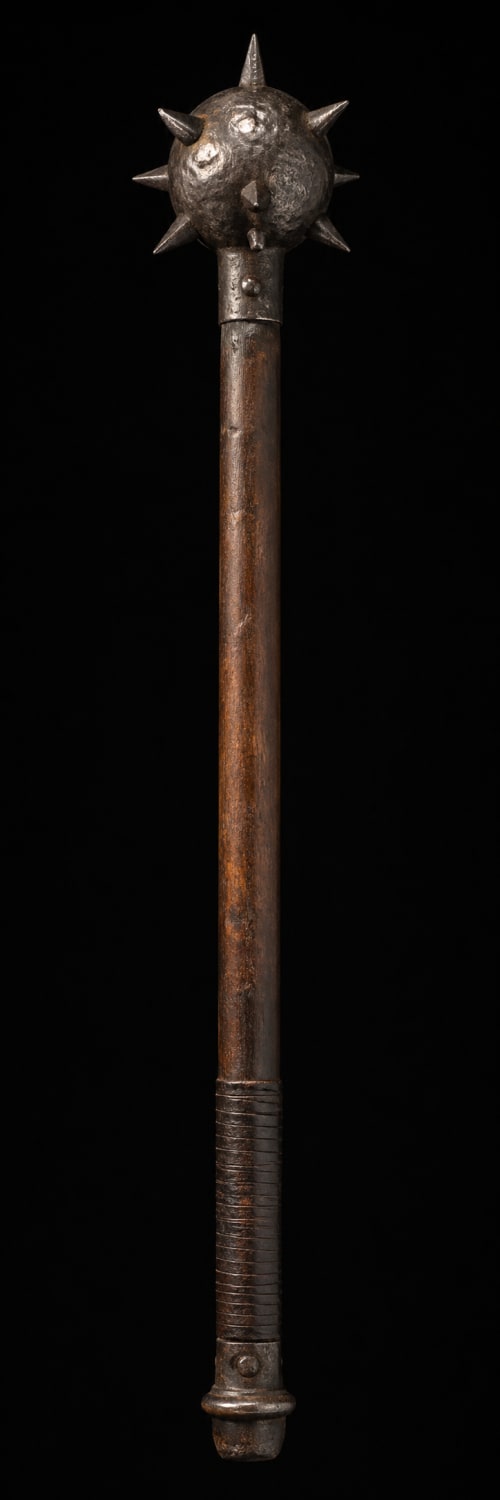
Morning Star
The spiked ball weapon of medieval warfare
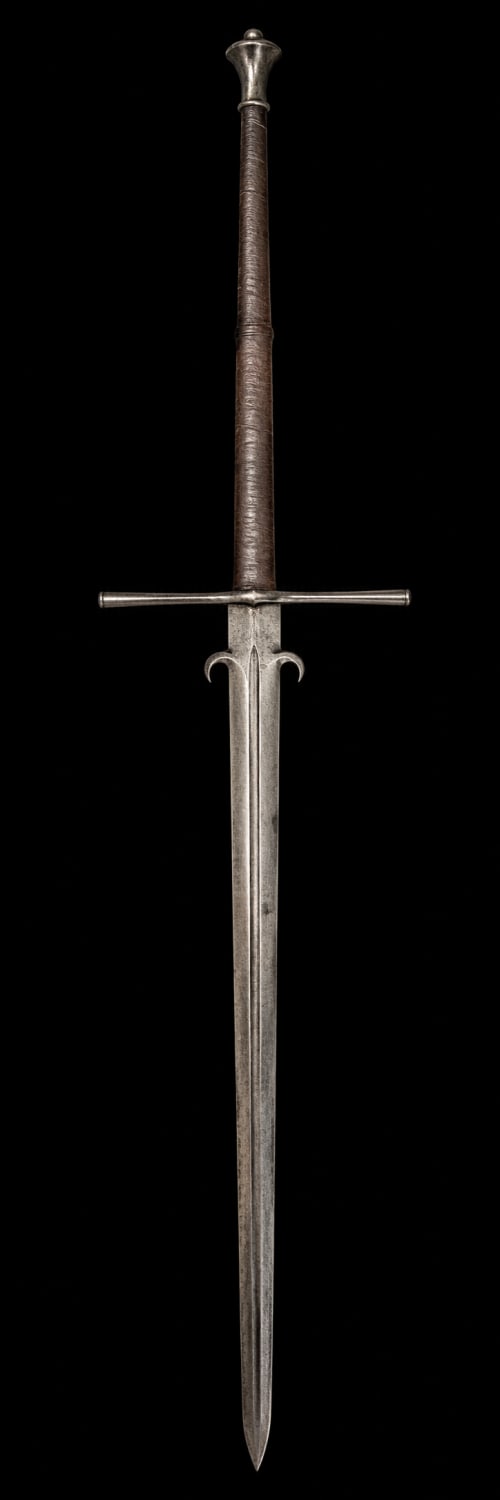
Zweihänder
The massive two-handed sword of German Landsknechts
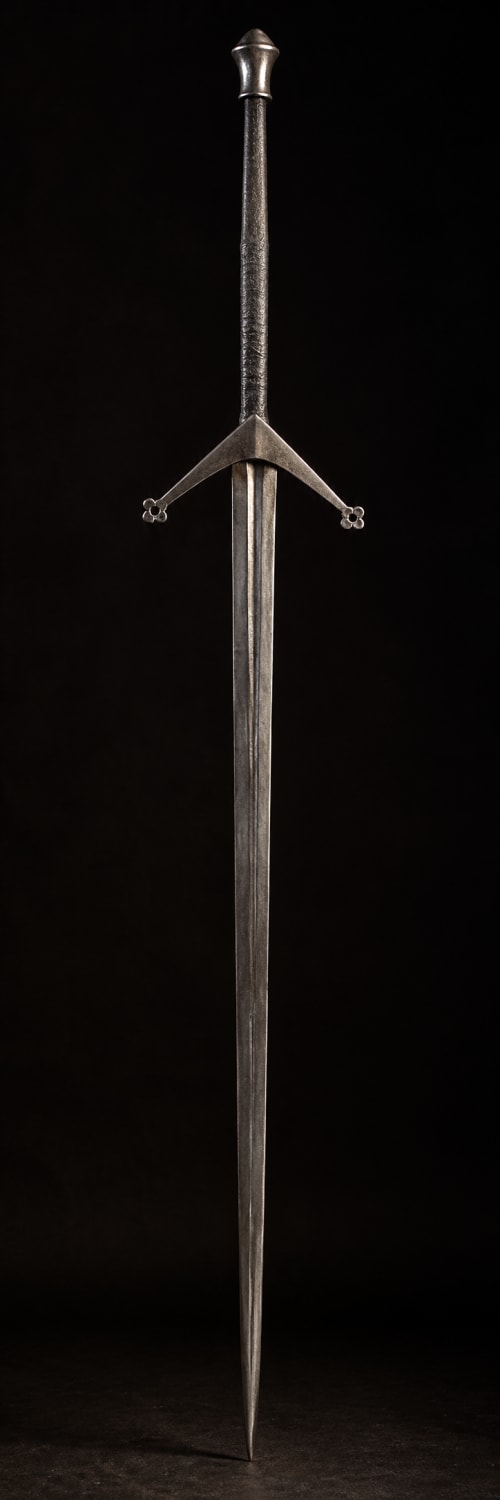
Claymore
The great two-handed sword of the Scottish Highlands

Halberd
The versatile polearm combining axe, spear, and hook

Battle Axe
An axe designed specifically for combat

Lance
The cavalry charge weapon of the mounted knight

Glaive
A polearm with a curved single-edged blade

Falchion
A single-edged medieval European chopping sword
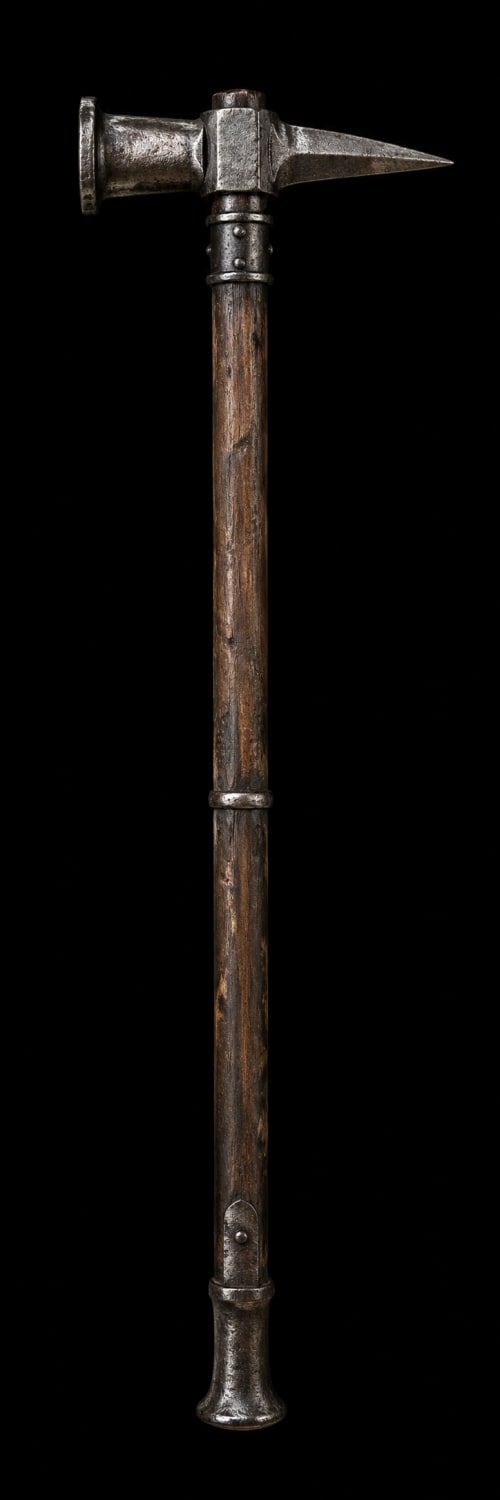
War Hammer
A blunt weapon designed to defeat plate armor

Pike
An extremely long spear for massed infantry formations

Flail
A chain-linked striking weapon that bypasses shields

Spear
Humanity's oldest weapon