
Lance
The cavalry charge weapon of the mounted knight
Names in Other Languages
 랜스한국어
랜스한국어Lance · 기사의 기마 돌격용 창
 ランス日本語
騎士の騎馬突撃用の槍
 騎槍繁體中文
騎士的騎馬衝鋒武器
 LanzeDeutsch
Die Stoßwaffe des berittenen Ritters
 Lance de cavalerieFrançais
L'arme d'estoc du chevalier monté
 Lanza de caballeríaEspañol
El arma de acometida del caballero montado
 Lança de cavalariaPortuguês
A arma de investida do cavaleiro montado
 LancaPolski
Broń szarżowa konnego rycerza
 Рыцарское копьёРусский
Ударное оружие конного рыцаря
The lance is the core weapon of the medieval cavalry charge: a horse-only spear of a long wooden shaft about 300–400 cm tipped with a steel head. A vamplate (conical hand guard) at the middle of the shaft absorbs the shock and shields the hand, and the shaft is locked into a grapper (lance rest, the arrêt) fixed to the breastplate. This 'couched lance' technique gathers the rider's weight and the horse's full speed into a single point at the tip, creating a shock penetration that no infantry or cavalry can meet head-on. After the first impact the shaft usually broke or, having run a foe through, was dropped for a sword or mace. In the joust, deliberately frangible lances were used to reduce injury.
Origin
The lance was established as a shock weapon in 10th–11th-century Europe, when the stirrup and the high-backed saddle let a knight brace the spear firmly under the arm and deliver the horse's full momentum into the enemy. This 'couched lance' charge underpinned the tactical supremacy of the high-medieval heavy cavalry, the knights. It reached its height in the 12th–15th centuries as a symbol of chivalry and, apart from war, flowered as the ceremonial sport of the joust. From the 16th century the shock charge declined before firearms and pike squares, but the lance lived on in the form of the lancer into the 19th and early 20th centuries.
Features
- A horse-only spear about 300–400 cm in total length
- Vamplate (conical hand guard) to protect hand and absorb shock
- Locked into a grapper (armor rest) to concentrate momentum
- Concentrates the charge's energy at a single point ('couched lance')
- Weight about 2.5–4 kg
- Frangible lances made specially for the joust
Stories
The lance's power lay in 'a single impact.' Riding at full speed, the knight tucked the shaft under his arm and locked it in the rest, putting the whole momentum of horse and man behind the point as it struck home. The aim was the decisive single blow — to break an infantry square or unhorse an enemy rider — and since the shaft usually broke or stuck on impact, the knight then switched to sword or mace. The 'lance charge,' many knights riding knee to knee in a line and striking together, was the most terrifying sight of the medieval battlefield. In the joust, the same technique was matched to unseat the opponent.
Weakness
It was virtually single-use, usually breaking or lodging fast on the first impact. Too long and heavy for fighting on foot, it was useless once the horse was lost. If the charge missed or the enemy sidestepped, the long shaft made an immediate response hard, and on terrain where speed was impossible — dense forest, city streets — its power vanished. Above all, from the 16th century the pike square and firearms blunted the cavalry charge itself, and the lance as a shock weapon was steadily pushed off the battlefield.
Cultural Significance
The lance is the weapon that symbolizes the knight and chivalry. The joust was a central ritual of medieval and Renaissance aristocratic culture, and the image of an armored knight lowering his lance at the gallop became the very picture of 'the knight.' The 1559 death of King Henry II of France, his eye pierced by a splinter from a broken lance in a joust, was one spur to the joust's decline. The lance also left deep marks on language and literature: Cervantes' Don Quixote charging windmills he takes for giants, lance lowered, became the byword for chasing vain ideals, and the English 'at full tilt' and 'to break a lance' both come from the joust.
In Popular Culture
The lance is the emblematic weapon of works about knights and the Middle Ages. Cervantes' Don Quixote charging the windmills is the most famous scene, and it is drawn as the key tool of the joust in films like A Knight's Tale and Ivanhoe and in the tourneys of Game of Thrones. In games it is familiar from the 'couched lance' charge of Mount & Blade, the Lance and Gunlance weapon classes of Monster Hunter, and the spears of the Dragoon in Final Fantasy. It is usually portrayed as a shock weapon that 'stakes everything on a single charge,' matching its historical use well.
Trivia
- From the scene in Cervantes' Don Quixote where the knight, mistaking windmills for giants, lowers his lance and charges, came 'tilting at windmills' — an idiom for reckless idealism, fighting imaginary foes.
- King Henry II of France died in 1559 when a splinter from his opponent's broken lance pierced the eye-slit of his helm and his eye during a joust; the accident was a turning point in the joust's decline.
- The English expressions 'at full tilt' (at top speed) and 'to break a lance for someone' (to argue or strive on their behalf) both come from the charge of the joust.
Related

Longsword
The quintessential two-handed sword of medieval Europe
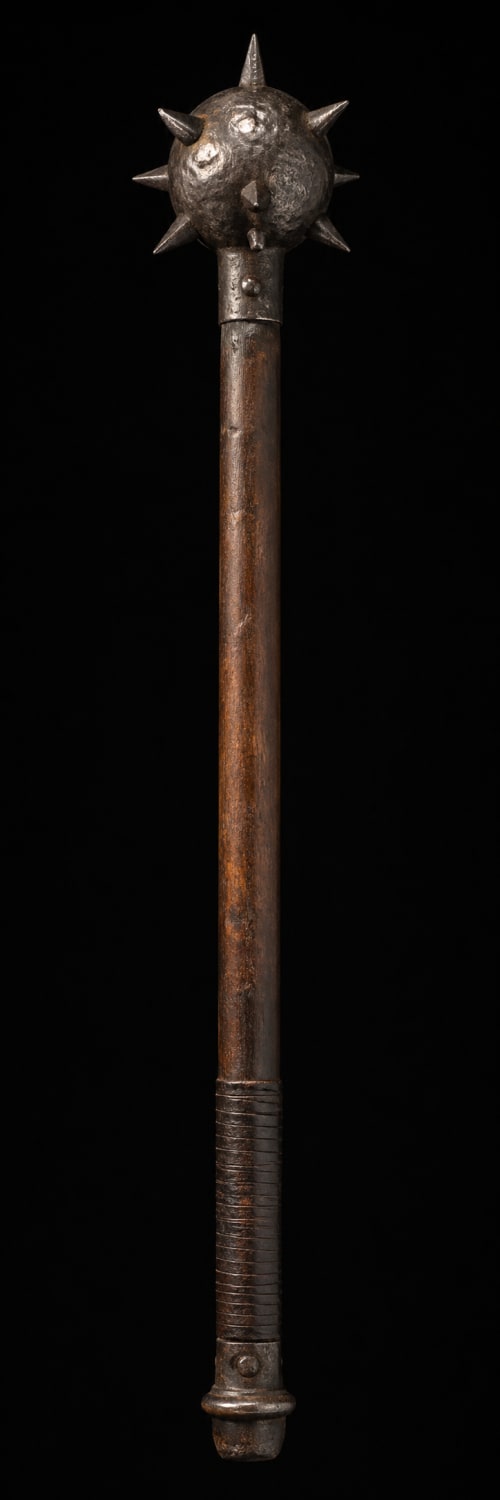
Morning Star
The spiked ball weapon of medieval warfare
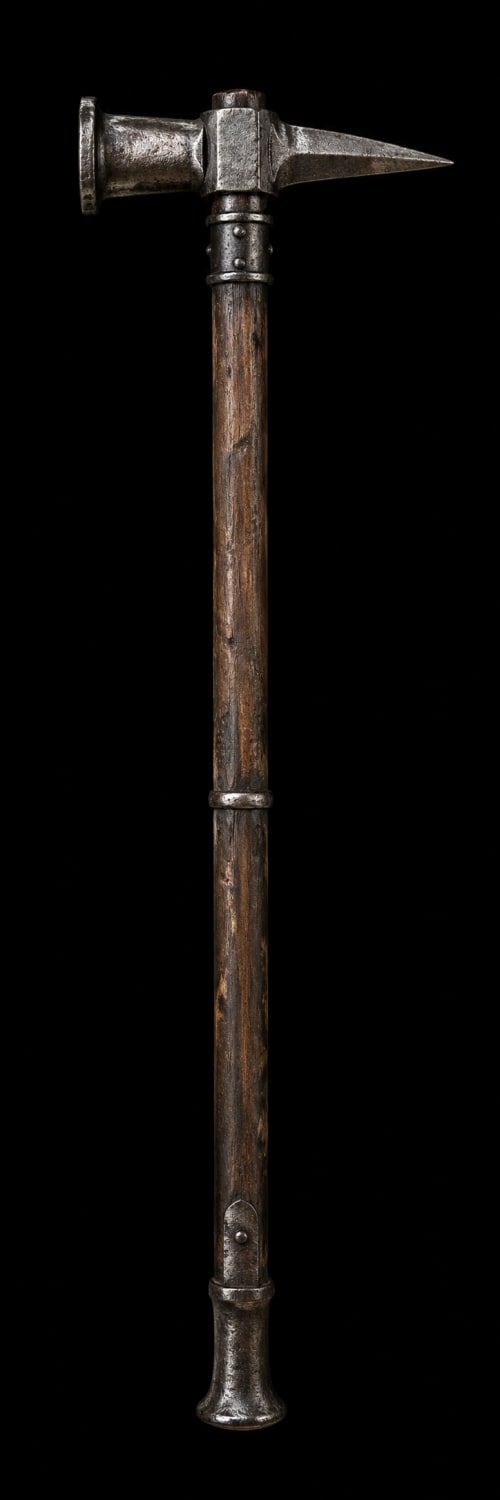
War Hammer
A blunt weapon designed to defeat plate armor

Pike
An extremely long spear for massed infantry formations

Halberd
The versatile polearm combining axe, spear, and hook

Shamshir
The curved cavalry saber of Persia
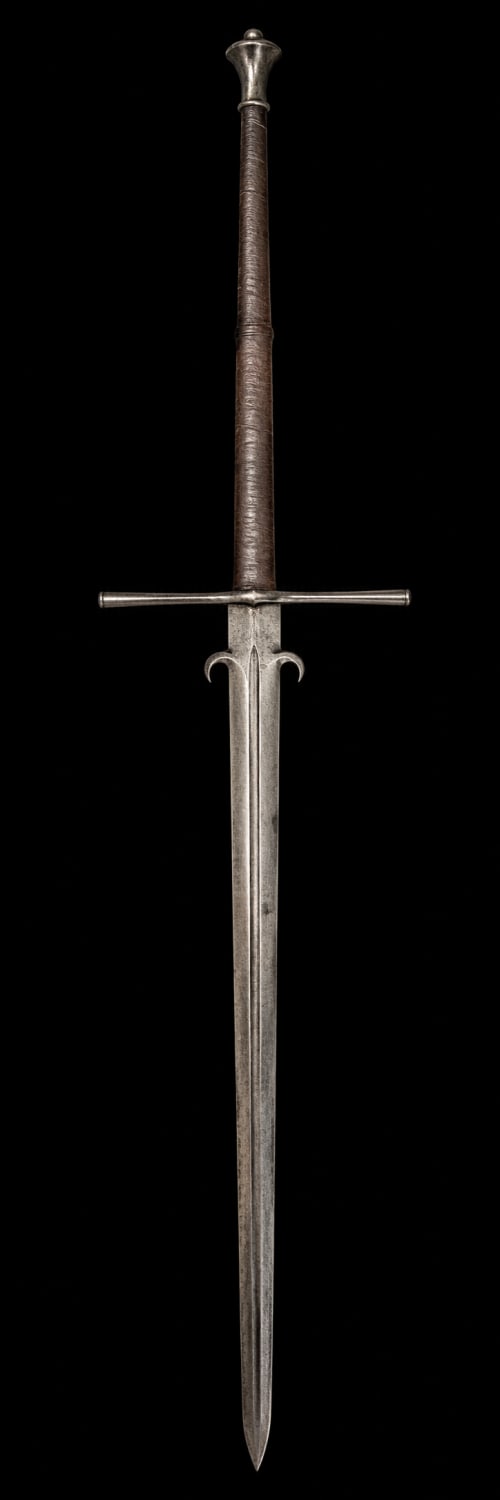
Zweihänder
The massive two-handed sword of German Landsknechts

Crossbow
The mechanized ranged weapon of the medieval era

Battle Axe
An axe designed specifically for combat

Sabre
The curved cavalry sword for slashing
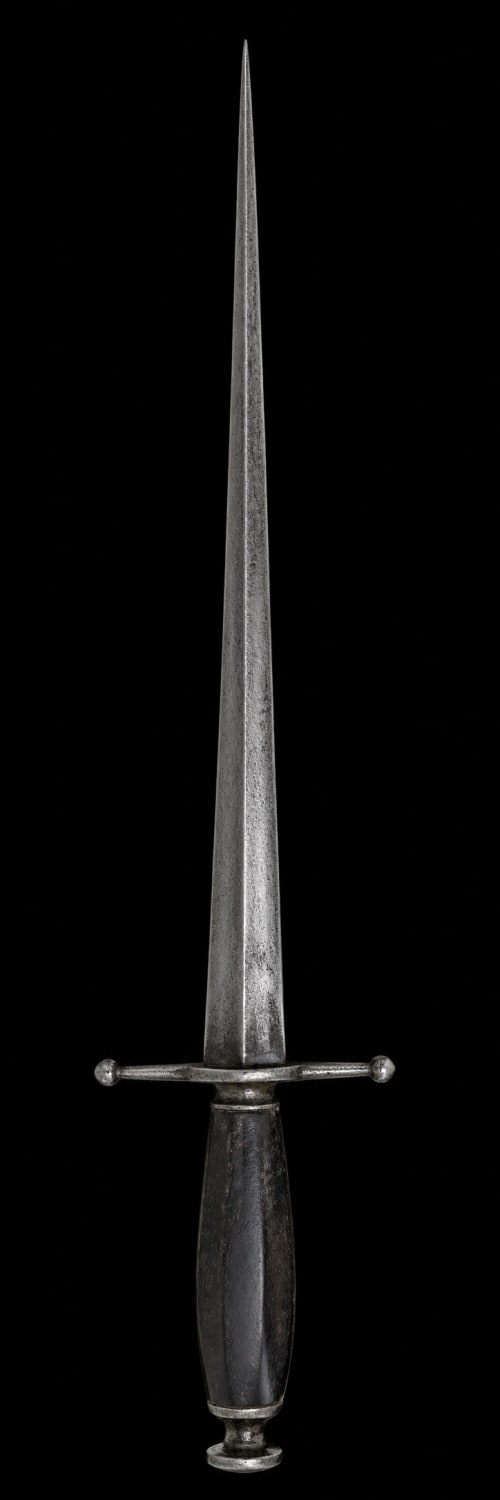
Stiletto
The Italian thrusting-only dagger

Glaive
A polearm with a curved single-edged blade