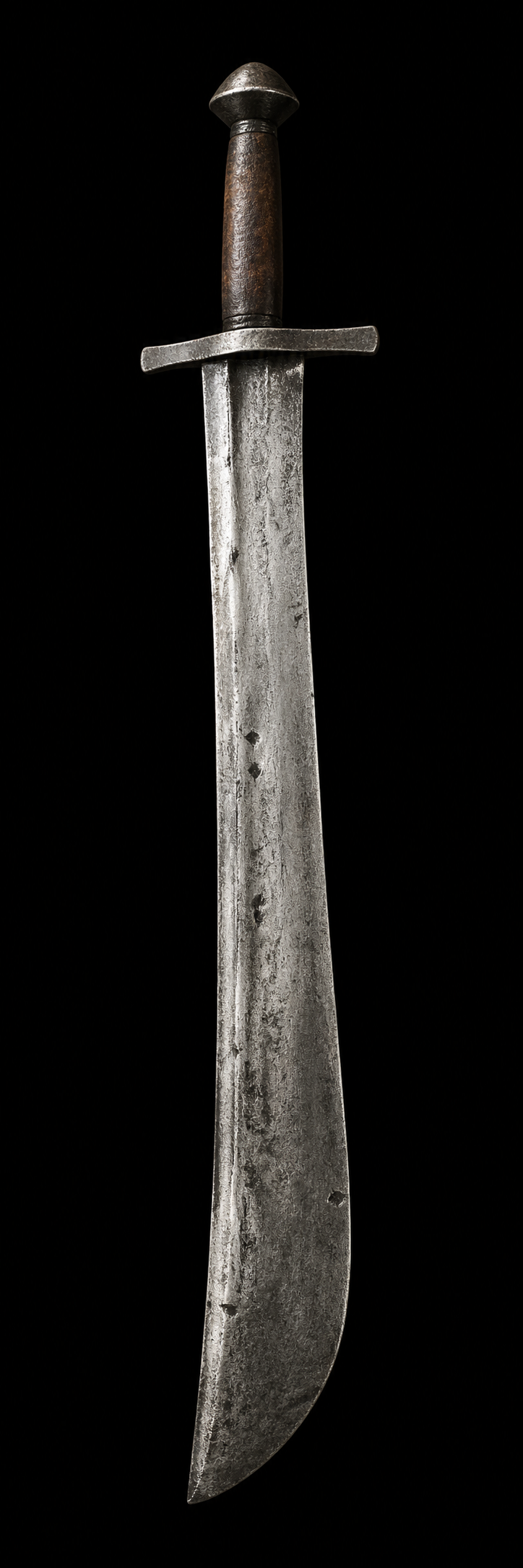
Falchion
A single-edged medieval European chopping sword
Names in Other Languages
 팔시온한국어
Falchion · 중세 유럽의 외날 곡검
 ファルシオン日本語
中世の片刃斬撃刀
 彎刀繁體中文
中世紀單刃劈砍刀
 FalchionDeutsch
Das einschneidige Hiebschwert des Mittelalters
 FauchonFrançais
L'épée de taille à un tranchant du Moyen Âge
 BracamarteEspañol
La espada de tajo de un filo del medievo
 FalçãoPortuguês
A espada de corte de fio único medieval
 FalszjonPolski
Średniowieczny miecz jednoosieczny do cięć
 ФальшионРусский
Средневековый однолезвийный рубящий меч
The falchion is a single-edged one-handed cutting sword of medieval Europe, marked by a blade that broadens toward the tip. With a blade of about 60 to 80 cm, the cleaver-like design that widens at the end sets the center of mass toward the front of the blade, making it strong for a heavy, axe-like chopping cut. Single-edged with a straight back, it is thought to have developed from butchering knives and agricultural tools. It appeared around the 11th century and was used across Europe into the 16th, and being simpler and cheaper to make than the costly knightly sword with its cruciform hilt, it was mass-issued to common infantry. Authentic surviving examples are very rare, however, so much of what we know of the falchion comes through medieval manuscript illustrations and sculpture.
Origin
The falchion is a single-edged sword that appeared in Europe around the 11th century and was used into the 16th. It is thought to have developed from the cutting tools of the butcher and the farm and from the tradition of the seax, the Germanic single-edged knife, settling in as the cheap, practical weapon in the hand of the common infantryman. It appears frequently in the illustrations and sculpture of the Crusades era (1096 to 1291) in particular, suggesting how widely it was used in real fighting. Because even an infantryman with no formal sword training could be effective with a simple chopping cut, it spread as a popular weapon easier to handle than the sword.
Features
- A single edge broadening toward the tip (about 60 to 80 cm)
- A cleaver-like design for a powerful cut
- A center of mass set toward the front of the blade
- A simple and cheap construction
- A weapon mass-issued to common infantry
- A weight of about 600 g to 1 kg
Stories
The falchion was the weapon of the common infantryman who had not learned formal swordsmanship. Thanks to the blade broadening toward the tip and the weight set forward, even the simple act of chopping down hard, without complex technique, had the power to cut deep into flesh. It was commonly handled in one hand with a small shield, a buckler, or a large shield in the other, and it was especially effective against a foe who was not properly armored. Being easy to handle and cheap, so that it could be put in anyone's hand, was its most practical advantage and the greatest difference from the knightly sword, which demanded training in swordsmanship.
Weakness
The weakness of the falchion arises from its being a single-edged cutting sword. With its edge on one side only, it is poor at the straight thrust, and being specialized for the heavy cut, its defensive moves such as precise parrying are also limited. Above all, against a foe in hard plate armor the cut scarcely told, so it was unsuited to anti-armor combat. That is, the falchion was a weapon that shone against an unarmored foe, but its limits were clear in meeting a heavily armored knight head-on.
Cultural Significance
The falchion is a weapon symbolic of the common man's sword of the Middle Ages. Where the knightly sword with its cruciform hilt was a symbol of rank and chivalry, the falchion was the cheap, practical weapon of the foot soldier. Interestingly, in medieval art the falchion was often placed in the hand of a low-status soldier or an executioner, or of a figure drawn as the enemy, a Saracen soldier, Goliath, a persecutor, as an iconographic mark set in contrast to the noble knight's cruciform sword. This is in part art reflecting the fact that the falchion really was the plain, rough blade of the common foot soldier.
In Popular Culture
The falchion appears richly in medieval manuscript illustrations such as the Maciejowski Bible, through which its form survives to this day. In fantasy and games it commonly appears as a class of heavy, strong cutting weapon, but its form is often unlike the historical falchion: the falchion of fiction is usually drawn as a deeply curved sword like a scimitar, whereas the real falchion had a nearly straight back and a blade broadening toward the tip. It is an intriguing weapon whose name is familiar but whose true form is widely mistaken.
Trivia
- Falchions that survive as genuine artifacts are very rare; the best known is the Conyers falchion of around the 13th century, kept at Durham Cathedral in England and tied to the legend that Sir John Conyers slew the Sockburn Worm, a dragon-like monster, and most other images of the falchion come down to us through manuscript illustration and sculpture.
- In medieval art the falchion was often drawn in the hand of a low-status soldier or executioner or an enemy figure such as a Saracen or Goliath, used as an iconographic mark set against the noble knight's cruciform sword, which reflects the fact that the falchion really was the cheap, rough blade of the foot soldier.
- The falchion is thought to have developed from the cutting tools of butchering and farming and from the tradition of the single-edged seax knife and is close to the German Grosse Messer, the great knife, yet in modern fantasy and games it is usually mis-drawn as a deeply curved sword like a scimitar.
Related

Halberd
The versatile polearm combining axe, spear, and hook

Longsword
The quintessential two-handed sword of medieval Europe
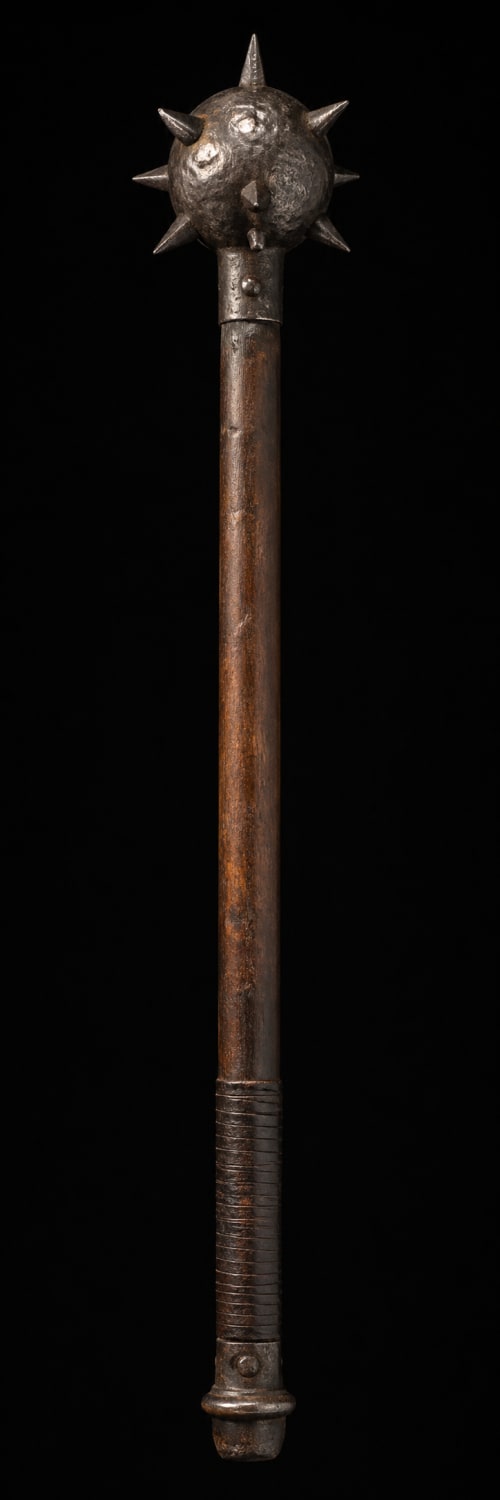
Morning Star
The spiked ball weapon of medieval warfare
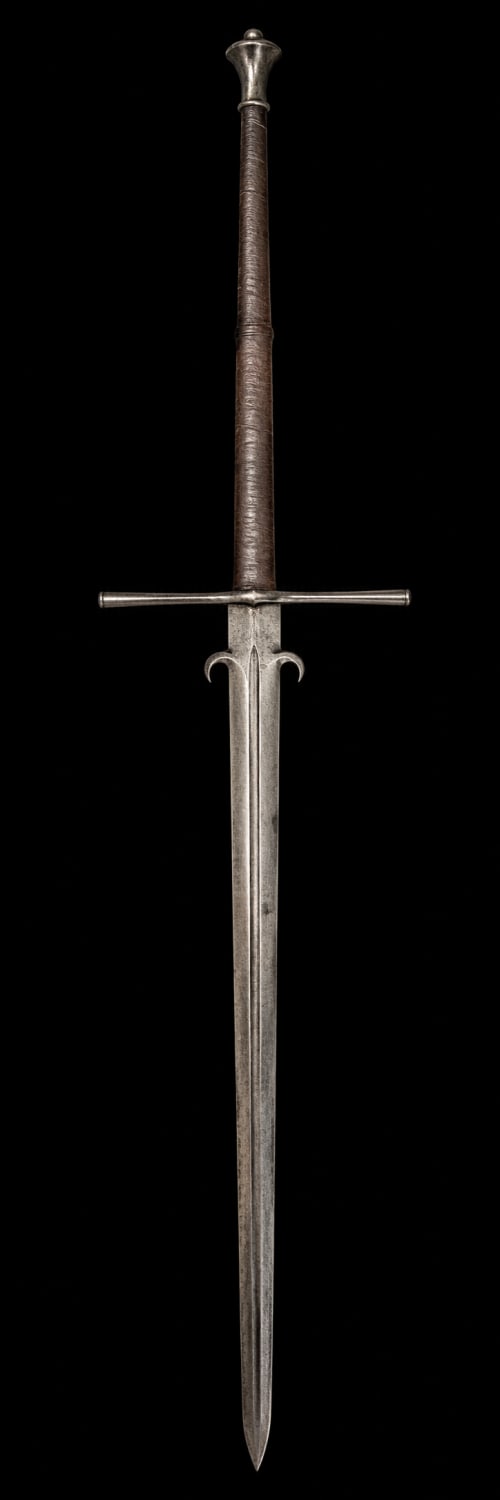
Zweihänder
The massive two-handed sword of German Landsknechts

Battle Axe
An axe designed specifically for combat

Glaive
A polearm with a curved single-edged blade
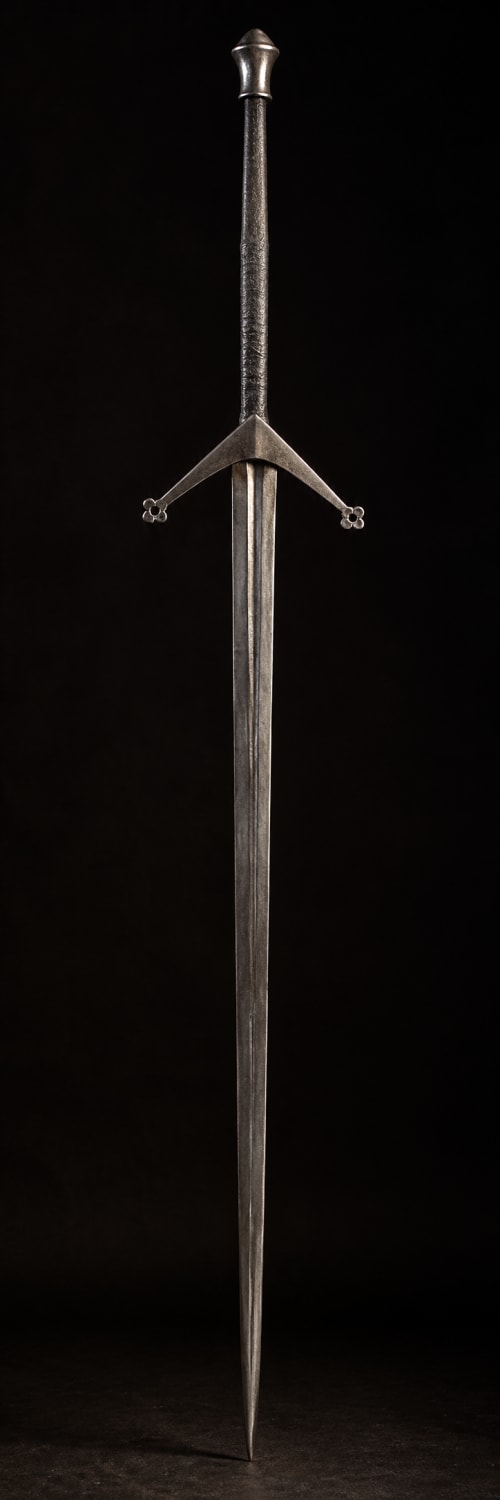
Claymore
The great two-handed sword of the Scottish Highlands

Pike
An extremely long spear for massed infantry formations

Flail
A chain-linked striking weapon that bypasses shields

Gladius
The standard short sword of the Roman legionnaire

Dao
The iconic single-edged Chinese saber

Spear
Humanity's oldest weapon