
Rapier
A thrust-oriented slender sword of Renaissance Europe
Names in Other Languages
 레이피어한국어
Rapier · 유럽의 찌르기 특화 세검
 レイピア日本語
刺突特化のルネサンス細剣
 細劍繁體中文
歐洲刺擊特化的細長劍
 RapierDeutsch
Der schlanke Degen der Renaissance
 RapièreFrançais
L'épée fine de la Renaissance
 EstoqueEspañol
La espada fina del Renacimiento
 RapieiraPortuguês
A espada fina do Renascimento
 RapierPolski
Smukła szpada renesansu
 РапираРусский
Тонкая шпага эпохи Ренессанса
The rapier is a thrust-specialized sword born in Renaissance Europe, marked by a long, slender, double-edged blade of about 100 to 130 cm. The blade is narrow, stiff, and sharply pointed, optimized for the thrust. Its most striking trait is the complex swept hilt that encloses the hand, in which several rings, a knuckle-bow, and quillons guard the whole hand like a cage. It was the self-defense weapon of the European noble and citizen and the standard weapon of the duel of honor from the 16th to the 18th century. Though it looks slender, its long blade and large guard bring the total weight to about 1 to 1.4 kg. The foil and the epee of modern fencing developed from this weapon, and it was also the weapon that led to the birth of systematic schools of swordsmanship.
Origin
The rapier first appeared in late-15th-century Spain and took its perfected form in 16th-century Italy. Its name is thought to come from the Spanish espada ropera, the sword of the robes, that is, the civilian sword worn with everyday dress rather than armor, which from the start reveals its nature as a civilian weapon. As fencing masters such as the Italian Camillo Agrippa and the Spanish Destreza school, La Verdadera Destreza, the True Skill, developed a systematic swordsmanship based on geometry, the rapier soon became the weapon that gave birth to fencing as a science.
Features
- A long, slender, double-edged blade (about 100 to 130 cm)
- The swept hilt, a complex metal guard enclosing the hand
- A narrow, stiff blade optimized for the thrust
- A total weight of about 1 to 1.4 kg
- The ancestor of modern fencing, the foil and the epee
- Led to the birth of the Italian and Spanish schools of fencing
Stories
The rapier was a weapon not of the battlefield but of the street and the court. The gentlemen of 16th- to 18th-century Europe wore the rapier with their everyday dress and used it for self-defense and the duel of honor. The point attack, thrusting straight in rather than cutting, was its heart, so swordsmanship centered on the contest of distance and timing, reaching the point to the target before the opponent could. It was commonly handled with the rapier in one hand and a dagger, the main gauche, or a cloak in the other to ward and thrust. From street self-defense to the formal court duel, the rapier was the standard weapon of one-on-one personal combat.
Weakness
The weakness of the rapier is its lack of a cut and its unfitness for war. With a slender blade leaning toward the thrust, its power to cut and chop is very weak, and against an armored opponent it scarcely tells. The long, light blade is cumbersome in the press of the battlefield and not at all suited to the mass combat of many tangled together. In the end the rapier is only a civilian weapon specialized for the one-on-one duel against an unarmored opponent, unfit as a weapon of war.
Cultural Significance
The rapier is a weapon symbolic of the age of the gentleman, honor, and the duel. The culture of the duel, in which a gentleman with his armor laid aside wore the sword with his everyday dress and drew it for honor, is inseparable from the rapier. The rapier also led the making of swordsmanship into a science: the Italian Camillo Agrippa brought geometry into fencing, reducing the guards to four and emphasizing the thrust over the cut, and the Spanish Destreza school built fencing on geometric figures like the mysterious circle. Today the rapier is the romantic weapon of the swashbuckler, remembered as the sword of the Three Musketeers, Zorro, and Cyrano de Bergerac.
In Popular Culture
The rapier is the emblematic weapon of swashbuckler works and of works dealing with the duel. It commonly appears as the weapon of the elegant, nimble swordsman character, as with the Three Musketeers, Zorro, and Inigo Montoya of The Princess Bride, and in games it is drawn as a class of light sword centered on the quick thrust. Since the foil and epee of modern Olympic fencing are descendants of this weapon, its lineage can be seen through sports broadcasts too. In fiction, though, the rapier is often shown used for cutting as well, like an all-purpose sword, whereas it was originally a weapon extremely specialized for the thrust.
Trivia
- The name rapier is thought to come from the Spanish espada ropera, the sword of the robes, which from the start shows its nature as a civilian and self-defense sword worn with everyday dress rather than armor.
- The rapier led the making of swordsmanship into a science: the Italian Camillo Agrippa brought geometry into fencing, reducing the guards to four and emphasizing the thrust over the cut, and the Spanish Destreza school built its theory of fencing on geometric figures like the mysterious circle.
- The rapier is the ancestor of modern sport fencing: through the lighter court smallsword that succeeded it, it carried on to the foil and the epee of today's Olympic fencing, and it is also familiar as the sword of the Three Musketeers, Zorro, and Cyrano de Bergerac.
Related

Sabre
The curved cavalry sword for slashing

Musket
The muzzle-loading firearm of the early modern era
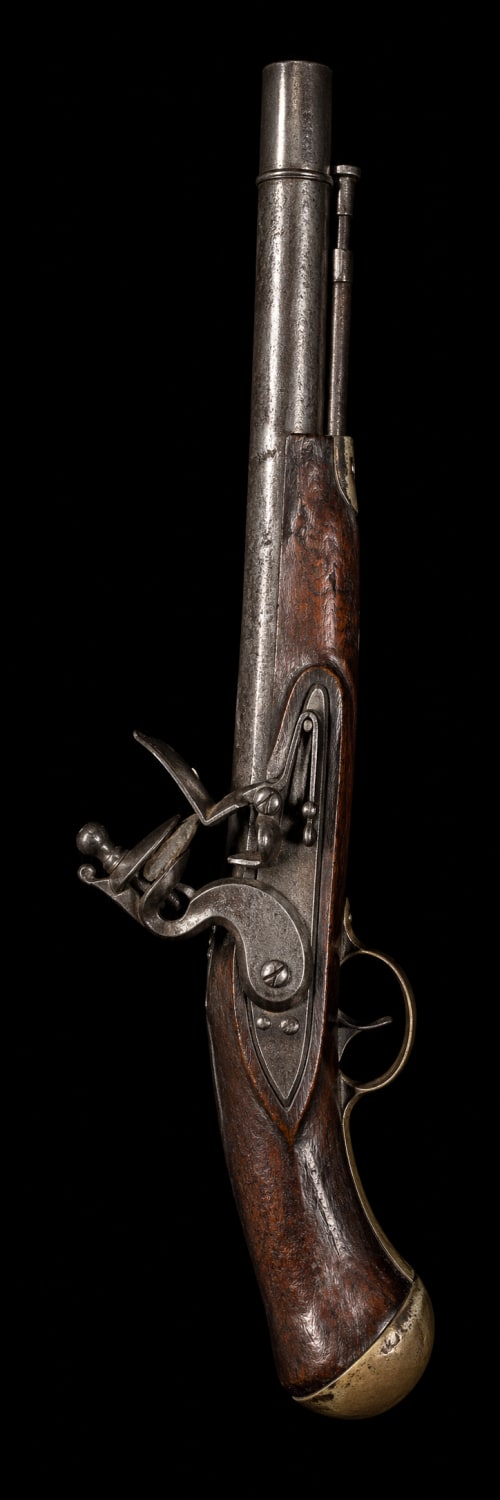
Flintlock Pistol
A single-shot pistol ignited by striking flint

Katana
The iconic curved sword of the Japanese samurai

Falchion
A single-edged medieval European chopping sword

Gladius
The standard short sword of the Roman legionnaire

Halberd
The versatile polearm combining axe, spear, and hook

Longsword
The quintessential two-handed sword of medieval Europe

Spear
Humanity's oldest weapon
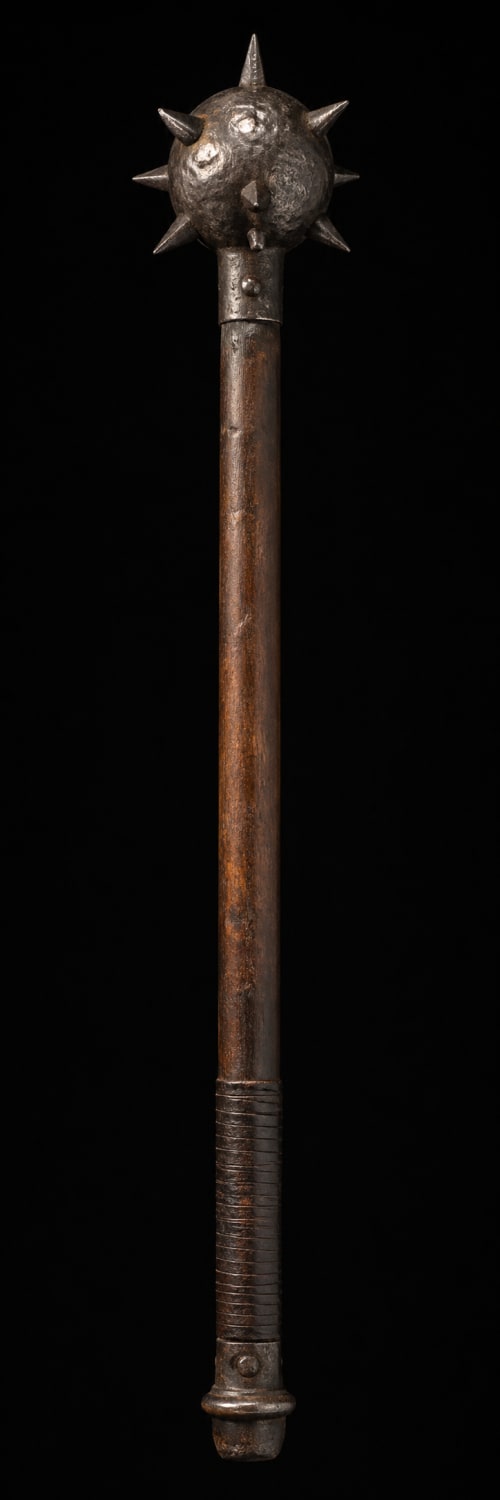
Morning Star
The spiked ball weapon of medieval warfare
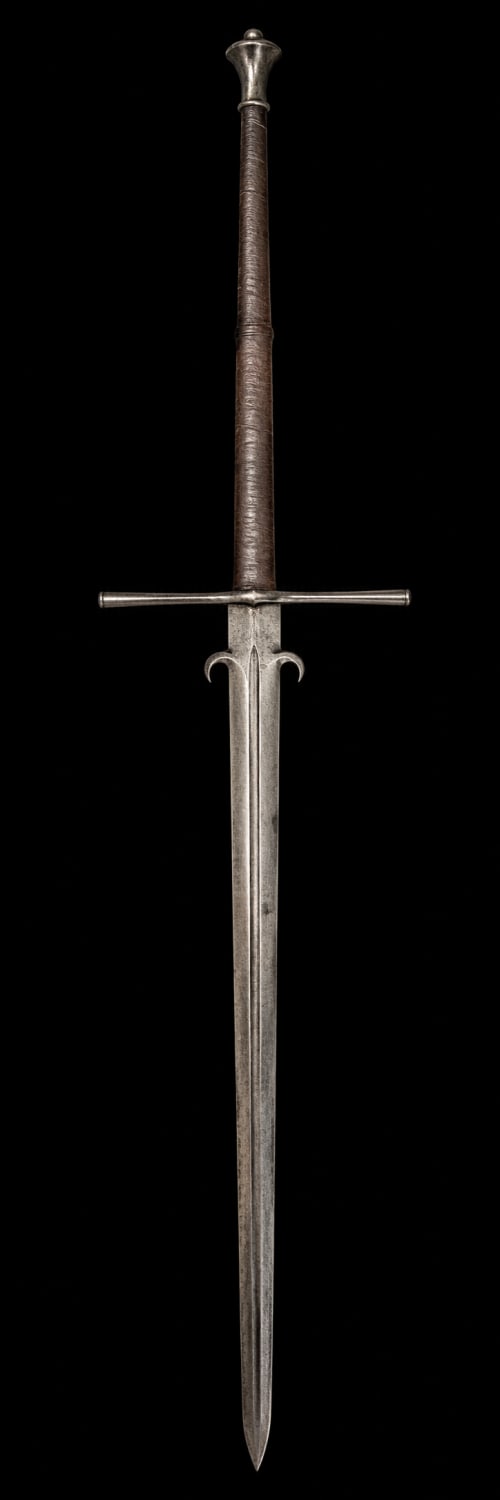
Zweihänder
The massive two-handed sword of German Landsknechts

Crossbow
The mechanized ranged weapon of the medieval era