
Gladius
The standard short sword of the Roman legionnaire
Names in Other Languages
 글라디우스한국어
Gladius · 로마 군단병의 표준 단검
 グラディウス日本語
ローマ軍団兵の標準短剣
 格拉迪烏斯繁體中文
羅馬軍團兵的標準短劍
 GladiusDeutsch
Das Standardkurzschwert des römischen Legionärs
 GladiusFrançais
L'épée courte standard du légionnaire romain
 GladiusEspañol
La espada corta estándar del legionario romano
 GládioPortuguês
A espada curta padrão do legionário romano
 GladiusPolski
Standardowy miecz rzymskiego legionisty
 ГладиусРусский
Стандартный короткий меч римского легионера
The gladius is the standard infantry short sword of the ancient Roman legions. A short, broad, double-edged blade of about 45 to 68 cm with a sharp point, it is optimized for the thrust. It changed over time from the early leaf-shaped hispaniensis, through the waisted Mainz type, to the Pompeii type with parallel edges. The blade was forged of high-carbon steel and hard, and the hilt was made of wood or bone to prevent slipping, with a round pommel to balance it. The Roman legionary, sheltering behind the great shield, the scutum, thrust the short blade swiftly through the gaps between the shields at the enemy's exposed body: this combination of the short sword, the great shield, and the disciplined formation was the heart of Rome's conquest of the Mediterranean.
Origin
The gladius derived from the sword used by the Celtiberians of the Iberian Peninsula around the 3rd century BC. The Roman army, seeing its power in the Second Punic War, the war with Carthage, adopted it and called it the gladius hispaniensis, the Spanish sword, and thereafter it was the standard weapon of the Roman legions for some 600 years, into the 3rd century AD. It changed by era from the leaf-shaped hispaniensis to the waisted Mainz type and the shorter Pompeii type with parallel edges, and in the later empire it gradually gave way to the longer cavalry sword, the spatha.
Features
- A short, broad, double-edged blade (about 45 to 68 cm)
- An evolution from leaf-shaped (hispaniensis) to parallel-edged (Pompeii)
- High hardness from high-carbon steel
- A hilt of wood or bone and a round pommel
- A center of mass set for thrusting behind a shield
- A total weight of about 700 g to 1 kg
Stories
The power of the gladius came not from the sword alone but from the union of sword, shield, and formation. The legionary first threw the pilum javelin to scatter the enemy, then advanced in close formation behind the great shield, the scutum. As the enemy closed, sheltering behind the shield he thrust the short gladius swiftly through the gap between shield and shield at the enemy's undefended body. Roman military doctrine emphasized the thrust over the cut, because a stab wound is far more deadly than a slash. The short, stiff, sharp-pointed gladius was a weapon made for exactly this thrust from behind the shield.
Weakness
The weakness of the gladius arises from its short blade. Used alone without a shield, it is at a great reach disadvantage against an enemy with a longer sword or a spear, and there is a limit to broad slashing cuts. By nature it is specialized for the short thrust within the close infantry formation, under the protection of the shield, so it can hardly show its power in mounted combat or one-on-one fighting in the open field. That is, the gladius was a strong weapon not as a sword alone but only within the system of the legion.
Cultural Significance
The gladius is a weapon symbolic of Rome and its legions. Because the heart of the military power that made the conquests of the Roman Empire possible was exactly this union of short sword, shield, and discipline, the gladius stands for the Roman war machine itself. The word gladiator, the arena fighter, comes from the name of this sword, and the flower gladiolus, the little sword, with its sword-shaped leaves, comes from the same root. Thus the gladius left its name deeply not only on weaponry but on language and culture.
In Popular Culture
The gladius is a weapon never missing from works about Rome. It appears as the standard weapon of the legionary and the gladiator in films such as Gladiator and dramas such as Rome and Spartacus, and is drawn as the emblematic weapon of the Roman legion in strategy games such as Rome Total War. It is mostly depicted thrusting short alongside the scutum shield, which fits its historical use well. In works that depict one-on-one duels with flair, however, the point that the true element of the gladius lay not in individual skill but in the close formation of the legion is sometimes treated faintly.
Trivia
- The word gladiator, the arena fighter, comes from the name of this sword, the gladius, and the flower gladiolus, the little sword, with its sword-shaped leaves, comes from the same Latin root.
- Roman military doctrine, in writers such as Vegetius, emphasized the thrust over the cut, because a slash is easily survived while a stab even a few centimeters deep is fatal, and the short, stiff, sharp-pointed gladius was made for exactly this thrust.
- The gladius derived from the sword of the Celtiberians of Iberia and was adopted by Rome in the Second Punic War as the gladius hispaniensis, the Spanish sword, changing over some 600 years through the Mainz and Pompeii types before giving way to the longer spatha in the later empire.
Related

Spear
Humanity's oldest weapon

Javelin
A light spear designed for throwing

Xiphos
The double-edged short sword of ancient Greek hoplites

Falchion
A single-edged medieval European chopping sword

Halberd
The versatile polearm combining axe, spear, and hook

Longsword
The quintessential two-handed sword of medieval Europe
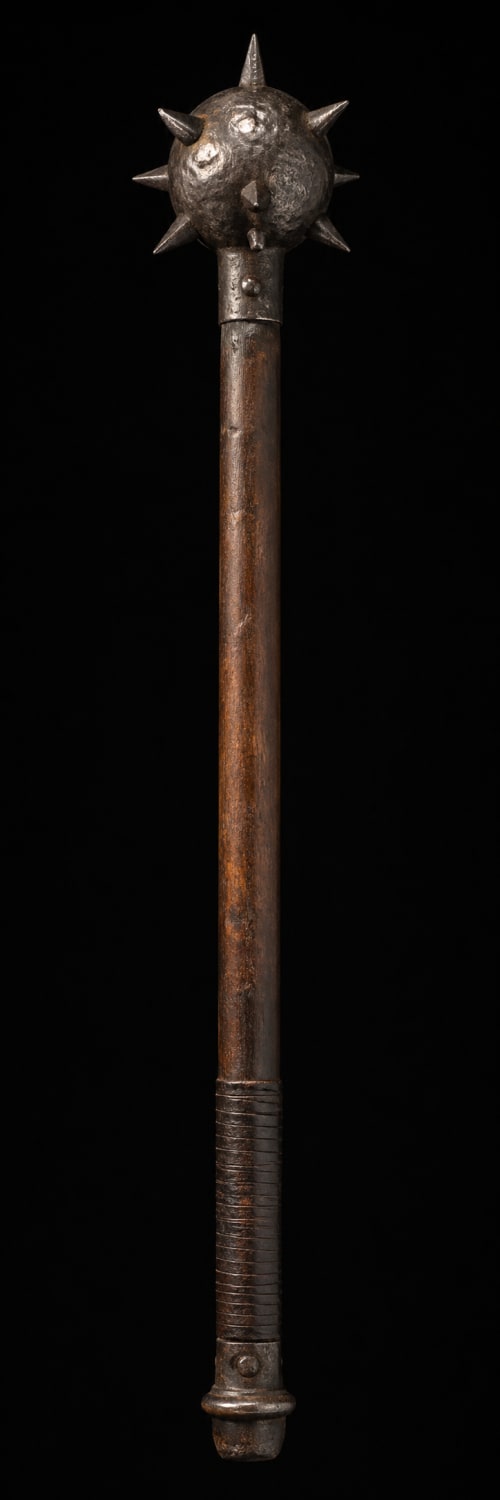
Morning Star
The spiked ball weapon of medieval warfare
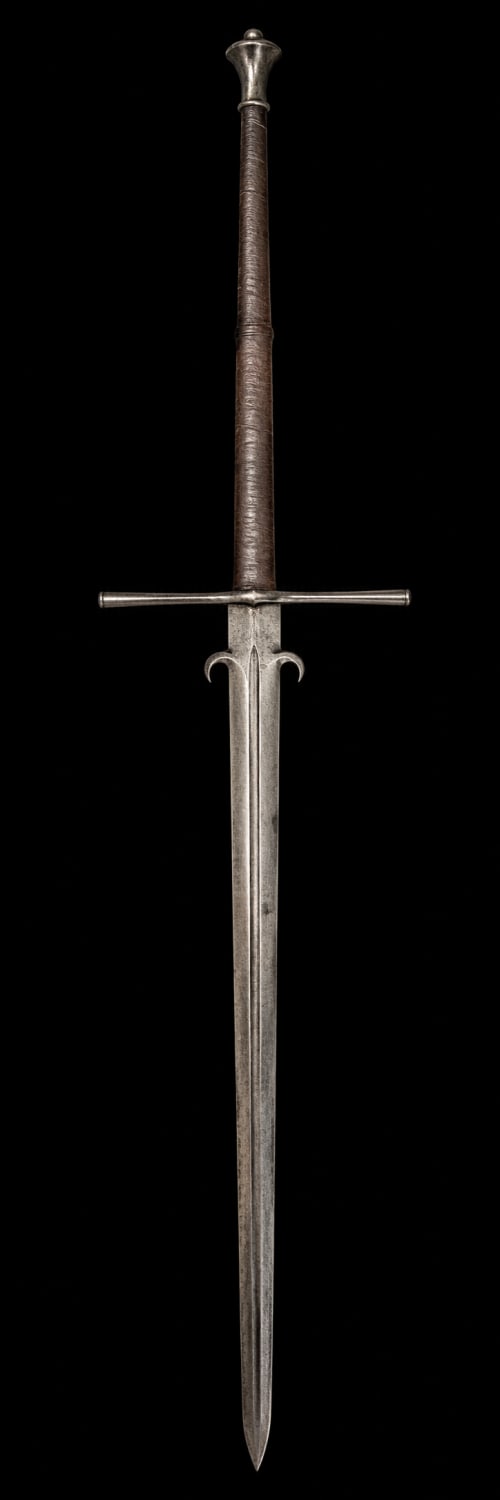
Zweihänder
The massive two-handed sword of German Landsknechts

Battle Axe
An axe designed specifically for combat

Musket
The muzzle-loading firearm of the early modern era

Glaive
A polearm with a curved single-edged blade
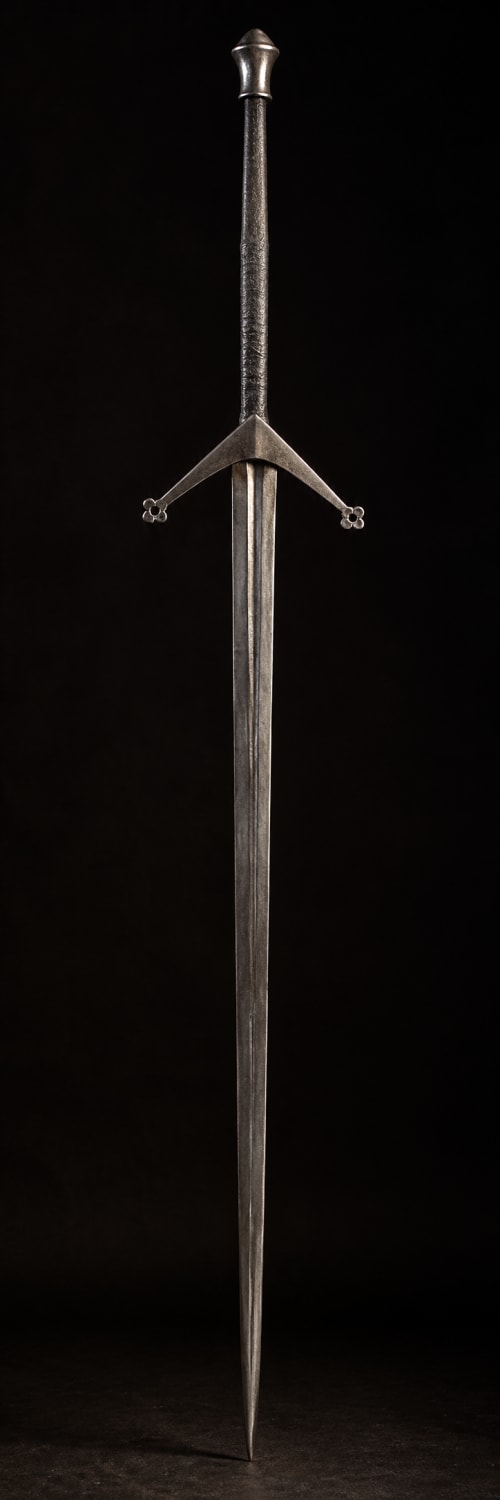
Claymore
The great two-handed sword of the Scottish Highlands