
Longbow
The iconic weapon of the English archer
Names in Other Languages
 롱보우한국어
Longbow · 영국 장궁병의 상징
 ロングボウ日本語
イングランド弓兵の象徴的武器
 長弓繁體中文
英格蘭弓箭手的標誌性武器
 LangbogenDeutsch
Der mächtige Bogen der englischen Bogenschützen
 Arc longFrançais
Le puissant arc des archers anglais
 Arco largoEspañol
El poderoso arco de los arqueros ingleses
 Arco longoPortuguês
O poderoso arco dos arqueiros ingleses
 Łuk długiPolski
Potężny łuk angielskich łuczników
 Длинный лукРусский
Мощный лук английских лучников
The longbow is the representative great bow of medieval England, a large bow about 180 cm carved whole from a single stave of yew. It looses arrows with the strong force of an 80 to 150 pound draw (about 36 to 68 kg), and a skilled archer boasts the astonishing speed of 10 to 12 shots a minute. Its effective range reaches about 200 m and its maximum about 350 m, and with the bodkin head it pierced mail. The true power of this bow lay not in one man but in hundreds shooting at once to darken the sky with an arrow storm. In the Hundred Years War the English longbowmen broke the numerically superior French knightly armies again and again with this massed fire.
Origin
The longbow originally came from the traditional war bow of Wales. King Edward I of England (reigned 1272 to 1307), seeing its power after his conquest of Wales, took it into the English armies, and thereafter it became the core strength of England in the Hundred Years War (1337 to 1453). At Crecy in 1346, Poitiers in 1356, and Agincourt in 1415, the outnumbered English broke the French heavy cavalry and the knights with the arrow storm of their longbowmen, and the longbow became a legend. The English crown saw archery as the foundation of national defense and encouraged practice by law.
Features
- Made from a single stave of yew, about 180 cm long
- A draw of 80 to 150 pounds (about 36 to 68 kg)
- 10 to 12 shots a minute for a skilled archer
- An effective range of about 200 m, a maximum of about 350 m
- Pierces mail with the bodkin head
- The arrow storm, a tactic of massed fire
Stories
The key tactic of the longbow was the volley in a great pitched battle. When hundreds of longbowmen loosed at once to pour down an arrow storm that darkened the sky, the horse and the man of the charging cavalry fell together. Above all, the decisive strength of the longbow lay in its rate of fire: the longbow that loosed 10 to 12 shots a minute overwhelmed the crossbow, which managed only 1 to 3. The rout of the rain-soaked Genoese crossbowmen by the English longbowmen at Crecy in 1346 is a stark example. Against armor they chose the narrow, pointed bodkin head, and against horses or lightly armed infantry the broad head.
Weakness
The weakness of the longbow lay not in the bow but in the man. To draw a strong pull of over 80 pounds properly took years of training from childhood, so the very raising of skilled archers was difficult, so much so that an archer's skeleton bears curvature of the spine and an enlarged bone in the left arm. The string also slackened and the power fell off in rain and damp, and above all, as plate armor developed from the 15th century, even the bodkin head could hardly pierce good armor, so with the spread of firearms it was gradually pushed off the battlefield.
Cultural Significance
The longbow is a weapon symbolic of England's military identity and national pride. The longbowman who upheld the victories of the Hundred Years War joined with the pride of the free yeoman class to be remembered as the weapon of England, with which a common commoner brought down a noble knight. The victory at Agincourt in 1415 became an immortal tale in the Saint Crispin's Day speech of Shakespeare's play Henry V, and the legend of the righteous master archer Robin Hood too is inseparable from the longbow. Thus the longbow became, beyond a mere weapon, a national myth of England.
In Popular Culture
The longbow appears as an emblematic weapon in works dealing with the Middle Ages and the Hundred Years War. The arrow storm of the English longbowman is drawn again and again in films and dramas of medieval English setting, including the tales of Robin Hood and Henry V, and in strategy games such as Age of Empires and Total War. In fiction, though, the harsh draw weight of the longbow and the lifetime of training needed to handle it are scarcely reflected, so it tends to be drawn as a light bow that anyone shoots with ease. The true strength of the longbow, its rapid rate of over ten shots a minute, is also little shown.
Trivia
- The decisive strength of the longbow in the Hundred Years War was its rate of fire and volume: a skilled archer loosed 10 to 12 shots a minute, overwhelming the crossbow at 1 to 3, and the arrow storm made by hundreds overwhelmed the slow Genoese crossbowmen at Crecy in 1346 and broke the French knightly charge, carried on to Poitiers and Agincourt.
- The longbow originally came from the war bow of Wales, taken into the English armies by King Edward I after his conquest of Wales, and thereafter it became the emblematic weapon of England in the Hundred Years War.
- The story that the English two-fingered insult (the V sign) comes from the English longbowmen at Agincourt, who supposedly had their draw fingers cut off by the French when captured, is widely spread but a later myth with no contemporary historical evidence.
Related

War Bow
A heavy-draw longbow built for battlefield use

Crossbow
The mechanized ranged weapon of the medieval era
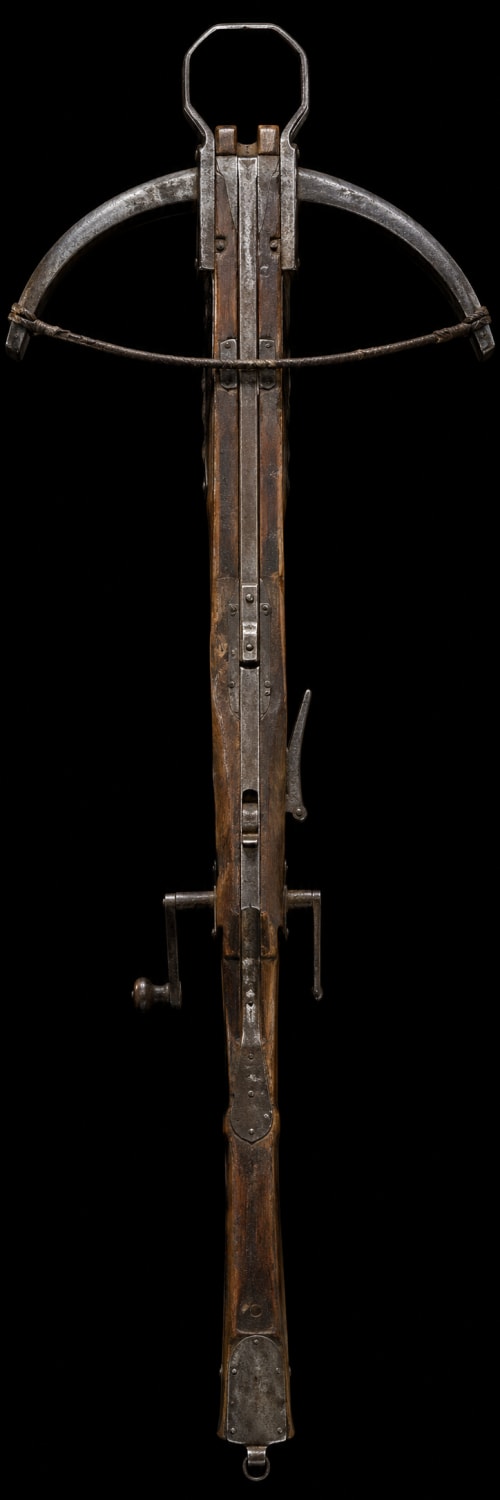
Arbalest
A heavy steel-prodded crossbow of the late Middle Ages

Mongol Bow
The composite bow of mounted archers

Halberd
The versatile polearm combining axe, spear, and hook

Longsword
The quintessential two-handed sword of medieval Europe
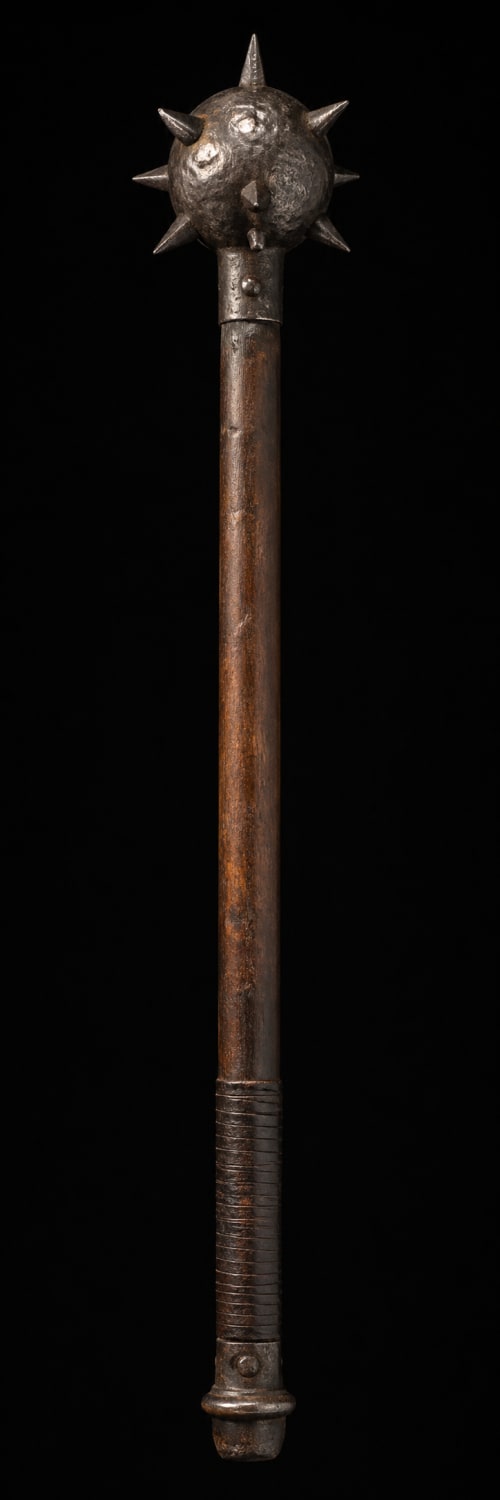
Morning Star
The spiked ball weapon of medieval warfare
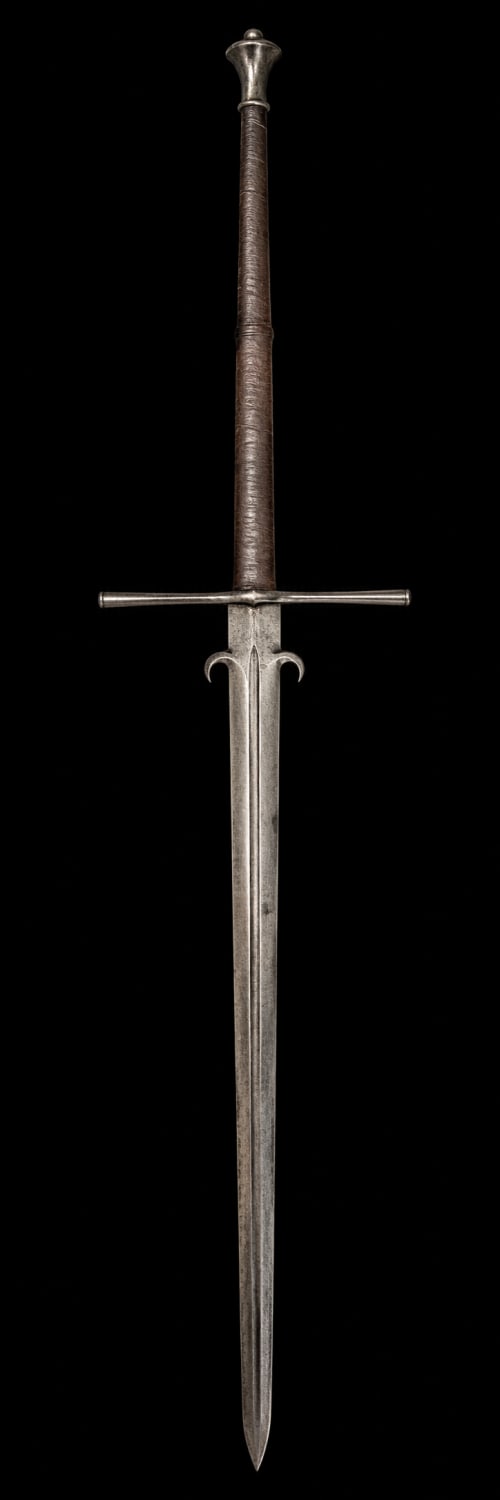
Zweihänder
The massive two-handed sword of German Landsknechts

Battle Axe
An axe designed specifically for combat

Lance
The cavalry charge weapon of the mounted knight
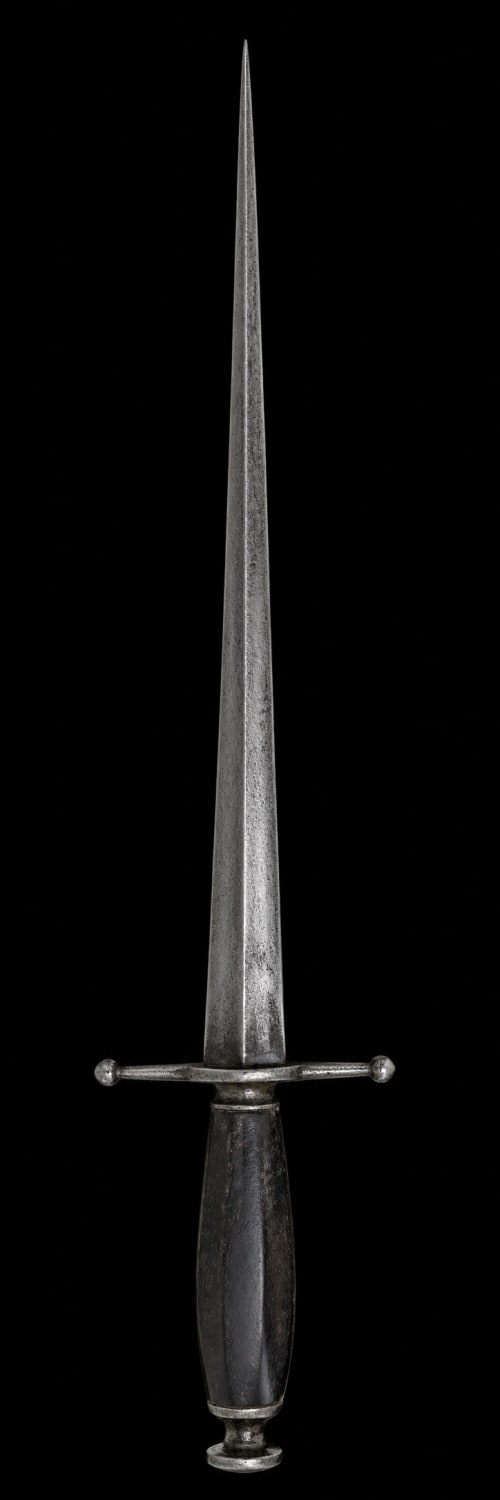
Stiletto
The Italian thrusting-only dagger

Glaive
A polearm with a curved single-edged blade