Revenant
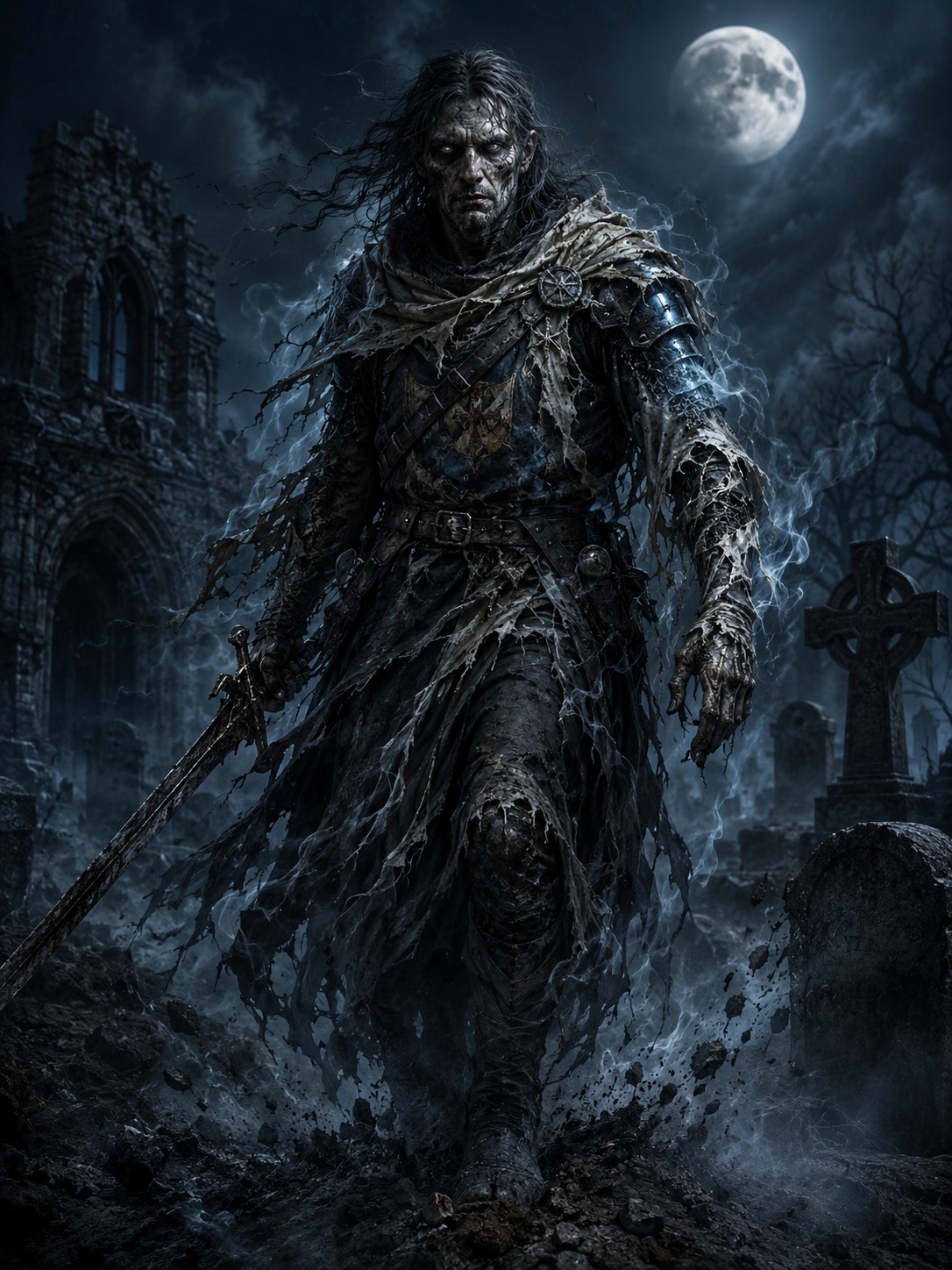
Revenant · The Vengeful Returned — A Corpse Risen From the Grave for One Purpose
Names in Other Languages
 레브넌트한국어
Revenant · 복수의 귀환자 — 한 가지 목적으로 무덤에서 돌아온 시체
 レヴナント日本語
Revenant · 復讐の帰還者 — 一つの目的のため墓から戻った死体
 復仇歸者繁體中文
Revenant · 復仇之歸者 — 為一個目的自墓中歸來之屍體
 WiedergängerDeutsch
Revenant · Der rachsüchtige Zurückgekehrte — Eine für einen Zweck dem Grab entstiegene Leiche
 RevenantFrançais
Revenant · Le revenu vengeur — Un cadavre sorti de la tombe pour un seul dessein
 RenacidoEspañol
Revenant · El retornado vengador — Un cadáver alzado de la tumba por un solo propósito
 RenascidoPortuguês
Revenant · O retornado vingador — Um cadáver erguido da sepultura por um único propósito
 RewenantPolski
Revenant · Mściwy powracający — trup powstały z grobu dla jednego celu
 РевенантРусский
Revenant · Мстительный вернувшийся — труп, восставший из могилы ради одной цели
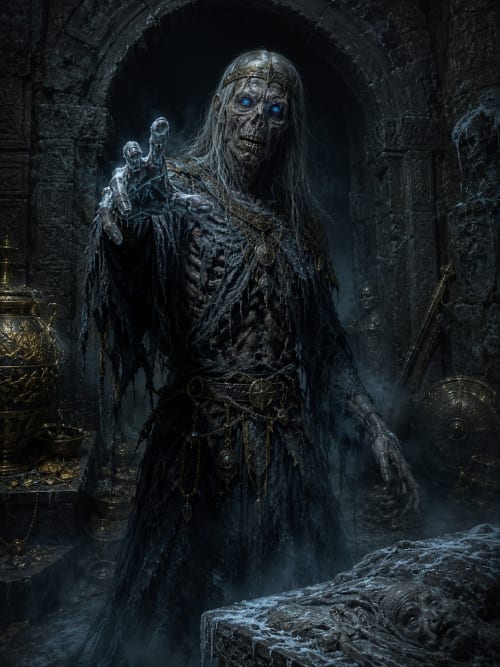
The Revenant (English revenant, from Latin revenans, 'the one returning') is a corpse that has risen from its grave on its own under the drive of intense vengeance or unresolved purpose, the medieval European iconographic figure of a self-aware undead retaining a distinct ego and a single purpose. The etymology lies in the Latin revenans, the present participle of the verb revenire ('to return'), which became the canonical term in eleventh- and twelfth-century Latin chronicles for the corpse that comes back from the grave to torment the village. The decisive textual source is the Historia Rerum Anglicarum (History of English Affairs) by the twelfth-century English chronicler William of Newburgh (c. 1136-1198), whose Book V chapters 22-24 record detailed cases of revenants in Buckinghamshire, Berwick, and Anant in northern England, establishing the decisive medieval European canon. Contemporary works such as Walter Map's De Nugis Curialium (Courtiers' Trifles, c. 1180) and the figure of Glam in the Saga of Grettir (Grettis Saga, thirteenth to fourteenth century) form the Northern-European revenant canon. Gary Gygax's first-edition Dungeons & Dragons Monster Manual (1977) systematised the revenant as a self-aware undead obsessed with a single object of vengeance, and Alejandro Gonzalez Inarritu's 2015 film The Revenant (starring Leonardo DiCaprio, winner of the Academy Award for Best Director) established the twenty-first-century cinematic canon of the figure.
Origin
The iconographic origin is the Latin chronicle tradition of eleventh- and twelfth-century medieval Europe. The Latin revenans ('the one returning'), the present participle of revenire ('to return'), became the canonical term for a corpse that rises from the grave after burial to torment the village. The decisive source is Book V chapters 22-24 of the Historia Rerum Anglicarum, written between 1196 and 1198 by William of Newburgh (c. 1136-1198), an Augustinian canon of Yorkshire: a layman of Buckinghamshire who, after his death, returned every night to press upon his wife's bed and was eventually placated by Hugh of Lincoln (c. 1140-1200) who ordered an absolution to be laid upon the corpse's chest; a wealthy merchant of Berwick who, after death, roamed the city and caused a plague until the corpse was finally exhumed and burned; and a soul of Anant whose corpse rose every night to kill people until two brothers exhumed it, stabbed it, and cremated it. These cases established the decisive medieval European revenant canon. Walter Map's De Nugis Curialium (c. 1180) and Geoffrey of Burton's Vita Sanctae Modwennae of the late twelfth century, with its Stapenhill revenant case, are contemporary canonical sources. The Saga of Grettir (Grettis Saga, thirteenth to fourteenth century), the masterpiece of the Icelandic family sagas, contains the figure Glam — a corpse who rose after death to lay waste to a farm before being beheaded by the hero Grettir — joining the Northern European draugr canon with the revenant.
Features
- A distinct self-aware ego and a single purpose (vengeance, unresolved mission)
- A corpse that has risen from its grave on its own
- Repeated resurrection until the purpose is accomplished
- Relentless pursuit of the target to the end
- Unlike the mindless zombie, retains personality and memory
- A decayed corpse exerting superhuman strength
Stories
The Historia Rerum Anglicarum of William of Newburgh and the De Nugis Curialium of Walter Map of the twelfth century are the canonical texts of medieval European revenant iconography, and the placation rites recorded therein — laying an absolution upon the corpse's chest, or exhuming the corpse to stab it and cremate it — became the decisive canon of medieval placation iconography. The eighteenth-century Eastern European vampire panic (1725-1755 in Serbia and Hungary), with the cases of Petar Blagojevic and Arnold Paole, marks the transition of revenant iconography from the medieval to the modern era. John William Polidori's The Vampyre (1819) and Bram Stoker's Dracula (1897) differentiated the revenant into vampire literature. The first edition of Gary Gygax's Advanced Dungeons & Dragons Monster Manual in 1977 added the revenant as a self-aware undead obsessed with a single object of vengeance, returning after destruction within twenty-four hours until the purpose is accomplished, establishing the modern fantasy role-playing canon. Jeff VanderMeer's Nova series in 2010, Alejandro Gonzalez Inarritu's 2015 film The Revenant (starring Leonardo DiCaprio as Hugh Glass and winning Academy Awards for Best Director, Best Actor, and Best Cinematography), and the 2019 Electronic Arts video game Apex Legends character Revenant established the contemporary canon.
Weakness
The revenant's weaknesses are: (1) the imprudence of single-purpose obsession — the revenant is so fixated on the single purpose of vengeance or mission that it is defenceless against other threats and temptations, ignoring direct challenges from non-target humans and pursuing only the target; (2) repose upon completion of purpose — the canonical motif that when vengeance is accomplished or the mission resolved, the revenant collapses into its own repose; (3) the twelfth-century medieval placation rite — in the cases recorded by William of Newburgh, exhuming the corpse and laying an absolution upon its chest, or stabbing it and cremating it (cremation), placates the revenant; (4) holy implements — Christian holy implements such as holy water, the crucifix, and church bells weaken the revenant in medieval canon; (5) cremation — the decisive method of all medieval revenant placation, completely burning the corpse, is the canonical solution. The 1977 D&D revenant is set to revive within twenty-four hours, and in the 2015 film The Revenant, the conceit that Hugh Glass, brought to the brink of death by a bear attack, refuses death through his vengeance for his son's murder — the motif of refusing death through extremity of natural environment and sheer will — became the modern canon.
Cultural Significance
The revenant is a paradigm iconographic figure at the crossroads of medieval European religious-political history, Christian placation theology, modern vampire literature, and contemporary fantasy gaming. The revenant cases recorded by William of Newburgh during the twelfth-century Anglo-Norman period (the reign of Henry II, 1154-1189) are analysed as the condensed product of post-Conquest English social anxiety and the consolidation of religious orthodoxy into canonical placation iconography. The case of Hugh of Lincoln, a senior Catholic prelate, directly ordering the placation of a revenant in 1182 is canonical to Catholic placation theology, in which the medieval Church's power of absolution extended not only to spiritual authority but also to posthumous absolution of the dead. After the eighteenth-century Eastern European vampire panic (the cases of Petar Blagojevic and Arnold Paole in 1725-1755 Serbia), the revenant iconography differentiated into vampire literature, settling into Polidori's The Vampyre (1819), Sheridan Le Fanu's Carmilla (1872), and Bram Stoker's Dracula (1897). In the twenty-first-century gaming industry, large franchises such as Dungeons & Dragons, Magic: The Gathering, and Apex Legends established the revenant as the standard iconography of the self-aware undead, and the 2015 Academy Award for Best Picture won by The Revenant placed revenant iconography in the mainstream cinematic canon.
In Popular Culture
- William of Newburgh, Historia Rerum Anglicarum (1196-1198) — decisive medieval European canon of revenant iconography
- Walter Map, De Nugis Curialium (c. 1180) — Anglo-Norman canon of revenant in twelfth-century England
- Geoffrey of Burton, Vita Sanctae Modwennae, Stapenhill case (late twelfth century) — canonical medieval placation rite
- Saga of Grettir, Glam (thirteenth to fourteenth century) — Northern European draugr-revenant canon
- Eastern European vampire panic (1725-1755) — differentiation of revenant into modern vampire literature
- Bram Stoker, Dracula (1897) — revenant iconography in vampire literature canon
- Gary Gygax, AD&D Monster Manual (1977) — standardisation of revenant in modern fantasy role-playing games
- Alejandro Gonzalez Inarritu, The Revenant (2015) — cinematic canon (three Academy Award wins)
- Electronic Arts, Apex Legends character Revenant (2019) — contemporary video-game canon
Trivia
The Latin etymology revenans is the singular nominative present participle of revenire ('to return'), and in twelfth-century Latin chronicles it became the canonical term for 'the one who returns from death'. The French revenant settled from the seventeenth century as a common noun meaning 'ghost' or 'spectre', and the English revenant was borrowed from French in the late eighteenth century (first attestation in the Oxford English Dictionary in 1827). The Book V chapters 22-24 of William of Newburgh's Historia Rerum Anglicarum is the most detailed canonical document of the revenant in medieval Latin chronicles, and stands as the canonical primary source for understanding death, placation, and theological authority in Anglo-Norman society, prescribed in medieval-history curricula at Cambridge and Oxford. The revenant entry in the first-edition AD&D Monster Manual of 1977 by Gary Gygax established the canon of the self-aware undead obsessed with a single object of vengeance that revives within twenty-four hours, with one scholarly hypothesis crediting the influence of Wolverine's regenerative motif from Stan Lee's X-Men (1963). The 2015 Alejandro Gonzalez Inarritu film The Revenant was adapted by Michael Punke into the eponymous 2002 novel from the historical memoir of Hugh Glass (1783-1833), a fur trapper of the 1820s American West, and Leonardo DiCaprio's Best Actor win at the 88th Academy Awards that same year was a cinematic-historical event, his first win after six nominations.
Related
Wraith
Wraith · The Vengeful Specter — A Dark Spirit That Lost Its Form, Leaving Only Hatred
Zombie
Zombie · The Reanimated Corpse — Mindless Man-Eating Hordes of the Dead
Vampire
Vampire · The Bloodsucker — Night's Aristocrat Living Immortal on the Blood of the Living

Skeleton Warrior
Skeleton Warrior · Undead Soldier — A warrior risen from death and granted unlife

Banshee
Banshee · The Wailing Death-Herald — Lament of Celtic Lore
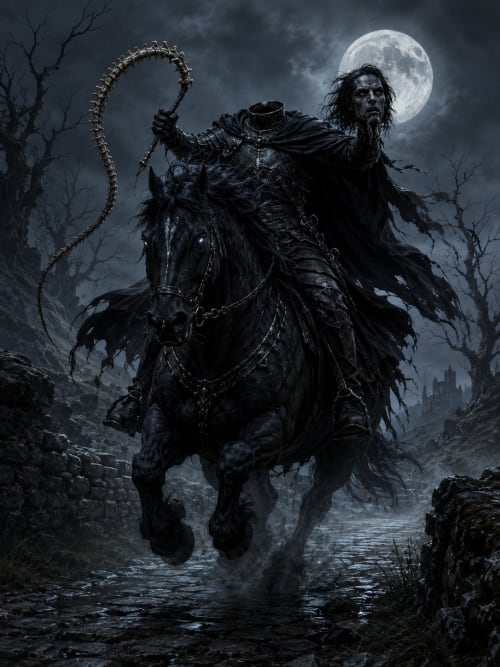
Dullahan
Dullahan · The Headless Horseman — Ireland's Death-Bringing Envoy
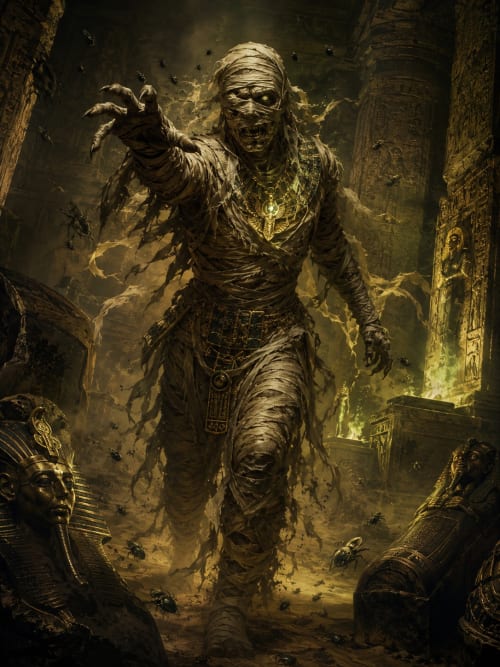
Mummy
Mummy · The Bandaged Dead — A Cursed Corpse Guarding the Tomb
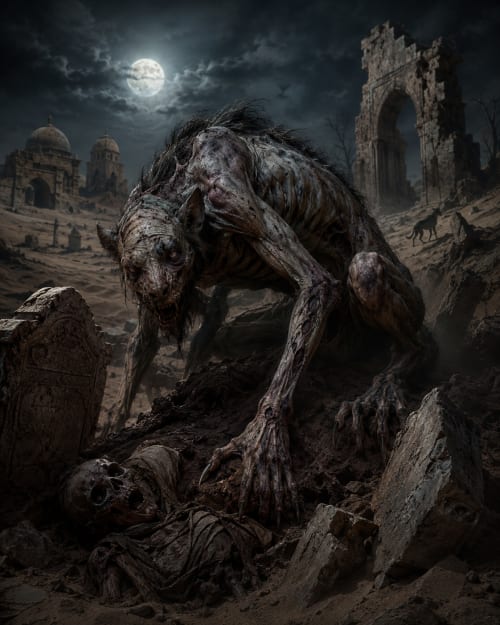
Ghoul
Ghoul · The Corpse-Eater — A Desert Monster That Digs Up and Devours the Dead
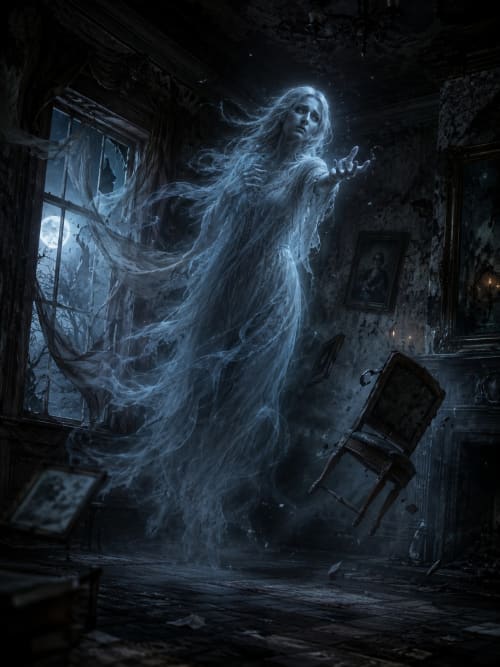
Ghost
Ghost · The Wandering Spirit — A Soul Bound to the World by Attachment and Unfinished Story
Wight
Wight · The Barrow Dead — A Cursed Corpse Guarding the Tomb's Treasure

Nue
Nue · Chimera — Legendary Japanese Monster

Gremlin
Gremlin · The Machine-Breaking Yokai — A Prankster of the Modern Technological Age