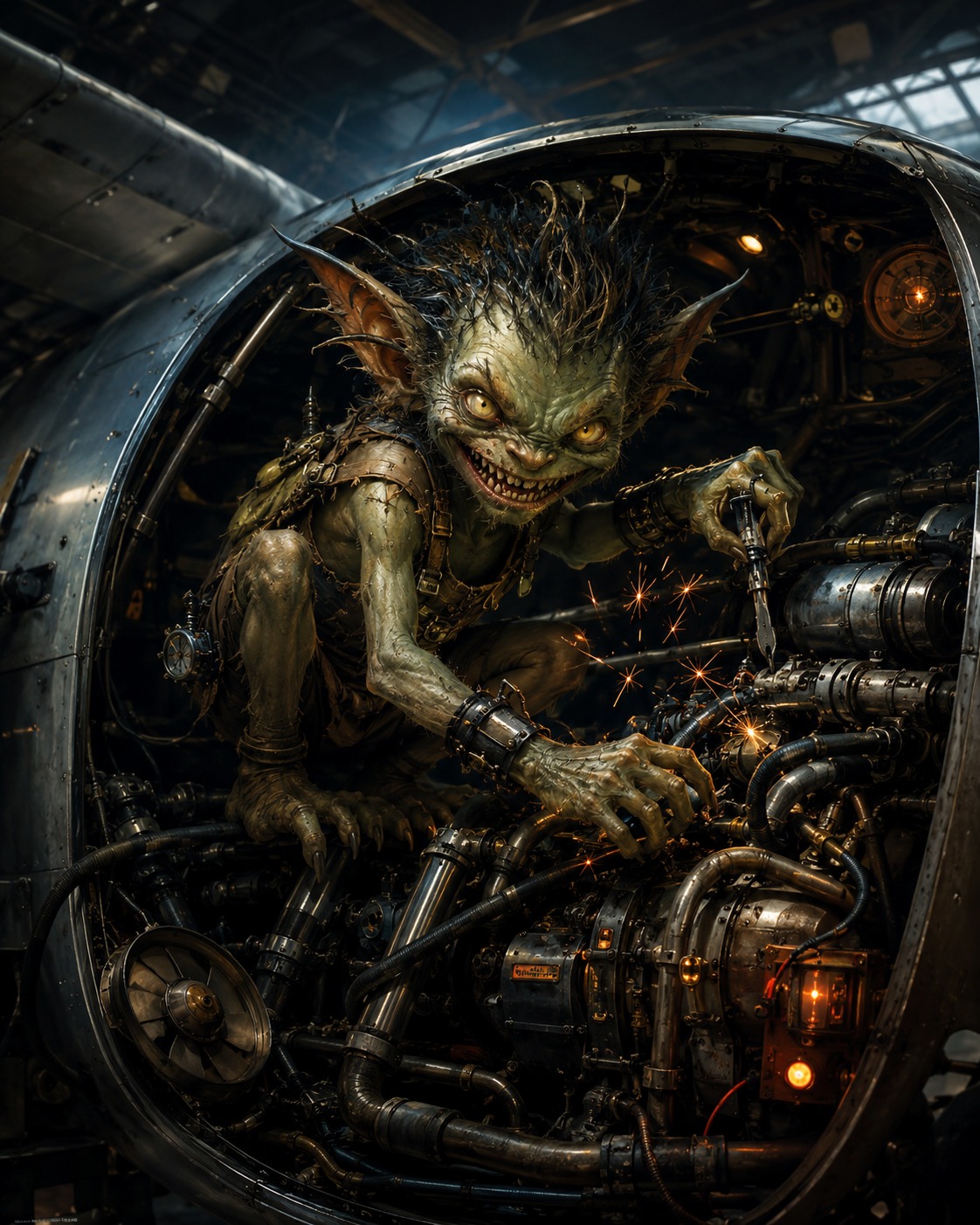
Gremlin
Gremlin · The Machine-Breaking Yokai — A Prankster of the Modern Technological Age
Names in Other Languages
 그렘린한국어
Gremlin · 기계를 망가뜨리는 요괴 — 현대 기술 시대의 장난꾸러기
 グレムリン日本語
Gremlin · 機械を壊す妖怪 — 現代技術時代のいたずら者
 搗蛋鬼繁體中文
Gremlin · 破壞機械之妖怪 — 現代科技時代之搗蛋者
 GremlinDeutsch
Gremlin · Der maschinenzerstörende Kobold — Ein Schelm des modernen technischen Zeitalters
 GremlinFrançais
Gremlin · Le lutin briseur de machines — Un farceur de l'ère technologique moderne
 GremlinEspañol
Gremlin · El duende rompemáquinas — Un bromista de la era tecnológica moderna
 GremlinPortuguês
Gremlin · O duende quebra-máquinas — Um brincalhão da era tecnológica moderna
 GremlinPolski
Gremlin · Psujący maszyny chochlik — figlarz nowoczesnej ery technologicznej
 ГремлинРусский
Gremlin · Ёкай, ломающий машины — проказник современной технологической эпохи
The Gremlin (English Gremlin) is the small and cunning twentieth-century modern yokai that secretly damages machines and devices, the canonical iconographic figure of the newest form of yokai born of industrial-technological civilisation. The etymology is uncertain, but it originated in the military slang of the pilots and mechanics of the Royal Air Force (RAF) of Britain in the 1920s, first appearing in print in the British aviation magazine The Aeroplane in April 1929, and settled during the two World Wars as the unseen entity blamed for the inexplicable mechanical failures of RAF aircraft. The decisive source is the first children's book by the Norwegian-born British RAF pilot Roald Dahl (1916-1990), The Gremlins, published in April 1943 — Disney's first illustrated children's book, with illustrations by Walt Disney himself and produced by Disney — which established the popular canon of the gremlin iconography. The 11 October 1963 CBS Twilight Zone Season 5 episode Nightmare at 20,000 Feet, starring William Shatner, in which a gremlin appears on the wing of an airliner, established the American television canon, and the 8 June 1984 Joe Dante film Gremlins (screenplay by Chris Columbus, produced by Steven Spielberg) completed the decisive popular canon of twenty-first-century gremlin iconography.
Origin
The iconographic origin is the military slang of British RAF aircraft mechanics and pilots in the 1920s. The earliest print source is the appearance of the term gremlin in the British aviation trade journal The Aeroplane on 18 April 1929, and through the 1930s it circulated within the RAF as the unseen entity blamed for inexplicable aircraft failures. Charles Graves's memoir The Thin Blue Line (1941) and Hubert Griffith's article The Gremlin Question in the Royal Air Force Journal of April 1942 first introduced the gremlin iconography to the general public. The decisive text is the children's book The Gremlins, published in April 1943 by Roald Dahl (1916-1990) via Random House in the United States — an autobiographical children's tale composed by the Norwegian-born British RAF pilot Dahl while serving as Assistant Air Attache at the British Embassy in Washington D.C. after being wounded in a fighter crash, illustrated by Walt Disney himself, and Disney's first illustrated children's book — which established the popular gremlin canon. The 12 February 1944 Warner Brothers Bugs Bunny short Falling Hare, in which Bugs Bunny duels a gremlin in a military aircraft hangar, is the canonical American animation.
Features
- Small and nimble body with cunning expression
- Instinct for sabotage, secretly damaging machines and devices
- Targeting tendency for aircraft, engines, and electronics
- Personification of inexplicable accidents and misfortune
- Obsession with mischief and sabotage
- The newest yokai iconography born of modern industrial-technological civilisation
Stories
The gremlin iconography, having settled in RAF military literature of 1941-1943, was established as a popular canon by Roald Dahl's April 1943 children's book The Gremlins, illustrated by Walt Disney and published by Random House. The Warner Brothers Bugs Bunny short Falling Hare of 12 February 1944 (directed by Bob Clampett) — in which Bugs Bunny duels a gremlin clinging to a bomb in a military aircraft hangar — is the canonical American animation, and the Warner Brothers follow-up cartoon Russian Rhapsody of 5 May 1944, in which a Hitler-gremlin appears, established the decisive canon of two-world-war gremlin animation. The CBS Twilight Zone Season 5 episode Nightmare at 20,000 Feet of 11 October 1963 (screenplay by Richard Matheson from his 1961 eponymous short story, starring William Shatner) — in which a flight-phobic patient recently discharged from psychiatric hospital, Bob Wilson, witnesses a gremlin dismantling the engine on the wing outside the aircraft window — is the canonical American television gremlin. The Warner Brothers film Gremlins of 8 June 1984 (directed by Joe Dante, screenplay by Chris Columbus, produced by Steven Spielberg's Amblin Entertainment) — in which Gizmo, a Mogwai, transforms into evil gremlins when fed after midnight or wet — completed the canonical American film gremlin, and Joe Dante's 1990 sequel Gremlins 2: The New Batch followed.
Weakness
The gremlin's weaknesses are: (1) detection — by nature obsessed with sabotage, the gremlin is easily driven away when detected, an iconography canonical to RAF military lore; (2) the weakness of the individual specimen — in the 1984 Joe Dante film Gremlins a horde of gremlins appears, but individual gremlins are easily overpowered by humans and pose a threat only in numbers; (3) helplessness in non-mechanical environments — the canonical target of the gremlin is the aircraft, the engine, and electronic devices, and it is helpless in natural environments without mechanical civilisation; (4) sunlight — the decisive weakness in the 1984 Joe Dante film, the canonical motif that gremlins exposed to sunlight instantly melt and die; in the film's climax the protagonist Billy (Zach Galligan) shatters a department-store skylight to annihilate the gremlin horde with sunlight; (5) water — the 1984 film's Mogwai/gremlin asexually reproduces multiplies when contacted with water, so this is not strictly a weakness but a multiplication mechanism, yet operates as a containment-mechanism weakness; (6) food after midnight — the third of the canonical three taboos of the film ('do not expose to bright light, do not let water touch, do not feed after midnight') is the canonical weakness-taboo iconography, breaking which causes the Mogwai to transform into a gremlin.
Cultural Significance
The gremlin is not merely a yokai but the newest yokai iconography of the twentieth-century industrial-technological civilisation, the history of warfare, and popular culture. The gremlin, originating in British RAF military slang of the 1920s-1930s, is a modernist condensation of the industrial-age myth that personified the aircraft failures of the RAF during the two World Wars, the inscrutability of machines beyond human control. The 1943 Roald Dahl children's book The Gremlins and Walt Disney's contemporary short animated film project of the same name (unfinished, production halted in 1944) — Disney attempted to film the book after publication in collaboration with the RAF, but the production was halted due to copyright dispute with the RAF — is recorded as Disney's largest unfinished project. The 1984 Joe Dante Gremlins, together with the same-year Steven Spielberg Indiana Jones and the Temple of Doom, was an event in American film history that prompted the MPAA to create the new PG-13 rating between PG and R — the first official PG-13 film was Red Dawn (1985), but Gremlins and Temple of Doom are recorded as the two films that triggered the creation of PG-13. Since the 2010s, the gremlin has been reinterpreted as the iconography that personifies digital-age system errors and cyber accidents, employed as a metaphor for AI errors in BBC documentaries such as Gremlins of Artificial Intelligence (2017).
In Popular Culture
- The Aeroplane (April 1929) — earliest print appearance of the gremlin
- Charles Graves, The Thin Blue Line (1941) — RAF military memoir gremlin canon
- Hubert Griffith, The Gremlin Question (1942) — introduction of the gremlin to the general public via British aviation journal
- Roald Dahl, The Gremlins (1943) — popular canon of the gremlin children's book (illustrated by Walt Disney)
- Warner Brothers, Falling Hare (1944) — Bugs Bunny gremlin animation canon
- Richard Matheson, Nightmare at 20,000 Feet, short story (1961) — American horror short-story canon
- CBS Twilight Zone, Nightmare at 20,000 Feet (1963) — American television gremlin canon (starring William Shatner)
- Joe Dante, Gremlins (1984) — decisive American film gremlin canon
- Joe Dante, Gremlins 2: The New Batch (1990) — canonical sequel
Trivia
The etymology of gremlin is academically uncertain — competing hypotheses derive it from Old English gremian ('to vex'), Irish gruaimin ('a gloomy little person'), or from the 1925 Fremlin's Elephant Ale beer-advertisement character borrowed by a British poet's nursery rhyme. The gremlin first appeared in print in The Aeroplane on 18 April 1929 — the first entry in the Oxford English Dictionary being 1929 — making it one of the newest yokai-lexical items of the twentieth century. The Gremlins of Roald Dahl, first printed in April 1943 by Random House in the United States in fifty thousand copies and distributed free to RAF wounded, was simultaneously made into a short animated film The Gremlins (unfinished, 1944) by Walt Disney — production was halted in 1944 due to copyright dispute with the RAF and, in 2008, twenty-four unfinished cels were discovered in the Disney archive by Jack Kabat, making it recorded as Disney's largest unfinished project. The 1984 Joe Dante film Gremlins earned 150 million US dollars worldwide on an 11 million budget, and is recorded in film history as the event, together with Indiana Jones and the Temple of Doom of the same year, that triggered the creation of the MPAA PG-13 rating on 1 July 1984.
Related
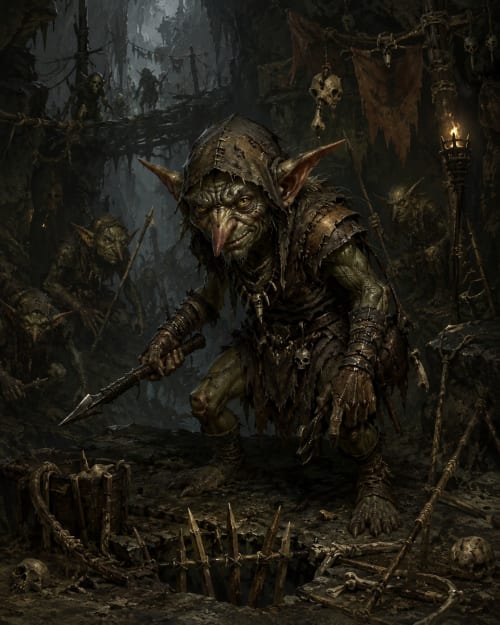
Goblin
Goblin · The Cunning Little Folk — Raiders Who Live by Numbers and Guile
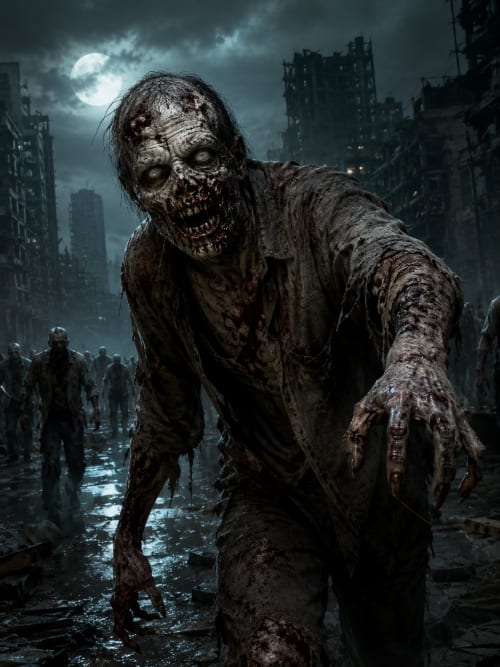
Zombie
Zombie · The Reanimated Corpse — Mindless Man-Eating Hordes of the Dead
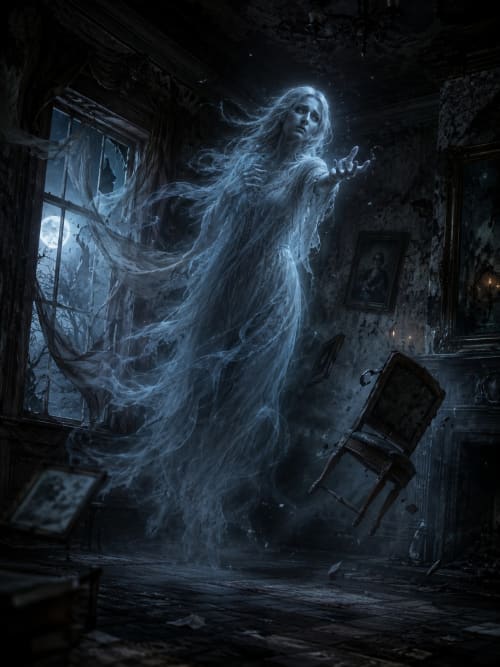
Ghost
Ghost · The Wandering Spirit — A Soul Bound to the World by Attachment and Unfinished Story
Banshee
Banshee · The Wailing Death-Herald — Lament of Celtic Lore
Dullahan
Dullahan · The Headless Horseman — Ireland's Death-Bringing Envoy
Mummy
Mummy · The Bandaged Dead — A Cursed Corpse Guarding the Tomb
Ghoul
Ghoul · The Corpse-Eater — A Desert Monster That Digs Up and Devours the Dead
Wraith
Wraith · The Vengeful Specter — A Dark Spirit That Lost Its Form, Leaving Only Hatred
Vampire
Vampire · The Bloodsucker — Night's Aristocrat Living Immortal on the Blood of the Living

Skeleton Warrior
Skeleton Warrior · Undead Soldier — A warrior risen from death and granted unlife
Revenant
Revenant · The Vengeful Returned — A Corpse Risen From the Grave for One Purpose
Wight
Wight · The Barrow Dead — A Cursed Corpse Guarding the Tomb's Treasure