LoreArc

Norse

15 items tagged with "Norse"

🐉Spirits(1)
⚔️Weapons(1)
🐉Dragons(2)
⚔️Armor(1)
odin

Odin

Odin · Allfather of Norse Myth — God of Wisdom, War, and Death

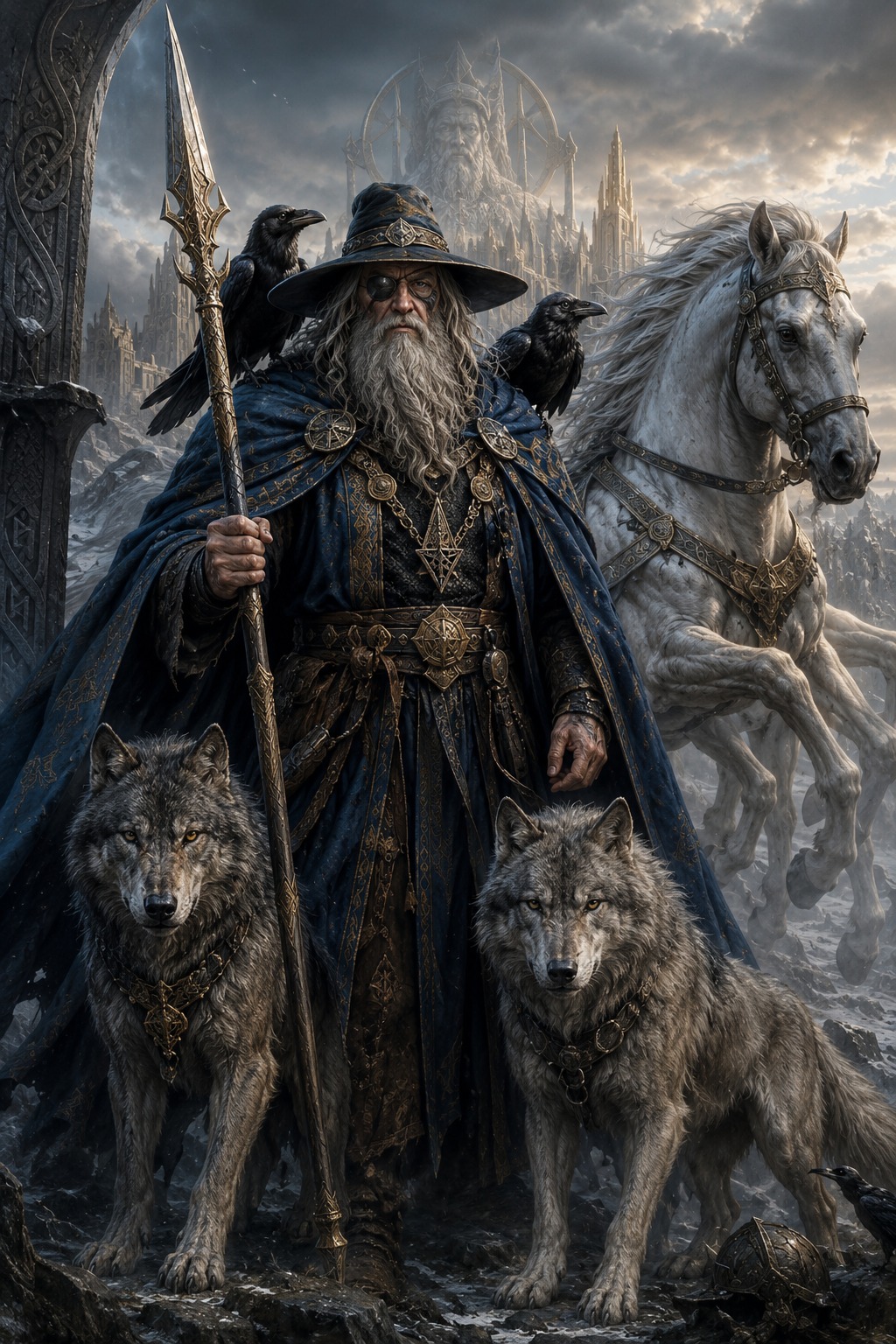
Odin (Old Norse Odin, Proto-Germanic Wodanaz, 'the one of frenzy, ecstasy, inspiration') is the decisive canonical chief god, the All-Father (Alfodr) of all gods and humans, and the god of wisdom, poetry, war, death, runes, and seidr magic of the Aesir (Aesir) in Norse mythology, and the decisive canonical iconographic figure as the grandson of the giant Buri (Buri), son of Borr (Borr) and Bestla (Bestla), who together with his brothers Vili (Vili) and Ve (Ve) killed the primordial giant Ymir (Ymir) and created the world from his body. The etymology is the decisive canonical vocabulary derived from the Old Norse Odin or Proto-Germanic Wodanaz ('frenzy, ecstasy, inspiration'), cognate with the English Wednesday (Old English Wodnesdaeg, 'Woden's day'), the German Mittwoch, and the Latin furor (frenzy). The decisive textual canon is the Prose Edda (Prose Edda) of c. 1220 of the early 13th-century Icelandic poet-historian Snorri Sturluson (Snorri Sturluson, 1179-1241) — chapters 6-9 (creation), 15 (Mimir's well), and 51 (Ragnarok) of Gylfaginning (Gylfaginning) — and the Voluspa (Voluspa), Havamal (Havamal) stanzas 138-141, Grimnismal (Grimnismal), and Vafthrudnismal (Vafthrudnismal) of the Poetic Edda (Poetic Edda) of the c. 1270 Codex Regius (Codex Regius) manuscript are the decisive poetic canon, and the decisive canonical iconography of sacrificing one eye to the well (Mimisbrunnr) of Mimir (Mimir) to gain cosmic wisdom, and hanging himself on Yggdrasil (Yggdrasill) for 9 days to learn the runes (runir).

thor

Thor

Thor · Norse God of Thunder — Protector of Mankind

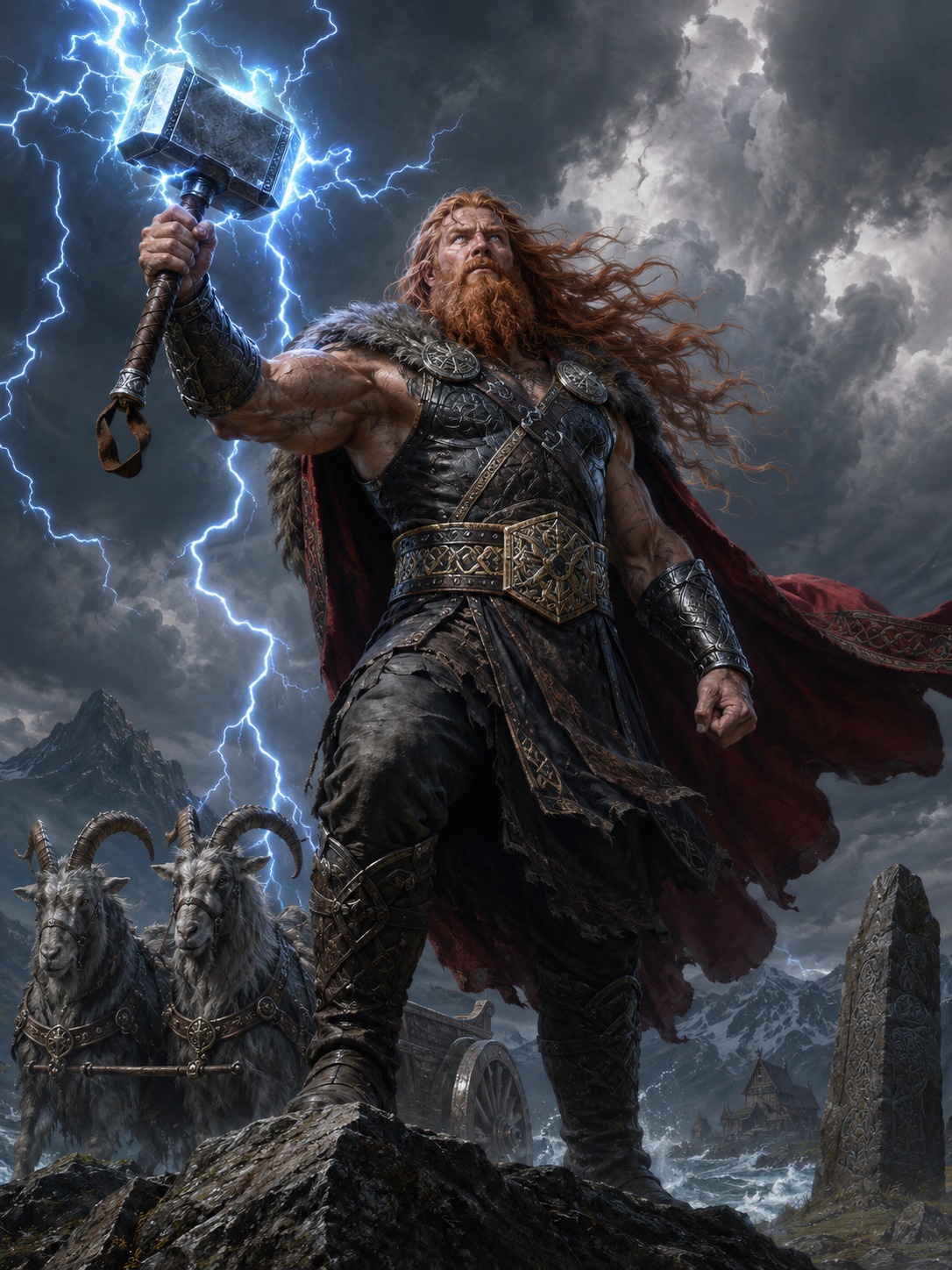
Thor (Old Norse Thorr, Proto-Germanic Thunraz 'thunder') is the god of thunder, lightning, storms, strength, and fertility of Norse mythology — the decisive canon, the son of Odin (Odin) and the earth goddess Jord (Jord), married to Sif (Sif) — the decisive canonical iconographic figure. The etymology is the decisive canonical vocabulary derived from the Old Norse Thorr or Proto-Germanic Thunraz ('thunder'), cognate with the English Thursday (Old English Thunresdaeg, 'Thunor's day'), the German Donnerstag, and the Latin Tonans (epithet of Jupiter, 'thundering'). The decisive textual canon is chapter 9 of the Germania (Germania) of the c. 1st-century Roman historian Tacitus (Cornelius Tacitus, c. 56-120) — the decisive Roman-era canon of Donar (Donar, later Thor) identified by the Germanic tribes with Hercules (Hercules) — and the Prose Edda (Prose Edda) of c. 1220 of the early 13th-century Icelandic poet-historian Snorri Sturluson (Snorri Sturluson, 1179-1241) — chapters 21 (introduction), 25, 28 (Mjollnir), 42-48 (Utgarda-Loki, Skrymir episode), and 50 (Jormungandr fishing) of Gylfaginning (Gylfaginning) — the decisive canon — and the Voluspa (Voluspa), Thrymskvida (Thrymskvida), Hymiskvida (Hymiskvida), Harbardsljod (Harbardsljod), and Alvissmal (Alvissmal) of the Poetic Edda (Poetic Edda) of the c. 1270 Codex Regius (Codex Regius) manuscript are the decisive poetic canon. The decisive canonical iconography of the hammer Mjollnir (Mjollnir) — a weapon that returns when thrown — and the chariot drawn by two goats Tanngnjostr (Tanngnjostr) and Tanngrisnir (Tanngrisnir).

heimdall

Heimdall

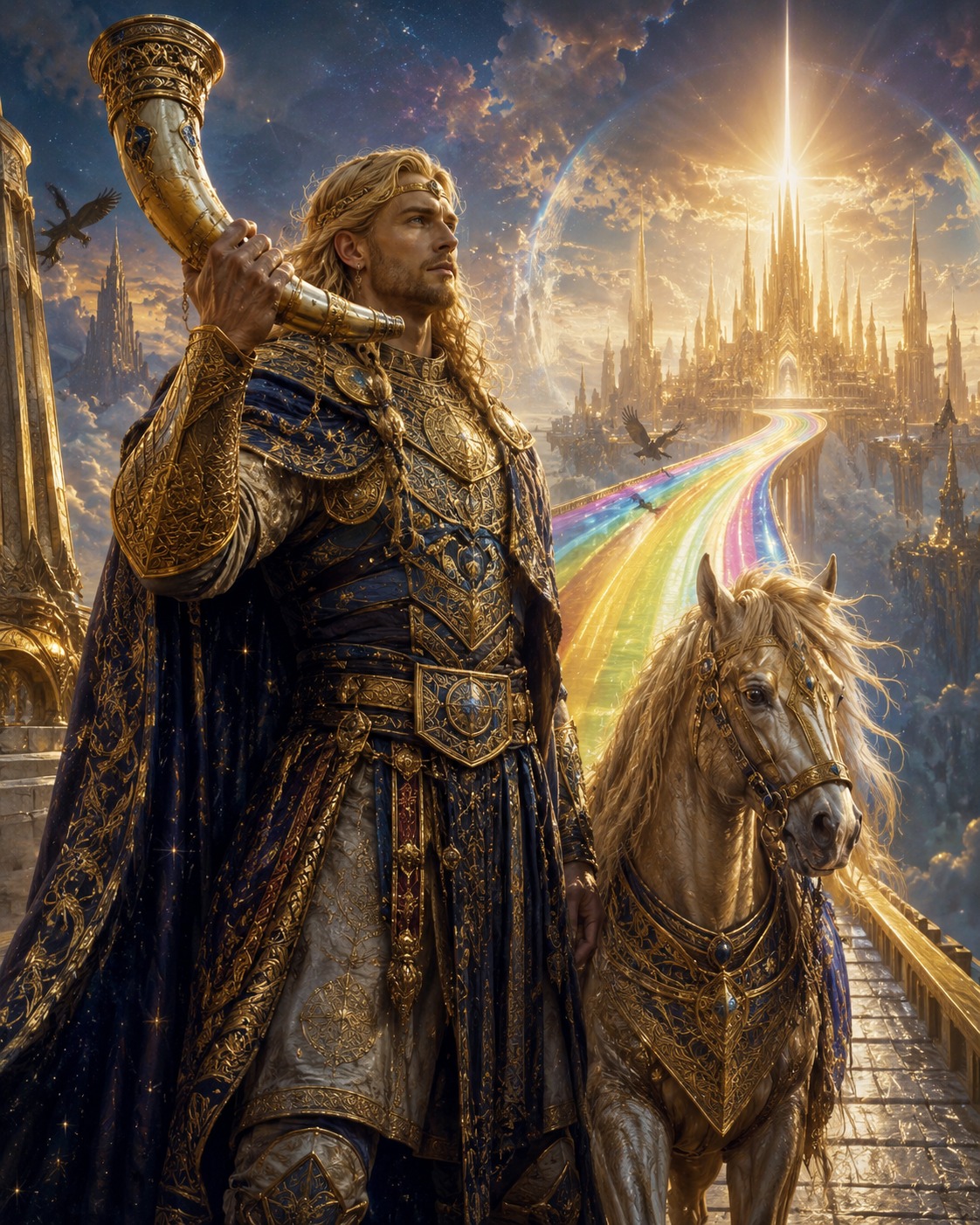
Heimdall · Watchman of Bifröst — Trumpeter of Ragnarök

Heimdall (Old Norse Heimdallr, 'shining one of the world' or 'pillar of the world') is the decisive canonical god of light, vigilance, and watching of the Aesir (Aesir) in Norse mythology, and the decisive canonical iconographic figure of the eternal watchman of the rainbow bridge Bifrost (Bifrost). The etymology is the Old Norse compound of heim ('world, home') and dallr ('shining one' or 'pillar') — meaning 'shining one of the world' — the decisive canonical vocabulary, and the aliases Gullintanni (Gullintanni, 'the one with golden teeth') — the god with golden teeth — and Vitli (Vitli, 'the white one') and Hallinskidi (Hallinskidi) are the decisive canonical vocabulary. The decisive textual canon is the Prose Edda (Prose Edda) of c. 1220 of the early 13th-century Icelandic poet-historian Snorri Sturluson (Snorri Sturluson, 1179-1241) — chapter 27 of Gylfaginning (Gylfaginning) — the decisive Heimdall canon — and chapter 51 — the Ragnarok canon — and the Voluspa (Voluspa), Grimnismal (Grimnismal) stanza 13, Thrymskvida (Thrymskvida) stanza 15, and Rigsthula (Rigsthula, Lay of Rig) of the Poetic Edda (Poetic Edda) of the c. 1270 Codex Regius (Codex Regius) manuscript are the decisive poetic canon of Heimdall. The decisive canon of mysterious birth from nine mothers (nine waves, nine sisters), and the decisive canonical iconographic figure who at Ragnarok blows the great horn Gjallarhorn (Gjallarhorn) to wake the gods and mutually destroys with Loki (Loki).