
Arbalest
A heavy steel-prodded crossbow of the late Middle Ages
Names in Other Languages
 아르발레스트한국어
Arbalest · 강철 활대의 대형 석궁
 アーバレスト日本語
鋼鉄の弩弓
 大型十字弓繁體中文
鋼製弩弓
 ArbalestDeutsch
Die schwere Stahlarmbrust
 Arbalète lourdeFrançais
La lourde arbalète à arc d'acier
 ArbalestaEspañol
La pesada ballesta de arco de acero
 ArbalestaPortuguês
A pesada besta de arco de aço
 Kusza ciężkaPolski
Ciężka kusza ze stalowym łukiem
 АрбалестРусский
Тяжёлый арбалет со стальной дугой
The arbalest is a heavy crossbow of the late Middle Ages that used a steel prod in place of the earlier wood-and-horn composite, boasting the greatest penetration of its day. The steel prod's draw weight ran to hundreds of kilograms — far beyond drawing by hand — so it had to be spanned mechanically with a windlass (pulley device) or a cranequin (geared device). It could pierce even plate armor at an effective range of 200 m and beyond, but spanning took so long that its rate of fire was only one or two bolts a minute. To offset this, it was paired with a pavise-bearer, behind whose great shield the crossbowman sheltered while reloading. It shot a short bolt (quarrel, about 30–40 cm) and required little training, so even conscripts could be made battle-ready quickly.
Origin
The arbalest appeared in 12th–13th-century Europe as steel metallurgy advanced, replacing the older wood-and-horn composite crossbow. It reached its height on the 14th–15th-century battlefield as the infantry's armor-piercing missile weapon, and the Genoese crossbowmen in particular won fame hired as mercenaries across Europe. Its core advance was the union of a steel prod with mechanical spanning devices (windlass and cranequin). With the spread of firearms such as the matchlock in the 16th century — a rival, since both needed little training and pierced armor — it gradually gave way to the gun and lived on for hunting and sport.
Features
- Steel prod — the greatest penetration of its day (pierces plate)
- Mechanical spanning with windlass (pulley) or cranequin (gears) required
- Effective range over ~200 m, shooting a short bolt (quarrel)
- Slow rate of fire, one or two bolts a minute
- Worked in pairs with a pavise (great shield) bearer
- Little training needed — conscripts made battle-ready quickly
Stories
In sieges and open field it served as the armor-piercing weapon to bring down heavily armored knights and men-at-arms. The shooter spanned the string by machine, set a bolt, then aimed and loosed from behind a pavise, and spent a long while reloading. Because of the slow rate, it was best used in ranks firing by rotation, or in combined arms with shield-bearers and spearmen, rather than alone. It was especially deadly where the shooter was protected — defending a wall or a narrow chokepoint. With its great power, a single bolt could punch through shield and man alike.
Weakness
Its gravest weakness was the extremely slow rate of fire, only one or two bolts a minute. In the same time a longbowman could loose more than ten, so in a fast melee or close fight it was badly outmatched. The spanning devices (windlass, cranequin) were heavy and complex, awkward to carry and handle, and a mechanical failure left it all but useless. Rain fouled the string and mechanism (the Genoese crossbowmen at Crécy are the classic example), and in close combat it was defenseless, so the cover of shields and spears was essential.
Cultural Significance
The crossbow, the arbalest among them, shocked medieval society as 'a weapon with which a commoner could kill a knight.' Because a single powerful bolt could fell an armored noble without years of training, the Second Lateran Council of 1139 went so far as to forbid the crossbow in war between Christians (allowing it only against non-believers) — a ban that was, of course, scarcely observed. The death of Richard the Lionheart, struck by a crossbow bolt at the siege of Châlus in 1199, is remembered as an irony visited upon a king who had embraced the weapon.
In Popular Culture
The arbalest appears in games and fantasy as the archetypal 'powerful but slow heavy crossbow.' Dark Souls features a crossbow named literally the 'Arbalest,' and it is familiar too as the Heavy Bowgun of Monster Hunter or the Genoese crossbowmen of Mount & Blade and Total War. As with Geralt in The Witcher or the film Van Helsing, the crossbow is often cast as the weapon of vampire and monster hunters. It is usually portrayed as 'slow to load but lethal in a single shot,' aligning well with its historical use.
Trivia
- The Second Lateran Council of 1139 forbade the crossbow in war between Christians — it was seen as 'too cruel and dishonorable' that a lowborn soldier could so easily kill a noble knight.
- Richard the Lionheart of England died of a crossbow-bolt wound at the siege of Châlus in 1199, a fate said to have come back upon a king who favored the crossbow.
- The crossbow's true advantage over the longbow was training, not power: an English longbowman trained for years from childhood, but a crossbowman could be raised in weeks, which is why continental armies preferred it.
Related

Crossbow
The mechanized ranged weapon of the medieval era

Longbow
The iconic weapon of the English archer

War Bow
A heavy-draw longbow built for battlefield use

Halberd
The versatile polearm combining axe, spear, and hook

Longsword
The quintessential two-handed sword of medieval Europe
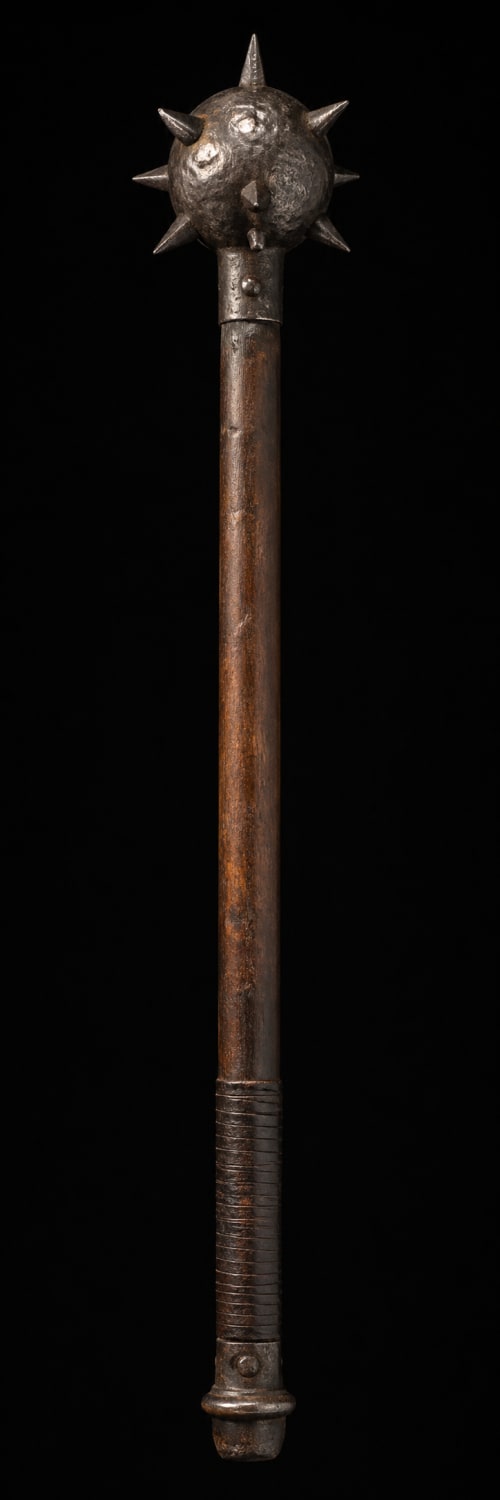
Morning Star
The spiked ball weapon of medieval warfare
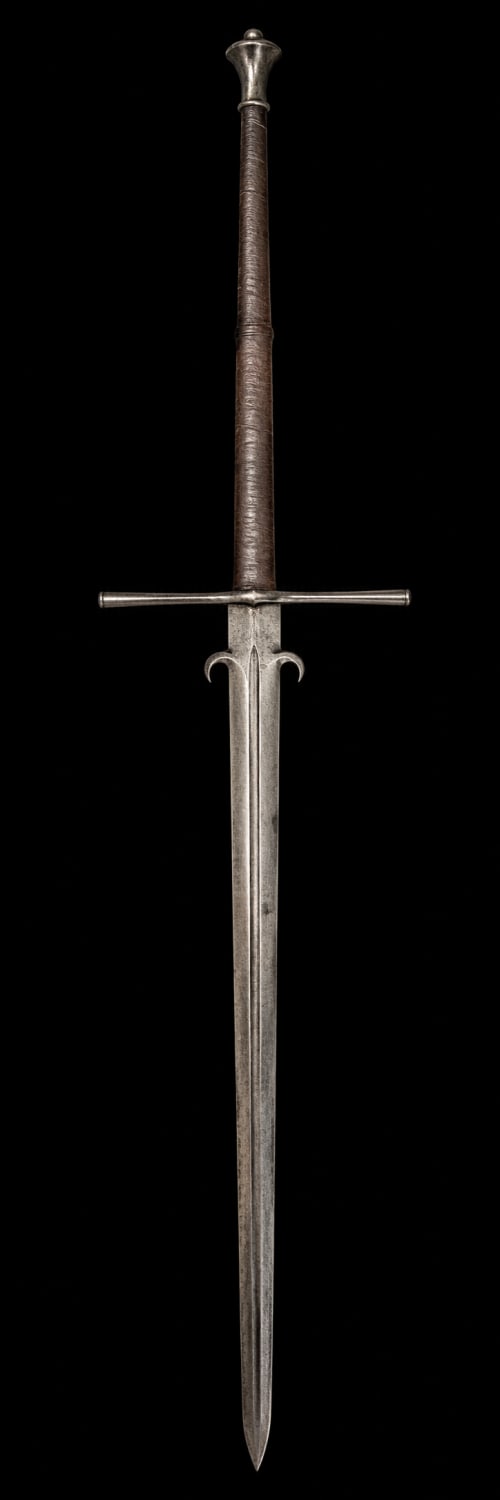
Zweihänder
The massive two-handed sword of German Landsknechts

Battle Axe
An axe designed specifically for combat

Lance
The cavalry charge weapon of the mounted knight
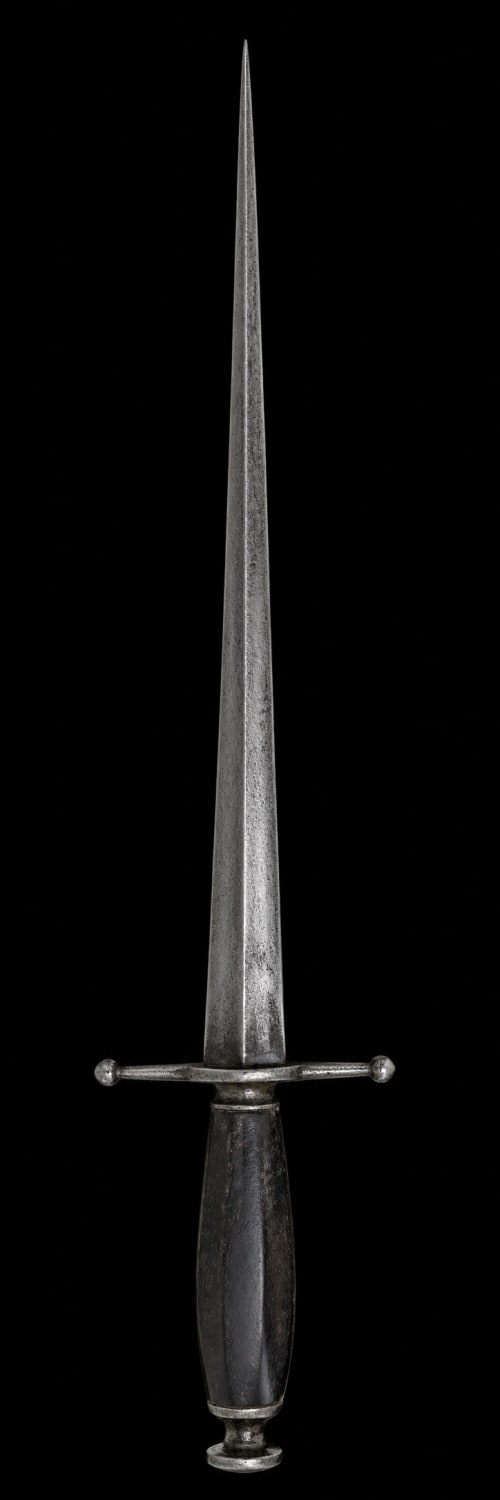
Stiletto
The Italian thrusting-only dagger

Mongol Bow
The composite bow of mounted archers

Glaive
A polearm with a curved single-edged blade