
Hand Cannon
The earliest portable gunpowder weapon
Names in Other Languages
 핸드 캐논한국어
Hand Cannon · 최초의 휴대용 화약 무기
 手持ち火砲日本語
最初期の個人用火器
 手持火銃繁體中文
最早的個人火器
 HandkanoneDeutsch
Die früheste tragbare Feuerwaffe
 Canon à mainFrançais
La toute première arme à feu portable
 Cañón de manoEspañol
La primera arma de fuego portátil
 Canhão de mãoPortuguês
A primeira arma de fogo portátil
 Działo ręcznePolski
Najwcześniejsza przenośna broń palna
 Ручная пушкаРусский
Самое раннее переносное огнестрельное оружие
The hand cannon is humanity's first personal firearm, invented in 13th-century Yuan China (the Mongol Empire). Of utterly simple form — a short iron tube fixed to the end of a wooden stave (tiller) — it was loaded with powder and a projectile (a lead, stone, or iron ball) and fired by holding a lit coal or match to the touchhole on the side of the barrel. The gunner usually braced the stave under the arm or on a rest and ignited it with the other hand. Its accuracy was wretched, loading took minutes, and the risk of a burst was real, yet its armor-piercing power and the thunderous noise and flame — terrifying to men and horses alike — were immense. This primitive gun is the starting point of every firearm that followed, from the matchlock to the musket to the modern rifle.
Origin
Gunpowder was invented in China, and the hand cannon, with its metal barrel, likewise first appeared in 13th-century Yuan China. The oldest surviving specimen is the Heilongjiang hand cannon of about 1288, reckoned the world's oldest metal-barreled firearm. China's gunpowder and firearm technology passed westward through the Mongol conquests and the Islamic world, and by the early 14th century the hand cannon (handgonne) was in use in Europe too. There it developed alongside the crossbow as an infantry firearm, and as it was refined into the matchlock arquebus with its trigger ignition in the 15th century, the hand cannon gradually disappeared.
Features
- Iron tube + wooden stave — an utterly simple form
- Humanity's first personal firearm
- Fired by holding a flame directly to the touchhole
- Wretched accuracy, loading measured in minutes
- Armor-piercing power
- The psychological terror of noise and flame
Stories
On the battlefield its chief purpose was to fire in a volley at the enemy formation, throwing it into disorder through power and the terror of noise, smoke, and flame — it was not a weapon for hitting one chosen man. Because loading was slow, it was used by many in ranks firing in rotation, or worked from behind shields, spears, or wagons. In the Hussite Wars (1419–1434) above all, Jan Žižka's Bohemian peasant army mounted hand cannons on war wagons (the Wagenburg) and repeatedly broke heavily armored crusader knights. Resting it on a support or a wall eased its recoil and aiming problems somewhat.
Weakness
Its accuracy was so poor that aiming at a specific target was nearly impossible, and loading took minutes, so there was no rapid fire. Handling and igniting loose powder by hand made misfires and bursts a real danger, and rain or damp that wetted the powder made it impossible to fire at all. The gunner needed one hand to ignite it, so aim and stance were unsteady, and the smoke blocked the view. These weaknesses were gradually remedied as the 15th-century matchlock brought a trigger-operated ignition and a shoulder stock.
Cultural Significance
The hand cannon opened the door to the 'age of gunpowder,' the starting point at which the age of the knight and noble — guarded by armor and castle walls — began to wane. As a briefly trained commoner could now fell an armored knight with a single shot, the firearm decisively completed the 'leveling of the battlefield' that the crossbow had begun. The hand cannon is also a symbol of one of history's greatest technology transfers — Chinese gunpowder and firearms reaching Europe by way of the Mongols and the Islamic world. The Czech word for it, píšťala, is often cited as the origin of 'pistol.'
In Popular Culture
The hand cannon appears as 'the first gun' in works set in the late medieval and early gunpowder eras. The Hand Cannoneer of Age of Empires II is the classic example, and it is familiar too as the early gunners of Total War and Mount & Blade. Meanwhile the 'Hand Cannon' of the sci-fi game Destiny — a revolver-class weapon — borrows the historical name, in tune with the modern usage of 'hand cannon' for a big, powerful pistol. It is usually portrayed as 'slow and inaccurate, but devastating in a single thunderous shot.'
Trivia
- The oldest surviving metal-barreled firearm is the Heilongjiang hand cannon of about 1288, from Yuan China — a decisive artifact for the origin of firearms.
- Gunpowder and the first firearms all began in China and reached Europe in the early 14th century by way of the Mongol Empire and the Islamic world — among the most consequential technology transfers in history.
- The hand cannon used by the Bohemian peasant army in the Hussite Wars, the píšťala, is often cited as the origin of the English word 'pistol,' and left a symbolic case of commoner infantry defeating a knightly army with firearms.
Related

Katar
India's push dagger with a transverse grip

Halberd
The versatile polearm combining axe, spear, and hook

Longsword
The quintessential two-handed sword of medieval Europe
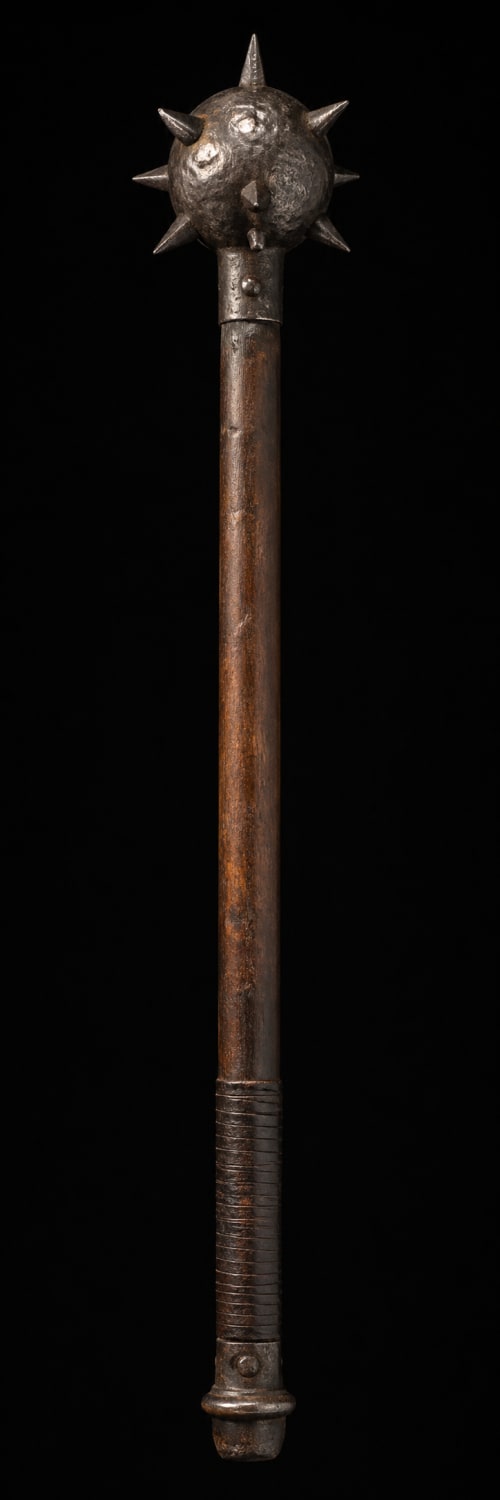
Morning Star
The spiked ball weapon of medieval warfare
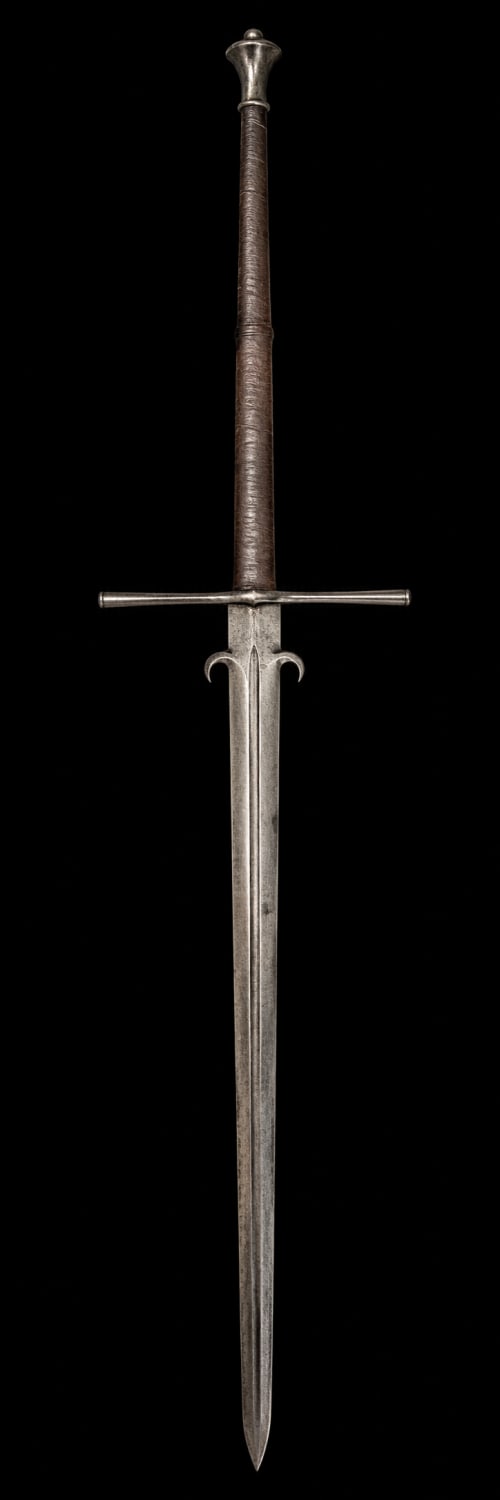
Zweihänder
The massive two-handed sword of German Landsknechts

Battle Axe
An axe designed specifically for combat

Mongol Bow
The composite bow of mounted archers

Glaive
A polearm with a curved single-edged blade

Dane Axe
The Viking two-handed battle axe

Falchion
A single-edged medieval European chopping sword
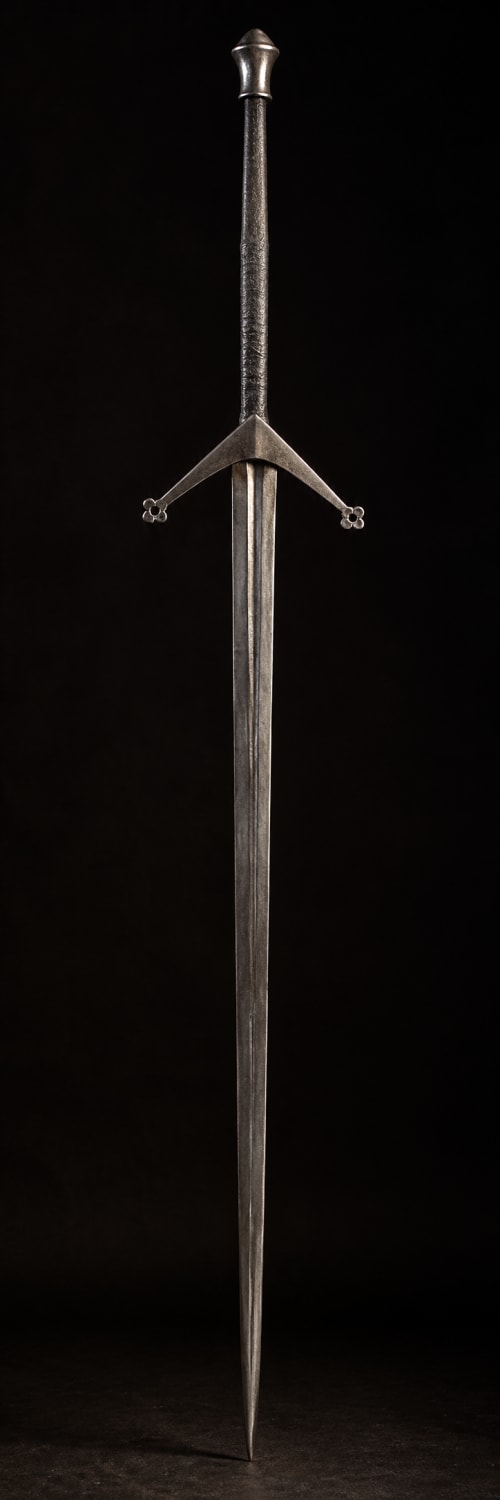
Claymore
The great two-handed sword of the Scottish Highlands
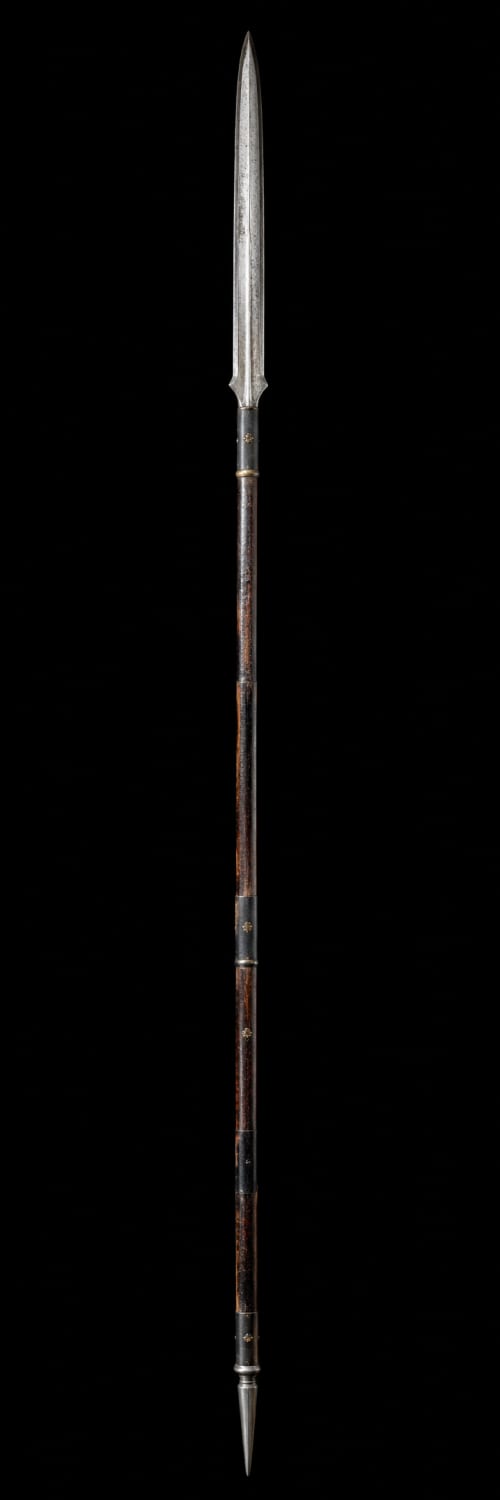
Yari
The straight-bladed Japanese spear