
Dane Axe
The Viking two-handed battle axe
Names in Other Languages
 데인 액스한국어
Dane Axe · 바이킹의 양손 전투 도끼
 デーン・アックス日本語
ヴァイキングの両手戦斧
 丹麥斧繁體中文
維京人的雙手戰斧
 DänenaxtDeutsch
Die Zweihand-Streitaxt der Wikinger
 Hache danoiseFrançais
La hache de guerre à deux mains des Vikings
 Hacha danesaEspañol
El hacha de guerra a dos manos de los vikingos
 Machado dinamarquêsPortuguês
O machado de guerra de duas mãos dos vikings
 Topór duńskiPolski
Oburęczny topór bojowy wikingów
 Датский топорРусский
Двуручный боевой топор викингов
The Dane axe is the great two-handed battle axe of the Viking Age (9th–11th centuries): a broad, crescent-curved blade on a long haft of about 120–170 cm. The cutting edge can reach some 30 cm across, yet the head is thin and weighs only 1–2 kg, making it lighter and faster than it looks and giving it a deep, sword-like cut. Swung in great two-handed arcs, it could split a shield or hew the leg of a warhorse, and it was the badge of the bravest elite among Viking warriors. At the Battle of Hastings in 1066, the huscarls (royal guard) of King Harold of England met the Norman cavalry with this axe — a scene preserved in the Bayeux Tapestry.
Origin
The Dane axe grew in 9th-century Scandinavia from the everyday tool-axe enlarged for war, part of the broad-axe (breiðøx) family. It spread with Viking raiding and conquest into England, Ireland, and Normandy, and took particular root in the Danelaw and among the huscarls of the Anglo-Saxon royal household, earning the name “Dane axe.” In the 11th century its fame reached the East, where the Varangian Guard of the Byzantine emperor bore it and became known as the “axe-bearing guard.” From the 12th–13th centuries, as armor grew heavier, it gradually yielded to pole weapons.
Features
- Broad, crescent-curved blade up to about 30 cm across
- Long haft of about 120–170 cm — wielded two-handed
- Thin, wide blade giving a deep, sword-like cut
- Head weighing only 1–2 kg, light and fast for its size
- Badge of the Viking elite, the huscarls, and the Varangian Guard
- Depicted in the Bayeux Tapestry in the hands of a warrior
Stories
The key was a great two-handed downward arc that split a shield outright or hewed through helm and mail. Its broad blade could target a horse's legs to break a cavalry charge. Typically the axeman waited behind the shield wall, stepped forward to shatter the enemy line with one or two heavy blows, then drew back. The horn at the top of the blade could hook down an enemy shield or twist away a weapon as a secondary technique. But because the wielder was exposed throughout the swing, it was a weapon of the elite, used on the assumption that comrades would cover him.
Weakness
Held in both hands, it left no hand for a shield, so its defense was poor, and the long gap between its great swings let a seasoned foe counter. It needed room to swing and was cramped in a shoulder-to-shoulder formation, in a narrow interior, or in a melee. The thin blade cut superbly but could chip or bend if driven hard into a hard target. From the 12th century, as plate and reinforced armor spread, this cutting-focused axe steadily lost its edge.
Cultural Significance
The Dane axe stood for Viking valor and the prestige of the warrior aristocracy: in an age when swords were costly and scarce, axes were far more common, but this great axe in particular marked the elite. Its prestige reached beyond the North — the Varangian Guard, the Norse and Rus mercenaries who protected the Byzantine emperor, carried it and were called the “axe-bearing guard” (pelekyphoroi), bringing it as far as Constantinople. To this day the coat of arms of Norway shows a lion holding the axe of King Saint Olaf — and that axe is the heir of the Viking-age broad axe, a rare case of a weapon surviving as a nation's emblem.
In Popular Culture
The Dane axe is a stock visual sign of “the Viking” in historical drama and games. In Assassin's Creed Valhalla it is a two-handed weapon the hero Eivor can wield; the series Vikings and The Last Kingdom show it as the warriors' signature arm. Medieval-combat games such as Mount & Blade and Chivalry feature it as a long-hafted, heavy-hitting axe, and it has shaped the “greataxe” image of tabletop RPGs. It is usually portrayed as a slow but devastating single-blow weapon, where game design and historical use align neatly.
Trivia
- At Hastings in 1066, King Harold's huscarls were said to fell a Norman horse and rider with a single Dane-axe blow, and the Bayeux Tapestry actually shows an axeman cutting down a Norman cavalryman's horse.
- The Byzantine emperor's Varangian Guard, carrying Dane axes on their shoulders, were called in Greek the pelekyphoroi (“axe-bearers”), a rare instance of Northern warriors serving as the elite guard of a Mediterranean empire.
- The axe held by the lion in Norway's coat of arms and royal standard is the emblem of King Saint Olaf, who fell at Stiklestad — so a broad Viking battle axe lives on as a nation's official heraldry.
Related

Battle Axe
An axe designed specifically for combat

Halberd
The versatile polearm combining axe, spear, and hook

Longsword
The quintessential two-handed sword of medieval Europe
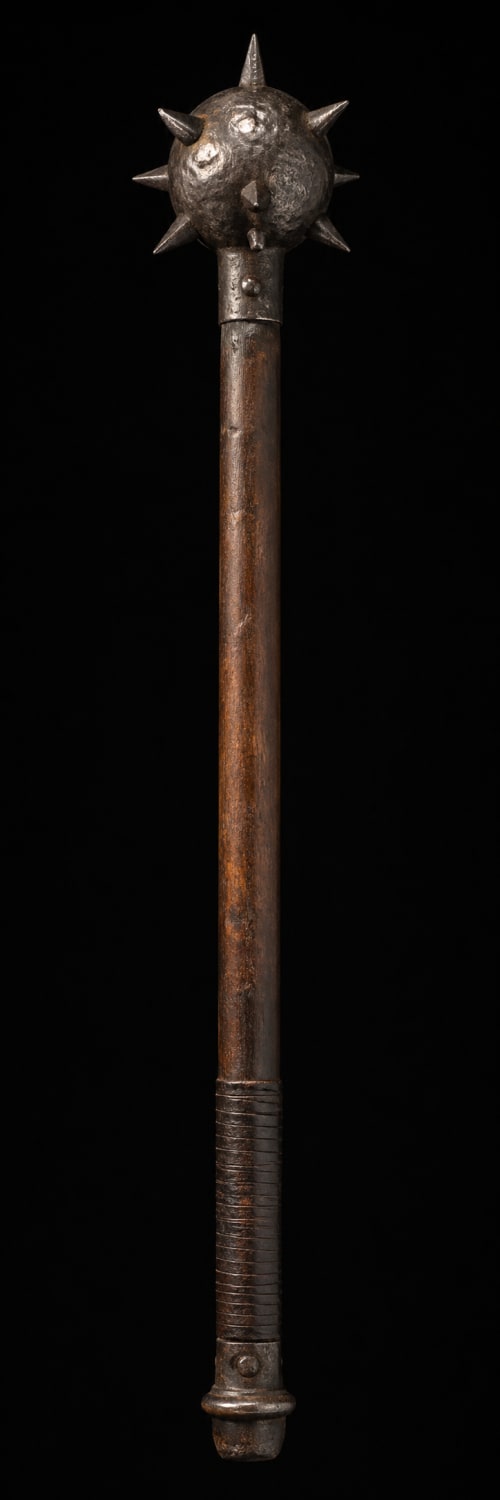
Morning Star
The spiked ball weapon of medieval warfare
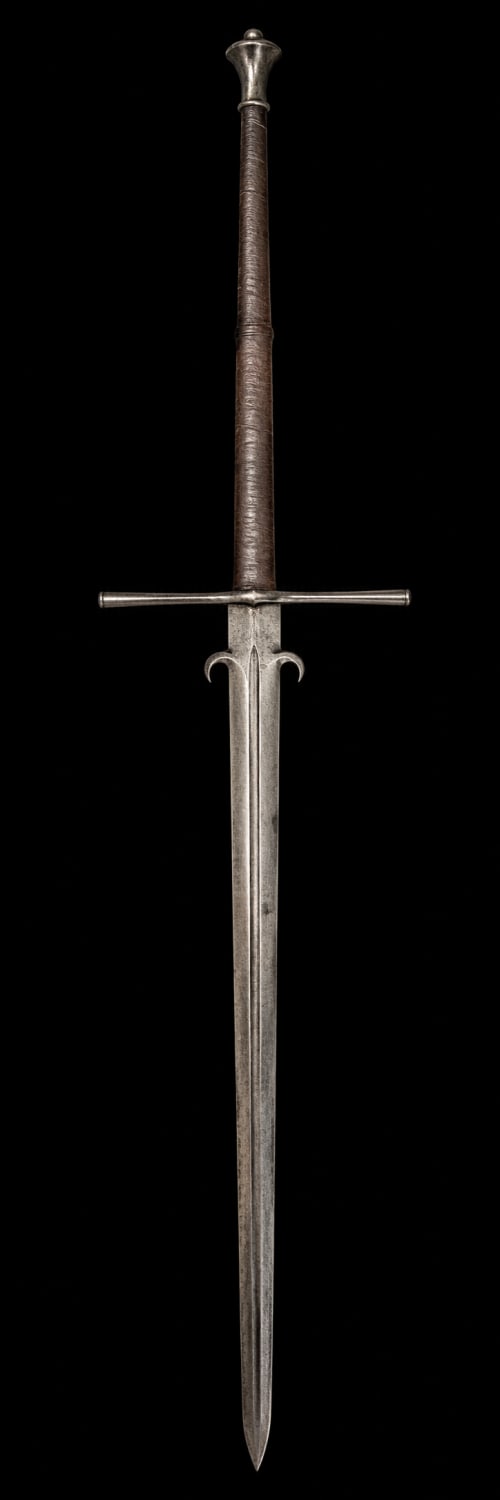
Zweihänder
The massive two-handed sword of German Landsknechts

Glaive
A polearm with a curved single-edged blade

Katar
India's push dagger with a transverse grip

Falchion
A single-edged medieval European chopping sword
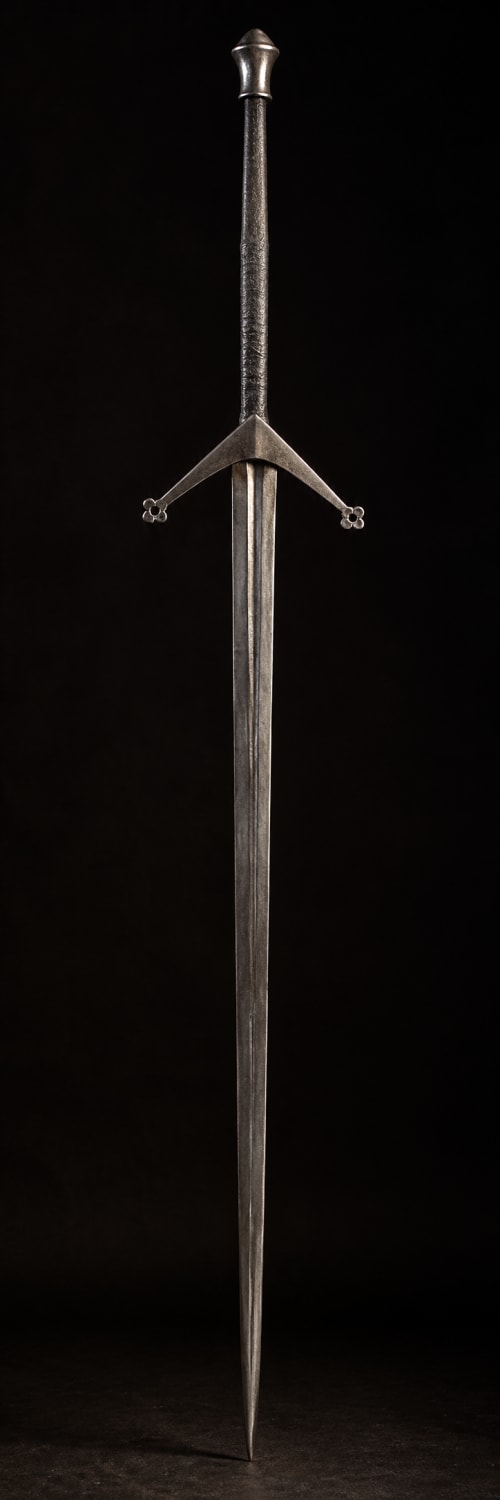
Claymore
The great two-handed sword of the Scottish Highlands
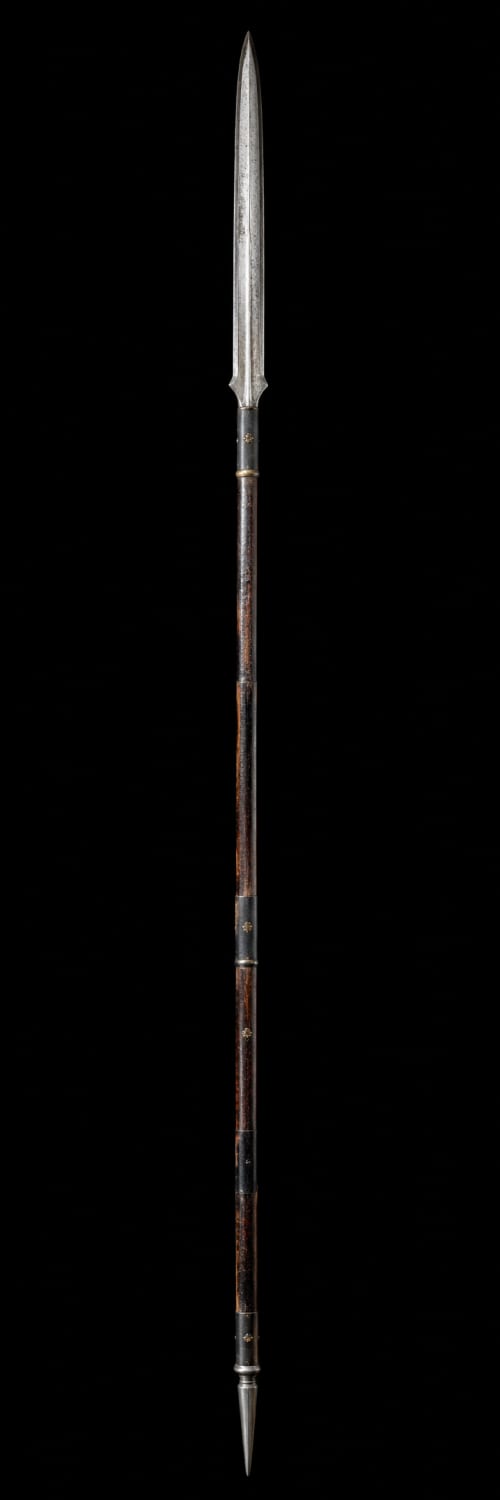
Yari
The straight-bladed Japanese spear

Pike
An extremely long spear for massed infantry formations

Flail
A chain-linked striking weapon that bypasses shields