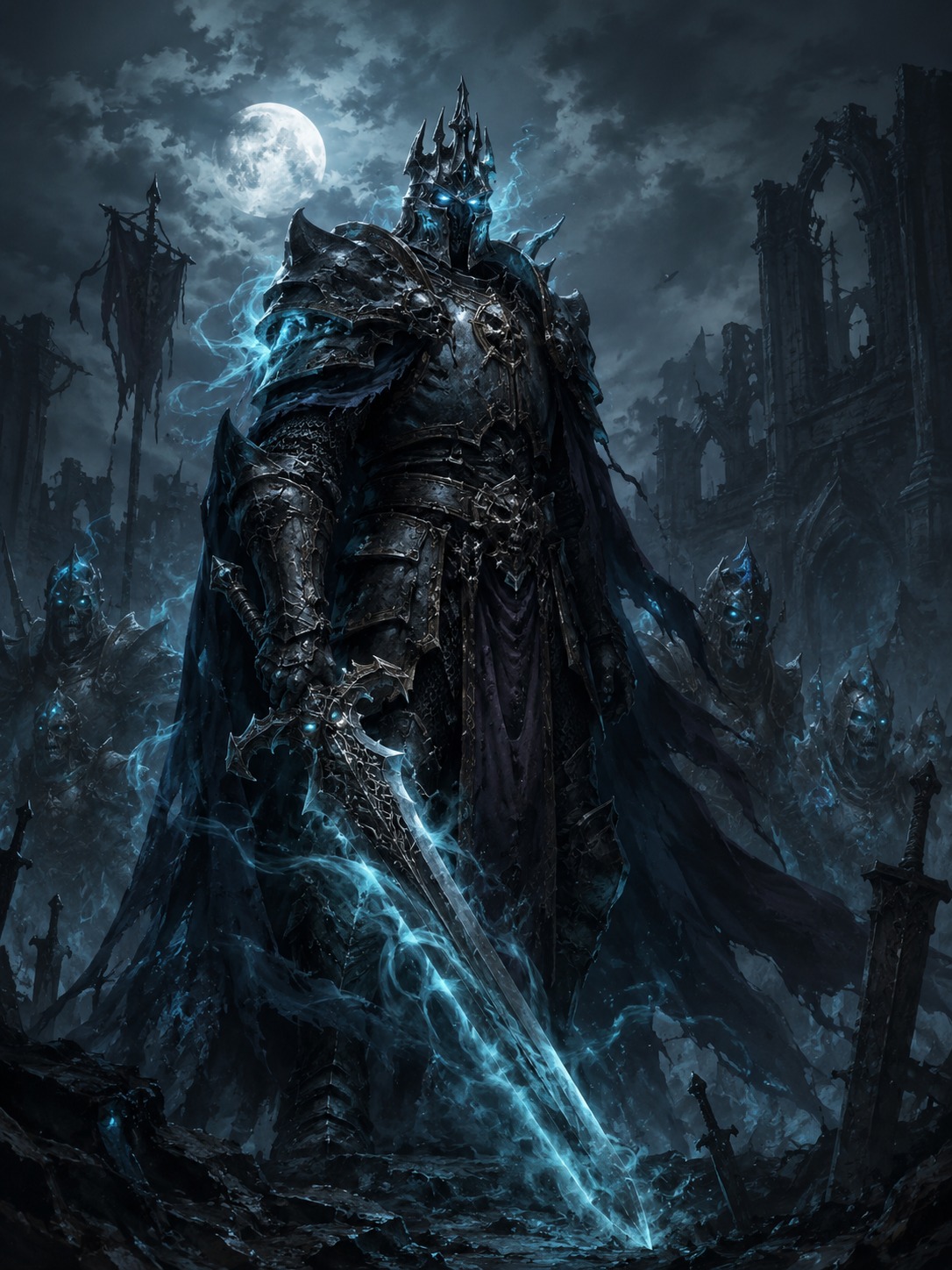
Death Knight
Death Knight · The Knight of Death — A Specter-Warrior of Cursed Blade and Black Magic
Names in Other Languages
 데스나이트한국어
Death Knight · 죽음의 기사 — 저주받은 검과 흑마법의 망령 전사
 デスナイト日本語
Death Knight · 死の騎士 — 呪われた剣と黒魔術の亡霊戦士
 死亡騎士繁體中文
Death Knight · 死亡騎士 — 受詛咒之劍與黑魔法之亡靈戰士
 TodesritterDeutsch
Death Knight · Der Ritter des Todes — Ein Geisterkrieger verfluchter Klinge und schwarzer Magie
 Chevalier de la mortFrançais
Death Knight · Le chevalier de la mort — Un spectre-guerrier de lame maudite et de magie noire
 Caballero de la muerteEspañol
Death Knight · El caballero de la muerte — Un espectro-guerrero de espada maldita y magia negra
 Cavaleiro da mortePortuguês
Death Knight · O cavaleiro da morte — Um espectro-guerreiro de lâmina amaldiçoada e magia negra
 Rycerz ŚmierciPolski
Death Knight · Rycerz śmierci — widmowy wojownik przeklętego ostrza i czarnej magii
 Рыцарь смертиРусский
Death Knight · Рыцарь смерти — призрак-воин проклятого клинка и чёрной магии
The Death Knight (English Death Knight) is the warrior-undead at the apex of modern fantasy iconography, the corpse-knight that rises after death under the broken oath of its lifetime or under a binding curse; if the lich is the apex of mage-undead, the death knight is the apex of warrior-undead. The iconographic origin lies in the medieval European Arthurian tradition of the fallen knight — Mordred in Sir Thomas Malory's Le Morte d'Arthur (1485) — and the supernatural figure of the Green Knight in the late-fourteenth-century alliterative poem Sir Gawain and the Green Knight, but the decisive canonisation was Gary Gygax's addition of the Death Knight to his AD&D Monster Manual II in July 1983. The canonical popular figure of the death knight is Lord Soth, a fallen Knight of Solamnia introduced in Margaret Weis and Tracy Hickman's 1984 D&D Dragonlance novel Dragons of Autumn Twilight, and the 2002 Blizzard Entertainment video game Warcraft III: Reign of Chaos, in which the human prince Arthas Menethil falls to become the Death Knight of the Lich King Ner'zhul, established the decisive twenty-first-century canon. The November 2008 expansion World of Warcraft: Wrath of the Lich King introduced the Death Knight as the first playable hero class in WoW, completing the gaming canon.
Origin
The iconographic origin is the medieval European Arthurian motif of the fallen knight. In the late-fifteenth-century England, the Le Morte d'Arthur (Death of Arthur), composed by Sir Thomas Malory (1415-1471) in Oxford prison in 1469-1470 and printed by William Caxton in 1485, contains in Book XXI 'The Book of the Death of Arthur' the tragedy of Mordred, the bastard son of King Arthur, betraying his father and dealing him a mortal wound at the Battle of Camlann before being slain himself — the canonical fallen-knight figure of English literature. The anonymous late-fourteenth-century Sir Gawain and the Green Knight established the supernatural-knight canon with the Green Knight who continued to live and move even after his head was severed. The decisive canonisation of the modern death knight iconography was Gary Gygax's addition of the Death Knight to AD&D Monster Manual II in July 1983: the setting that twelve dark knights were transformed into death knights by the curse of the mage Demilich Thorha and scattered across the Greyhawk world settled the canon. Margaret Weis and Tracy Hickman's Dragons of Autumn Twilight of November 1984 in which Lord Soth, the greatest knight of the Knights of Solamnia, was cursed by the gods and became a death knight for his illicit love and broken vow, becoming the eternal tragedy of Solamnia, settled the popular canonical figure.
Features
- Jet-black armour and the cold will of a wraith
- Combat prowess combining excellent swordsmanship with black magic and necromancy
- Leadership commanding undead armies
- Tragic self-awareness with vestiges of pre-fall honour
- Bound by the chain of the curse that raised it
- If the lich is the apex of mage-undead, the death knight is the apex of warrior-undead
Stories
After the Death Knight was added to AD&D Monster Manual II by Gary Gygax in July 1983 — with the setting that twelve dark knights were transformed into death knights by the curse of the mage Demilich Thorha and scattered across the Greyhawk world — the figure became the canon of modern fantasy role-playing games. In Margaret Weis and Tracy Hickman's first volume of the Dragonlance Chronicles, Dragons of Autumn Twilight (November 1984), Lord Soth, the greatest of the Knights of Solamnia, was cursed by the gods for his illicit love with the elven maiden Kit beyond his wife and his broken vow at the temple of Takhisis, becoming the death knight of Dargaard Keep: this narrative was expanded into the 1996 stand-alone novel Lord Soth by Ed Greenwood and became the decisive canonical character of the death-knight tragedy. The Dark Knight Cecil Harvey of Square's July 1991 video game Final Fantasy IV — a dark-magic-and-swordsmanship-wielding dark knight who awakens to become a paladin of light — is the canonical figure of the Japanese RPG dark knight. Blizzard Entertainment's video game Warcraft III: Reign of Chaos of 3 July 2002, in which the human prince Arthas Menethil takes up the magical sword Frostmourne and falls to become the Death Knight of the Lich King Ner'zhul, is the twenty-first-century gaming canon, and the World of Warcraft: Wrath of the Lich King expansion of 13 November 2008, in which the Death Knight became the first hero class in WoW — selling 2.8 million copies in the first twenty-four hours, a video-game launch record — completed the gaming canon.
Weakness
The death knight's weaknesses are: (1) the dissolution of the curse that raised it — in the 1983 D&D canon, the lifting of Thorha's curse, or in the 1984 Dragonlance canon, divine pardon, settles the death knight at rest; (2) the dissolution of the binding oath — the narrative in which Lord Soth, who broke his vow of the Knights of Solamnia, attains repose through true repentance at the Age of Despair, is canonical; (3) pre-fall honour and lingering attachments — the greatest weakness and also the thread of salvation — the motif that the self-awareness of having once been an honourable knight makes the death knight hesitate every time he draws his sword; (4) holy weapons and light magic — the narrative in which Cecil of the 1991 Final Fantasy IV awakens as a paladin of light and overcomes his dark self, and the 2008 Wrath of the Lich King final boss the Lich King Arthas is purified by the dawnlight sword (the light-crystal of Light's Hope Chapel) of the bearer of light Tirion Fordring, are canonical; (5) destruction of magical weapons — the canonical climactic resolution in which the breaking of Arthas's rune-blade Frostmourne severs the bondage of his soul and brings him true death.
Cultural Significance
The death knight is not merely an undead but the canonical figure of modern fantasy where Western chivalric literature, Japanese role-playing games, and American video games converge. The betrayal of Mordred and the tragedy of the Battle of Camlann in the 1485 Le Morte d'Arthur of Sir Thomas Malory established the decisive canon of the 'fallen knight' in Western chivalric literature, and the supernatural Green Knight of the thirteenth-century alliterative poem Sir Gawain and the Green Knight settled the iconography of the knight beyond death. Gary Gygax's 1983 D&D and Weis and Hickman's 1984 Dragonlance condensed this medieval chivalric tragedy into the fantasy RPG death knight, and Cecil Harvey of Square's 1991 Final Fantasy IV and Arthas Menethil of Blizzard's 2002 Warcraft III reinterpreted the death knight iconography at the twin apices of Japanese RPGs and American video games. The Skull Knight of Kentaro Miura's 1989 manga Berserk is the canonical death knight of Japanese manga. The success of the 2008 World of Warcraft: Wrath of the Lich King — about 4.6 million copies sold in its first year for 100 million US dollars in revenue — established the death knight iconography in the canonical position of twenty-first-century global gaming culture. In 2017, the American gaming magazine Game Informer ranked Wrath of the Lich King first in the greatest fifty game expansions in history.
In Popular Culture
- Sir Thomas Malory, Le Morte d'Arthur, Mordred (1485) — Western canon of fallen-knight literature
- Sir Gawain and the Green Knight (late fourteenth century) — English-literature canon of the supernatural knight
- Gary Gygax, AD&D Monster Manual II (1983) — canonisation of the death knight in modern fantasy RPG
- Margaret Weis and Tracy Hickman, Dragons of Autumn Twilight, Lord Soth (1984) — canonical character of death-knight tragedy
- Kentaro Miura, manga Berserk, Skull Knight (1989) — death knight canon of Japanese manga
- Square, Final Fantasy IV, Cecil Harvey (1991) — canon of the Japanese RPG dark knight
- Blizzard, Warcraft III: Reign of Chaos, Arthas Menethil (2002) — twenty-first-century gaming death-knight canon
- Blizzard, World of Warcraft: Wrath of the Lich King (2008) — canon of the death knight as playable hero class
- Net-Ease, Diablo IV, Necromancer (2023) — successor of the necromancy undead class
Trivia
The term Death Knight first appeared as a canonical monster classification in pages 17-18 of Gary Gygax's AD&D Monster Manual II of July 1983 — there was no Death Knight entry in the 1981 Fiend Folio, and only the lich existed in the 1977 first-edition Monster Manual. Lord Soth in the first volume of the 1984 Dragonlance Chronicles, Dragons of Autumn Twilight, is the first canonical character into which Margaret Weis and Tracy Hickman incorporated Gygax's 1983 Death Knight setting, and Ed Greenwood's 1996 spin-off novel Lord Soth became the decisive canonical text of the death-knight tragic figure. The World of Warcraft: Wrath of the Lich King, released on 13 November 2008, sold 2.8 million copies in its first twenty-four hours and 4 million in its first month, setting a video-game launch record and decisive event in the popularisation of death-knight iconography. The Death Knight character launch trailer announced at the 2008 BlizzCon is among the most popular game videos on YouTube ever, exceeding one hundred million views. The Skull Knight of Kentaro Miura's Berserk first appeared in 1989 and has continued as the canonical Japanese dark-fantasy death-knight figure until Miura's death in 2021 — the manga continues in serialisation, having reached volume 41 under Kouji Mori after the author's death.
Related
Lich
Lich · The Undying Mage — An Archmage Who Refused Death by Sealing the Soul
Revenant
Revenant · The Vengeful Returned — A Corpse Risen From the Grave for One Purpose
Wraith
Wraith · The Vengeful Specter — A Dark Spirit That Lost Its Form, Leaving Only Hatred
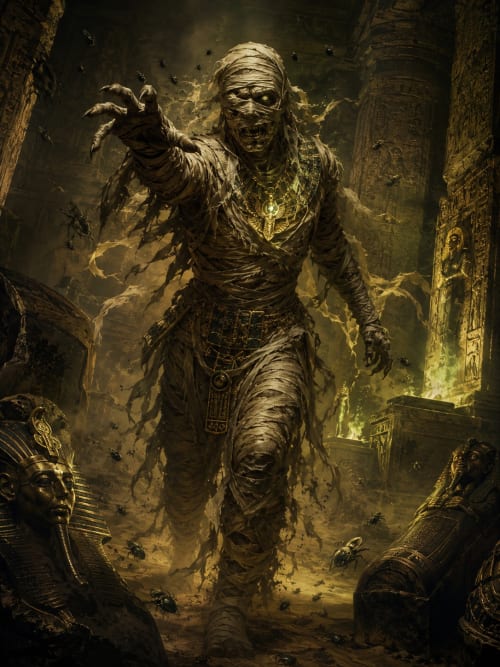
Mummy
Mummy · The Bandaged Dead — A Cursed Corpse Guarding the Tomb
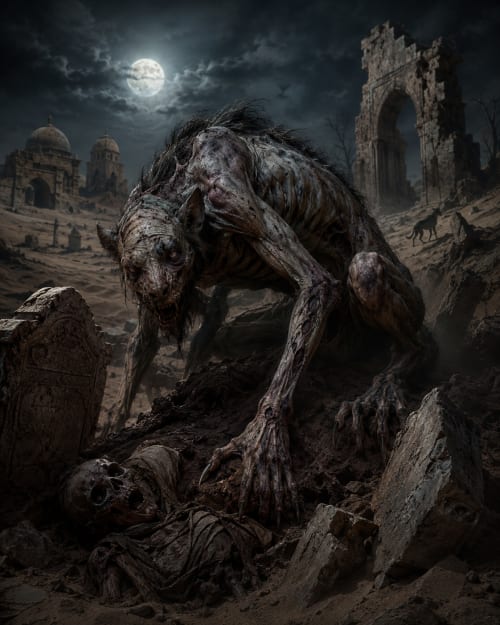
Ghoul
Ghoul · The Corpse-Eater — A Desert Monster That Digs Up and Devours the Dead
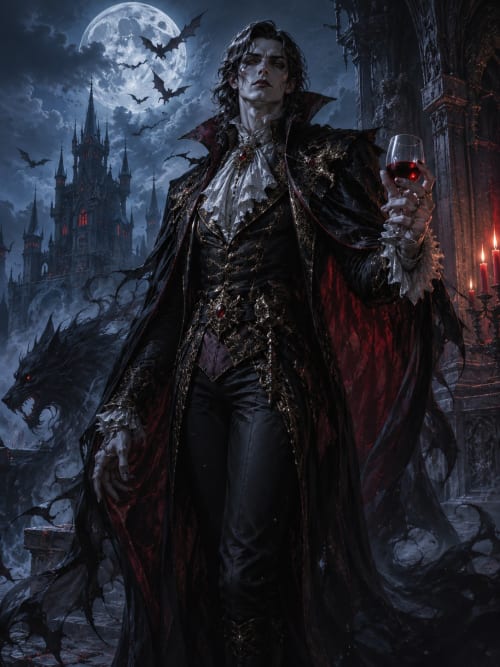
Vampire
Vampire · The Bloodsucker — Night's Aristocrat Living Immortal on the Blood of the Living
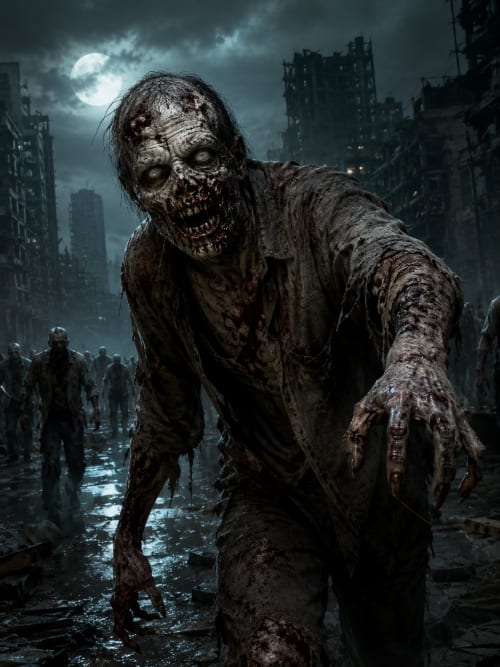
Zombie
Zombie · The Reanimated Corpse — Mindless Man-Eating Hordes of the Dead

Skeleton Warrior
Skeleton Warrior · Undead Soldier — A warrior risen from death and granted unlife
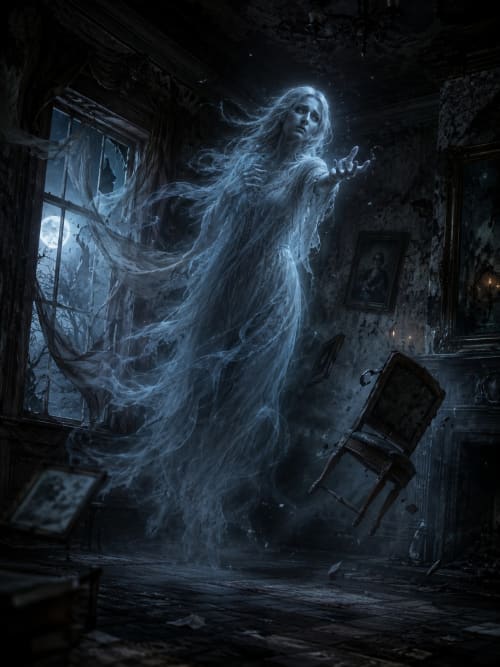
Ghost
Ghost · The Wandering Spirit — A Soul Bound to the World by Attachment and Unfinished Story
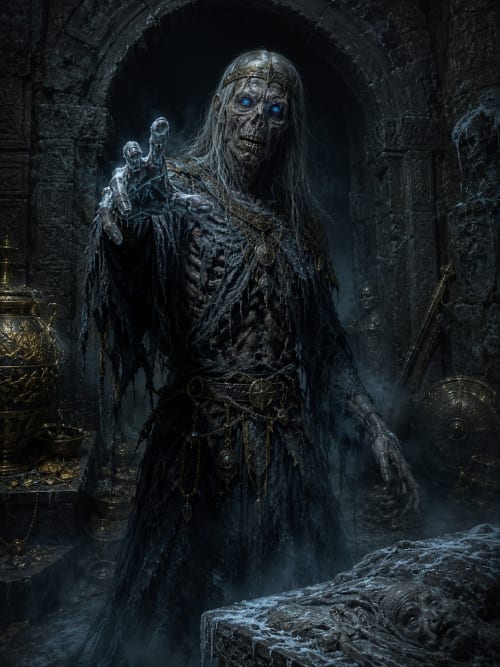
Wight
Wight · The Barrow Dead — A Cursed Corpse Guarding the Tomb's Treasure
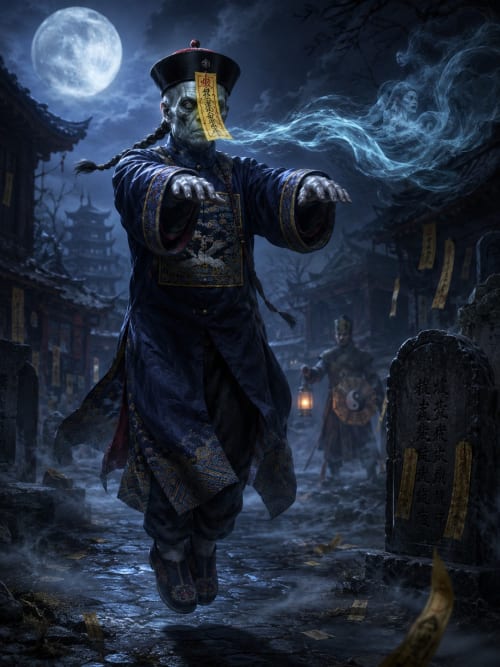
Jiangshi
Jiangshi · The Chinese Hopping Corpse — A Stiff, Leaping Corpse-Spirit
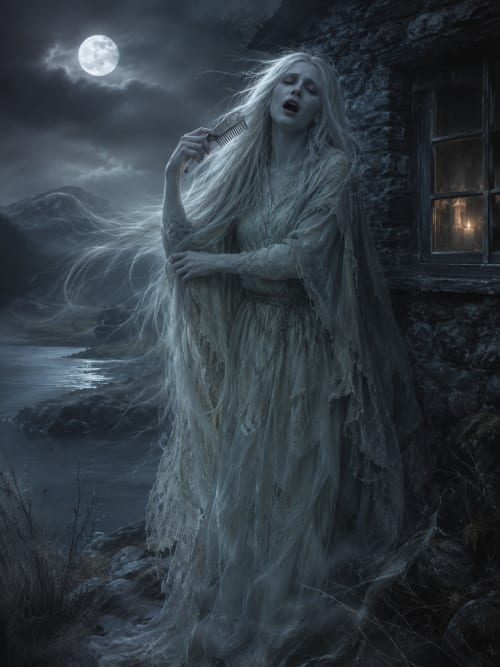
Banshee
Banshee · The Wailing Death-Herald — Lament of Celtic Lore