Jiangshi
Jiangshi · The Chinese Hopping Corpse — A Stiff, Leaping Corpse-Spirit
Names in Other Languages
 강시한국어
강시한국어Jiangshi · 중국 강시 — 뻣뻣하게 튀어 다니는 시체 요괴
 キョンシー日本語
Jiangshi · 中国の僵尸 — 硬直して跳ね回る死体妖怪
 殭屍(道教)繁體中文
Jiangshi · 中國殭屍 — 僵硬跳行的屍體妖怪
 JiangshiDeutsch
Jiangshi · Der chinesische Hüpfleichnam — Ein steifer, springender Leichengeist
 JiangshiFrançais
Jiangshi · Le cadavre sauteur chinois — Un esprit-cadavre raide et bondissant
 JiangshiEspañol
Jiangshi · El cadáver saltarín chino — Un espíritu-cadáver rígido y brincador
 JiangshiPortuguês
Jiangshi · O cadáver saltitante chinês — Um espírito-cadáver rígido e saltitante
 JiangshiPolski
Jiangshi · Chiński skaczący trup — sztywny, skaczący duch-trup
 ЦзяншиРусский
Jiangshi · Китайский прыгающий труп — окоченелый, скачущий дух-труп
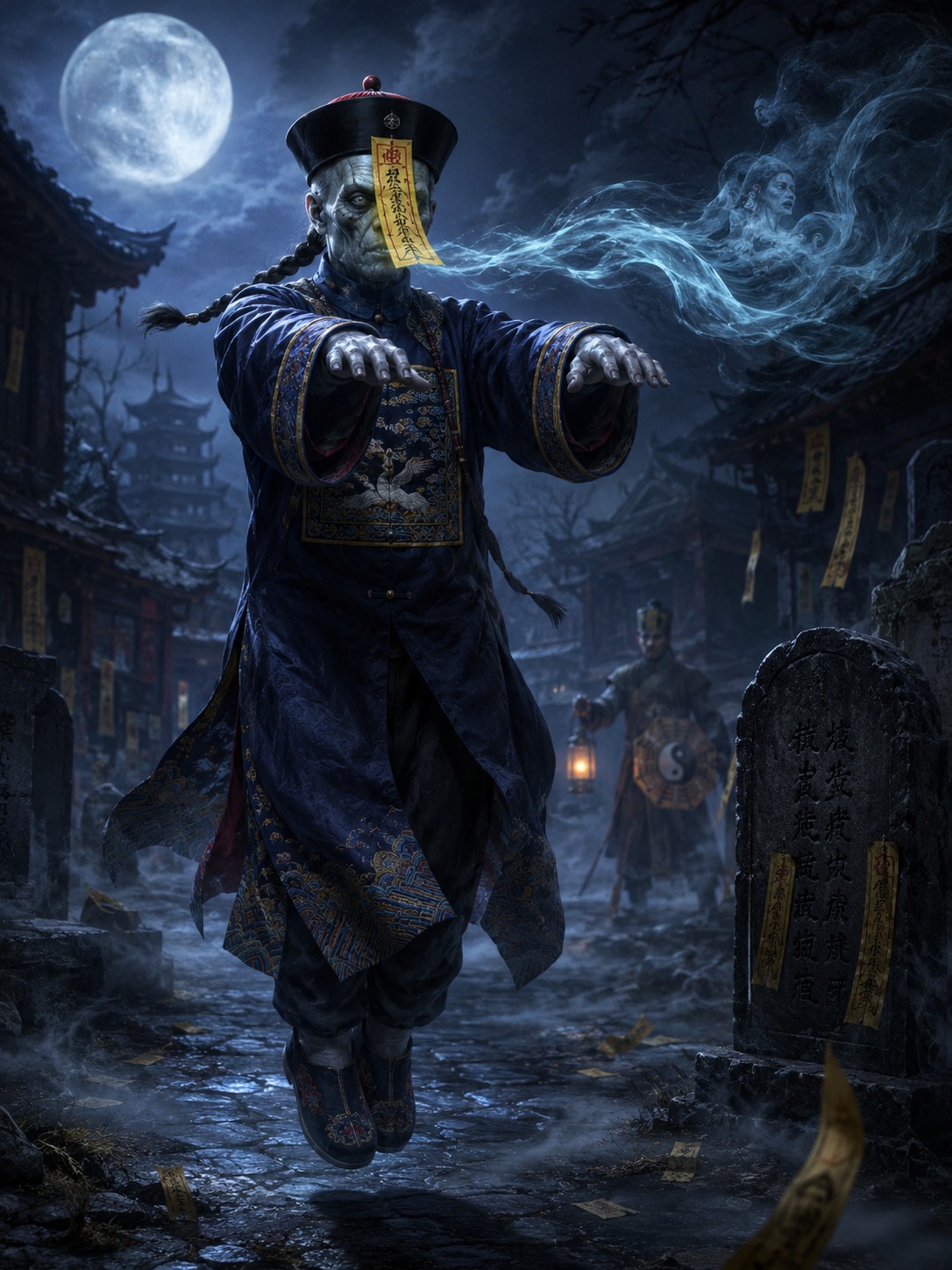
The Jiangshi (Chinese jiangshi, 'stiff corpse') is the Chinese corpse-yokai of an unburied dead body grown rigid and reanimated. The figure is defined by post-mortem rigor that holds its arms outstretched, by the canonical hopping motion in which it moves with both feet together, by the Qing-dynasty Manchu official's robe (magua) and round cap, and by its qi-draining (xi jing) nature: it absorbs the life-energy of the living through its breath. The etymology is jiang ('stiff') plus shi ('corpse'), so 'stiff corpse'. The figure entered formal Chinese literature in the late eighteenth century through Yuan Mei's Zibuyu (1788) and Ji Yun's Yuewei caotang biji (1789-1798), the Qing-era biji notation collections. The iconographic root is the Hunan Xiangxi corpse-walking custom (ganshi), in which a Daoist sorcerer was said to lead the bodies of those who died abroad home through the night using talismans. Lau Koon-wai's 1985 Hong Kong film Mr. Vampire, starring Lam Ching-ying, decisively fixed the modern hopping-jiangshi iconography and launched the Hong Kong jiangshi-film boom of 1985-1992.
Origin
The Chinese characters for jiangshi exist in both traditional and simplified forms, both combining jiang ('stiff, rigid') with shi ('corpse'). The earliest substantive literary attestations are the late-eighteenth-century Qing-era biji notation collections: Yuan Mei (1716-1797), Zibuyu (also known as Xin Qixie, c. 1788), and Ji Yun (1724-1805), Yuewei caotang biji (1789-1798). Both fix the image of an unburied corpse that, having grown rigid, returns to life and harms the living. Scholars trace the iconography to the Hunan Xiangxi corpse-walking custom (ganshi or zoushi), in which a Daoist sorcerer was said to lead, by means of talismans, the bodies of those who died abroad through the night in single file to their home villages, a practice reported as actual folklore in late-Qing nineteenth-century accounts. The visual iconography of the Manchu official's robe came together in early-twentieth-century Shanghai theatre and cinema, after the fall of the Qing, and Lau Koon-wai's 1985 Hong Kong film Mr. Vampire (Geung si sin sang) decisively fixed the visual canon.
Features
- Rigid post-mortem posture with arms outstretched forward
- Hopping locomotion with both feet held together
- Qing-dynasty Manchu official's robe (magua) and round cap
- Drains qi (life-energy) from the living through its breath
- Detects the living by the sound of their breath — holding one's breath conceals one
- Halted by a Daoist talisman (fu) affixed to the forehead
Stories
Lau Koon-wai's 1985 Hong Kong film Mr. Vampire (Geung si sin sang, produced by Sammo Hung, starring Lam Ching-ying as the Daoist priest) established the visual canon of the modern jiangshi. The Mr. Vampire series, from 1985 to 1992, drove the Hong Kong jiangshi-film boom; Lam Ching-ying's Daoist iconography became the genre standard. From the late 1980s the film genre was exported to Japan, where the Japanese kana spelling kyonshi was fixed, the 1986 Nikkatsu children's film Kodomo no Kyonshi and the 1988 NHK children's drama Kyonshi series brought the figure into Japanese children's culture. The jiangshi appears in Capcom's 1996 Soul Edge and the Dynasty Warriors series, in Western tabletop games (notably as the 'hopping vampire' of Dungeons and Dragons), and in modern Chinese cinema such as Juno Mak's Rigor Mortis (2013), a Hong Kong revival that paid homage to Mr. Vampire.
Weakness
The jiangshi's weaknesses are exceptionally well codified in Qing-dynasty biji literature and Daoist folk practice. The principal weakness is the Daoist talisman (fu), a strip of yellow paper inscribed in cinnabar ink with mantras: affixed to the jiangshi's forehead, it stops the creature on the spot, the central device of Mr. Vampire (1985). The second weakness is the breath-detection limit: the jiangshi locates the living by the sound of their breath, so holding one's breath conceals one from it, a key set-piece of the 1985 film. The third is folk pharmacology: glutinous rice (nuomi, used in preserving corpses), peachwood swords and stakes, mirrors (which give the creature a shock of self-recognition), chicken blood, and pearl powder are all canonical jiangshi-repelling tools. The fourth is the limit of posture: the rigid corpse cannot turn quickly, and stepping sharply aside leaves the jiangshi unable to follow. The fifth is sunlight, an addition standardised after Mr. Vampire (1985).
Cultural Significance
The jiangshi is not merely a corpse-yokai but the marriage of Qing-dynasty Daoist folk practice with the late-twentieth-century Hong Kong film industry. Qing-era biji literature laid the iconographic ground, and the Hunan Xiangxi corpse-walking custom united with the Daoist sorcerer's talisman ritual to fix the jiangshi-against-Daoist combat pattern. Lau Koon-wai's 1985 Mr. Vampire decisively visualised the hopping-jiangshi iconography and the talisman duel; the thirty-odd Hong Kong jiangshi films of 1985-1992 became the canon of East Asian horror. Lam Ching-ying, the Daoist priest of the Mr. Vampire series, was the absolute visual icon of the genre until his death in 1997. In Japan, late-1980s import fixed the kana spelling kyonshi and brought the figure into children's culture through the 1986 Nikkatsu film and the 1988 NHK children's drama series. Juno Mak's Rigor Mortis (2013) signalled the twenty-first-century revival of the jiangshi film, paying explicit homage to Mr. Vampire.
In Popular Culture
- Yuan Mei, Zibuyu (Xin Qixie), c. 1788 — Qing-era biji establishment of the jiangshi iconography
- Ji Yun, Yuewei caotang biji (1789-1798) — substantive Qing-era literary attestation
- Lau Koon-wai (director), Lam Ching-ying (star), Mr. Vampire (Geung si sin sang, 1985) — decisive visual canon
- Mr. Vampire series (1985-1992) — Hong Kong jiangshi-film boom
- Nikkatsu, Kodomo no Kyonshi (children's film, 1986) — Japanese children's culture entry
- NHK, Kyonshi children's drama series (1988) — Japanese popular culture
- Juno Mak (director), Rigor Mortis (Geung si, 2013) — twenty-first century revival
Trivia
The Chinese characters for jiangshi exist in traditional and simplified forms; both combine 'stiff' with 'corpse'. The Hunan Xiangxi corpse-walking custom (ganshi) is reported as actual folklore in late-Qing nineteenth-century accounts, in which a Daoist sorcerer was said to lead, by means of talismans, the bodies of those who died abroad through the night in single file to their home villages; anthropological reporting suggests that in practice the bodies were dismembered and transported by porters in adjusted Daoist-procession garb. Lam Ching-ying (1952-1997), the Daoist priest of the Mr. Vampire films, was the absolute visual icon of the jiangshi-film genre; his death in 1997 plunged the genre into a long quiet. The jiangshi enters English as 'hopping vampire' (or sometimes 'Chinese hopping vampire'), used in some Dungeons and Dragons monster manuals. The Japanese kana spelling kyonshi was fixed by the Japanese import of Mr. Vampire in 1985 and survives in the 1986 Nikkatsu children's film and the 1988 NHK children's drama series.
Related
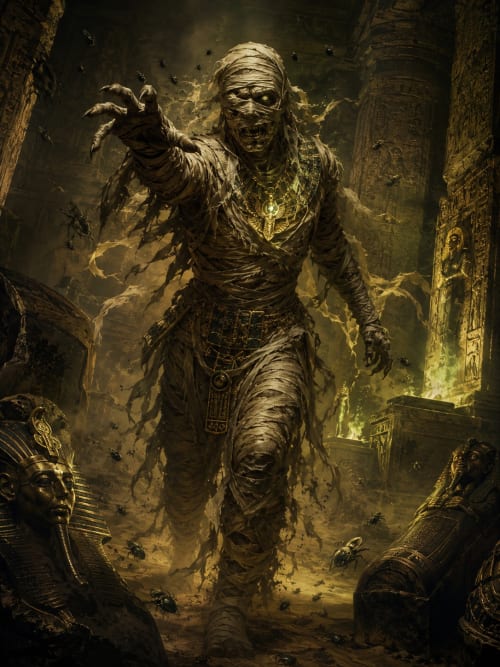
Mummy
Mummy · The Bandaged Dead — A Cursed Corpse Guarding the Tomb
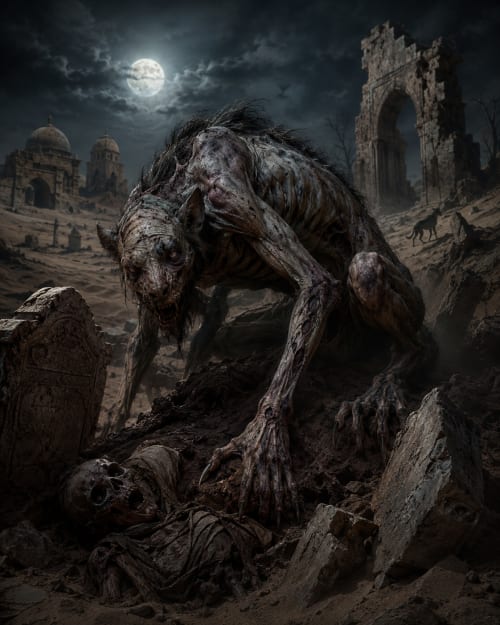
Ghoul
Ghoul · The Corpse-Eater — A Desert Monster That Digs Up and Devours the Dead
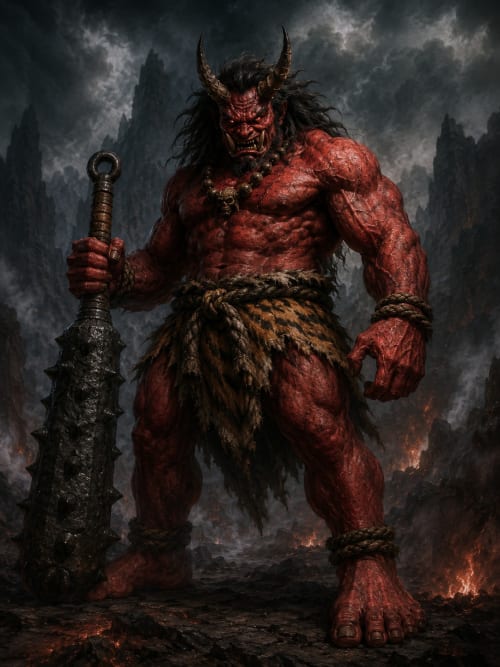
Oni
Oni · The Japanese Demon — A Horned, Hulking Man-Eating Ogre
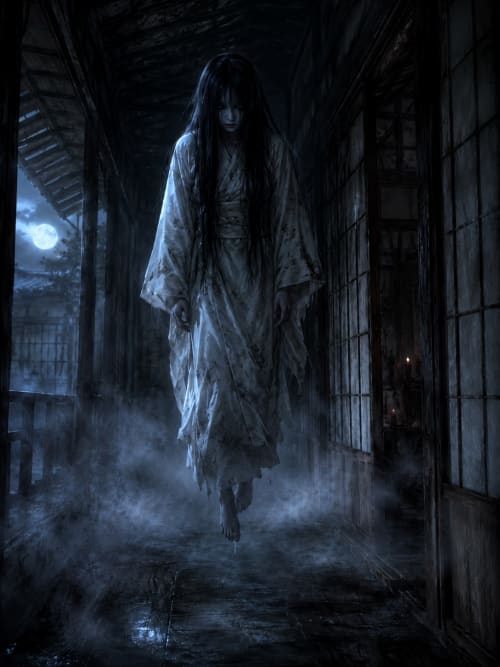
Onryo
Onryo · The Japanese Vengeful Ghost — A Cursing Specter Returned in Grudge
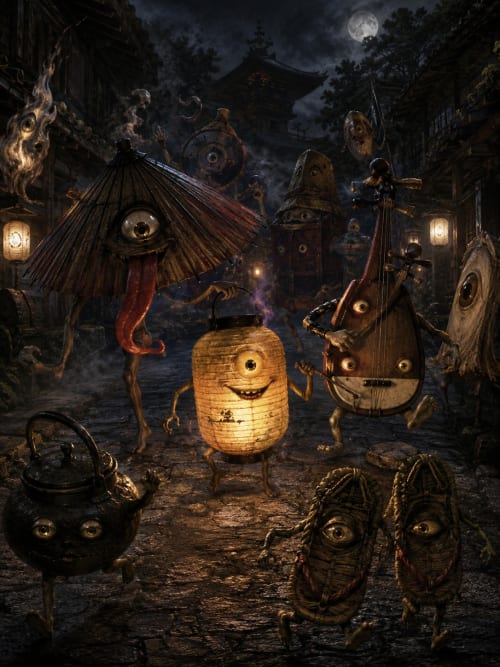
Tsukumogami
Tsukumogami · The Tool Yokai — A Spirit Dwelling in a Hundred-Year-Old Object
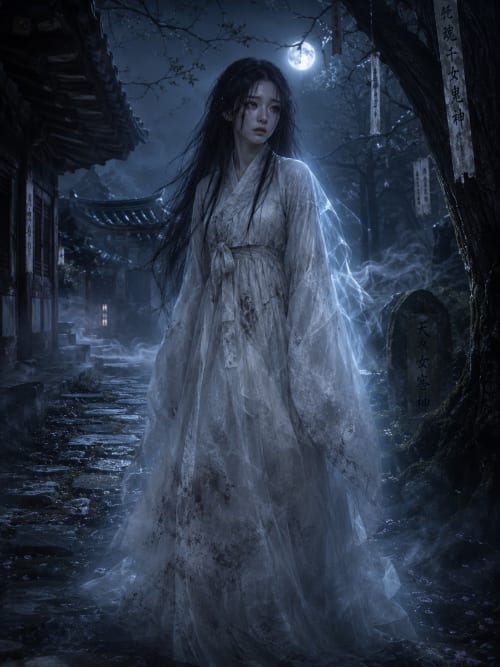
Cheonyeo-gwisin
Cheonyeo-gwisin · The Grudge-Bound Maiden Ghost — A Korean Spirit Wandering With Unresolved Han
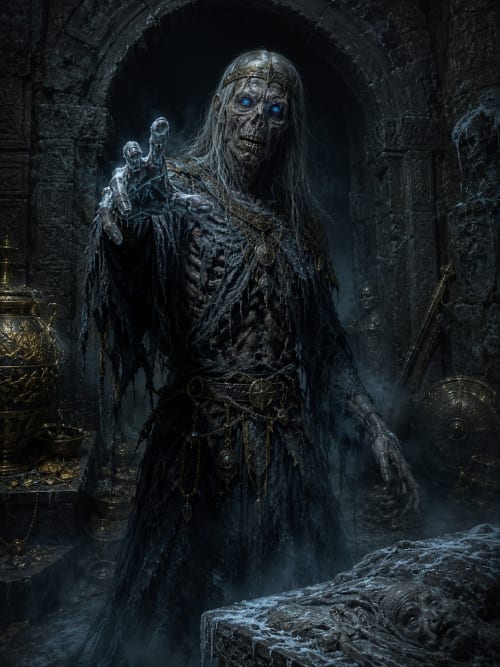
Wight
Wight · The Barrow Dead — A Cursed Corpse Guarding the Tomb's Treasure
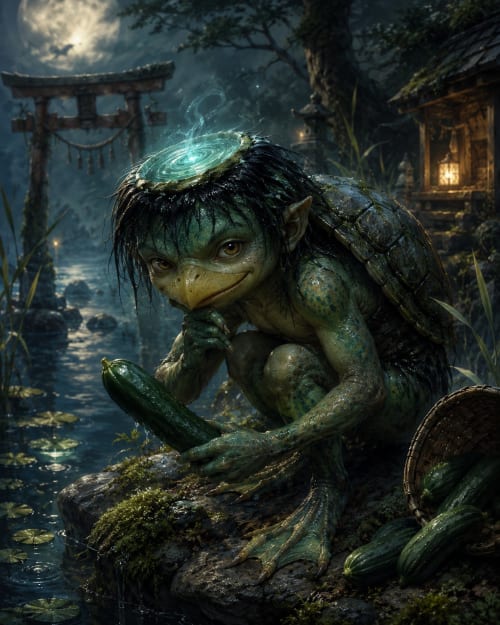
Kappa
Kappa · The Japanese Water Yokai — A River Prankster With Power in a Head-Dish

Banshee
Banshee · The Wailing Death-Herald — Lament of Celtic Lore
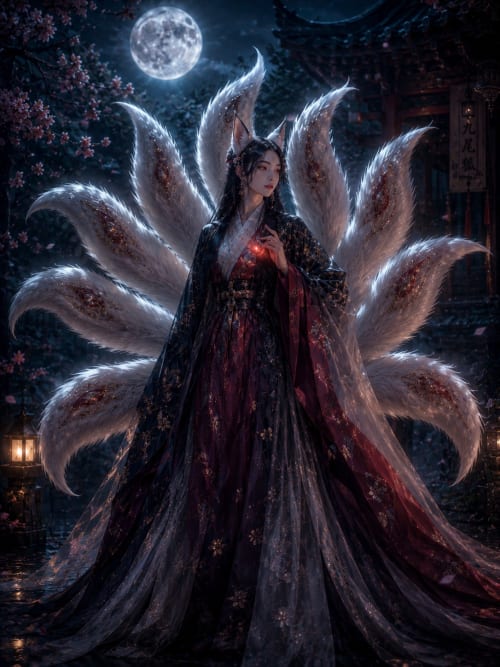
Gumiho
Gumiho · Nine-Tailed Fox — The Bewitching Fox-Spirit of East Asia
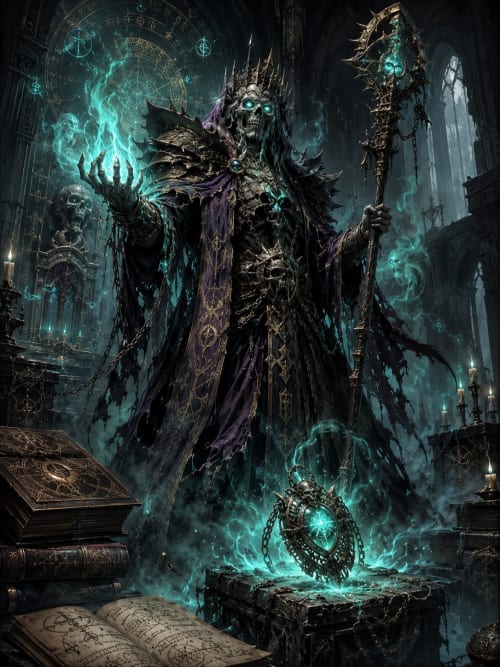
Lich
Lich · The Undying Mage — An Archmage Who Refused Death by Sealing the Soul
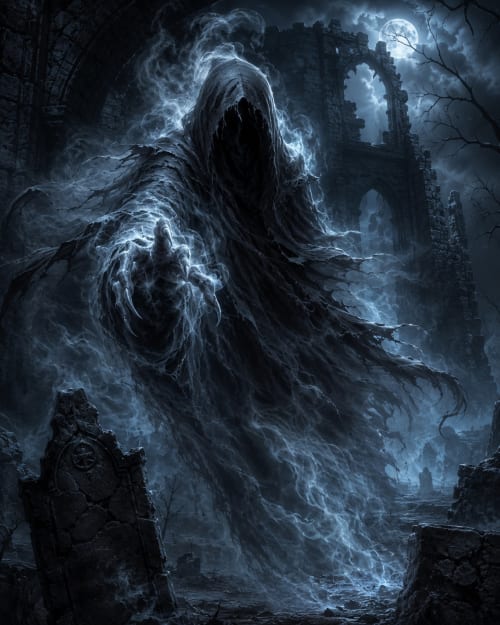
Wraith
Wraith · The Vengeful Specter — A Dark Spirit That Lost Its Form, Leaving Only Hatred