LoreArc

Epic

34 items tagged with "Epic"

🐉Spirits(6)
oread-spirit
📸 2

Oread

Spirit King

Mountain Nymph of Greek Mythology

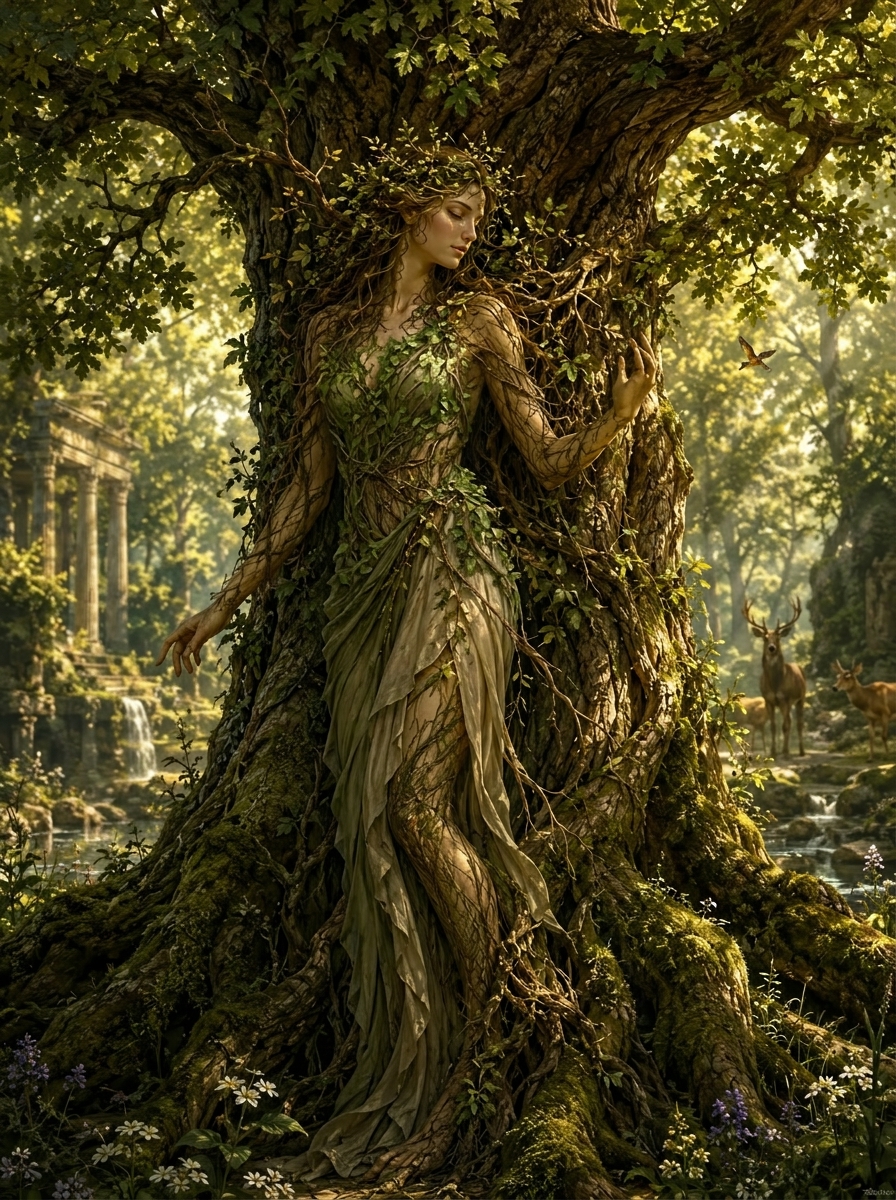
The Oread (Greek Oreias, plural Oreiades, English Oread) is the mountain nymph (Greek nymphe) of Greek mythology, who dwells in mountains and caves, frequently depicted as a companion of the hunting goddess Artemis — the decisive canonical iconographic figure of the Greek-mythological mountain spirit. The etymology derives from the Greek oros ('mountain'), and within the classification of nymphs — Naiad (freshwater), Oceanid (ocean), Nereid (salt sea), Dryad (tree), Oread (mountain) — the Oread is the decisive canon of the mountain. The decisive textual canon is the origin in line 420 of Book 6 of the Iliad of the eighth-century BCE Homer (Homeros) — that the mountain nymphs planted elm trees by the grave of Eetion, father of Andromache — and in lines 615-617 of Book 24 — that the mountain nymphs danced on Mount Sipylos after the death of the children of Niobe — the origin of the mountain-nymph iconography, and the decisive canon is the Echo and Narcissus canon in lines 339-510 of Book 3 of the Metamorphoses (Metamorphoses) of the Roman poet Ovid (Publius Ovidius Naso, 43 BCE - 17 CE) of c. 8 CE — in which the Oread mountain nymph Echo loved the beautiful youth Narcissus unrequitedly but, by the curse of Hera, could only repeat the last words of others, and ultimately became the mountain echo (meta-echo) — the decisive culminating canon of the Latin-literary Oread. The 1903 painting Echo and Narcissus by the British Pre-Raphaelite painter John William Waterhouse (1849-1917), held by the Walker Art Gallery in Liverpool, Britain, established the visual canon of the Oread in the nineteenth-century Victorian era.

naiad-spirit
📸 2

Naiad

Spirit King

Freshwater Nymph of Greek Mythology

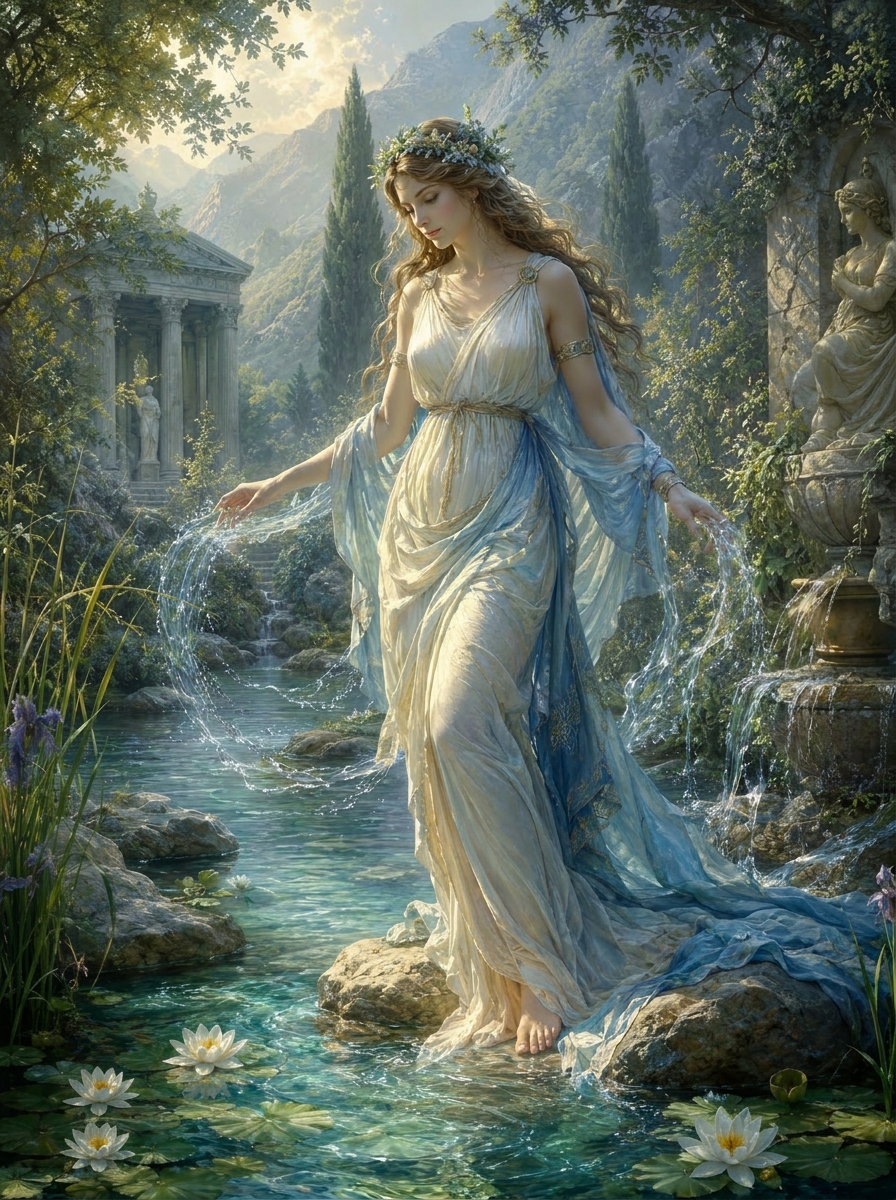
The Naiad (Greek Naias, plural Naiades, English Naiad) is the freshwater nymph (Greek nymphe) who dwells in the freshwater (springs, rivers, lakes, wells) of Greek mythology, in the form of a beautiful human female, embodying the divinity of the freshwater source — the decisive canonical iconographic figure of Greek-mythological nature spirits. The etymology derives from the Greek verb naein ('to flow'), and within the four-fold classification of nymphs — Naiad (freshwater), Oceanid (Oceanids, ocean), Nereid (Nereids, salt sea), and Dryad (Dryads, tree) — the Naiad is the decisive canon of freshwater. The decisive textual canon is in the Theogony (Theogonia) of the Greek poet Hesiod (Hesiodos), c. 700 BCE — lines 364-370, the canon of the 3,000 sisters Oceanids and 3,000 brothers River-gods (Potamoi) born to the river-god Oceanus (Okeanos) and his sister Tethys — is the decisive textual canon of the Naiad, and the river nymphs appear decisively in Books 14 and 20 of the Iliad and Books 13 and 17 of the Odyssey by Homer (Homeros) of the eighth century BCE. The Naiad Castalia of the Castalian Spring (Kastalia) by the Temple of Apollo at Delphi in Greece — the canonical inspiration of poetic prophecy — is the most decisive individual Naiad, and the 1896 painting Hylas and the Nymphs by the British Pre-Raphaelite painter John William Waterhouse (1849-1917) established the visual canon of the Naiad in the nineteenth-century Victorian era.
ignis-fatuus

Ignis Fatuus

Spirit King

Latin 'Foolish Fire,' Scientific Name for Will-o'-the-Wisp

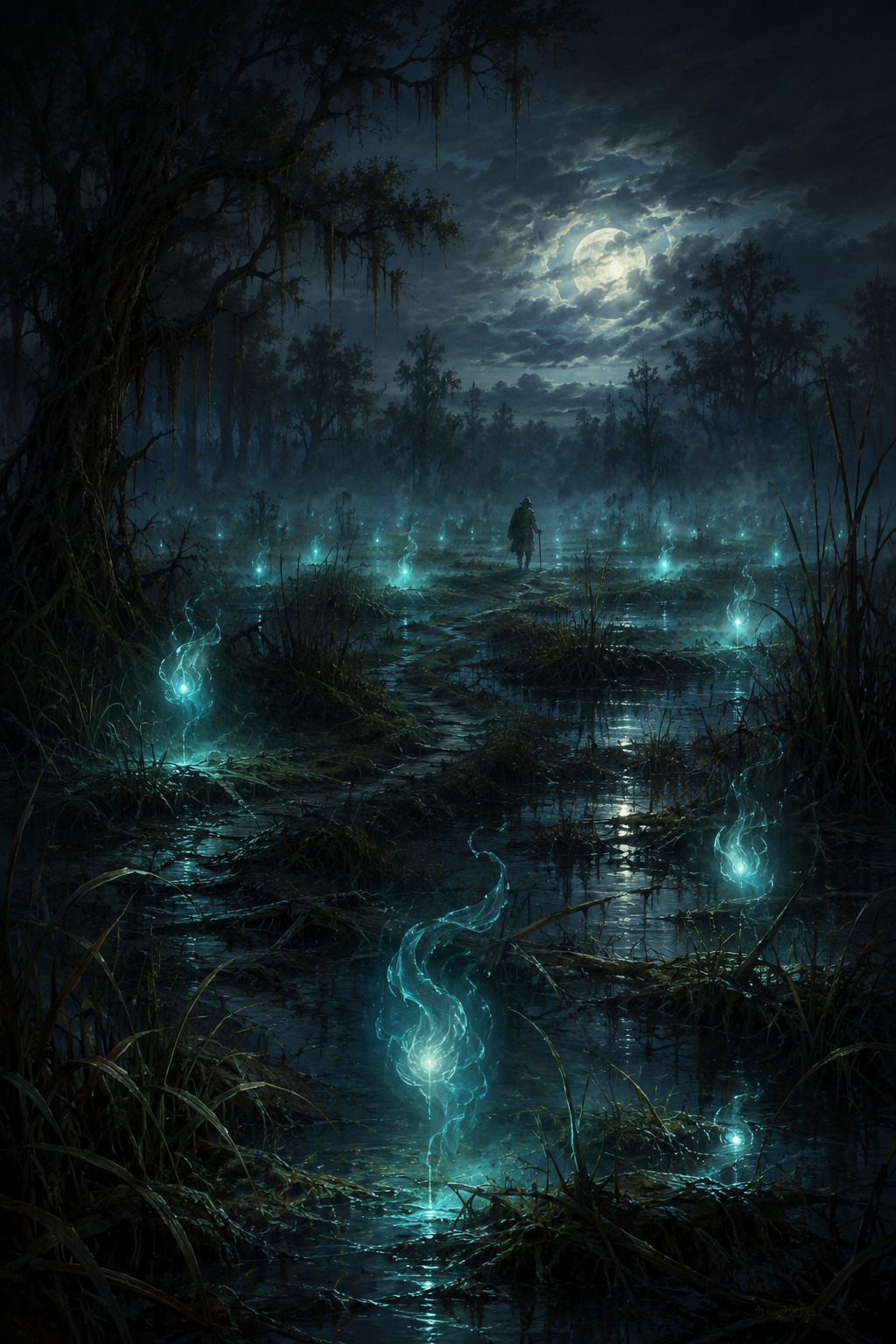
The Ignis Fatuus (Latin ignis fatuus, English ignis fatuus/will-o'-the-wisp, German Irrlicht, French feu follet) is the canonical scientific name for the natural-phosphorescence phenomenon in marshes — Latin 'foolish fire' (ignis 'fire' + fatuus 'foolish') — and the canonical iconography of medieval European folklore and English literature, the blue light presumed to be the natural ignition of marsh methane (CH4) and phosphine (PH3) that lures travelers and causes them to lose their way. The etymology is the combination of the Latin ignis ('fire') and fatuus ('foolish'), and since appearing in the Natural History (Naturalis Historia) of the Roman naturalist Pliny the Elder (Plinius Maior, 23-79 CE) of the 1st century, it settled as the decisive scientific name in 16th-18th-century natural histories. The decisive textual canon is the canon of Act 3 Scene 3 of the historical play Henry IV, Part 1 of the British William Shakespeare (1564-1616) of 1597 — in which Sir Falstaff compares Bardolph's red nose to 'ignis fatuus or a ball of wildfire' — the decisive English-literary entry, and the decisive poetic canon is the canon of lines 634-642 of Book 9 of the epic Paradise Lost of the British poet John Milton (1608-1674) of 1667 — comparing Satan's seduction of Eve to the marsh ignis fatuus — the decisive English-literary canon. The Will-o-Wisp of the 1977 D&D Monster Manual by Gygax of TSR in the USA — consistent through to 5e (5th Edition) of 2014 — is the decisive canon of the modern fantasy RPG will-o'-the-wisp.

ariel-spirit
📸 2

Ariel

Spirit King

Air Spirit from Shakespeare's The Tempest

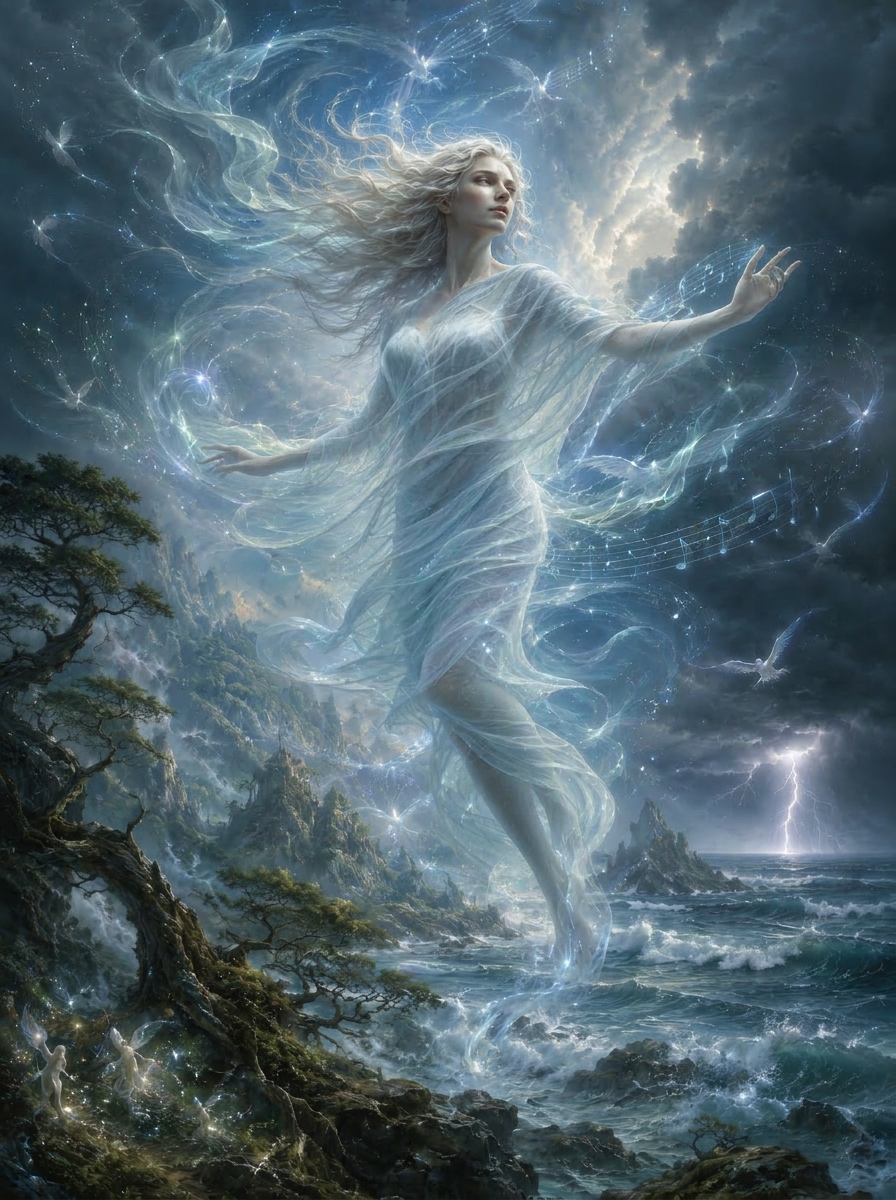
Ariel (English Ariel, Hebrew Ariel ('lion of God' or 'messenger of God'), Latin Ariel) is the air spirit in the last solo play The Tempest of 1611 by the English playwright William Shakespeare (1564-1616), the faithful servant of the sorcerer Prospero who, in invisible form, freely commands tempests, illusions, and music — the decisive canonical iconographic figure of the English-literary air spirit. The etymology derives from the Hebrew Ariel ('lion of God' or 'messenger of God') — the alternative name of Jerusalem in Isaiah 29:1-2 of the Old Testament — and in the European Kabbalistic mysticism of the fourteenth to sixteenth centuries, Ariel was canonised as the angel of the air element (Air) among the seventy-two angels of the Shem HaMephorash, decisively recorded in Book 3 of the De Occulta Philosophia Libri Tres of the German mystic Heinrich Cornelius Agrippa (1486-1535) of 1533. The decisive canon is Shakespeare's play The Tempest, premiered on 1 November 1611 at Whitehall Palace in London, England (published in the First Folio Volume 1 of 1623) — the plot in which Ariel, who had been imprisoned in a pine tree by the witch Sycorax for twelve years, is rescued by Prospero and bound to serve him for twelve years in exchange for the promise of freedom (Acts 1.2 to 4) — is the decisive canon of the English-literary air spirit. The sylph Ariel in the satirical poem The Rape of the Lock of 1714 by Alexander Pope (1688-1744) extended the eighteenth-century English-literary air-spirit canon, and the Air Elemental and Sylph canon of the 1977 D&D Monster Manual by Gary Gygax of TSR in the USA is the decisive canonical iconography of the modern fantasy RPG air spirit.

phoenix-spirit
📸 2

Phoenix Spirit

Spirit King

Spirit Form of the Immortal Phoenix

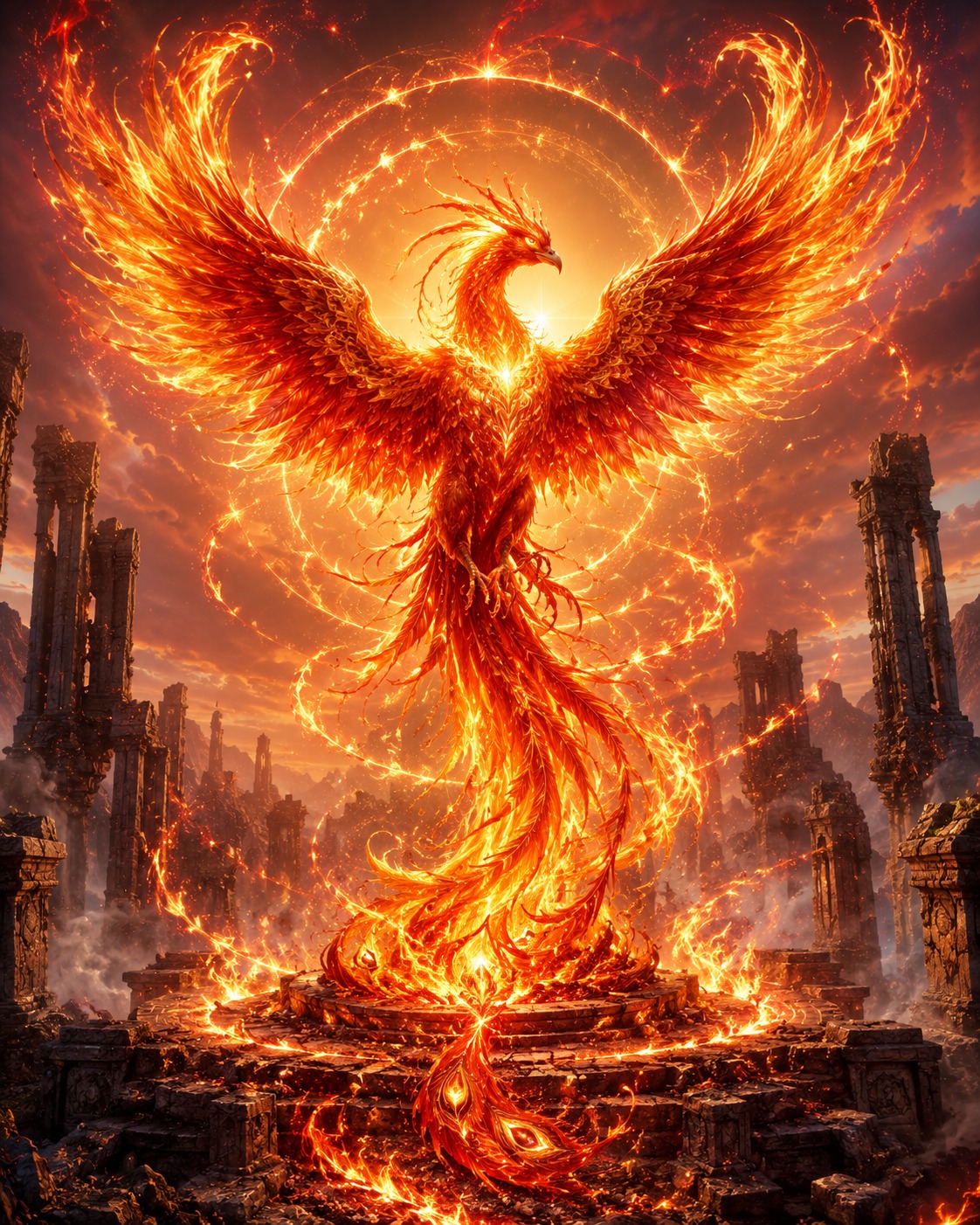
The Phoenix Spirit (Greek Phoinix, Latin Phoenix, English Phoenix) is the canonical iconographic figure of the immortal flame-bird — adapting the Egyptian Bennu (Bennu) and the Greek Phoenix tradition into the spirit category — that immolates itself every 500 or 1000 years and is reborn from the ashes. The etymology is presumed from the Greek Phoinix (Greek 'crimson' or 'Phoenician bird'), and the bennu ('the one that rises') of ancient Egypt — the canonical sacred bird of the resurrection of the sun god Ra and Osiris of Heliopolis — is the decisive origin of the Greek Phoenix iconography. The decisive textual canon is Chapter 73 of Book 2 of the Histories (Historiai) of the Greek historian Herodotus (Herodotus, c. 484-425 BCE) of the 5th century BCE — the testimony of Egyptian priests of seeing the Phoenix at the Sun Temple of Heliopolis and the canon that every 500 years the Phoenix comes from Arabia to Heliopolis carrying the corpse of its father Phoenix in a myrrh egg — the decisive canon, and the decisive Latin-literary canon is the canon of lines 392-407 of Book 15 of the Metamorphoses of the Roman poet Ovid (Publius Ovidius Naso, 43 BCE - 17 CE) of c. 8 CE — the 1000-year cyclic self-immolation and rebirth from the ashes — the decisive canon. The decisive modern canon is the Headmaster Dumbledore's phoenix Fawkes of the Harry Potter (Harry Potter) series of the British author J. K. Rowling (J. K. Rowling, b. 1965) of 1997-2007 — first appearing in Chapter 12 of Harry Potter and the Chamber of Secrets of 1998 — the decisive culminating work of the 21st-century global Phoenix canon.

🐉Monsters(4)