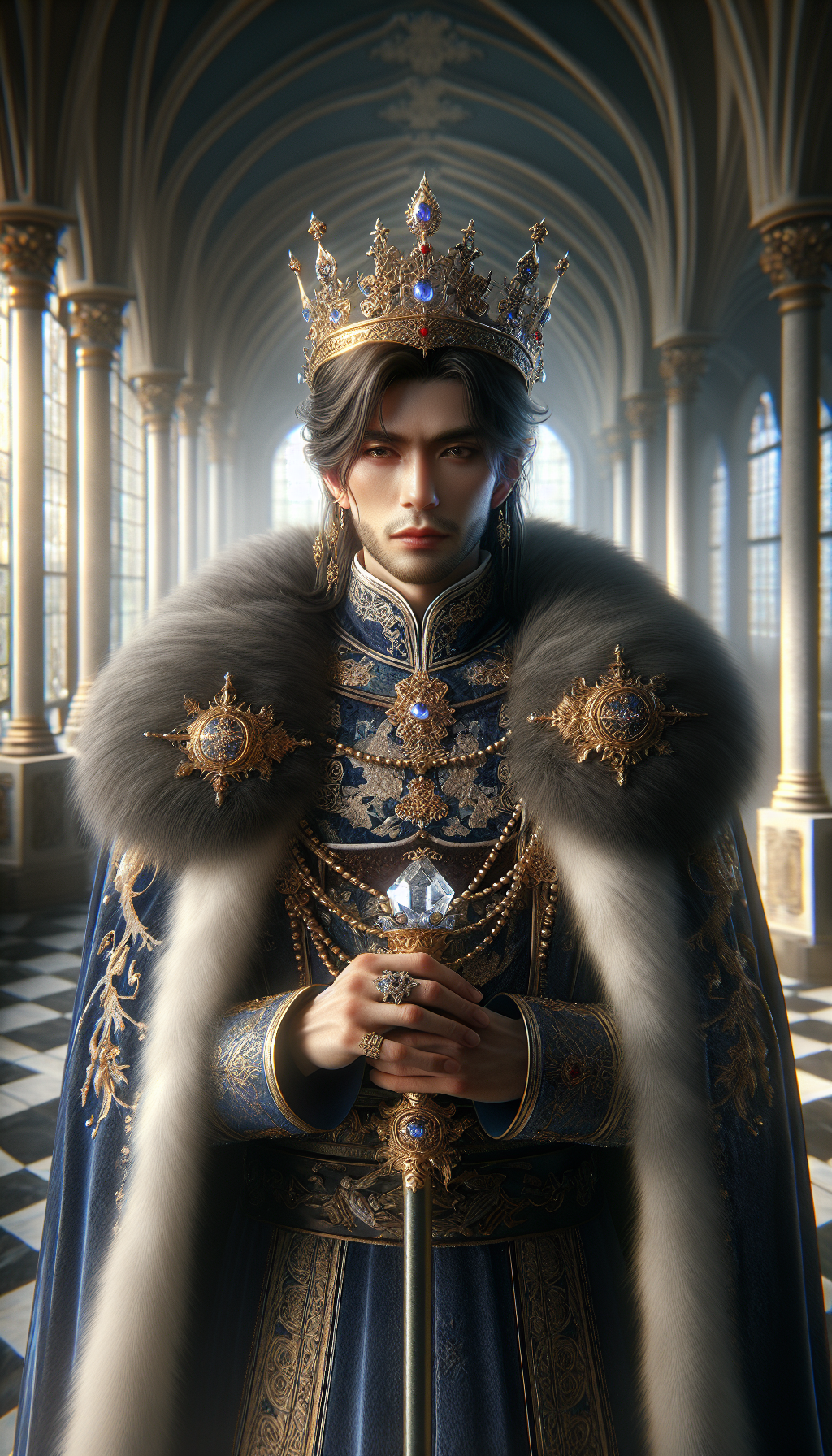
Emperor
皇帝 · Emperor — The Empire's Supreme Pinnacle, the Living Law Itself
Names in Other Languages
 황제한국어
황제한국어皇帝 · Emperor — 제국의 최정점, 살아있는 법 그 자체
 皇帝日本語
皇帝日本語皇帝 · Emperor — 帝国の至高の頂点、生きている法そのもの
 皇帝繁體中文
皇帝 · Emperor — 帝國的最高頂點,活著的法律本身
 KaiserDeutsch
皇帝 · Kaiser — Der höchste Gipfel des Reiches, das lebende Gesetz selbst
 EmpereurFrançais
皇帝 · Empereur — Le Sommet Suprême de l'Empire, la Loi Vivante Elle-même
 EmperadorEspañol
皇帝 · Emperador — El Pináculo Supremo del Imperio, la Ley Viviente en Sí Misma
 ImperadorPortuguês
皇帝 · Imperador — O Pico Supremo do Império, a Lei Viva em Si Mesma
 CesarzPolski
皇帝 · Cesarz — Najwyższy Szczyt Imperium, Żywe Prawo Samo w Sobie
 ИмператорРусский
皇帝 · Император — Высший Пик Империи, Живой Закон Сам по Себе
The emperor is the supreme monarch ruling over multiple kingdoms, peoples, and cultures, a higher monarchical title than the king of a single kingdom. The etymology comes from Latin 'imperator' (commander-in-chief), originally meaning the supreme commander of late Roman Republic armies, becoming effectively a monarchical title after Augustus (27 BCE). In East Asia, Qin Shi Huang first used the title 'Emperor' (皇帝) in 221 BCE, becoming standard in China, Korea, Japan, and Vietnam. In the West, it was used by Holy Roman Emperors (from Charlemagne in 800), Russian Tsars, Austrian and German emperors, and Napoleon of France. The emperor's legitimacy derives not from mere power but from the sacred authority of 'Mandate of Heaven' or 'God's vicar.' Almost all European empires collapsed with World War I, and currently only the Emperor of Japan (a modern constitutional monarch) uses the title. In fantasy, it's the standard title for the most powerful monarch characters.
Origin
Traces its origins to the Roman Emperor (Caesar/Augustus). Every major civilization developed its own form of the 'supreme ruler' title: the Byzantine Emperor, the Holy Roman Emperor, China's Son of Heaven (天子), and the Islamic Caliph.
Features
- Holds dominion over multiple kingdoms and peoples in a vast super-regional realm
- Divine Right — combines temporal rule with religious authority as God's representative on earth
- The emperor's word carries the force of law
- Commands the imperial guard and holds supreme command of all imperial armies
- Depending on the fantasy setting, the emperor may himself be the mightiest mage or warrior alive
Stories
The ultimate power structure of fantasy. The emperor is the colossal force at the center of the narrative — either the protagonist's ultimate goal, or the last bulwark protecting the world.
Weakness
The more powerful the emperor, the more intense the succession crises and internal power struggles. Absolute power breeds absolute solitude — it is impossible to tell who is truly loyal to the emperor.