Yuki-onna
Yuki-onna · The Snow Woman — A Cold, Sorrowful Beauty Appearing in the Blizzard
Names in Other Languages
 유키온나한국어
Yuki-onna · 설녀 — 눈보라 속에 나타나는 차갑고 슬픈 미녀
 雪女日本語
雪女日本語Yuki-onna · 雪女 — 吹雪の中に現れる冷たく悲しい美女
 雪女繁體中文
Yuki-onna · 雪女 — 現於暴風雪中之冷豔哀美女
 Yuki-onnaDeutsch
Yuki-onna · Die Schneefrau — Eine kalte, sorgenvolle Schöne, die im Schneesturm erscheint
 Yuki-onnaFrançais
Yuki-onna · La femme des neiges — Une beauté froide et triste apparaissant dans le blizzard
 Yuki-onnaEspañol
Yuki-onna · La mujer de las nieves — Una belleza fría y triste que aparece en la ventisca
 Yuki-onnaPortuguês
Yuki-onna · A mulher da neve — Uma beleza fria e triste que aparece na nevasca
 Yuki-onnaPolski
Yuki-onna · Śnieżna kobieta — chłodna, smutna piękność pojawiająca się w zamieci
 Юки-оннаРусский
Yuki-onna · Снежная женщина — холодная, печальная красавица, являющаяся в метели
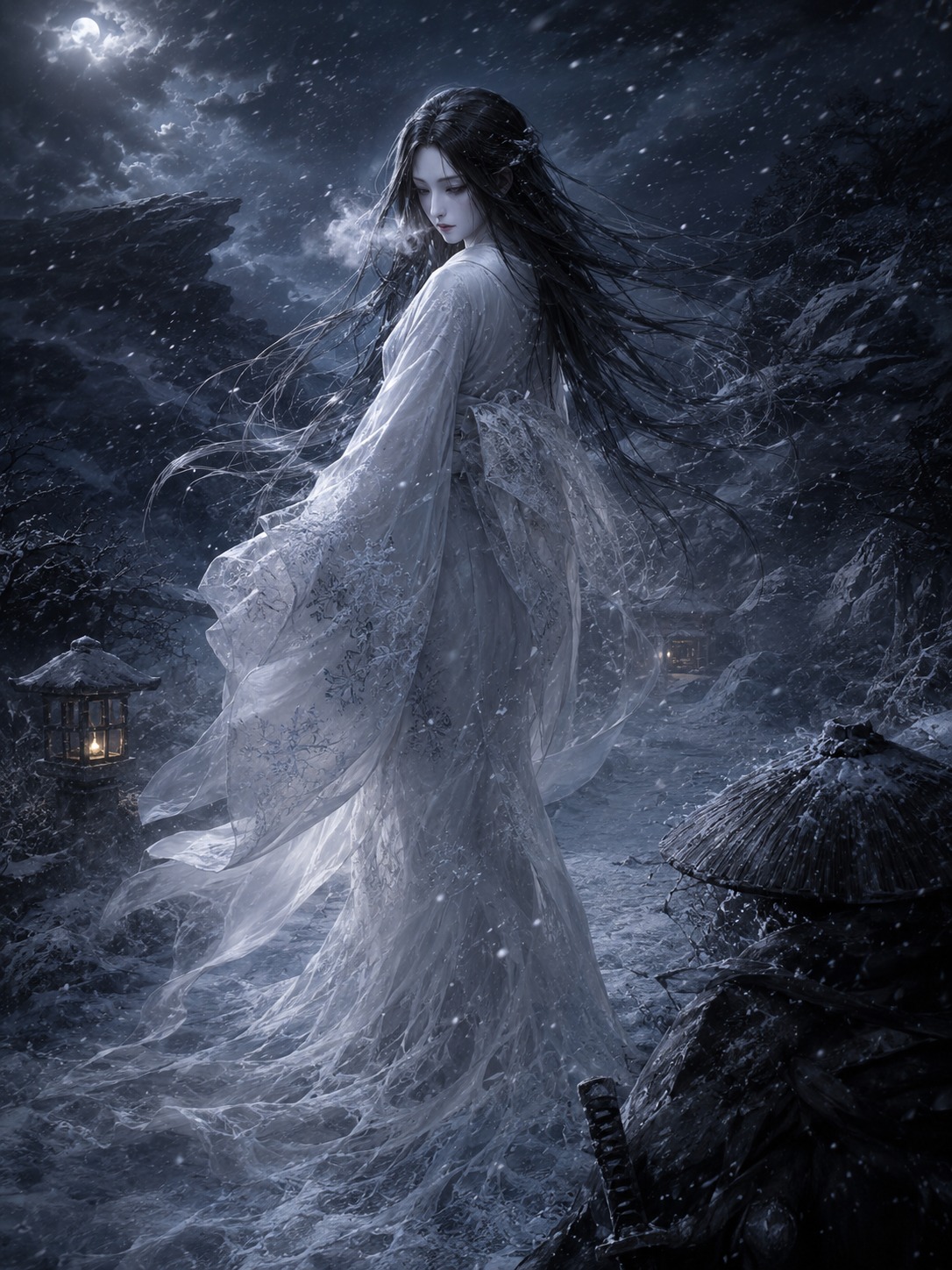
The Yuki-onna (Japanese Yuki-onna, 'snow woman') is the pale female yokai who appears suddenly in the night blizzard, the canonical iconographic figure of the Japanese winter snow-mountain yokai who in white kimono, jet-black hair, and a bloodless face approaches the lost traveller and freezes him to death with her cold breath. The iconographic origin is the fusion of the lethal-cold (toshi) folklore of Japan's heavy-snowfall regions in Tohoku, Chubu, and Hokkaido with mountain-deity (yama-no-kami) belief. The earliest textual record is the Sogi Shokoku Monogatari, a travel account by the renga poet Sogi (1421-1502) of the late Muromachi period (estimated late fifteenth century), describing a tall white-clad woman encountered in the snow mountains of Echigo Province (now Niigata Prefecture). In the Edo period, the Yuki-onna was systematised as a canonical yokai in the yokai catalogue Gazu Hyakki Yagyo (1776) of Toriyama Sekien (1712-1788). The decisive canon is the short story Yuki-Onna in Kwaidan: Stories and Studies of Strange Things, the English-language short-story collection published in April 1904 by Lafcadio Hearn (1850-1904, Japanese name Koizumi Yakumo): the woodcutters Mosaku (the elder) and Minokichi of Musashi Province are trapped in a blizzard and rest in a hut, where the Yuki-onna kills Mosaku but spares the young Minokichi on his promise never to disclose the secret; years later Minokichi marries a woman named Oyuki, who turns out to be the same Yuki-onna, and she vanishes when he breaks the secret. This established the decisive canon of modern Yuki-onna iconography. Masaki Kobayashi's 1965 film Kwaidan, with its Yuki-onna episode, won the Special Jury Prize at the Cannes Film Festival and completed the global canon.
Origin
The iconographic origin is the fusion of Japanese indigenous mountain belief with the freezing-to-death (toshi) folklore of heavy-snowfall regions. In Tohoku, Chubu, and Hokkaido — where the social experience of travellers freezing to death in the winter mountains was real every winter — the experience combined with mountain-deity (yama-no-kami) belief to settle the Yuki-onna iconography. The earliest textual record is the Sogi Shokoku Monogatari Book III, a travel account by the late-Muromachi renga poet Sogi (1421-1502, estimated late fifteenth century): a tall white-clad woman encountered in the snow mountains of Echigo Province (now Niigata Prefecture) freezes a man with her breath, a canonical record. In the Edo period, the Yuki-onna was established as a visual canon in the yin section of Toriyama Sekien's 1776 yokai catalogue Gazu Hyakki Yagyo — in white kimono, long black hair, and a pale face — and the eighteenth-century Miyage Iwa-toku of Takai Ranzan and the nineteenth-century Yokai-ko of Tada Katsumi settled it. The regional names of the Yuki-onna across Japan — Yuki-joro in Yamagata, Yuki-onba in Ibaraki, Yuki-biraki in Fukushima, Yuki-nee in Nagano, etc. — differ but share the iconographic origin. The decisive modern canonisation is the short story Yuki-Onna in Kwaidan: Stories and Studies of Strange Things, published in Boston in April 1904 by Lafcadio Hearn (Koizumi Yakumo): the woodcutters Mosaku and Minokichi of Musashi Province (modern Tokyo) meet the Yuki-onna in a blizzard, she freezes the elder Mosaku but spares the young Minokichi with the taboo 'tell no one of what you have seen today', and years later when Minokichi marries Oyuki and discloses the secret to her, she is revealed as the Yuki-onna and vanishes — the decisive canon.
Features
- White kimono and long jet-black hair
- Pale, bloodless face and cold blue eyes
- Appears suddenly within a blizzard
- Freezes humans to death with cold breath
- Ambivalence of beauty, sorrow, and cruelty
- Footless or leaves no footprints (classical iconography)
Stories
Sogi's Sogi Shokoku Monogatari of the Muromachi period and Toriyama Sekien's Gazu Hyakki Yagyo (1776) of the Edo period established the literary and visual canon of the Yuki-onna, and Lafcadio Hearn's 1904 Kwaidan, Yuki-Onna, established the decisive modern canon. The 1953 Toho Studios black-and-white film The Snow Woman (directed by Isamu Kosugi) was the start of the cinematic canon, and the Yuki-Onna episode of Masaki Kobayashi's anthology film Kwaidan (released 27 February 1965, based on Lafcadio Hearn, a four-tale omnibus) — with Keiko Kishi (b. 1932) as the Yuki-onna and Tatsuya Nakadai (b. 1932) as Minokichi — won the Special Jury Prize at the 1965 Cannes Film Festival and completed the global cinematic canon. Tokuma Takao's 1968 The Strange Love (Kaiki Yukionna), Toshiharu Ikeda's 1980 Yuki-onna, and Shiori Sakurai's 2017 Yuki-onna are sustained adaptations in Japanese film and television. Tsurara of Hiroshi Shiibashi's manga Nurarihyon's Grandson (Nurarihyon no Mago), serialised in Weekly Shonen Jump from 2008, is the canonical twenty-first-century Japanese-manga Yuki-onna, and the Yukimenoko (English Froslass) of the 2008 Nintendo video game Pokemon Diamond and Pearl borrowed the Yuki-onna iconography.
Weakness
The Yuki-onna's weaknesses are: (1) warmth and fire — the canonical Japanese motif that she melts and vanishes before warmth, fire, and the coming of summer; (2) the coming of spring — the Yuki-onna of Japanese snow-mountain belief is the kami of the winter mountain and the natural-cycle canon that she disappears when spring comes; (3) the taboo of disclosing the secret — the canonical weakness and taboo iconography in Lafcadio Hearn's 1904 Kwaidan Yuki-Onna, in which the Yuki-onna imposes a secret-taboo on the human ('tell no one') and when the human breaks the taboo she vanishes or kills him; (4) the affection she bears for humans — the decisive tragic motif of Japanese horror in Hearn's Kwaidan Oyuki canon, in which the Yuki-onna bears affection for the human Minokichi, marries him, and bears children, but vanishes in sorrow after the disclosure of the secret; (5) sunlight — in some regional canons the Yuki-onna is nocturnal and disappears with sunrise; (6) the pure heart of a child — in some Japanese folktales the Yuki-onna shows mercy to a child. In the finale of the Yuki-Onna episode of Masaki Kobayashi's 1965 Kwaidan, when Minokichi discloses the secret, Oyuki sheds sad tears and dissolves into a blizzard — a decisive scene in film history that became canon.
Cultural Significance
The Yuki-onna is not merely a horror yokai but the canonical iconographic figure of the Japanese horror aesthetic, traversing Japanese winter snow-mountain belief, Lafcadio Hearn's Japanology, 1960s Japanese cinema, twenty-first-century global Japanese manga, and gaming. The social experience of yearly freezing deaths in the heavy-snowfall regions of Tohoku and Chubu, fused with mountain-deity (yama-no-kami) belief, condensed into the Yuki-onna iconography, the canonical case of Japanese folkloristics; the 1942 Yokai-Dangi of Kunio Yanagita (1875-1962) analysed the Yuki-onna as the decisive case of Japanese folkloristics. Lafcadio Hearn's (Koizumi Yakumo) 1904 Kwaidan — the work of a Greek-born Irish writer naturalised in Japan, given a Japanese name, who fixed Japanese indigenous folklore in English — is the decisive canon of nineteenth- to twentieth-century Japanology, and Hearn's English-language publication was the decisive event that transmitted the Yuki-onna iconography to the West. The Special Jury Prize of Masaki Kobayashi's 1965 Kwaidan at the Cannes Film Festival was the decisive event by which Japanese horror cinema became world-cinematic canon, and the film is evaluated as one of the representative works of the Japanese Golden Age of cinema together with Yasujiro Ozu and Akira Kurosawa. Hiroshi Shiibashi's 2008 Nurarihyon's Grandson series (cumulative print run of about 14 million copies) and the 2010-2014 TV anime established the Yuki-onna iconography in the global Japanese-manga canon of the twenty-first century, and the Yukimenoko (English Froslass) of the 2008 Nintendo Pokemon Diamond/Pearl, and the 2017 Japanese film The Barber of Yoshino, are cases of the digital and cinematic adaptation of twenty-first-century Yuki-onna iconography.
In Popular Culture
- Sogi, Sogi Shokoku Monogatari (late fifteenth century) — earliest textual record of Yuki-onna
- Toriyama Sekien, Gazu Hyakki Yagyo (1776) — Edo Yuki-onna visual canon
- Lafcadio Hearn, Kwaidan, Yuki-Onna (1904) — decisive modern canon
- Isamu Kosugi, The Snow Woman (1953) — start of the Japanese Yuki-onna film
- Masaki Kobayashi, Kwaidan (1965) — Cannes Film Festival global canon
- Kunio Yanagita, Yokai-Dangi (1942) — Japanese folkloristics Yuki-onna canon
- Hiroshi Shiibashi, Nurarihyon's Grandson, Tsurara (2008) — twenty-first-century Japanese-manga canon
- Nintendo, Pokemon Diamond/Pearl, Froslass (2008) — video-game Yuki-onna borrowing
- TV anime Nurarihyon's Grandson (2010-2014) — global Japanese-animation canon
Trivia
The Sino-Japanese characters for Yuki-onna translate literally as 'snow' and 'woman', the canonical Japanese spelling that settled from the Muromachi period. The regional names of Yuki-onna across Japan — Yuki-joro in Yamagata, Yuki-onba in Ibaraki, Yuki-biraki in Fukushima, Yuki-nee in Nagano, and so on — number about thirty, but share the same iconographic core. Lafcadio Hearn's Kwaidan: Stories and Studies of Strange Things, published in April 1904 by Houghton Mifflin in Boston, was the last work published by Hearn five months before his death on 26 September the same year, and contains seventeen short stories reconstructed in English from Japanese folktales told to him by his Japanese wife Koizumi Setsuko. Masaki Kobayashi's Kwaidan, released on 27 February 1965 — an eight-month-long shoot and a four-tale omnibus of three hours and eleven minutes — won the Special Jury Prize at the 1965 Cannes Film Festival and was nominated for the Academy Award for Best Foreign Language Film the same year. Tsurara of Hiroshi Shiibashi's 2008 manga Nurarihyon's Grandson — the Yuki-onna bodyguard of the Nurarihyon house — was televised on TV Tokyo as the first and second seasons of the anime from April 2010 to December 2011. According to 2018 statistics of the Folklore Studies Institute of Keio University in Japan, about 100-200 people freeze to death every year in the winter mountains of Japan, cited as the statistical basis for the persistence of Yuki-onna belief into the twenty-first century.
Related

Kappa
Kappa · The Japanese Water Yokai — A River Prankster With Power in a Head-Dish
Oni
Oni · The Japanese Demon — A Horned, Hulking Man-Eating Ogre
Onryo
Onryo · The Japanese Vengeful Ghost — A Cursing Specter Returned in Grudge
Tsukumogami
Tsukumogami · The Tool Yokai — A Spirit Dwelling in a Hundred-Year-Old Object

Tengu
Tengu · The Japanese Mountain Yokai — Master of Martial Arts and Punisher of Pride
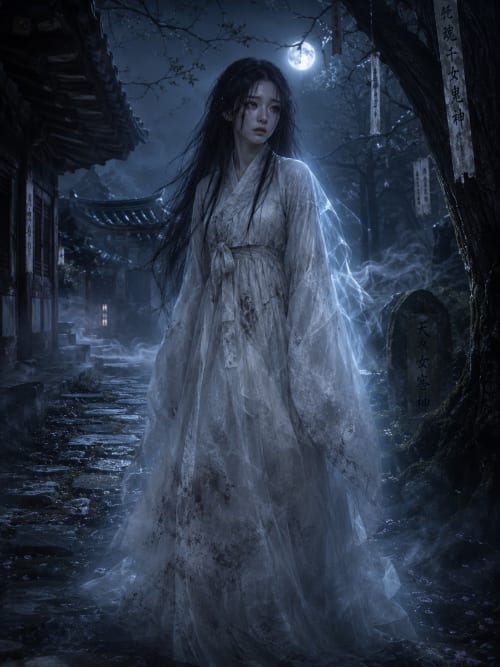
Cheonyeo-gwisin
Cheonyeo-gwisin · The Grudge-Bound Maiden Ghost — A Korean Spirit Wandering With Unresolved Han
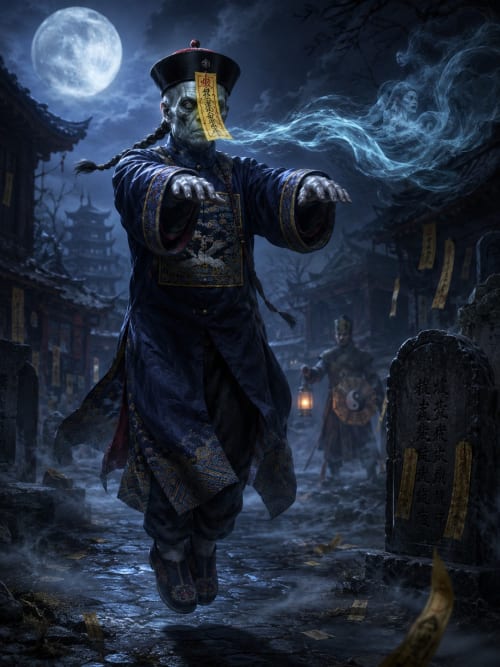
Jiangshi
Jiangshi · The Chinese Hopping Corpse — A Stiff, Leaping Corpse-Spirit
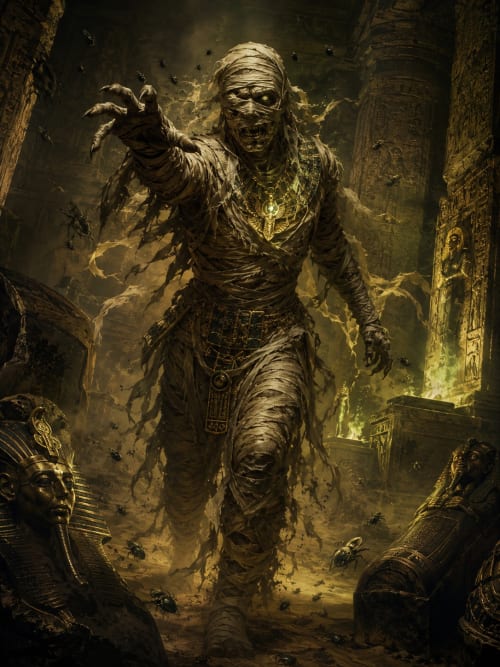
Mummy
Mummy · The Bandaged Dead — A Cursed Corpse Guarding the Tomb
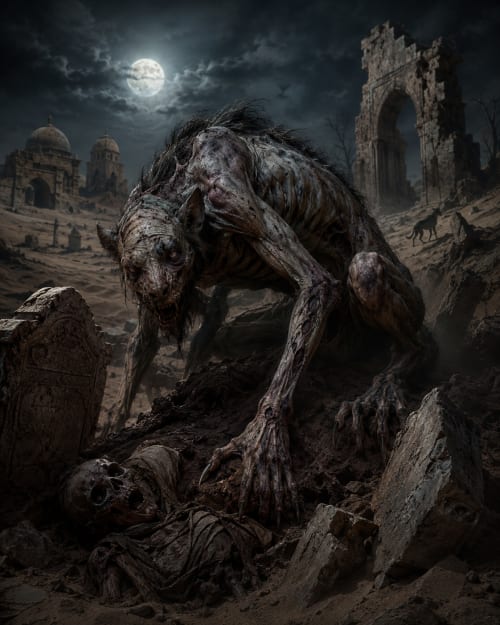
Ghoul
Ghoul · The Corpse-Eater — A Desert Monster That Digs Up and Devours the Dead
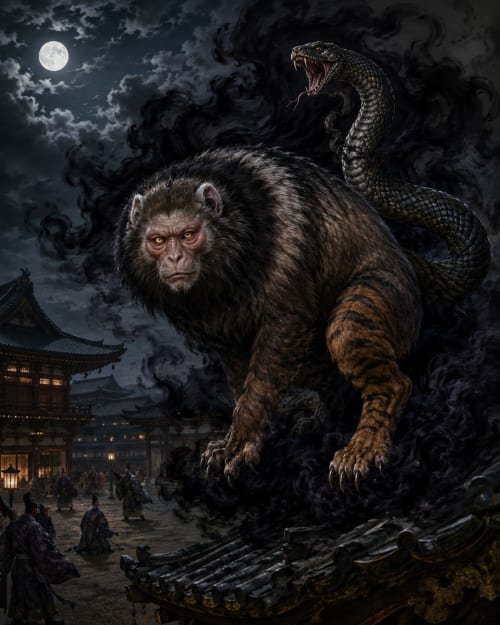
Nue
Nue · Chimera — Legendary Japanese Monster
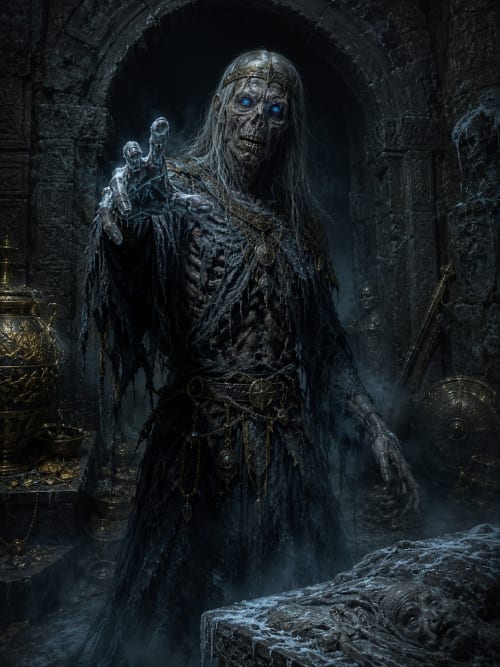
Wight
Wight · The Barrow Dead — A Cursed Corpse Guarding the Tomb's Treasure

Banshee
Banshee · The Wailing Death-Herald — Lament of Celtic Lore