LoreArc

Horror

10 items tagged with "Horror"

🐉Monsters(2)
beelzebub

Beelzebub

Beelzebub · Lord of the Flies — Prince of Gluttony

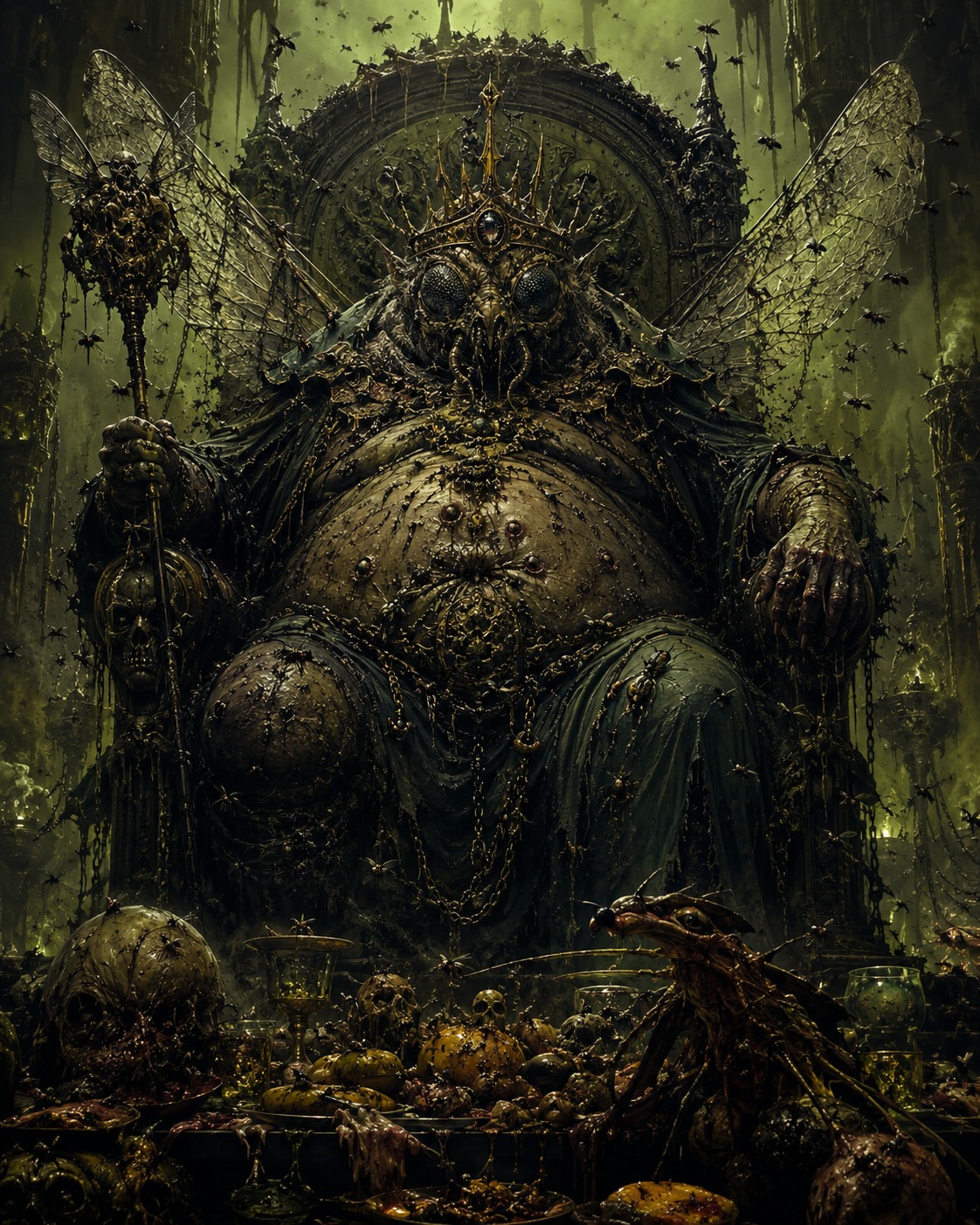
Beelzebub (Hebrew Baʿal-Zəvuv, Greek Beelzeboul, Latin Beelzebub) is the great demon of the Judeo-Christian tradition — the decisive canon — derived from the Hebrew Baal-zebub meaning 'Lord of the Flies' — the decisive canonical iconographic figure originating in the city of Ekron of Philistia where the god 'Baal-Zebul (Baal-Zebul, prince Baal)' was worshipped, with Jews scornfully changing the name to 'Lord of the Flies (zebub = fly)'. Aliases — Beelzeboul, Lord of the Flies, prince of devils, and Archduke of 'Gluttony (Gula, Gluttony)' among the Seven Deadly Sins — are the decisive canonical vocabulary. The decisive textual canon is the decisive origin canon of 2 Kings 1:2-16 of c. 6th-4th century BCE in which the king of Israel Ahaziah (Ahaziah) fell ill and sent messengers to consult Beelzebub of Ekron, only to be rebuked by Elijah (Elijah), and the decisive canon of Matthew (Matthew) 12:24-27, Luke (Luke) 11:15-19, and Mark (Mark) 3:22 of the 1st century CE in which the Pharisees slandered Christ by saying 'he casts out demons by Beelzebub, the prince of demons'. The decisive 17th-century English-literary canon of John Milton's (John Milton) Paradise Lost (Paradise Lost) Book 1 lines 78-81 of 1667 — the fallen angel next to Lucifer — and the decisive 20th-century English-literary canon of William Golding's (William Golding) novel Lord of the Flies (Lord of the Flies) of 1954.

🐉Dragons(4)
yamata-no-orochi

Yamata-no-Orochi

八岐大蛇 · Eight-Headed Serpent of Japanese Myth

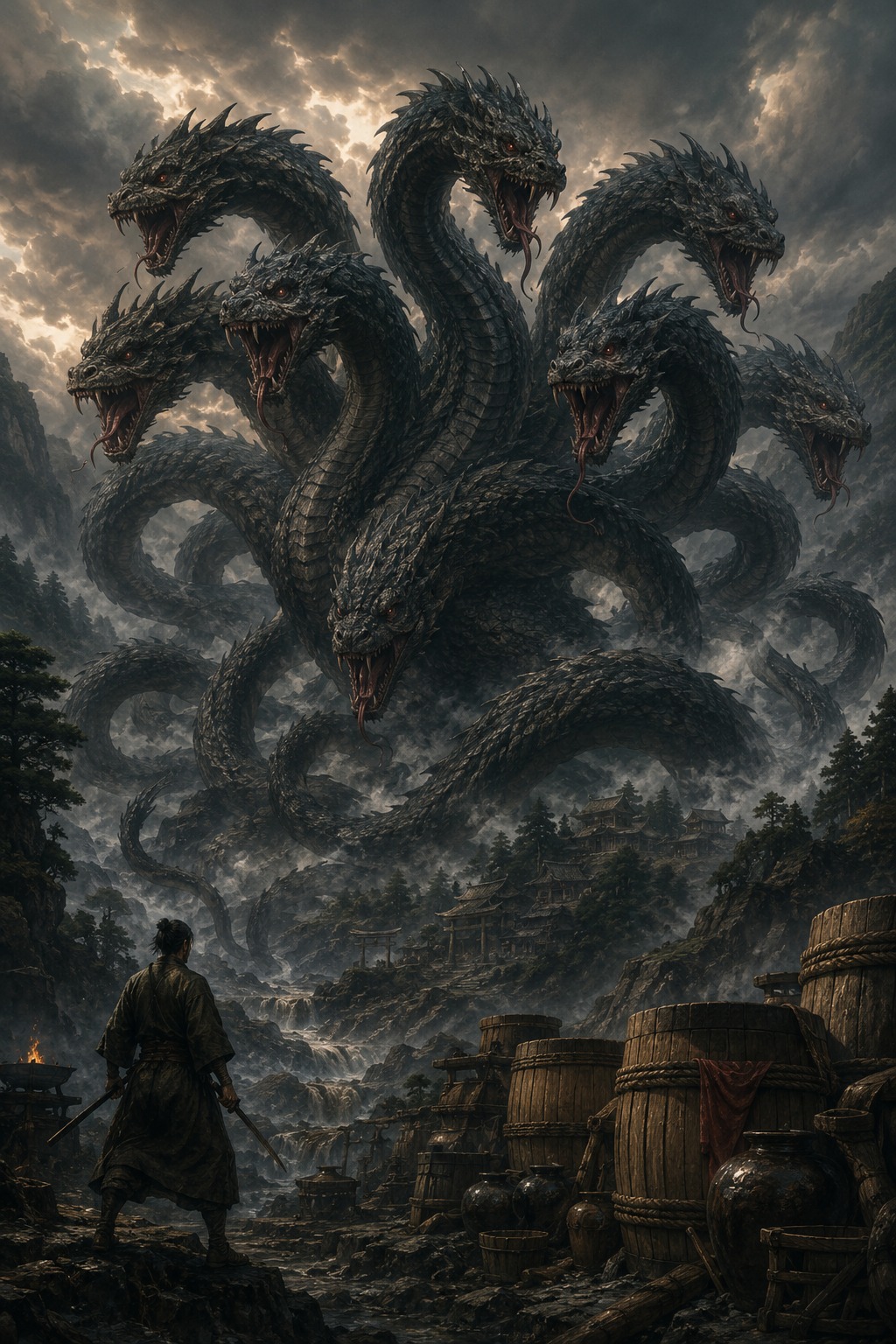
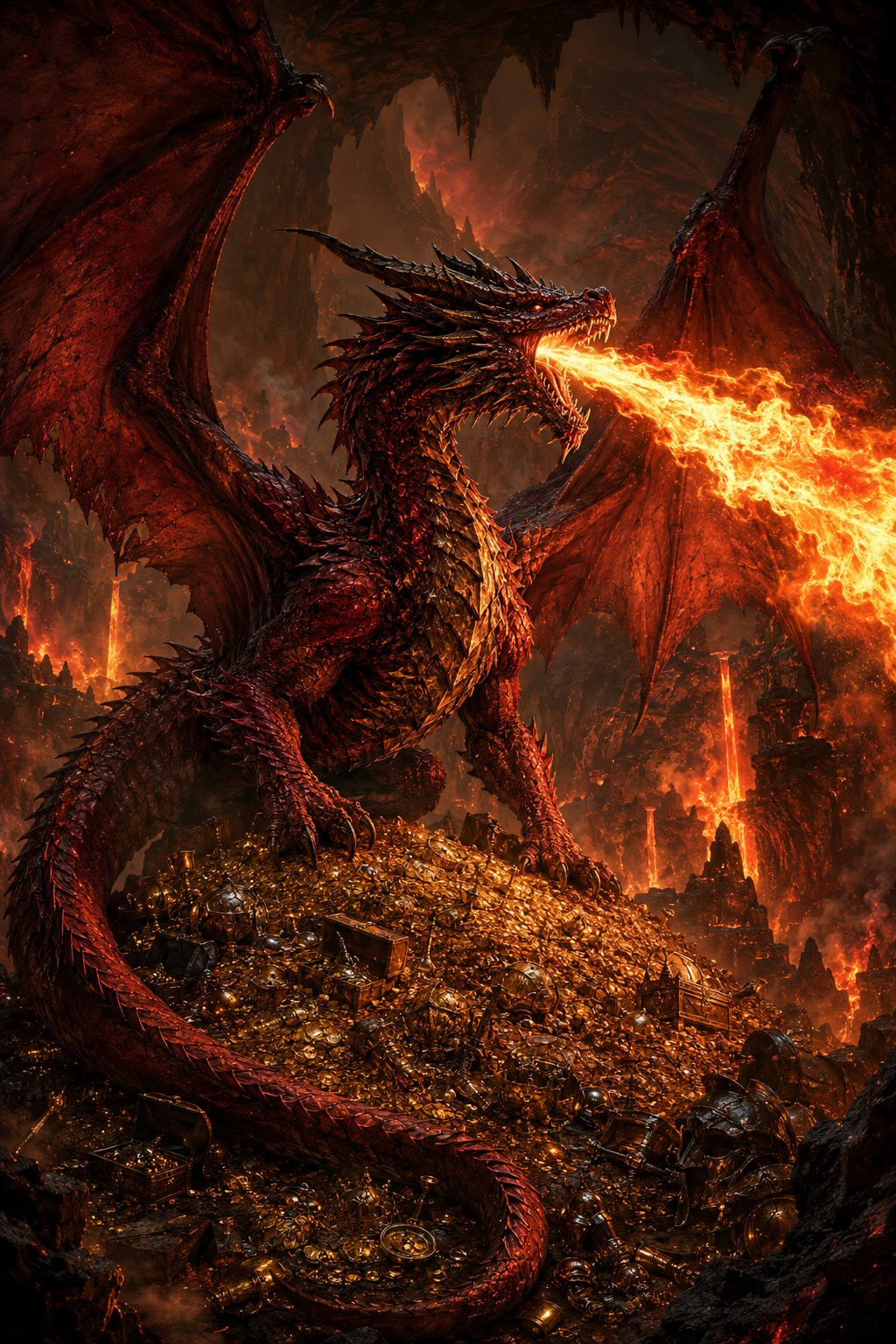
Yamata-no-Orochi ('eight-forked great serpent') is the most iconic many-headed dragon-serpent of Japanese myth, recorded in the early eighth century in the two foundational chronicles of the Japanese state: the 'Kojiki' (712) compiled by Ō no Yasumaro and the 'Nihon Shoki' (720) compiled under Prince Toneri. The serpent has eight heads and eight tails, and its body is so vast that it covers 'eight valleys and eight ridges, with cypress and cedar growing on its back and its belly always inflamed and bleeding'. It appears each year along the Hi no Kawa (today's Hii River) in the Izumo region (eastern Shimane prefecture) and demands one of the daughters of the old couple Ashinazuchi and Tenazuchi as tribute. After devouring seven of their eight daughters, it returns for the last, Kushinada-hime, when the storm-god Susanoo, banished from heaven, descends to Izumo. Susanoo prepares yashiori-no-sake (a wine brewed and refined eight times, sometimes called 'eight-fold wine'), pours it into eight large vats placed before eight gates so that each of Orochi's eight heads will drink from a separate vat, and waits until the eight heads are dead drunk. He then severs all eight heads and eight tails with the divine sword Totsuka-no-Tsurugi (a sword 'ten hand-spans long'). When one tail dulls his blade, he finds inside it another, finer sword — the Kusanagi-no-Tsurugi (also Ame-no-Murakumo-no-Tsurugi), one of the Three Sacred Treasures of the Japanese imperial house, today enshrined at Atsuta Shrine in Nagoya, Aichi prefecture.

nue

Nue

Nue · Chimera — Legendary Japanese Monster

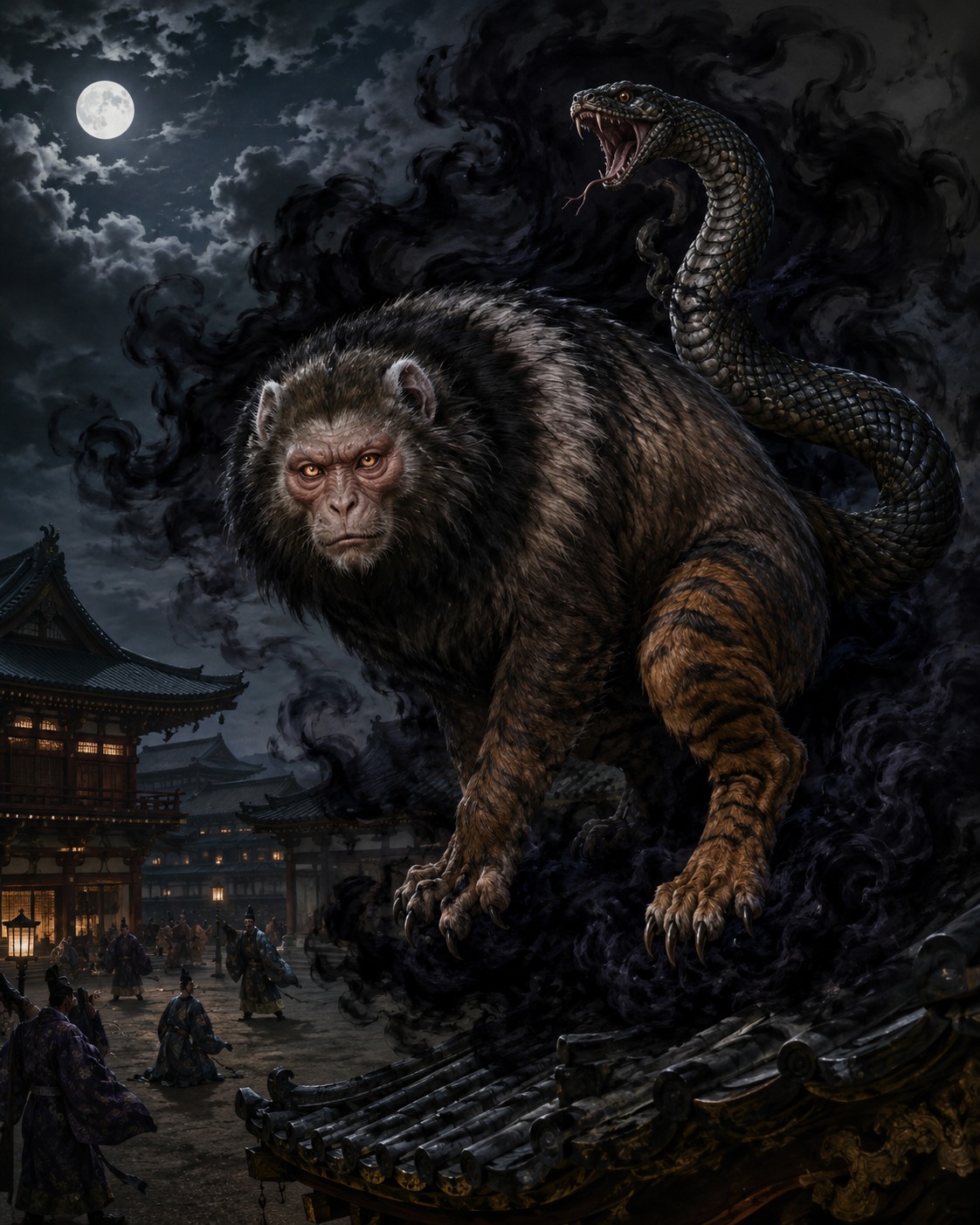
The Nue (Japanese Nue) is the canonical iconographic figure of the Heian-period Japanese chimeric yokai, possessed of the face of a monkey, the body of a raccoon dog (tanuki) or wildcat, the legs of a tiger, and the tail of a snake — one of the most mysterious composite yokai of Japanese legend. The name derives from the archaic Japanese name of the indigenous bird White's thrush (Zoothera dauma, in Japanese tora-tsugumi), whose sad and uncanny cry, when heard, is said in the canon to portend disaster — the canonical bird of the Onmyodo (Yin-Yang Way) belief of the Heian Imperial court. The iconographic origin is the Onmyodo belief of the Heian period (794-1185) and the canonised gunki-mono (military-tale) tradition of the late twelfth century. The decisive textual source is the chapter Nue in Book 4 of the early thirteenth-century Heike Monogatari (Tale of the Heike), the decisive canon of Japanese gunki-mono: in the spring of 1153 a black cloud appeared every dawn over the Heian-kyo Imperial Court from the eastern mountains and disturbed the sleep of Emperor Konoe (reigned 1139-1155), causing his illness; Minamoto no Yorimasa (1104-1180), the greatest archer of the Heian period, shot the nue down from within the black cloud — the decisive textual canon of the Nue legend. The 1779 yokai catalogue Konjaku Gazu Zoku Hyakki by Toriyama Sekien (1712-1788) established the visual canon of the Nue.