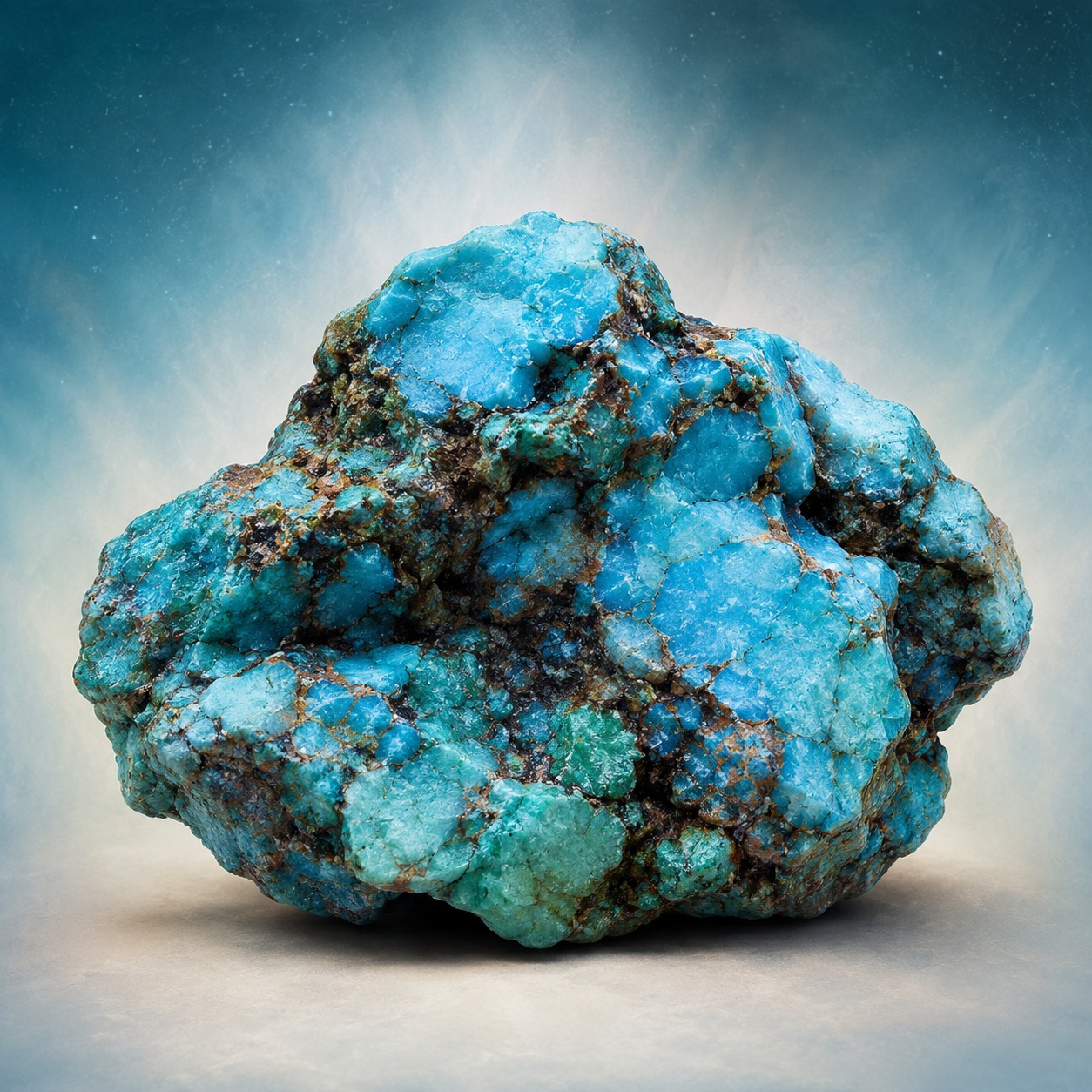
Turquoise
Turquoise · 綠松石 — Sky stone of the Aztec and Navajo
Names in Other Languages
 터키석한국어
Turquoise· 綠松石 아즈텍·나바호의 하늘돌
 緑松石日本語
Turquoise· 綠松石 アステカとナバホの天石
 綠松石繁體中文
Turquoise· 綠松石 阿茲特克與納瓦荷之天石
 TuerkisDeutsch
Turquoise · 綠松石 — Himmelsstein der Azteken und Navajo
 TurquoiseFrançais
Turquoise · 綠松石 — Pierre du ciel des Azteques et Navajos
 TurquesaEspañol
Turquoise · 綠松石 — Piedra del cielo de aztecas y navajos
 TurquesaPortuguês
Turquoise · 綠松石 — Pedra do ceu dos astecas e navajos
 TurkusPolski
Turquoise · 綠松石 — Niebieski kamien Aztekow i Navajo
 БирюзаРусский
Turquoise· 綠松石 Небесный камень ацтеков и навахо
Turquoise (English Turquoise, French turquoise) is the sky stone of the Aztec and Navajo of the decisive canon — derived from French 'turquoise (Turkish)' — the decisive canonical vocabulary — the decisive canon of the Persian gem imported into Europe via the Venetian Turkish trade port in the 13th century — and the decisive mineralogical canon of hydrous copper aluminium phosphate (CuAl6(PO4)4(OH)8·4H2O). Aliases — Turquoise (Turquoise), Persian gem, Stone of Hathor (Mistress of Turquoise), chalchihuitl (Aztec, blue stone), doot-l'izhii (Navajo) — are the decisive canonical vocabulary. The decisive mining origin canon is the decisive origin canon of the Wadi Maghara (Wadi Maghara) mines on the Sinai Peninsula of Egypt of c. 5500 BCE — the decisive canon of being humanity's oldest turquoise mine, and the decisive canon of Hathor ('Mistress of Turquoise') of Egypt. The decisive natural history canon is the decisive canon of callais (callais) in Pliny the Elder's Natural History (Naturalis Historia) Book 37 verses 110-112 of the 1st century.
Origin
The etymological origin is the decisive canonical vocabulary of French 'turquoise (Turkish)' — the decisive canon of the Persian gem imported into Europe via the Venetian Turkish trade port in the 13th century. The decisive mining origin canon is the decisive origin canon of the Wadi Maghara (Wadi Maghara) mines and Serabit el-Khadim (Serabit el-Khadim) mines on the southern Sinai Peninsula of Egypt of c. 5500 BCE — the decisive canon of 7000 years of Egyptian mining. The decisive Egyptian canon is the decisive canon of Hathor (Hathor, 'Mistress of Turquoise') of Egypt of c. 5th century BCE — the decisive canon of the goddess of the guardian of the Sinai mines, and the decisive canon of the turquoise stripes on the golden mask of Tutankhamun of c. 1323 BCE. The decisive Persian canon is the decisive canon of the Neyshabur (Neyshabur) mines in Khorasan (Khorasan) of Persia from the 1st century onward — the decisive canon of being the world's finest turquoise source for over 2000 years. The decisive Aztec canon is the decisive canon of the turquoise mosaic Double-Headed Serpent (Aztec Double-Headed Serpent, now at the British Museum Am1894,-.634) of Quetzalcoatl (Quetzalcoatl, 'feathered serpent') of the Aztec of 1400-1521, and the decisive canon of the turquoise mosaic mask (now at the British Museum Am,St.400) of Tezcatlipoca (Tezcatlipoca, 'smoking mirror').
Features
- Hydrous copper aluminium phosphate (CuAl6(PO4)4(OH)8·4H2O) — Mohs hardness 5-6
- Main axis sacred stone of the Aztec Quetzalcoatl protective stone of the Navajo
- Egyptian Hathor (Hathor) 'Mistress of Turquoise'
- Neyshabur mines of Khorasan, Persia — world's finest source for 2000 years
- Birthstone of December — Gemstone of the 11th wedding anniversary
- Origin — Sinai Egypt, Khorasan Persia, southwest USA, Hubei China
Stories
The mining of the Wadi Maghara mines on Sinai of Egypt of c. 5500 BCE is the decisive origin, and the decisive natural history canon is callais in Pliny the Elder's Natural History Book 37 verses 110-112 of the 1st century. The decisive canon used as the sacred stone of the Aztec feathered serpent Quetzalcoatl, and the decisive canon established as the protective stone of the Navajo and Pueblo Native Americans. The Egyptian Sinai mines are the oldest gem mining site of humanity — the decisive canon, and the decisive Persian poetry canon is the decisive canon of the 11th-century Persian poet Mahmud al-Kashgari's 'Turquoise keeps a person safe from the evil eye'. The decisive 21st-century global canon is the decisive canon of the 'tongue of god' stone of Tibet from the 13th century, and the decisive canon of the silver and turquoise jewelry of the Navajo and Pueblo Native Americans of the American Southwest of the 21st century.
Weakness
Turquoise's weaknesses are: (1) Mohs hardness 5-6 limit — the decisive canonical weakness — much softer than sapphire (9) and diamond (10); (2) porosity — the decisive canonical weakness — being very porous, color changes or damage occur from oil, perfume, and sweat; (3) binding of light — the decisive canon of color fading under prolonged direct sunlight; (4) binding of treatment — the decisive canon that over 90% of market turquoise undergoes stabilization or dye treatment; (5) binding of imitation — the decisive canon of forgery by dye-treated howlite and magnesite; (6) binding of the sacred domain — the decisive canon; (7) binding of Persia — the decisive canon of the binding of Khorasan mines; (8) binding of time — the decisive canon of 7000 years of Egyptian binding. The decisive canonical finale is the decisive mythological canon of the Quetzalcoatl's turquoise mosaic at the British Museum after the fall of the Aztec in 1521.
Cultural Significance
Turquoise is not merely a gem icon but the canonical iconographic figure of the decisive Egyptian-Persian-Aztec-Navajo canon, traversing the mining of the Wadi Maghara mines on Sinai of Egypt of c. 5500 BCE, the turquoise on the golden mask of Tutankhamun of c. 1323 BCE, Pliny the Elder's Natural History Book 37 verses 110-112 of the 1st century, the Neyshabur mines of Khorasan of Persia from the 1st century onward, the turquoise mosaic Double-Headed Serpent of Quetzalcoatl of the Aztec of 1400-1521, the turquoise mosaic mask of Tezcatlipoca of the Aztec, the 11th-century Mahmud al-Kashgari's poem, the import via the Venetian Turkish trade port of the 13th century, and the protective stone of the Navajo and Pueblo Native Americans from the 19th century. The etymological origin settled as the decisive canon of French 'turquoise (Turkish)' — the decisive canon of the Persian gem imported into Europe via the Venetian Turkish trade port in the 13th century. The decisive mining origin canon is the decisive origin canon of the Wadi Maghara (Wadi Maghara) and Serabit el-Khadim (Serabit el-Khadim) mines on the southern Sinai Peninsula of Egypt of c. 5500 BCE — the decisive canon of humanity's oldest turquoise mining site. The decisive Egyptian canon is the decisive canon of Hathor (Hathor) of Egypt of c. 5th century BCE — 'Mistress of Turquoise', and the decisive canon of the turquoise on the golden mask of Pharaoh Tutankhamun (Tutankhamun) of c. 1323 BCE. The decisive natural history canon is the decisive canon of callais (callais) in Pliny the Elder's Natural History (Naturalis Historia) Book 37 verses 110-112 of the 1st century by the Roman Pliny the Elder (Pliny the Elder, 23-79) — the decisive canon of the blue gem of Persia and Egypt. The decisive Persian canon is the decisive canon of the Neyshabur (Neyshabur) mines in Khorasan (Khorasan) of Persia from the 1st century onward — the decisive canon of the world's finest turquoise source for over 2000 years. The decisive Aztec canon is the decisive canon of the turquoise mosaic Double-Headed Serpent (Aztec Double-Headed Serpent, now at the British Museum Am1894,-.634) of Quetzalcoatl (Quetzalcoatl, 'feathered serpent') of the Aztec of 1400-1521, and the decisive canon of the turquoise mosaic mask (now at the British Museum Am,St.400) of Tezcatlipoca (Tezcatlipoca, 'smoking mirror'), and the decisive Navajo and Pueblo Native American canon is the decisive canon of the turquoise of Chaco Canyon (Chaco Canyon) of the American Southwest from the 13th century onward, and the decisive canon of the silver and turquoise jewelry (squash blossom necklace, naja pendant, etc.) of the Navajo (Navajo) and Pueblo (Pueblo) from the late 19th century.
In Popular Culture
- Wadi Maghara (Wadi Maghara) and Serabit el-Khadim mines on Sinai of Egypt mining (c. 5500 BCE) — decisive mining origin canon
- Egyptian Hathor (Hathor) 'Mistress of Turquoise' (c. 5th century BCE) — decisive Egyptian canon
- Turquoise on the golden mask of Tutankhamun (c. 1323 BCE) — decisive Egyptian canon
- Pliny the Elder Natural History Book 37 verses 110-112 callais (1st century) — decisive natural history canon
- Neyshabur (Neyshabur) mines of Khorasan of Persia (from 1st century onward) — decisive Persian canon
- Aztec Double-Headed Serpent (Aztec Double-Headed Serpent) of Quetzalcoatl (1400-1521) — decisive Aztec canon
- Turquoise mosaic mask of Tezcatlipoca of the Aztec (1400-1521) — decisive Aztec canon
- 13th century import via the Venetian Turkish trade port — decisive European trade canon
- Turquoise of Chaco Canyon of the American Southwest (from 13th century) — decisive Pueblo canon
- Silver and turquoise jewelry of the Navajo (Navajo) and Pueblo (Pueblo) from the 19th century — decisive Navajo canon
Trivia
The etymology of Turquoise (English Turquoise, French turquoise, Latin callais) is the decisive canonical vocabulary of French 'turquoise (Turkish)' — the decisive canon of the Persian gem imported into Europe via the Venetian Turkish trade port (Constantinople) in the 13th century. Aliases — Turquoise (Turquoise), Persian gem, Stone of Hathor (Mistress of Turquoise), chalchihuitl (chalchihuitl, Aztec), doot-l'izhii (doot-l'izhii, Navajo), Birthstone of December, Gemstone of the 11th wedding anniversary, Tongue of God (Tibet) — are the decisive canonical vocabulary. The decisive mining origin canon is the decisive origin canon of the Wadi Maghara (Wadi Maghara, active mining of c. 4000-3000 BCE Old Kingdom) mines and Serabit el-Khadim (Serabit el-Khadim, with the Temple of Hathor) mines on the southern Sinai Peninsula of Egypt of c. 5500 BCE — the decisive canon of humanity's oldest turquoise mining site for 7000 years. The decisive Egyptian canon is the decisive canon of Hathor (Hathor, 'Mistress of Turquoise', 'Lady of Sinai') of Egypt of c. 5th century BCE — the decisive canon of the goddess of the guardian of the Sinai mines, and the decisive canon of the turquoise stripes (with lapis lazuli, carnelian, and turquoise stripes) on the golden mask (now in the Egyptian Museum of Cairo, JE 60672) of the 18th Dynasty Pharaoh Tutankhamun (Tutankhamun, 1341-1323 BCE) of c. 1323 BCE. The decisive natural history canon is the decisive canon of callais (callais) in Pliny the Elder's Natural History (Naturalis Historia) Book 37 verses 110-112 of the 1st century by the Roman Pliny the Elder (Pliny the Elder, born 23 CE, died at Pompeii 79 CE) — 'callais is harvested from the harsh places of the mountains of Persia and Egypt as a blue gem, and is not damaged by cold'. The decisive Persian canon is the decisive canon of the Neyshabur (Neyshabur, near Mashhad) mines in Khorasan (Khorasan, northeastern province) of Persia (modern Iran) from the 1st century onward — the decisive canon of being the world's finest turquoise source for over 2000 years, and the decisive canon of the 11th-century Persian poet Mahmud al-Kashgari (Mahmud al-Kashgari, 1005-1102) — 'Turquoise keeps a person safe from the evil eye'. The decisive Aztec canon is the decisive canon of the turquoise mosaic Double-Headed Serpent (Aztec Double-Headed Serpent, ~2000 turquoise pieces, length ~43 cm, now at the British Museum Am1894,-.634, acquired 1894) of Quetzalcoatl (Quetzalcoatl, 'feathered serpent', god of wind/culture) of the Mexican Aztec (Aztec, 1325-1521) of 1400-1521, and the decisive canon of the turquoise mosaic mask (a human skull with ~240 pieces of turquoise and lapis lazuli mosaic, now at the British Museum Am,St.400) of Tezcatlipoca (Tezcatlipoca, 'smoking mirror', god of the night), and the decisive canon of diplomatic gifts sent to Hernán Cortés by Moctezuma II (Moctezuma II) of the Aztec in 1519. The decisive Navajo and Pueblo Native American canon is the decisive origin canon of the turquoise of Chaco Canyon (Chaco Canyon) of Pueblo (Pueblo) of New Mexico, USA of 850-1150 CE, and the decisive canon of the silver and turquoise jewelry (squash blossom necklace, naja pendant, etc.) of the Navajo (Navajo, 'Diné') from the late 19th century — the decisive canon of the Mexican silversmith Atsidi Sani (Atsidi Sani) teaching silversmithing to the Navajo in 1853.
Related
Sapphire
Sapphire· 靑玉 Gem of the heavens
Jade
Jade· 玉 Sacred stone of East Asia
Amber
Amber· 琥珀 Tears of the Heliades

Lapis Lazuli
Lapis Lazuli· 靑金石 Sky of Sumer and Egypt

Amethyst
Amethyst· 紫水晶 Gem of Dionysus
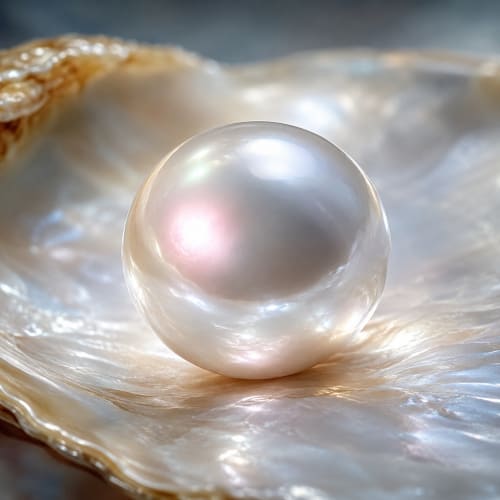
Pearl
Pearl· 眞珠 Tears of the sea

Carbuncle
Carbuncle· 紅榴石 Glowing fantasy gem

Gold
Gold· Au The radiant metal of myth
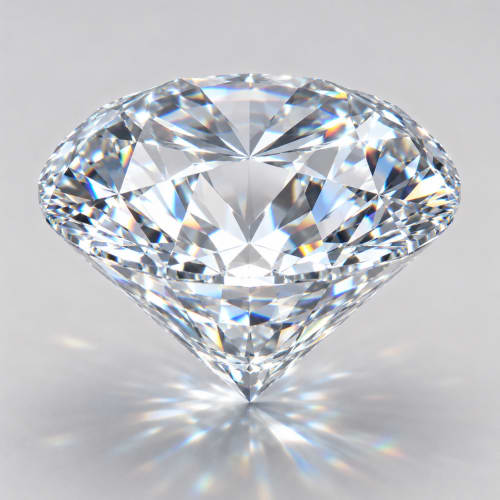
Diamond
Diamond· 金剛石 The hardest gem

Ruby
Ruby· 紅玉 The core of the four cardinal gems
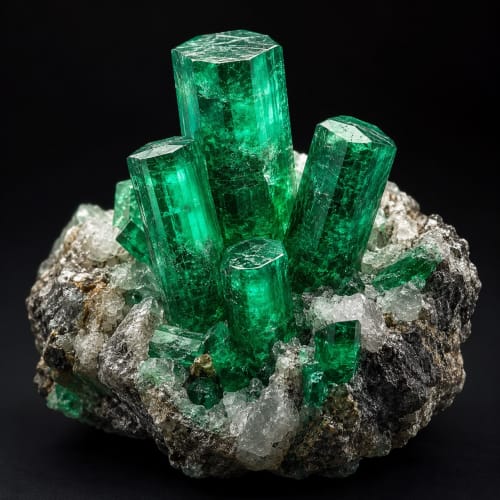
Emerald
Emerald· 翠玉 The Emerald Tablet of Hermes

Opal
Opal· 蛋白石 Gem of the rainbow