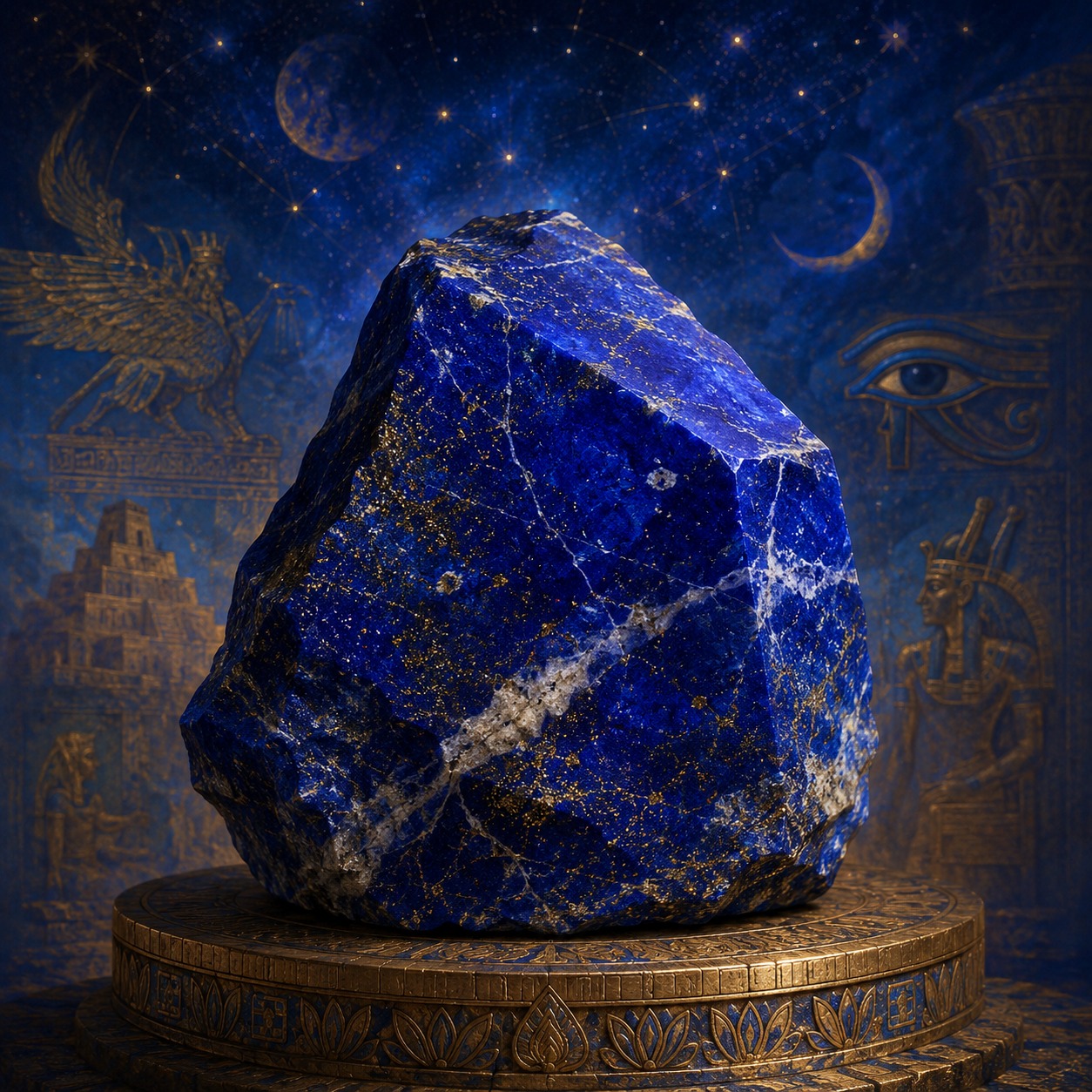
Lapis Lazuli
Lapis Lazuli· 靑金石 Sky of Sumer and Egypt
Names in Other Languages
 청금석한국어
Lapis Lazuli· 靑金石 수메르·이집트의 천공
 青金石日本語
Lapis Lazuli· 靑金石 シュメールとエジプトの蒼天
 青金石繁體中文
Lapis Lazuli· 靑金石 蘇美與埃及之青天
 LapislazuliDeutsch
Lapis Lazuli· 靑金石 Himmel von Sumer und Aegypten
 Lapis-lazuliFrançais
Lapis Lazuli· 靑金石 Ciel de Sumer et d Egypte
 LapislazuliEspañol
Lapis Lazuli· 靑金石 Cielo de Sumer y Egipto
 Lapis-lazuliPortuguês
Lapis Lazuli· 靑金石 Ceu de Sumeria e Egito
 LazurytPolski
Lapis Lazuli· 靑金石 Niebo Sumeru i Egiptu
 ЛазуритРусский
Lapis Lazuli· 靑金石 Небо Шумера и Египта
Lapis Lazuli (Latin Lapis Lazuli, Persian lazhuward) is the gem of the heavens of Sumer and Egypt of the decisive canon — derived from Persian 'lazhuward (blue)' via Arabic 'azure' to Latin 'lapis lazuli (blue stone)' — the decisive canonical vocabulary — the decisive mineralogical canon of the blue-gold metamorphic rock — also the decisive canon of the raw material of the Renaissance Ultramarine, the most expensive pigment. Aliases — Lapis Lazuli (Lapis Lazuli), Ultramarine (Ultramarine, 'beyond the sea'), sapphirus (sapphirus, pre-13th century Latin) — are the decisive canonical vocabulary. The decisive mining origin canon is the decisive origin canon of the Sar-e-Sang (Sar-e-Sang) mines in Afghanistan of c. 7000 BCE — the decisive canon of being humanity's oldest lapis lazuli mining site, used for over 6000 years. The decisive textual origin canon is the decisive origin canon of the 'mountain of lapis lazuli' in Tablet XI of the Epic of Gilgamesh (Epic of Gilgamesh) of Sumer of c. 18th-17th century BCE.
Origin
The etymological origin is the decisive canonical vocabulary of Persian 'lazhuward (blue)' via Arabic 'azure' to medieval Latin 'lapis lazuli (lapis 'stone' + lazuli 'of blue')'. The decisive mining origin canon is the decisive origin canon of the Sar-e-Sang (Sar-e-Sang) mines in Badakhshan (Badakhshan) of northeast Afghanistan of c. 7000 BCE — the decisive canon of being humanity's oldest lapis lazuli mining site for over 6000 years and the sole source of all ancient lapis lazuli. The decisive textual origin canon is the decisive origin canon of the 'mountain of lapis lazuli' in Tablet XI of the Epic of Gilgamesh (Epic of Gilgamesh) of Sumer of c. 18th-17th century BCE (the standard Akkadian edition, the clay tablets discovered in 1853 in the library of Ashurbanipal of Nineveh). The decisive Egyptian canon is the decisive canon of the lapis lazuli stripes on the golden mask of Pharaoh Tutankhamun (Tutankhamun) of c. 1323 BCE (now in the Egyptian Museum of Cairo, JE 60672), and the decisive canon of the lapis lazuli pectoral and the Eye of Horus in the Book of the Dead (Book of the Dead). The decisive natural history canon is the decisive canon of 'sapphirus' in Pliny the Elder's Natural History (Naturalis Historia) Book 37 verse 38 of the 1st century — the decisive canon in which pre-13th century Latin 'sapphirus' referred to lapis lazuli.
Features
- Blue-gold metamorphic rock — mixture of lazurite, sodalite, and pyrite
- Main axis — raw material of the Renaissance Ultramarine (Ultramarine) pigment
- Sar-e-Sang (Sar-e-Sang) mines of Afghanistan — 6000-year single source
- Sapphirus (sapphirus) among the twelve tribal gems of the high priest's breastplate
- Aliases — Lapis Lazuli (Lapis Lazuli), Ultramarine (Ultramarine)
- Origin — Sar-e-Sang of Afghanistan, Baikal of Russia, Andes of Chile
Stories
The mining of the Sar-e-Sang mines in Afghanistan of c. 7000 BCE is the decisive origin, and the decisive textual canon is the 'mountain of lapis lazuli' in the Epic of Gilgamesh of Sumer of c. 18th-17th century BCE. The decisive canon used as the gem of the heavens in Sumer, Egypt, Persia, and medieval Europe, and the decisive canon as the raw material of the Renaissance Ultramarine (Ultramarine, 'blue from beyond the sea'), the most expensive pigment, imported into Europe via the Venetian trade port from the 9th century. The decisive 17th-century art canon is the decisive canon of the lapis lazuli Ultramarine of the turban in the Girl with a Pearl Earring (Girl with a Pearl Earring) of c. 1665 by the Dutch Johannes Vermeer (Johannes Vermeer, 1632-1675) (now in the Mauritshuis Museum in The Hague), and the decisive 19th-century synthesis canon is the decisive canon of the synthetic Ultramarine (French Ultramarine) by the French Jean-Baptiste Guimet (Jean-Baptiste Guimet, 1795-1871) of 1828.
Weakness
Lapis Lazuli's weaknesses are: (1) acid — the decisive canonical weakness — the decisive canon of dissolving in acid, even damaged by vinegar; (2) Mohs hardness 5-5.5 limit — the decisive canonical weakness — much softer than sapphire (9) and diamond (10); (3) pigment cost — the decisive canonical weakness — the decisive canon that Renaissance Ultramarine pigment was more expensive than gold, requiring patrons' special contracts as artists hesitated to use it; (4) binding of synthesis — the decisive canon of the value drop of natural lapis after Guimet's invention of synthetic Ultramarine in 1828; (5) binding of single source — the decisive canon of the binding of the single source of Sar-e-Sang of Afghanistan; (6) binding of the sacred domain — the decisive canon; (7) binding of pyrite — the decisive canon of the name 'blue-gold' from the gold spots of pyrite; (8) binding of time — the decisive canon of the binding of pre-13th century sapphirus. The decisive canonical finale is the decisive mythological canon of the value drop of natural lapis after Guimet's invention of synthetic Ultramarine in 1828.
Cultural Significance
Lapis Lazuli is not merely a mineral icon but the canonical iconographic figure of the decisive ancient-Renaissance canon, traversing the mining of Sar-e-Sang mines in Afghanistan of c. 7000 BCE, the Epic of Gilgamesh of Sumer of c. 18th-17th century BCE, the lapis lazuli stripes of the golden mask of Pharaoh Tutankhamun of c. 1323 BCE, the high priest's breastplate of Exodus 28 of c. 13th century BCE, Pliny the Elder's Natural History Book 37 verse 38 of the 1st century, Vermeer's Girl with a Pearl Earring of 1665, and the invention of synthetic Ultramarine by Guimet in 1828. The etymological origin settled as the decisive canon of Persian 'lazhuward (blue)' via Arabic 'azure' to medieval Latin 'lapis lazuli'. The decisive mining origin canon is the decisive origin canon of the Sar-e-Sang (Sar-e-Sang) mines in Badakhshan (Badakhshan) of northeast Afghanistan of c. 7000 BCE — the decisive canon of being humanity's oldest lapis lazuli mining site for over 6000 years and the sole source of all ancient lapis lazuli. The decisive textual origin canon is the decisive origin canon of the 'mountain of lapis lazuli' in Tablet XI of the Epic of Gilgamesh (Epic of Gilgamesh, standard Akkadian edition) of Sumer of c. 18th-17th century BCE — the decisive canon of Gilgamesh seeking Utnapishtim's plant of eternal life on the mountain of lapis lazuli. The decisive Egyptian canon is the decisive canon of the lapis lazuli stripes on the golden mask (now in the Egyptian Museum of Cairo, JE 60672, found by Howard Carter in November 1922) of the 18th Dynasty Pharaoh Tutankhamun (Tutankhamun, 1341-1323 BCE) of c. 1323 BCE, and the decisive canon of the lapis lazuli pectoral and the Eye of Horus in the Egyptian Book of the Dead (Book of the Dead). The decisive biblical canon is the decisive canon of sapphirus (sapphirus, pre-13th century Latin for lapis lazuli) among the twelve tribal gems of the high priest's breastplate in Exodus 28:18 of c. 13th century BCE. The decisive natural history canon is the decisive canon of 'sapphirus' in Pliny the Elder's Natural History (Naturalis Historia) Book 37 verse 38 of the 1st century by the Roman Pliny the Elder (Pliny the Elder, 23-79) — the decisive canon in which pre-13th century Latin 'sapphirus' referred to lapis lazuli. The decisive 17th-century art canon is the decisive canon of the lapis lazuli Ultramarine of the turban in the Girl with a Pearl Earring (Girl with a Pearl Earring) of c. 1665 by the Dutch Johannes Vermeer (Johannes Vermeer, 1632-1675) (now in the Mauritshuis Museum in The Hague), and the decisive 19th-century synthesis canon is the decisive canon of the synthetic Ultramarine (French Ultramarine) invented by the French chemist Jean-Baptiste Guimet (Jean-Baptiste Guimet, 1795-1871) of 1828, causing the value drop of natural lapis.
In Popular Culture
- Sar-e-Sang mines of Afghanistan mining (c. 7000 BCE) — decisive mining origin canon
- Sumerian Epic of Gilgamesh (Epic of Gilgamesh) mountain of lapis lazuli (c. 18th-17th century BCE) — decisive textual origin canon
- Lapis lazuli stripes of the golden mask of Pharaoh Tutankhamun (c. 1323 BCE) — decisive Egyptian canon
- Lapis lazuli pectoral and Eye of Horus of Egyptian Book of the Dead — decisive Egyptian canon
- Exodus 28:18 sapphirus (lapis lazuli) of the high priest's breastplate (c. 13th century BCE) — decisive biblical canon
- Pliny the Elder Natural History Book 37 verse 38 sapphirus (1st century) — decisive natural history canon
- Johannes Vermeer Girl with a Pearl Earring lapis lazuli Ultramarine (1665) — decisive 17th-century art canon
- Jean-Baptiste Guimet synthetic Ultramarine (French Ultramarine) (1828) — decisive 19th-century synthesis canon
- Lapis lazuli Ultramarine pigment of Renaissance Venetian trade port — decisive art canon
- Birthstone of December — 21st-century decisive global canon
Trivia
The etymology of Lapis Lazuli (Latin Lapis Lazuli, Persian lazhuward, Arabic azure) is the decisive canonical vocabulary of Persian 'lazhuward (blue)' via Arabic 'azure' to medieval Latin 'lapis lazuli (lapis 'stone' + lazuli 'of blue')' — the decisive canon, and the Korean term 'cheongumseok (blue-gold stone)' refers to the gold spots of pyrite. Aliases — Lapis Lazuli (Lapis Lazuli), Ultramarine (Ultramarine), sapphirus (sapphirus, pre-13th century Latin), lazurite (lazurite, mineralogical main component), Stone of the Heavens, Egyptian Blue Gem — are the decisive canonical vocabulary. The decisive mining origin canon is the decisive origin canon of the Sar-e-Sang (Sar-e-Sang, 'place of stone') mines in Badakhshan (Badakhshan) of northeast Afghanistan of c. 7000 BCE — the decisive canon of being humanity's oldest lapis lazuli mining site for over 6000 years and the sole source of all ancient lapis lazuli. The decisive textual origin canon is the decisive origin canon of the 'mountain of lapis lazuli' in Tablet XI of the Epic of Gilgamesh (Epic of Gilgamesh, standard Akkadian edition, clay tablets from the library of Ashurbanipal (Ashurbanipal, reigning 668-627 BCE) of Nineveh discovered by the British Hormuzd Rassam in 1853) of Sumer of c. 18th-17th century BCE — the decisive canon of Gilgamesh seeking Utnapishtim (Utnapishtim)'s plant of eternal life on the mountain of lapis lazuli. The decisive Egyptian canon is the decisive canon of the lapis lazuli stripes on the golden mask (now in the Egyptian Museum of Cairo, JE 60672, 11 kg of gold with lapis lazuli stripes, found by the British Howard Carter (Howard Carter) in the KV62 tomb on 4 November 1922) of the 18th Dynasty Pharaoh Tutankhamun (Tutankhamun, born 1341 BCE, died 1323 BCE) of c. 1323 BCE, and the decisive canon of the lapis lazuli pectoral (scarab) and the Eye of Horus (Eye of Horus, wadjet) in the Egyptian Book of the Dead (Book of the Dead). The decisive biblical canon is the decisive canon of sapphirus (sapphirus, pre-13th century Latin for lapis lazuli) among the twelve tribal gems of the high priest's breastplate (hoshen) in Exodus 28:18 of c. 13th century BCE — the decisive canon of the confusion with the post-13th century blue variety of corundum sapphire. The decisive natural history canon is the decisive canon of 'sapphirus' in Pliny the Elder's Natural History (Naturalis Historia) Book 37 verses 38-39 of the 1st century by the Roman Pliny the Elder (Pliny the Elder, born 23 CE, died at Pompeii 79 CE) — 'sapphirus is blue with gold spots (pyrite) and not very hard but valuable as a gem'. The decisive 17th-century art canon is the decisive 17th-century art canon of the lapis lazuli Ultramarine of the turban in the Girl with a Pearl Earring (Girl with a Pearl Earring, Dutch 'Het Meisje met de Parel') of c. 1665 by the Dutch Johannes Vermeer (Johannes Vermeer, born October 1632, died December 1675) (now in the Mauritshuis Museum in The Hague), and the decisive canon of the blue color in paintings by Renaissance masters such as Raphael, Michelangelo, and Titian of c. 1665, with the decisive canon that 1 gram of Ultramarine was more expensive than gold, requiring patrons' special contracts. The decisive 19th-century synthesis canon is the decisive canon of the synthetic Ultramarine (French Ultramarine, 'Guimet's Ultramarine') invented by the French chemist Jean-Baptiste Guimet (Jean-Baptiste Guimet, born 20 July 1795, died 8 April 1871) of 1828 — the decisive canon of winning the 6000-franc prize of the French Society for the Encouragement of National Industry (Société d'Encouragement pour l'Industrie Nationale) in 1828.
Related
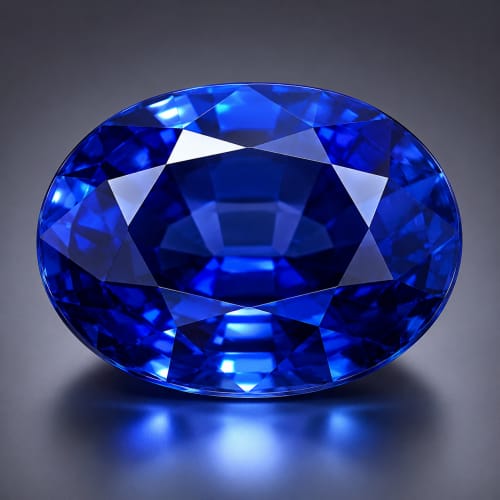
Sapphire
Sapphire· 靑玉 Gem of the heavens
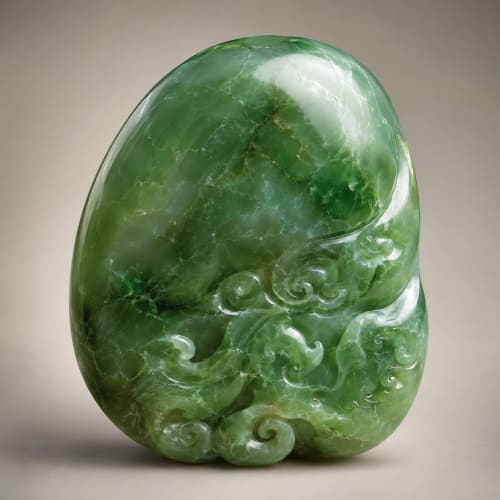
Jade
Jade· 玉 Sacred stone of East Asia
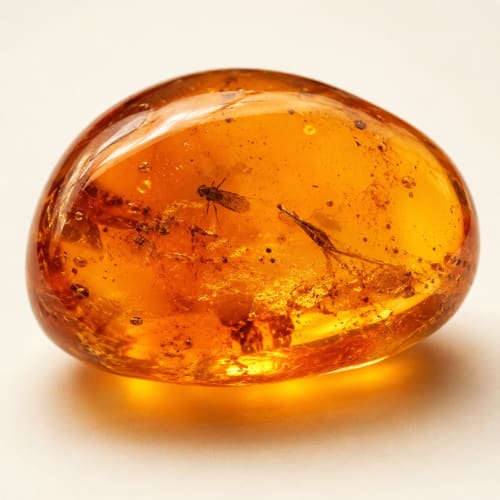
Amber
Amber· 琥珀 Tears of the Heliades

Turquoise
Turquoise · 綠松石 — Sky stone of the Aztec and Navajo

Amethyst
Amethyst· 紫水晶 Gem of Dionysus
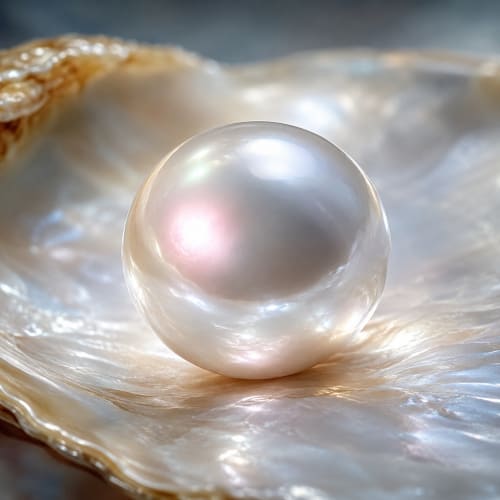
Pearl
Pearl· 眞珠 Tears of the sea

Carbuncle
Carbuncle· 紅榴石 Glowing fantasy gem

Gold
Gold· Au The radiant metal of myth
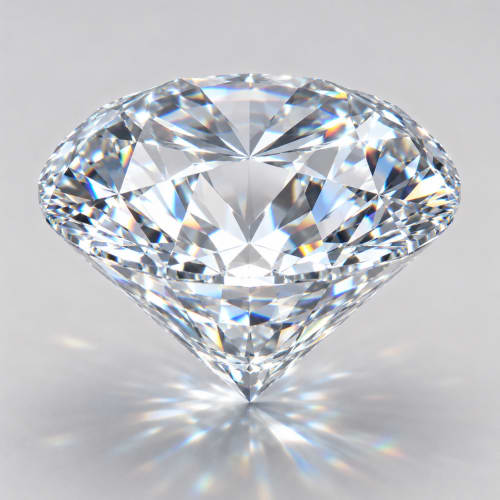
Diamond
Diamond· 金剛石 The hardest gem

Ruby
Ruby· 紅玉 The core of the four cardinal gems
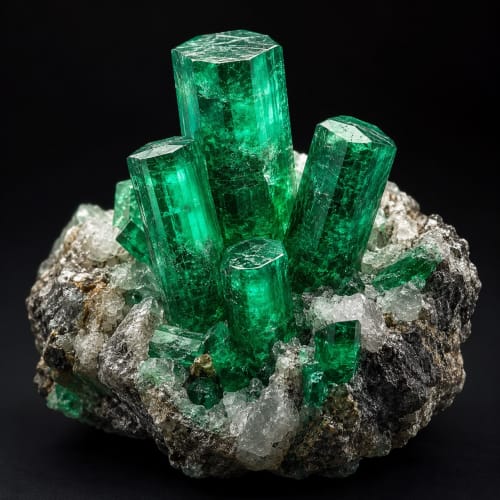
Emerald
Emerald· 翠玉 The Emerald Tablet of Hermes
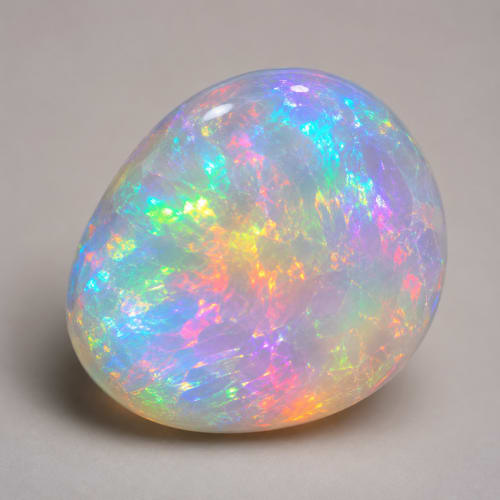
Opal
Opal· 蛋白石 Gem of the rainbow