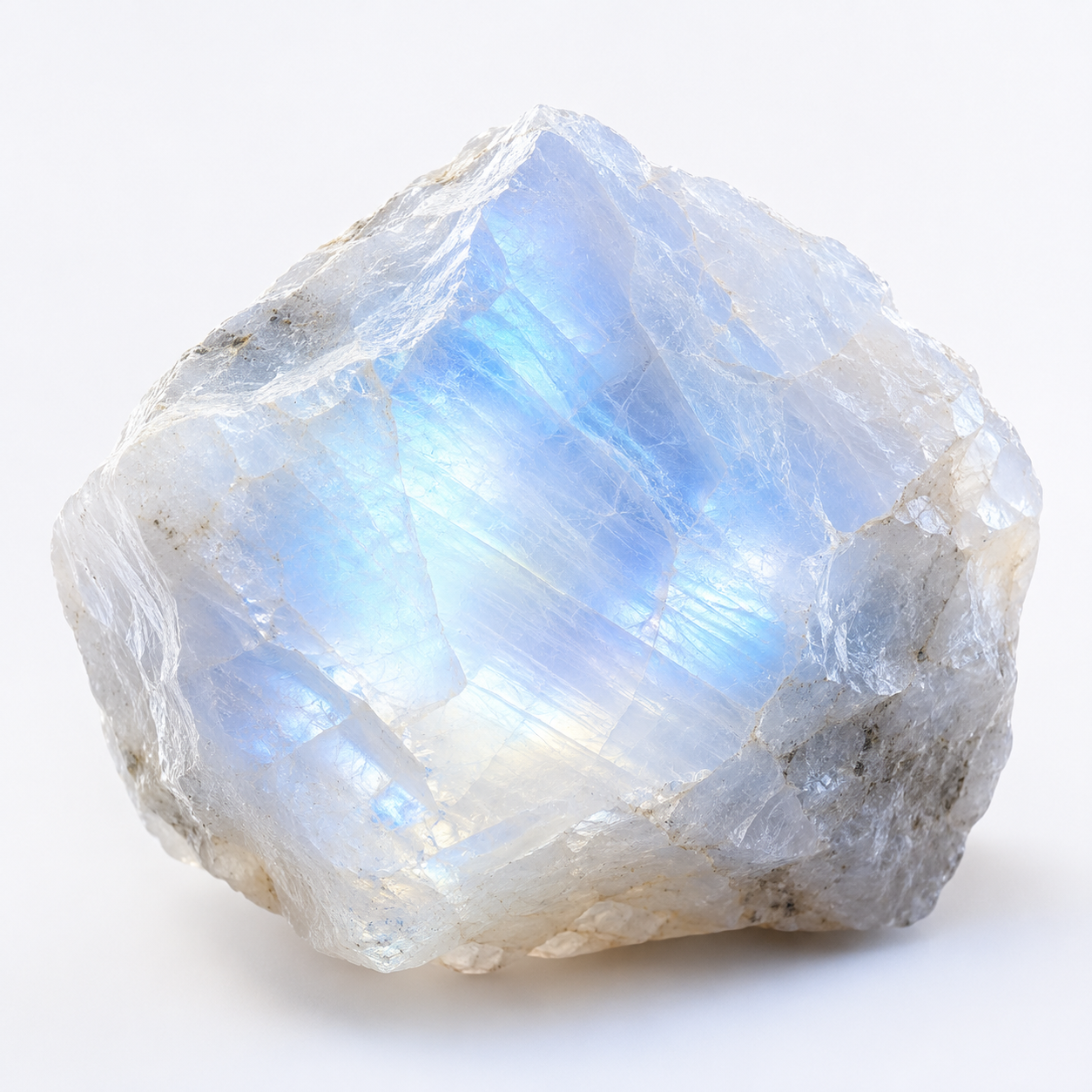
Moonstone
Moonstone· 月長石 Gem of moonlight
Names in Other Languages
 월장석한국어
Moonstone· 月長石 달빛의 보석
 月長石日本語
Moonstone· 月長石 月光の宝石
 月長石繁體中文
Moonstone· 月長石 月光之寶
 MondsteinDeutsch
Moonstone· 月長石 Edelstein des Mondlichts
 Pierre de luneFrançais
Moonstone· 月長石 Gemme du clair de lune
 Piedra lunarEspañol
Moonstone· 月長石 Gema de la luz de la luna
 Pedra da luaPortuguês
Moonstone· 月長石 Gema da luz da lua
 Kamien ksiezycowyPolski
Moonstone· 月長石 Klejnot swiatla ksiezyca
 Лунный каменьРусский
Moonstone· 月長石 Драгоценный камень лунного света
Moonstone (English Moonstone, Latin selenites, Greek selēnítēs, Sanskrit chandrakanta) is the gem of moonlight of the decisive canon — derived from Greek 'selēnítēs (σεληνίτης, moonstone, from σελήνη selēnē 'moon' + suffix)' — the decisive canonical vocabulary — the decisive mineralogical canon of potassium feldspar (KAlSi3O8) — and the decisive Indian canon of Sanskrit 'chandrakanta (beloved of the moon)'. Aliases — Moonstone (Moonstone), selēnítēs (Greek), chandrakanta (Sanskrit), gem of moonlight, gem of Chandra, adularia — are the decisive canonical vocabulary. The decisive natural history origin canon is the decisive canon of 'selenites is the stone whose light waxes and wanes with the moon' in Pliny the Elder's (Pliny the Elder, 23-79) Natural History (Naturalis Historia) Book 37 chapter 181 of the 1st century. The decisive Indian canon is the decisive canon of the gem of the moon god Chandra (Chandra) in Sanskrit 'chandrakanta (चन्द्रकान्त chandrakanta)'.
Origin
The etymological origin is the decisive canonical vocabulary of Greek 'selēnítēs (σεληνίτης selēnítēs, moonstone, from σελήνη selēnē 'moon' + ‐ίτης ítēs 'stone of')' — the decisive canon becoming the etymology of Latin 'selenites' and English 'selenite' — and Sanskrit 'chandrakanta (चन्द्रकान्त chandrakanta, 'beloved (kanta) of the moon (chandra)')' — and English 'moonstone'. The decisive natural history origin canon is the decisive canon of the Roman Pliny the Elder's (Pliny the Elder, 23-79) Natural History (Naturalis Historia) Book 37 chapter 181 of the 1st century — 'selenites is the stone whose light waxes and wanes with the moon, the light waxing with the full moon and waning with the new moon'. The decisive Indian canon is the decisive canon of Sanskrit 'chandrakanta (चन्द्रकान्त chandrakanta, beloved of the moon)' — the decisive canon of the gem of the Hindu moon god Chandra (Chandra) — and the decisive canon of being solidified moonlight. The decisive Roman canon is the decisive canon of the moonstone jewelry of the Roman senate of the 1st century — the decisive canon of the gem of the moon goddess Diana (Diana), and the decisive Adularia canon is the decisive canon of the discovery on Mount Adula (Adula) of Switzerland in 1780 — the decisive canon of the etymology of 'adularia' (adularia, variety of orthoclase). The decisive Art Nouveau canon is the decisive canon of the moonstone jewelry of René Lalique (René Lalique) of France and Tiffany (Tiffany) of the USA of 1890-1910. The decisive source canon is the decisive canon of Meetiyagoda (Meetiyagoda) of Sri Lanka.
Features
- Potassium feldspar (KAlSi3O8) Mohs hardness 6-6.5 monoclinic system
- Main axis Pliny Natural History Book 37 chapter 181 stone of moon changes
- Sanskrit chandrakanta gem of moon god Chandra
- Distinctive blue glow (adularescence) — decisive canon of light reflection
- Greek selēnítēs (stone of the moon) etymology
- Origin — Sri Lanka, India, Myanmar, Madagascar, Swiss Adula
Stories
The selenites in Pliny the Elder's Natural History Book 37 chapter 181 of the 1st century is the decisive natural history origin, and the gem of the moon god in Sanskrit chandrakanta is the decisive Indian canon. The decisive canon used as the gem of moonlight, and the decisive canon invoked as the alternative birthstone of June. The decisive Roman canon is the decisive canon of the gem of Diana of the 1st century, and the decisive Indian canon is the decisive canon of Sanskrit chandrakanta. The decisive Art Nouveau canon is the decisive canon of the moonstone jewelry of René Lalique and Tiffany of 1890-1910. The decisive source canon is the decisive canon of Meetiyagoda of Sri Lanka, and the decisive 21st century canon is the decisive canon of June's birthstone (together with pearl).
Weakness
Moonstone's weaknesses are: (1) Mohs hardness 6-6.5 limit — the decisive canonical weakness — softer than sapphire (9) and diamond (10); (2) binding of cleavage — the decisive canon of the two-directional cleavage of feldspar; (3) binding of impact — the decisive canon of being weak to impact; (4) binding of acid — the decisive canon of damage by acid; (5) binding of synthesis — the decisive canon of forgery by milky glass; (6) binding of the sacred domain — the decisive canon; (7) binding of the moon — the decisive canon of waxing and waning with the moon; (8) binding of time — the decisive canon of the binding of 2000 years of India. The decisive canonical finale is the decisive mythological canon of Art Nouveau of 1890-1910.
Cultural Significance
Moonstone is not merely a mineral icon but the canonical iconographic figure of the decisive Indian-Greco-Roman canon, traversing the gem of the moon god Chandra in Sanskrit chandrakanta, the stone of moon changes in Pliny the Elder's Natural History Book 37 chapter 181 of the 1st century, the gem of Diana of the Roman 1st century, the discovery of Swiss Adula in 1780, the moonstone Art Nouveau of René Lalique and Tiffany of 1890-1910, and the source of Meetiyagoda of Sri Lanka. The etymological origin settled as the decisive canon of Greek 'selēnítēs (σεληνίτης selēnítēs, stone of the moon)' — the decisive canon of Sanskrit 'chandrakanta (beloved of the moon)' and English 'moonstone'. The decisive natural history origin canon is the decisive canon of the Roman Pliny the Elder's (Pliny the Elder, 23-79) Natural History (Naturalis Historia) Book 37 chapter 181 of the 1st century — 'selenites is the stone whose light waxes and wanes with the moon'. The decisive Indian canon is the decisive canon of Sanskrit 'chandrakanta (चन्द्रकान्त chandrakanta, 'chandra (moon) + kanta (beloved)')' — the decisive canon of the gem of the Hindu moon god Chandra (Chandra) — and the decisive canon of solidified moonlight. The decisive Roman canon is the decisive canon of the moonstone jewelry of the Roman senate of the 1st century — the decisive canon of the gem of the moon goddess Diana (Diana) and the Greek Selene (Selene). The decisive Adularia canon is the decisive canon of the discovery on Mount Adula (Adula) of Switzerland in 1780 — the decisive canon of the etymology of mineralogical 'adularia (adularia, variety of orthoclase)'. The decisive Art Nouveau canon is the decisive canon of the moonstone jewelry of the French René Lalique (René Lalique, 1860-1945) and the American Tiffany (Tiffany, Louis Comfort Tiffany, 1848-1933) of 1890-1910, and the decisive source canon is the decisive canon of Meetiyagoda (Meetiyagoda) of Sri Lanka (Sri Lanka) — the decisive canon of the best source of blue moonstone. The decisive 21st century canon is the decisive canon of the designation of moonstone as the birthstone of June (with pearl) by the American jewelry association in 1912.
In Popular Culture
- Sanskrit chandrakanta (चन्द्रकान्त chandrakanta) gem of the moon god Chandra (Chandra) — decisive Indian canon
- Pliny the Elder Natural History (Naturalis Historia) Book 37 chapter 181 selenites — stone of moon changes (1st century) — decisive natural history origin canon
- Moonstone jewelry of the Roman senate gem of Diana (Diana) (1st century) decisive Roman canon
- Gem of the Greek Selene (Selene) — decisive Greek canon
- Discovery on Mount Adula (Adula) of Switzerland (1780) — decisive Adularia canon
- Art Nouveau moonstone by René Lalique (René Lalique) (1890-1910) — decisive Art Nouveau canon
- Art Nouveau moonstone by Tiffany (Tiffany Louis Comfort Tiffany) (1890-1910) — decisive Tiffany canon
- Source of Meetiyagoda (Meetiyagoda) of Sri Lanka — decisive source canon
- Designation of moonstone as the birthstone of June (with pearl) by the USA (1912) — decisive 21st century canon
- Distinctive blue glow (adularescence) — decisive mineralogical canon
Trivia
The etymology of Moonstone (English Moonstone, Latin selenites, Greek σεληνίτης selēnítēs, Sanskrit चन्द्रकान्त chandrakanta) is the decisive canonical vocabulary of Greek 'selēnítēs (σεληνίτης selēnítēs, stone of the moon, from σελήνη selēnē 'moon' + ‐ίτης ítēs 'stone of')' — the decisive canon becoming the etymology of Latin 'selenites' and English 'selenite' — and Sanskrit 'chandrakanta (चन्द्रकान्त chandrakanta, 'chandra (moon) + kanta (beloved), beloved of the moon')' — and English 'moonstone (stone of the moon)'. Aliases — Moonstone (Moonstone), selēnítēs (Greek), selenites (Latin), chandrakanta (Sanskrit), gem of moonlight, gem of Chandra, adularia (variety of orthoclase), birthstone of June — are the decisive canonical vocabulary. The decisive natural history origin canon is the decisive canon of the Roman Pliny the Elder's (Pliny the Elder, born 23 CE, died at Pompeii 79 CE) Natural History (Naturalis Historia) Book 37 chapter 181 of the 1st century — 'selenites is the stone whose light waxes and wanes with the moon, the light waxing with the full moon and waning with the new moon, from Arabia'. The decisive Indian canon is the decisive canon of Sanskrit 'chandrakanta (चन्द्रकान्त chandrakanta)' — the decisive canon of the gem of the Hindu moon god Chandra (Chandra, or Soma), one of the nine planets (navagraha) — and the decisive canon of the myth of solidified moonlight — 'if held in the mouth on a full moon night, moonstone reveals the future'. The decisive Roman canon is the decisive canon of the moonstone jewelry of the Roman senate of the 1st century — the decisive canon of the gem of the moon goddess Diana (Diana, Greek Artemis) and the Greek moon goddess Selene (Selene, σελήνη, the etymology). The decisive Adularia canon is the decisive canon of the discovery on Mount Adula (Adula) of Graubünden in Switzerland in 1780 — the decisive canon of the etymology of mineralogical 'adularia (adularia, variety of orthoclase)'. The decisive Art Nouveau canon is the decisive canon of the moonstone jewelry of the French René Lalique (René Lalique, born 6 April 1860, died 1 May 1945) and the American Tiffany (Tiffany, Louis Comfort Tiffany, born 18 February 1848, died 17 January 1933) of 1890-1910 — the decisive canon of the golden age of jewelry of the 1890s. The decisive source canon is the decisive canon of Meetiyagoda (Meetiyagoda) of Sri Lanka (Sri Lanka, 'Ceylon') — the decisive canon of the best source of blue moonstone — and the decisive canon of Karnataka of India, Myanmar, and Madagascar. The decisive 21st century canon is the decisive canon of the designation of moonstone as the birthstone of June (with pearl and alexandrite) by the American jewelry association in 1912, and the decisive mineralogical canon is the decisive canon of the distinctive blue glow 'adularescence' — the decisive canon of light scattering by the microscopic layers of two species of feldspar (orthoclase and albite).
Related

Opal
Opal· 蛋白石 Gem of the rainbow
Pearl
Pearl· 眞珠 Tears of the sea
Silver
Silver· Ag Metal of the moon and the soul

Amethyst
Amethyst· 紫水晶 Gem of Dionysus

Carbuncle
Carbuncle· 紅榴石 Glowing fantasy gem

Gold
Gold· Au The radiant metal of myth
Sapphire
Sapphire· 靑玉 Gem of the heavens
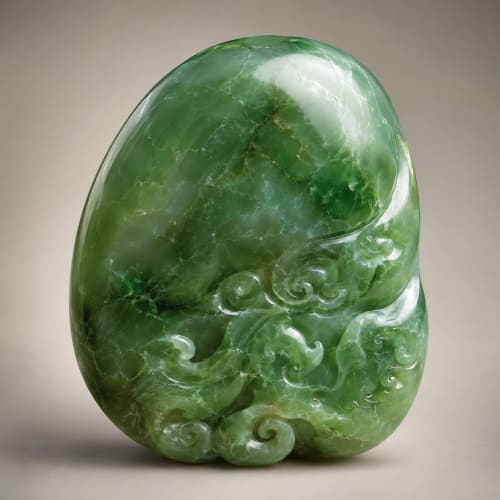
Jade
Jade· 玉 Sacred stone of East Asia
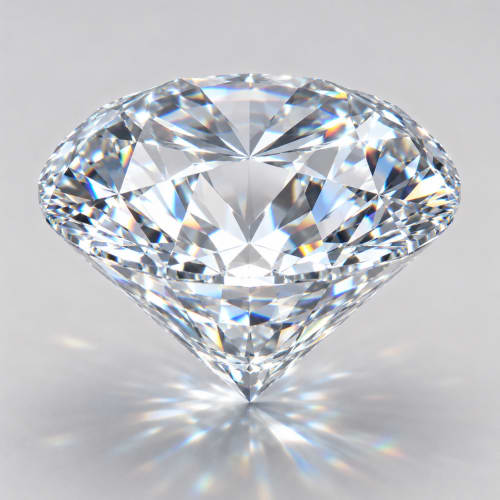
Diamond
Diamond· 金剛石 The hardest gem

Ruby
Ruby· 紅玉 The core of the four cardinal gems
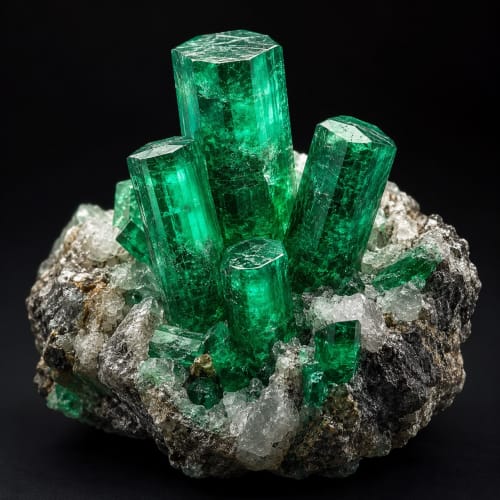
Emerald
Emerald· 翠玉 The Emerald Tablet of Hermes
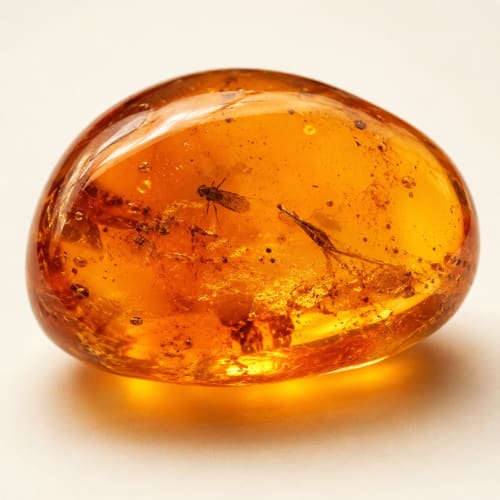
Amber
Amber· 琥珀 Tears of the Heliades