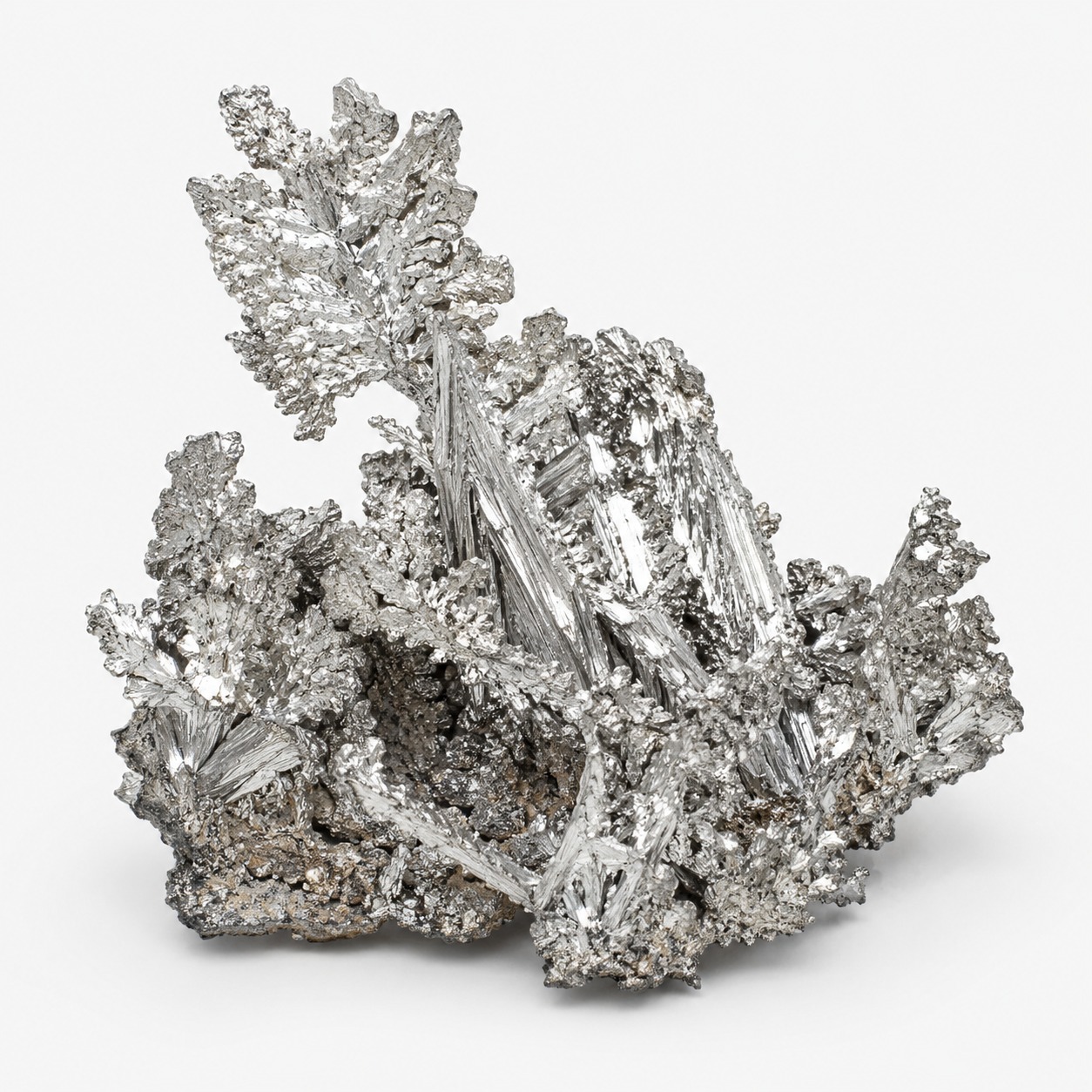
Silver
Silver· Ag Metal of the moon and the soul
Names in Other Languages
 은한국어
은한국어Silver· 銀 달과 영혼의 금속
 銀日本語
銀日本語Silver· 銀 月と霊の金属
 銀繁體中文
銀繁體中文Silver· 銀 月與靈之金屬
 SilberDeutsch
Silver· Ag Metall des Mondes und der Seele
 ArgentFrançais
Silver· Ag Metal de la lune et de l ame
 PlataEspañol
Silver· Ag Metal de la luna y el alma
 PrataPortuguês
Silver· Ag Metal da lua e da alma
 SrebroPolski
Silver· Ag Metal ksiezyca i duszy
 СереброРусский
Silver· Ag Металл луны и души
Silver (English Silver, Latin Argentum, Chinese ) is one of the seven metals of human history — the decisive canon — and the decisive canonical iconographic figure of the 'metal of the moon' — established as the weakness of werewolves and vampires in fantasy canon — also the metal of sacred purification and the standard of currency. Aliases — Silver (Silver), Argentum (Argentum, Latin), argyros (argyros, Greek), Metal of Selene, Tears of the Moon — are the decisive canonical vocabulary. The decisive origin canon is the decisive origin canon of silver mining in Mesopotamia and Anatolia of c. 3000 BCE, the electrum coinage of Lydia of the 6th century BCE, and subsequent silver coinage. The decisive weakness canon is the decisive origin canon of killing a werewolf with a silver bullet at the Beast of Gevaudan (Bete du Gevaudan) incident in France in 1764, and the decisive global film canon of the silver-headed cane in the film The Wolf Man (1941) by USA Universal Pictures (director George Waggner, starring Lon Chaney Jr.).
Origin
The etymological origin is the decisive canonical vocabulary of Old English 'seolfor' and Proto-Germanic 'silubr', and the parallel etymology of Latin 'argentum' and Greek 'argyros (shining)'. The decisive mining origin canon is the decisive origin canon of silver mining in Mesopotamia and Anatolia (modern Turkey) of c. 3000 BCE, and the decisive canon of the Laurion (Laurion, Attica, Greece) silver mines of the 5th century BCE becoming the foundation of the economy of Athens's Golden Age. The decisive currency canon is the decisive canon of the electrum (gold-silver alloy) of Lydia of the 6th century BCE being humanity's first coinage, followed by pure silver coinage — the decisive canon of the discovery of the Potosi (Potosi) silver mines in Bolivia in 1545 establishing the peak of European silver coinage in the 16th-17th centuries. The decisive mythological canon is the decisive canon of the silver bow and arrows of Selene (Selene, goddess of the moon) and Artemis (Artemis, goddess of the moon and the hunt) in Greek mythology, the silver symbol of Isis (Isis, goddess of the moon) in Egypt, and the White Tiger (Baihu) of China (guardian of the west and metal beast). The decisive biblical canon is the decisive canon of Matthew 26:14-15 of Judas Iscariot betraying Jesus for thirty pieces of silver (thirty pieces of silver).
Features
- Transition metal of atomic number 47 — chemical symbol Ag (Argentum)
- Highest electrical and thermal conductivity of all metals
- Highest reflectivity of all metals (over 95% white)
- Main axis metal of the moon weakness of werewolves and vampires
- Aliases — Argentum (Argentum), argyros (argyros), Metal of Selene
- Currency standard — silver standard from the 6th century to the 19th century
Stories
Silver mining in Mesopotamia and Anatolia of c. 3000 BCE is the decisive origin, and the decisive currency canon is the electrum coinage of Lydia of the 6th century BCE and the discovery of the Potosi silver mines in 1545. The decisive fantasy canon established as the weakness of werewolves and vampires, and the decisive canon of the metal of sacred purification used in Catholic and Eastern Orthodox chalices, crosses, and icons. The decisive canon of the silver standard as the currency standard from the 6th century until the adoption of the gold standard by Germany and the USA in 1873. The decisive 20th-century film canon is the decisive global canon of the silver-headed cane in The Wolf Man (1941) by USA Universal (director George Waggner), and the decisive canon of the film Silver Bullet (1985) of the USA. The decisive 21st-century global canon is the decisive canon of the silver weapons in the USA TV series Buffy the Vampire Slayer (1997) and the USA TV series Supernatural (2005-2020).
Weakness
Silver's weaknesses are: (1) oxidation — the decisive canonical weakness — the decisive canon of reacting with hydrogen sulfide (H2S) to form a black film of silver sulfide (Ag2S); (2) softness — the decisive canonical weakness — harder than gold but softer than steel; (3) rarity — the decisive canonical weakness — 1000 times more abundant than gold but only 0.0001% of the crust; (4) binding of industry — the decisive canon of over 80% consumption in photography, electronics, solar panels, etc.; (5) binding of currency — the decisive canon of the end of the silver standard with the adoption of the gold standard in 1873; (6) binding of the sacred domain — the decisive canon; (7) binding of the moon — the decisive canon of being bound as the metal of the moon; (8) binding of time — the decisive canon as one of the seven metals. The decisive canonical finale is the decisive mythological canon of the symbol of betrayal in Matthew's thirty pieces of silver.
Cultural Significance
Silver is not merely a metal icon but the canonical iconographic figure of the decisive human civilization canon, traversing silver mining in Mesopotamia and Anatolia of c. 3000 BCE, the electrum coinage of Lydia of the 6th century BCE, the Laurion silver mines of Greece of the 5th century BCE, Pliny's Natural History Book 33 of the 1st century, the thirty pieces of silver of Matthew 26 of the 1st century, the discovery of the Potosi silver mines in 1545, the Beast of Gevaudan in 1764, the Grimm's Snow White of 1812, the adoption of the gold standard in 1873, Bram Stoker's Dracula of 1897, Universal's The Wolf Man of 1941, the film Silver Bullet of 1985, and the USA TV series Supernatural of 2005. The etymological origin settled as the decisive canon of Old English 'seolfor' and Proto-Germanic 'silubr', with the parallel etymology of Latin 'argentum' and Greek 'argyros (shining)'. The decisive mining origin canon is the decisive canon of silver mining in Mesopotamia and Anatolia of c. 3000 BCE, and the decisive canon of the Laurion silver mines of the 5th century BCE becoming the foundation of the economy of Athens's Golden Age. The decisive currency canon is the decisive canon of the electrum coinage of Lydia of the 6th century BCE and subsequent pure silver coinage — the decisive canon of the discovery of the Potosi silver mines in Bolivia in 1545 establishing the global peak of the Spanish 8 reales silver coin in the 16th-17th centuries. The decisive natural history canon is the decisive canon of Pliny the Elder's Natural History (Naturalis Historia) Book 33 of the 1st century. The decisive mythological canon is the decisive canon of the moon metal of Selene/Artemis in Greece, Isis in Egypt, and the White Tiger in China, and the decisive biblical canon is the decisive canon of Judas Iscariot's thirty pieces of silver of Matthew 26:14-15. The decisive weakness canon is the decisive origin canon of killing a werewolf with a silver bullet at the Beast of Gevaudan (Bete du Gevaudan, 1764-1767) incident in France in 1764, and the decisive canon of the silver-headed cane (silver-headed cane) in the film The Wolf Man (The Wolf Man, director George Waggner, starring Lon Chaney Jr.) by USA Universal Pictures in 1941, and the decisive 21st-century global canon is the decisive canon of the silver weapons (silver bullets and silver knives) in the USA CW TV series Supernatural (2005-2020).
In Popular Culture
- Silver mining in Mesopotamia and Anatolia (c. 3000 BCE) — decisive origin canon
- Electrum coinage and silver coinage of Lydia (6th century BCE) — decisive currency canon
- Laurion silver mines of Greece (5th century BCE) — decisive mining canon
- Pliny the Elder Natural History Book 33 (1st century) — decisive natural history canon
- Matthew 26:14-15 Judas Iscariot's thirty pieces of silver (1st century) — decisive biblical canon
- Discovery of the Potosi silver mines in Bolivia (1545) — decisive global currency canon
- Silver bullet of the Beast of Gevaudan (1764) — decisive weakness canon
- Silver-headed cane of Universal's The Wolf Man (1941) — decisive 20th-century film canon
- USA film Silver Bullet (1985) — decisive 20th-century film canon
- Silver weapons in the USA CW TV series Supernatural (2005-2020) — 21st-century decisive global canon
Trivia
The etymology of Silver (English Silver, Latin Argentum, Greek argyros, Chinese ) is the decisive canonical vocabulary of Old English 'seolfor' and Proto-Germanic 'silubr', with the Latin 'argentum' deriving from the Indo-European root 'arg- (shining)' — the decisive canon of the parallel etymology of Greek 'argyros (argyros)' and Argentina (Argentina, land of silver). Aliases — Silver (Silver), Argentum (Argentum), argyros (argyros), Metal of Selene, Tears of the Moon, Metal of the Moon, Metal of Sacred Purification, Bane of the Werewolf, Bane of the Vampire — are the decisive canonical vocabulary. The decisive mining origin canon is the decisive origin canon of silver mining in Mesopotamia (modern Iraq) and Anatolia (modern Turkey) of c. 3000 BCE, and the decisive canon of the Laurion silver mines (Laurion, Attica, Greece, about 50 km south of Athens) of the 5th century BCE becoming the foundation of the economy of Pericles's Golden Age of Athens. The decisive currency canon is the decisive canon of the electrum (gold-silver natural alloy) of Lydia of the 6th century BCE being humanity's first coinage, and the decisive canon of pure silver coinage after the Persian conquest of Cyrus the Great in 546 BCE, with the decisive canon of the Roman denarius (denarius, introduced 211 BCE) silver coinage. The decisive natural history canon is the decisive canon of Pliny the Elder's Natural History (Naturalis Historia) Book 33 by the Roman Pliny the Elder (Pliny the Elder, born 23 CE, died at Pompeii 79 CE) of the 1st century. The decisive mythological canon is the decisive canon of the silver bow and arrows of Selene (Selene, goddess of the moon) and Artemis (Artemis, goddess of the moon and the hunt) in Greek mythology, the silver symbol of Isis (Isis, goddess of the moon) in Egypt, and the White Tiger (Baihu, leader of the seven western constellations) of China, and the decisive biblical canon is the decisive canon of Judas Iscariot (Judas Iscariot) betraying Jesus Christ for thirty pieces of silver (thirty pieces of silver, Greek triakonta argyria) to the chief priests in New Testament Matthew (Matthew) 26:14-15 — the decisive canon of throwing the silver coins into the temple before suicide. The decisive weakness canon is the decisive origin canon of Jean Chastel (Jean Chastel) killing a werewolf with a silver bullet on 19 June 1767 at the Beast of Gevaudan (Bete du Gevaudan, estimated 113 casualties) incident in France's Gevaudan (Gevaudan, modern Lozere) from June 1764 to June 1767, and the decisive global film canon of the silver-headed cane in the film The Wolf Man (The Wolf Man, director George Waggner (George Waggner), starring Lon Chaney Jr. (Lon Chaney Jr., 1906-1973), screenplay by Curt Siodmak) by USA Universal Pictures on 12 December 1941. The decisive currency end canon is the decisive canon of Germany's adoption of the gold standard in 1873 and the USA's Coinage Act of 1873 ('Crime of 1873') abolishing the silver standard and transitioning to the gold standard, and the decisive 21st-century global canon is the decisive canon of the silver bullets and silver knives in the USA WB TV series Buffy the Vampire Slayer (Buffy the Vampire Slayer, produced by Joss Whedon, 1997-2003) and the USA CW TV series Supernatural (Supernatural, produced by Eric Kripke, 15 seasons) from 13 September 2005.
Related

Mithril
Mithril · True Silver — A Legendary Metal Light as a Feather, Harder Than Steel
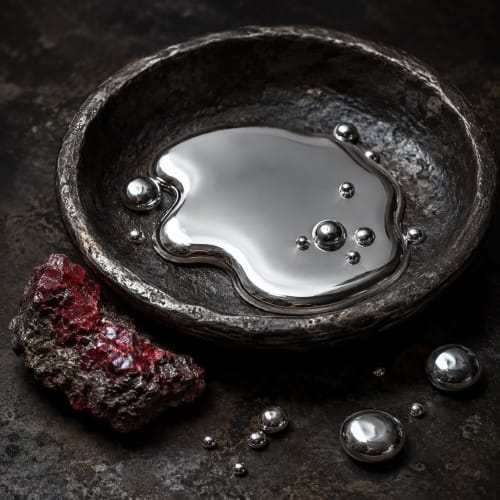
Mercury
Mercury· Hg Liquid metal, the element of Hermes

Gold
Gold· Au The radiant metal of myth
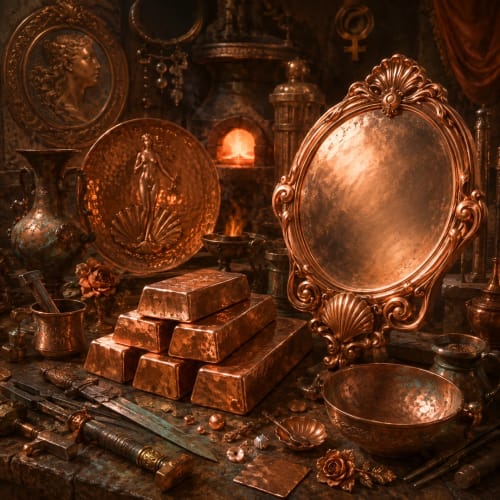
Copper
Copper· Cu Metal of Venus

Orichalcum
Orichalcum · The Lost Mystic Metal of Atlantis
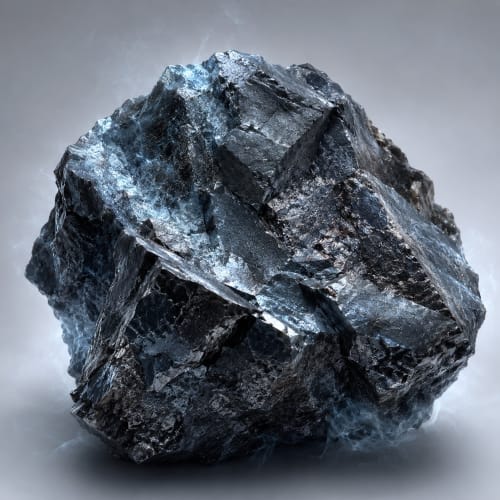
Cold Iron
Cold Iron· 寒鐵 Bane of the fae
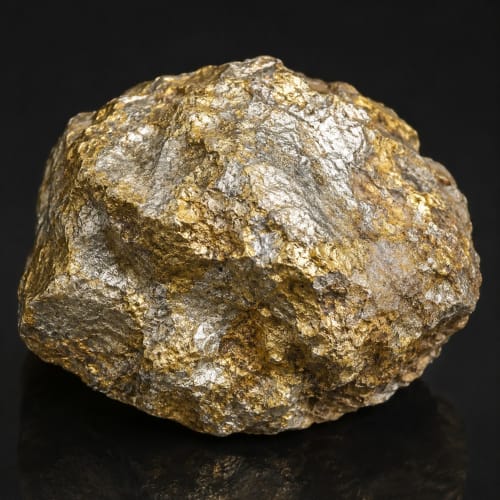
Electrum
Electrum· 琥珀金 Natural gold-silver alloy

Meteoric Iron
Meteoric Iron· 隕鐵 Steel that fell from the sky

Iron
Iron· Fe Core metal of human civilization

Lead
Lead· Pb Metal of Saturn
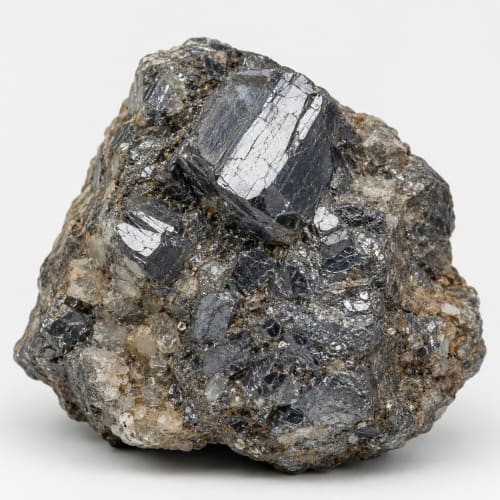
Tin
Tin· Sn Key ingredient of bronze

Amethyst
Amethyst· 紫水晶 Gem of Dionysus