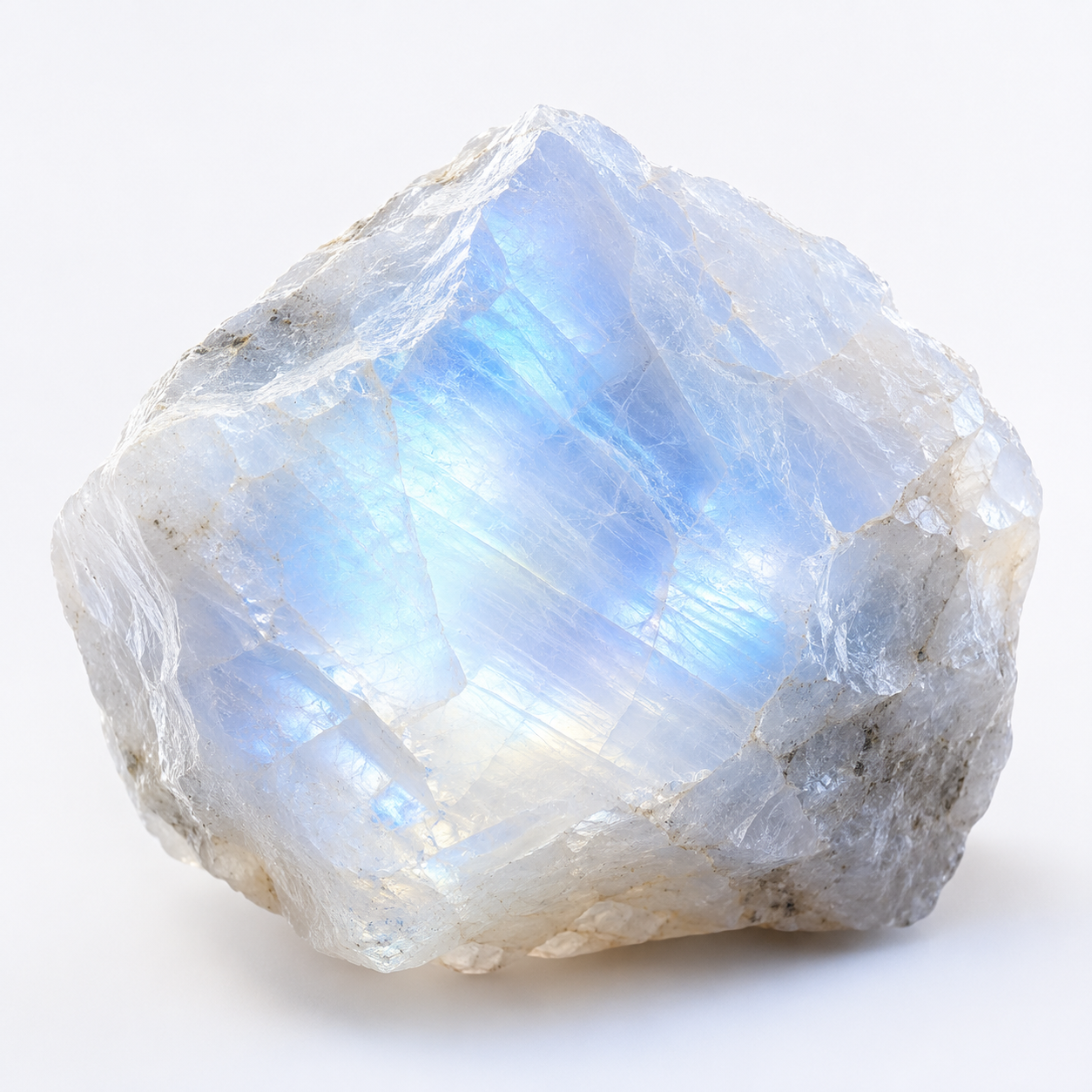
Moonstone
Moonstone· 月長石 Gem of moonlight
Moonstone (English Moonstone, Latin selenites, Greek selēnítēs, Sanskrit chandrakanta) is the gem of moonlight of the decisive canon — derived from Greek 'selēnítēs (σεληνίτης, moonstone, from σελήνη selēnē 'moon' + suffix)' — the decisive canonical vocabulary — the decisive mineralogical canon of potassium feldspar (KAlSi3O8) — and the decisive Indian canon of Sanskrit 'chandrakanta (beloved of the moon)'. Aliases — Moonstone (Moonstone), selēnítēs (Greek), chandrakanta (Sanskrit), gem of moonlight, gem of Chandra, adularia — are the decisive canonical vocabulary. The decisive natural history origin canon is the decisive canon of 'selenites is the stone whose light waxes and wanes with the moon' in Pliny the Elder's (Pliny the Elder, 23-79) Natural History (Naturalis Historia) Book 37 chapter 181 of the 1st century. The decisive Indian canon is the decisive canon of the gem of the moon god Chandra (Chandra) in Sanskrit 'chandrakanta (चन्द्रकान्त chandrakanta)'.