
Heater Shield
Classic triangular shield of the medieval knight
Names in Other Languages
 히터 실드한국어
Heater Shield · 중세 기사의 삼각형 방패
 ヒーターシールド日本語
中世騎士の逆三角形盾
 熨斗形盾繁體中文
中世紀騎士的倒三角形盾牌
 DreieckschildDeutsch
Klassischer dreieckiger Ritterschild des Mittelalters
 ÉcuFrançais
Bouclier triangulaire classique du chevalier médiéval
 Escudo de caballeroEspañol
Escudo triangular clásico del caballero medieval
 Escudo heaterPortuguês
Escudo triangular clássico do cavaleiro medieval
 Tarcza rycerskaPolski
Klasyczna trójkątna tarcza średniowiecznego rycerza
 Рыцарский щитРусский
Классический треугольный щит средневекового рыцаря
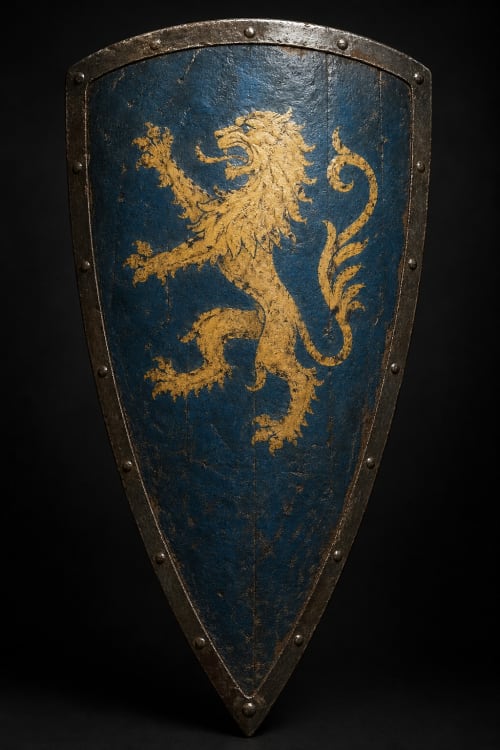
The heater shield is the standard shield used by the European knight in the 13th to 15th centuries, marked by an inverted-triangle shape, wide at the top and tapering to a point at the bottom. The name 'heater' is a later term, from its resemblance to an old clothes iron (a heater), for in the Middle Ages it was simply called a shield. It is a form shrunk from the large kite shield used in the 11th and 12th centuries, the lower part that had covered the leg becoming unnecessary as leg armor developed. About 50 to 70 cm tall, it could be handled easily with one hand, and was made in a layered structure of wooden boards covered with several layers of leather and cloth, the edge reinforced with a metal rim. Above all, the face of the shield became the chief field for painting the coat of arms, letting a knight be recognized on the battlefield and tying directly into the development of medieval heraldry. After the 15th century, as plate armor came to cover the whole body, it gradually declined on the battlefield, but it continued in use in the mounted joust.
Origin
The heater shield is seen as a shield specialized for mounted combat that appeared in the early 13th century as the kite shield used in the earlier age grew smaller. The kite shield hung long from the top down to the leg, guarding the flank and leg of the mounted knight together, but as leg armor of mail and plate developed, that long lower part became cumbersome. So, shortened below into an inverted-triangle shield easy to handle with one hand, it was refined into the heater shield. It was used widely as the standard shield of the European knight from the 13th to the 15th century, and with its clean face good for painting arms, it became a central tool of medieval heraldic culture.
Features
- Inverted-triangle shape, wide at the top and pointed at the bottom
- About 50 to 70 cm tall, a size handled with one hand
- Layered structure of wood, leather, and cloth with a metal-rim edge
- A coat of arms painted on the face for identification
- Smaller and lighter than the kite shield, suited to mounted combat
- Gear tied directly to the development of medieval heraldry
Stories
The heater shield was used chiefly in the knight's mounted combat and the mounted joust. The arm was slipped into the inner leather straps (the enarmes) and the grip held, fastening it firmly to the arm, and on horseback it was held to the left to turn aside the enemy's lance, blade, and arrow. Wide above to guard the torso and shoulder and narrow below to cover the flank from the saddle while leaving the leg to armor, it struck a balance well fitted to the mounted knight. Slightly curved into a dished surface to wrap to the body, it glanced a blow coming from the front aside. At rest it could also be slung on the back by a strap over the shoulder (the guige).
Weakness
The weakness of the heater shield comes from its small size. Small and light enough to hold in one hand, it suited mounted combat, but in infantry combat fought on foot it was hard to cover the whole body and was at a disadvantage against a larger shield. The leg in particular was not covered by the shield, and was protected only with separate leg armor. The body of wood and leather could split or break under repeated blows, and decisively, once plate armor came to cover the whole body, the hand-held shield itself became gradually unnecessary.
Cultural Significance
The heater shield is a shield that symbolizes medieval chivalry and heraldic culture. Its clean inverted-triangle face was perfectly suited to painting a coat of arms, serving as a 'moving badge of identity' that let a knight whose face was hidden by armor be recognized from afar. The shield-shaped frame of the coat of arms used to this day, the escutcheon, derives from the very form of this shield. So the heater shield became, beyond a mere defense, a symbol of medieval society that held a knight's house, honor, and identity on one face, and it remains today as the prototype of the coat of arms and the family crest.
In Popular Culture
The heater shield appears in nearly every film, drama, and game about the medieval knight and fantasy. The inverted-triangle shield painted with a splendid coat of arms is a representative form that calls 'the medieval knight' to mind at a glance, used in games and heraldic design as the typical shape of a shield. In fiction, however, the heater shield is often given to nearly every medieval warrior regardless of period, mixing with the earlier age when the kite shield or the round shield was used. For the symbolism of a shield painted with arms, it is especially loved as a visual device.
Trivia
- The name 'heater shield' is a later term, from its resemblance to an old clothes iron (a heater), and in the Middle Ages it was simply called a shield.
- The heater shield is a form shrunk from the large kite shield that had covered the leg, the lower part becoming unnecessary as leg armor developed.
- The escutcheon, the shield-shaped frame used for the coat of arms to this day, derives from the very form of this shield.
Related
Kite Shield
Large kite-shaped shield of the Norman knight
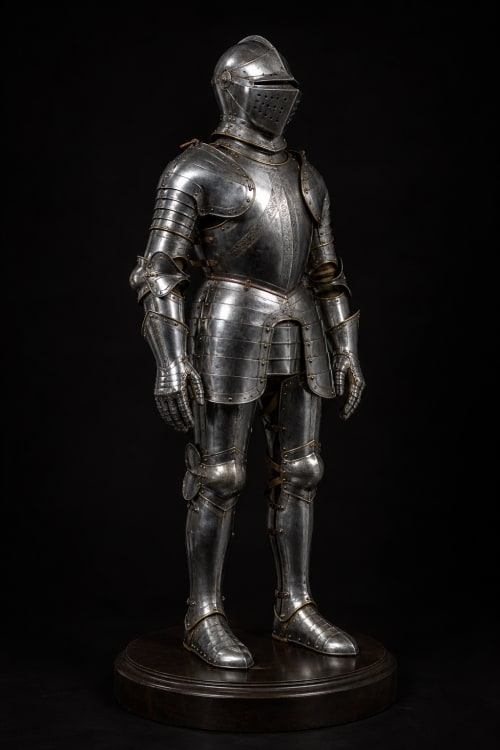
Plate Armor
Full-body steel armor of the medieval knight
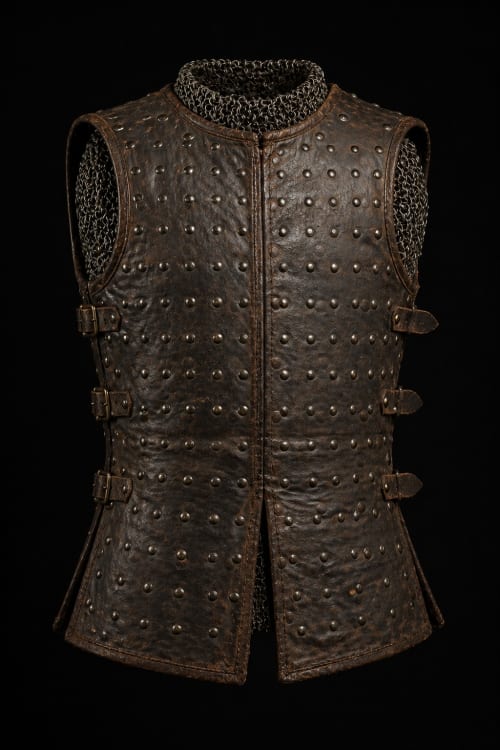
Coat of Plates
Transitional armor with iron plates riveted inside fabric
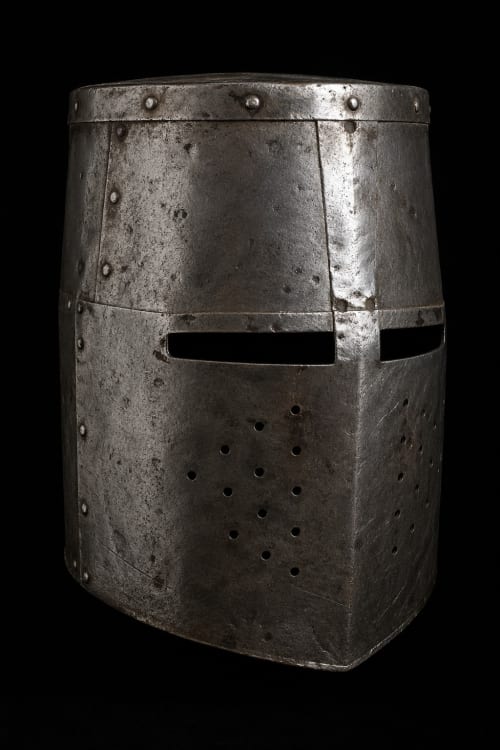
Great Helm
Barrel-shaped helmet enclosing the entire head
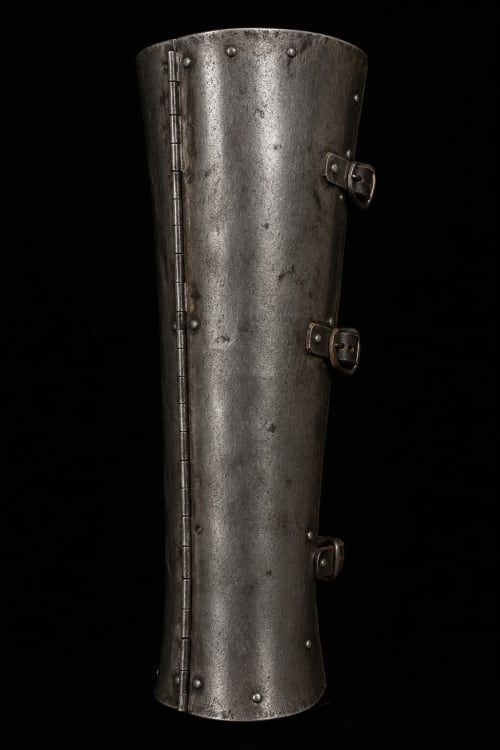
Vambrace
Tubular forearm armor of the medieval knight
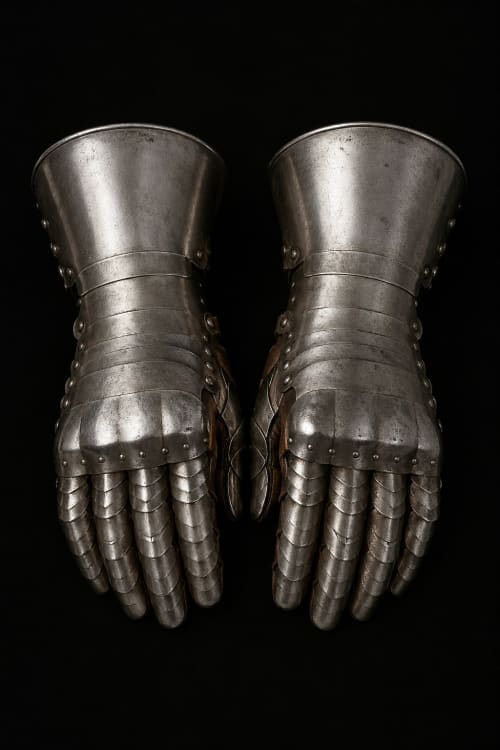
Gauntlet
Articulated metal glove of the medieval knight
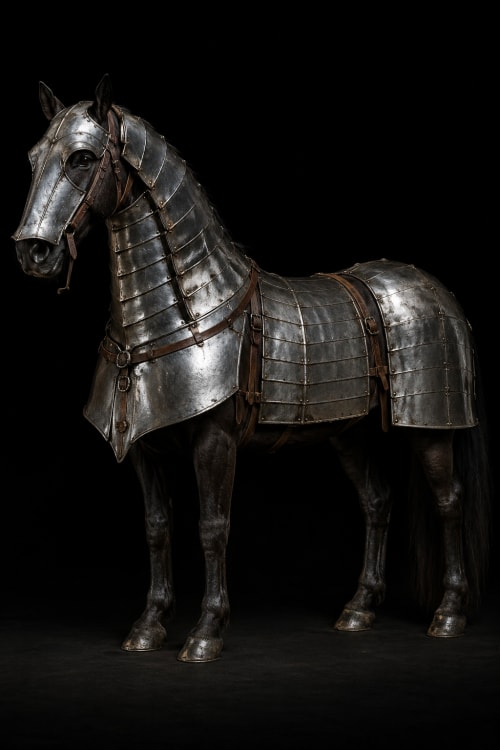
Horse Barding
Full-body armor for the war horse
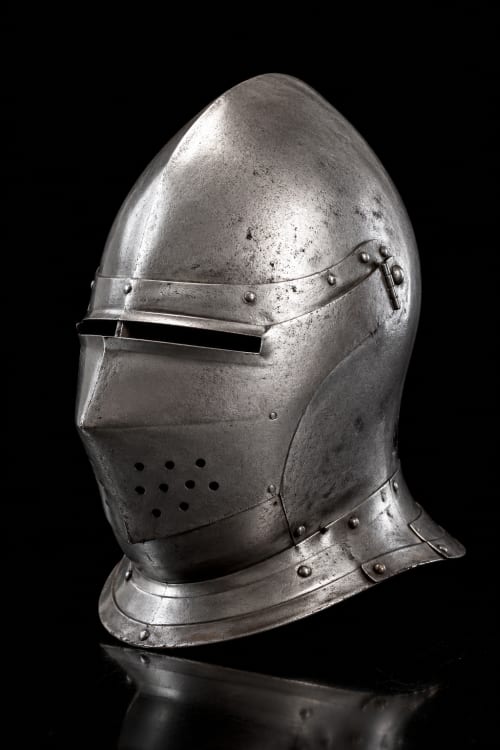
Armet
Close-fitting Italian helmet of the 15th century
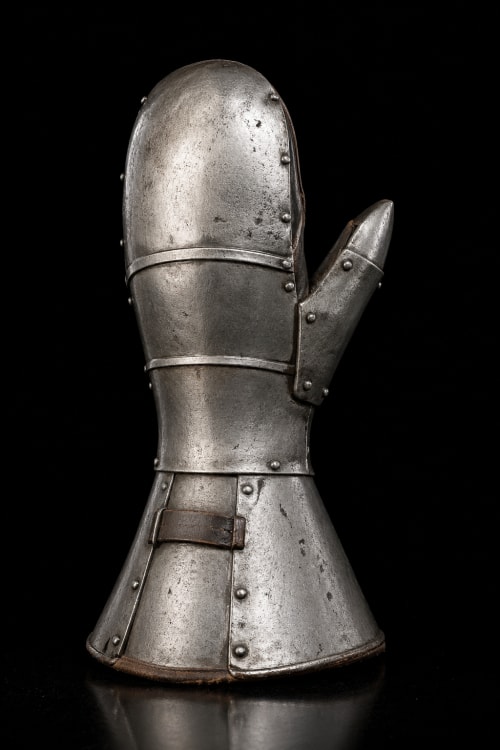
Mitten Gauntlet
Mitten-style metal gauntlet with unified finger shell
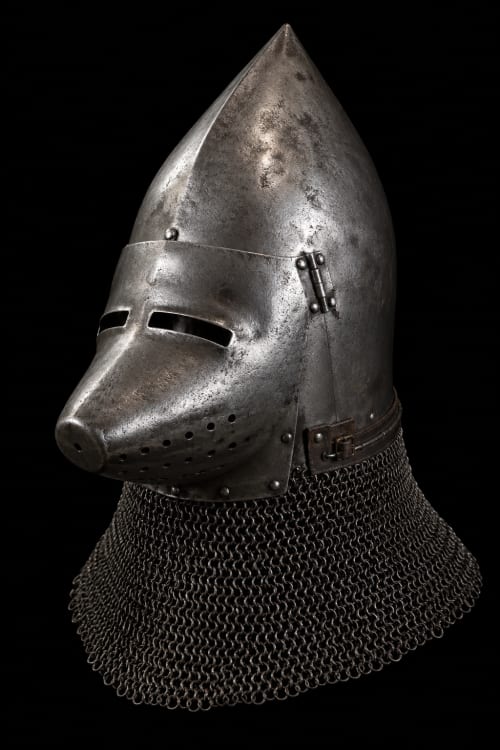
Bascinet
Pointed medieval helmet with detachable visor
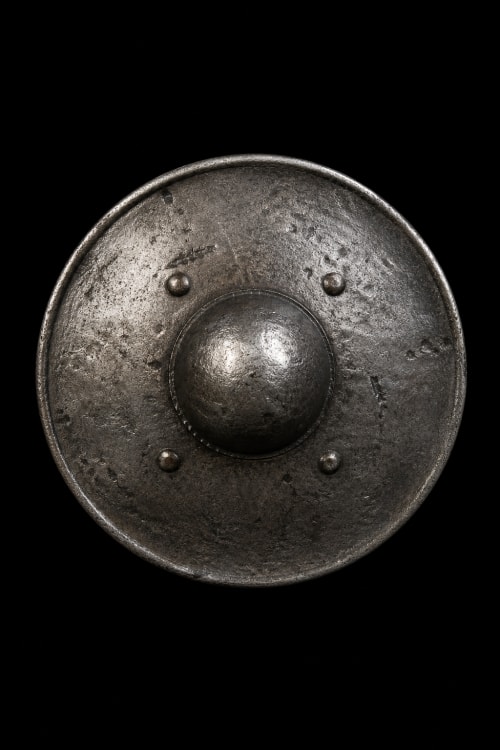
Buckler
Small fist-held round shield for active defense
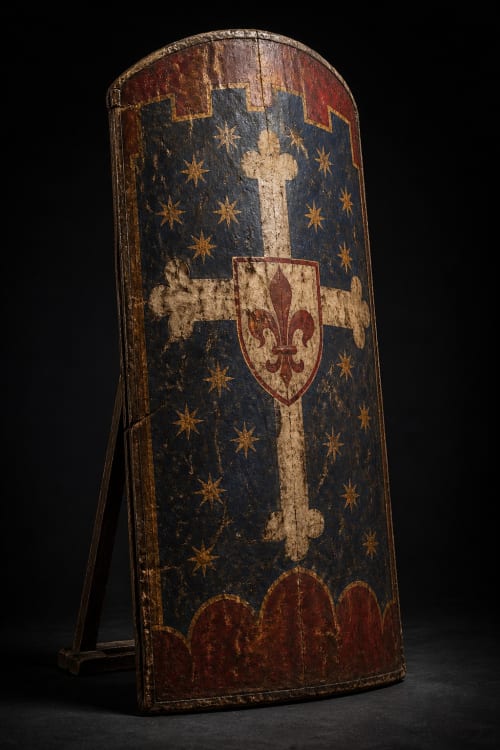
Pavise
Large standing shield for crossbowmen