
Coat of Plates
Transitional armor with iron plates riveted inside fabric
Names in Other Languages
 코트 오브 플레이트한국어
Coat of Plates · 천 속에 철판을 숨긴 과도기 갑옷
 コート・オブ・プレート日本語
布の外装に金属板を内蔵した過渡期の鎧
 罩甲繁體中文
布料外殼內嵌金屬板的過渡期鎧甲
 PlattenrockDeutsch
Übergangsrüstung mit in Stoff eingelassenen Metallplatten
 Cotte de platesFrançais
Armure de transition avec plaques métalliques intégrées dans du tissu
 Cota de placasEspañol
Armadura de transición con placas metálicas integradas en tela
 Cota de placasPortuguês
Armadura de transição com placas metálicas integradas em tecido
 PłatnerzPolski
Zbroja przejściowa z metalowymi płytami wszytymi w tkaninę
 БригантинаРусский
Переходный доспех с металлическими пластинами внутри ткани
The coat of plates, also known as the pair of plates, is the transitional armor that grew up in Europe from the middle of the 13th century to the late 14th century, in an age in which the mail hauberk alone could no longer take all of the shock of arrows and sword points. Inside a coat of cloth or leather, a number of iron plates large and small were fixed by rivets, and the arms of the family were painted on the outside, so that from without it looked like an ordinary surcoat, but inside hidden plates covered the chest, the back, and the flanks. The order of dressing was set: under it the man wore a thick padded gambeson, and over that the mail hauberk, and over that the coat of plates. These three layers together formed the standard of the 13th-century knight, and with a great helm laid on top, this is the figure of the knight most often shown in the illuminated manuscripts and tomb sculpture of the age.
Origin
There is no single settled answer in scholarship for the origin of the coat of plates, and it is seen that the influence that came from the East in the late 12th century and the line in the West that had been reinforcing the inside of the padded coat with small iron plates from the 11th and 12th centuries came together into the form that took root in the middle of the 13th century. The first thoroughgoing piece of evidence is the statue of Saint Maurice at the cathedral of Magdeburg of about 1250, on which a single coat of plates worn over the hauberk is carved with care. From the middle of the 13th century, for nearly a hundred years, the same dress increased in the tomb sculpture and illuminated manuscripts of all of Europe, and at the great burial site of the Battle of Wisby on the Swedish island of Gotland in 1361 as many as 25 actual coats of plates were brought to light, put in order in 1939 in the close study of Bengt Thordeman. In the late 14th century, as plate craft grew and chest and back turned into a single great plate, the coat of plates broke into two lines: the great plate ran on as one pair of cuirasses, and the line in which small plates were gathered grew into the brigandine of the same outer face.
Features
- Iron plates of many sizes fixed by rivets inside a cloth or leather outer coat
- Dress in which it was put on over the mail hauberk to make two layers of protection
- A covered structure whose outside, painted with the arms of the family, looked like an ordinary surcoat
- Actual examples brought to light in great number at the burial site of the Battle of Wisby (1361)
- Direct ancestor of both the single great plate cuirass and the small-plate brigandine
- A scholarly standard set by the typology of the Visby coats made by Bengt Thordeman in Sweden
Stories
The coat of plates was the reinforcing armor put on to lay another layer of cover over the chest and back of the 13th- and 14th-century knight and heavy foot. The three-layer dress of a padded gambeson, a mail hauberk over it, and a coat of plates over that took the shock of arrows and sword points in turn, spreading it through each layer, and against a blow that struck the same place again and again, the inner plate stood as the last support, lessening the depth that reached the flesh. Of the 25 actual coats of plates brought to light at the burial site of the Battle of Wisby in 1361, many were buried still on the body together with the mail, and arrowheads and sword marks were found driven in the same places, and so they stand as material evidence of how far the coat of plates withstood the growing longbow and the heavy flail. The same armor was also worn in tournament and ceremony, where the arms of the family on its outer face stood out clearly, and so it held the identity of the knight and his protection together within a single coat.
Weakness
The weakness of the coat of plates was the natural fruit of its make. Being a structure in which small iron plates were riveted inside a cloth, each plate took the shock by itself, but the strength to take a heavy blow that came again and again at one place with a single face was less than that of the later single plate cuirass. The shoulders, the flanks, and the legs had to be entrusted to the mail beneath, and so as the protection of the front grew firm, more weight fell on the other places. The cloth and the leather, when they took rain, weakened and could no longer carry the iron plate within, and when a rivet at one place worked loose, the plate at that place hung free and the grain of the protection broke. So from the middle of the 14th century the armorers began to make a single great plate to bear the whole chest, and within a generation it gathered up the place of the coat of plates.
Cultural Significance
The coat of plates is the decisive bridge in the history of European armor between the age of mail and the age of plate, and from the small plates within it the two lines of the single great plate cuirass and the coat of brigandine grew side by side. The statue of Saint Maurice at the cathedral of Magdeburg of about 1250 is the carving that most clearly shows this armor at the time of its taking root, and the same dress was carved on the tomb of Robert I of Scotland of the 1330s and on many tomb sculptures of England and France. But no source is clearer than the burial site of the Battle of Wisby in 1361, where the peasants and townsmen who stood against the army of Valdemar IV of Denmark were buried together, and from which 25 actual coats of plates were brought to light along with mail, axes, and spears, and made known to scholars in 1939 in Bengt Thordeman's Armour from the Battle of Wisby 1361. Today the actual pieces are kept at the National Historical Museum in Stockholm and the Gotland Museum in Visby, and show a century of the change of European armor in a single place.
In Popular Culture
The coat of plates appears in films, period dramas, and games about the 13th and 14th centuries as the single face on the chest of the knight in mail and great helm. In Kingdom of Heaven (2005), among the crusader knights, some are drawn with the coat of plates painted with the family arms over the chest, and in Braveheart (1995) the 14th-century Scottish knights are drawn in the same dress. In board and strategy games such as Crusader Kings III, Mount & Blade II: Bannerlord, and Kingdom Come: Deliverance, set in 15th-century Bohemia, the change from mail to coat of plates and brigandine is held with reasonable faithfulness, and in the museum the actual finds from Wisby in the National Historical Museum in Stockholm show the dress of the knight of that age most clearly. Films, however, often draw the 13th-century knight in the full plate of the 14th, and so often miss the place of the coat of plates altogether.
Trivia
- At the Battle of Wisby on the Swedish island of Gotland in 1361, where some 1800 peasants and townsmen who stood against the army of Valdemar IV of Denmark were buried together, the burial site brought 25 actual coats of plates to light, made known to scholars in 1939 in the close study of Bengt Thordeman.
- From the middle of the 14th century the coat of plates broke into two lines, the single great plate cuirass that bore the whole chest with one face, and the brigandine that kept the same outer form and gathered yet smaller plates more densely within, and so it is, in the end, the common mother of two of the great lines of armor of the later age.
- By the middle of the 13th century the English and French records first show the term 'pair of plates,' a name that came from the way two great plates were set as a pair over chest and back, and that shows that the same armor was called by two different names at the same time.
Related
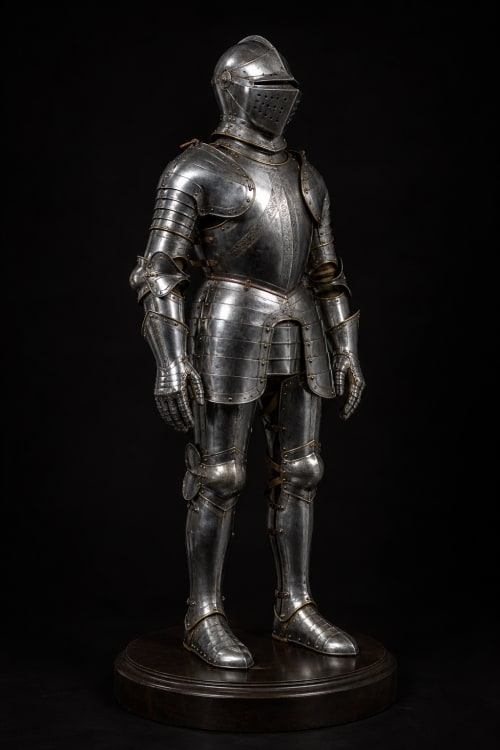
Plate Armor
Full-body steel armor of the medieval knight
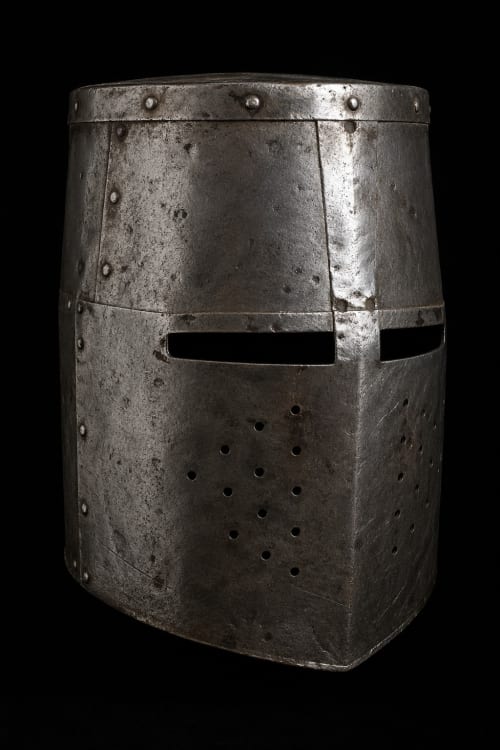
Great Helm
Barrel-shaped helmet enclosing the entire head
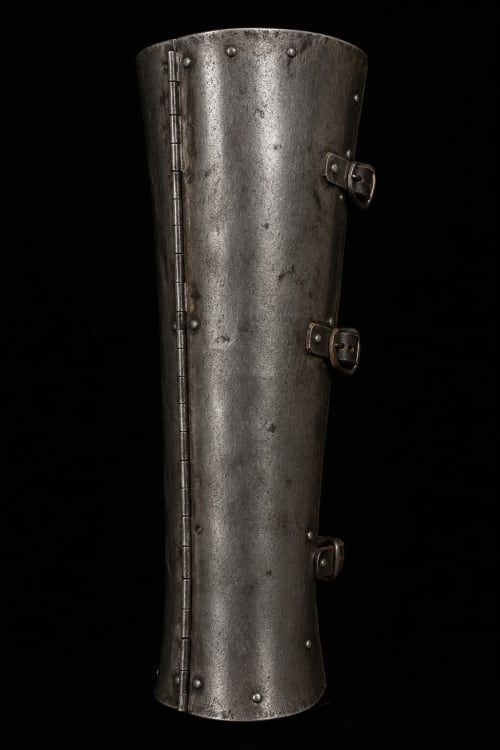
Vambrace
Tubular forearm armor of the medieval knight
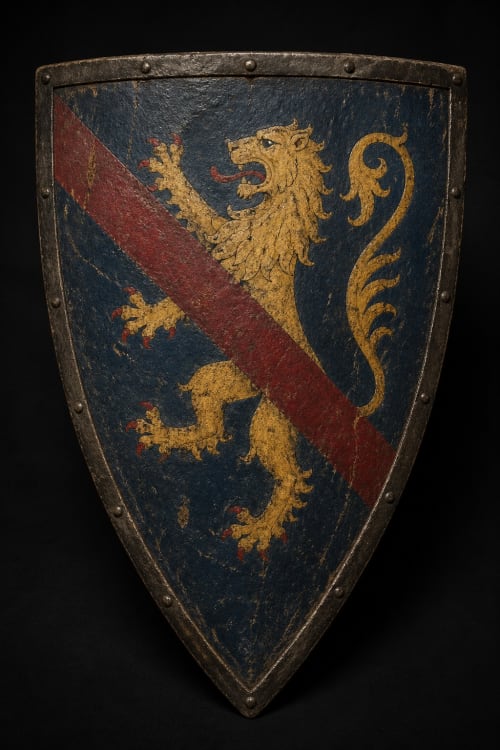
Heater Shield
Classic triangular shield of the medieval knight
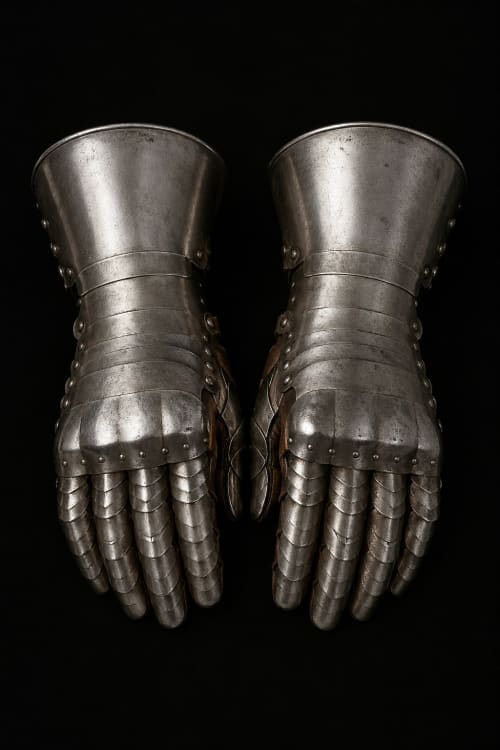
Gauntlet
Articulated metal glove of the medieval knight
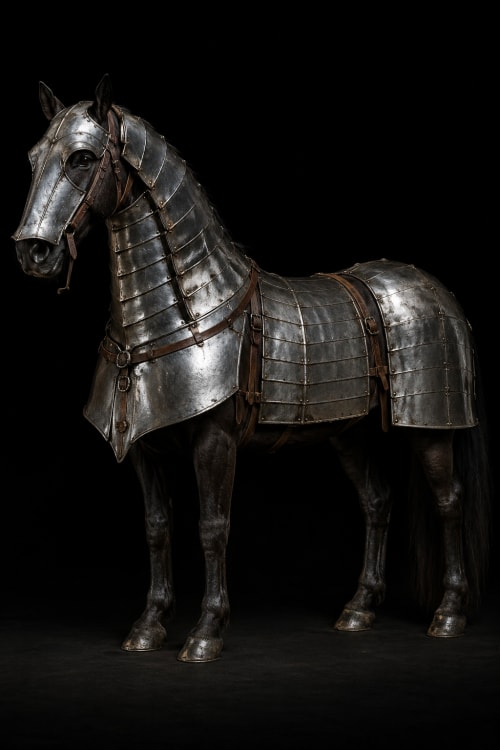
Horse Barding
Full-body armor for the war horse
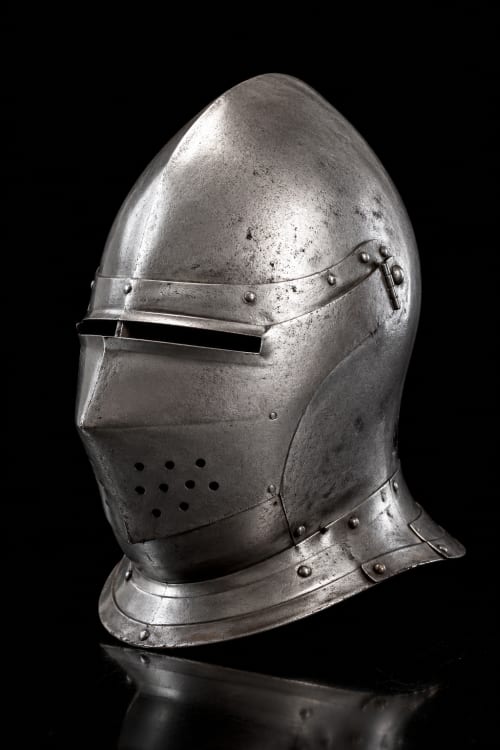
Armet
Close-fitting Italian helmet of the 15th century
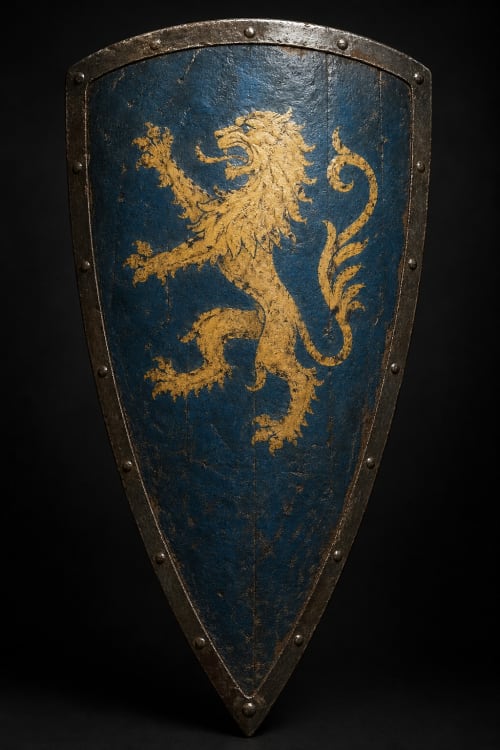
Kite Shield
Large kite-shaped shield of the Norman knight
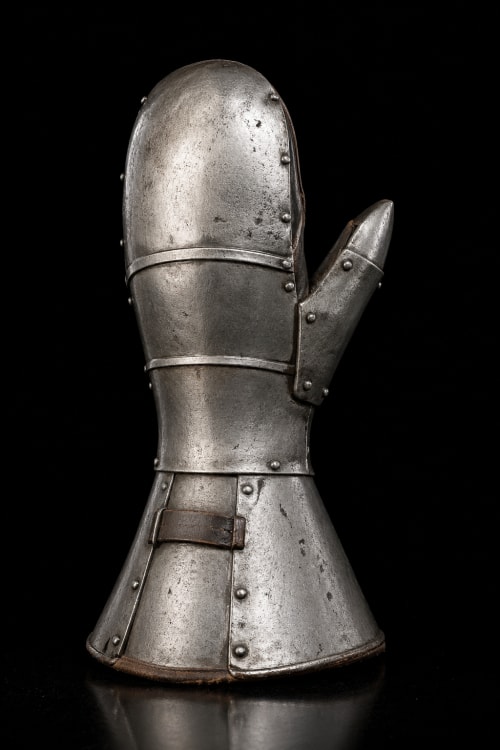
Mitten Gauntlet
Mitten-style metal gauntlet with unified finger shell
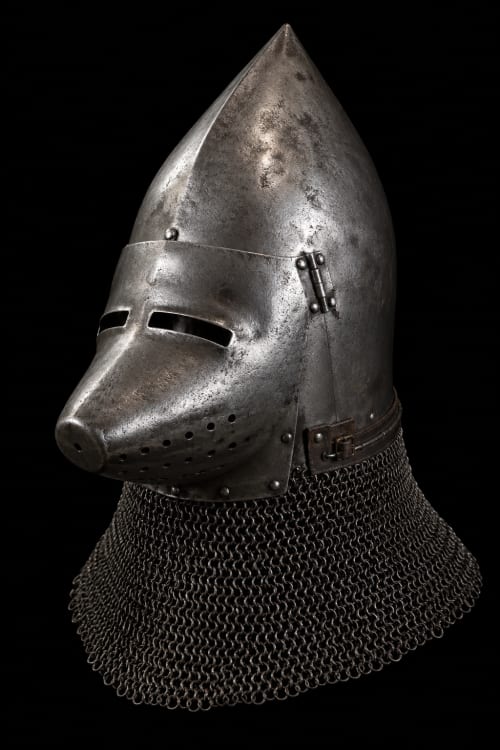
Bascinet
Pointed medieval helmet with detachable visor

Brigandine
Armor of small iron plates riveted between fabric layers
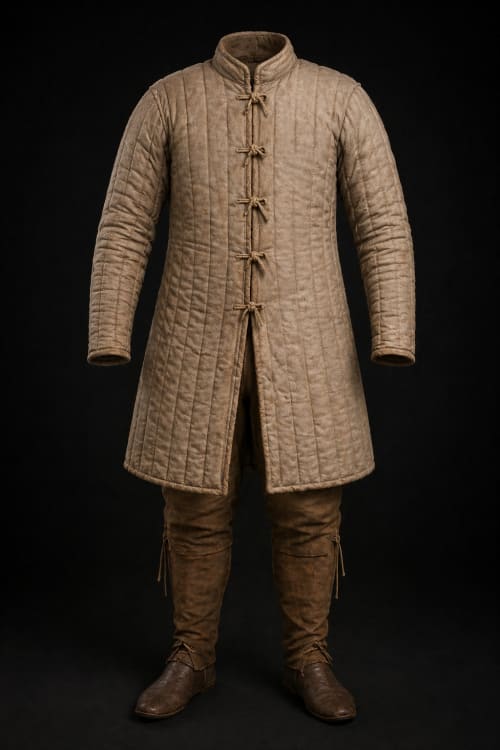
Gambeson
Quilted padded defensive garment